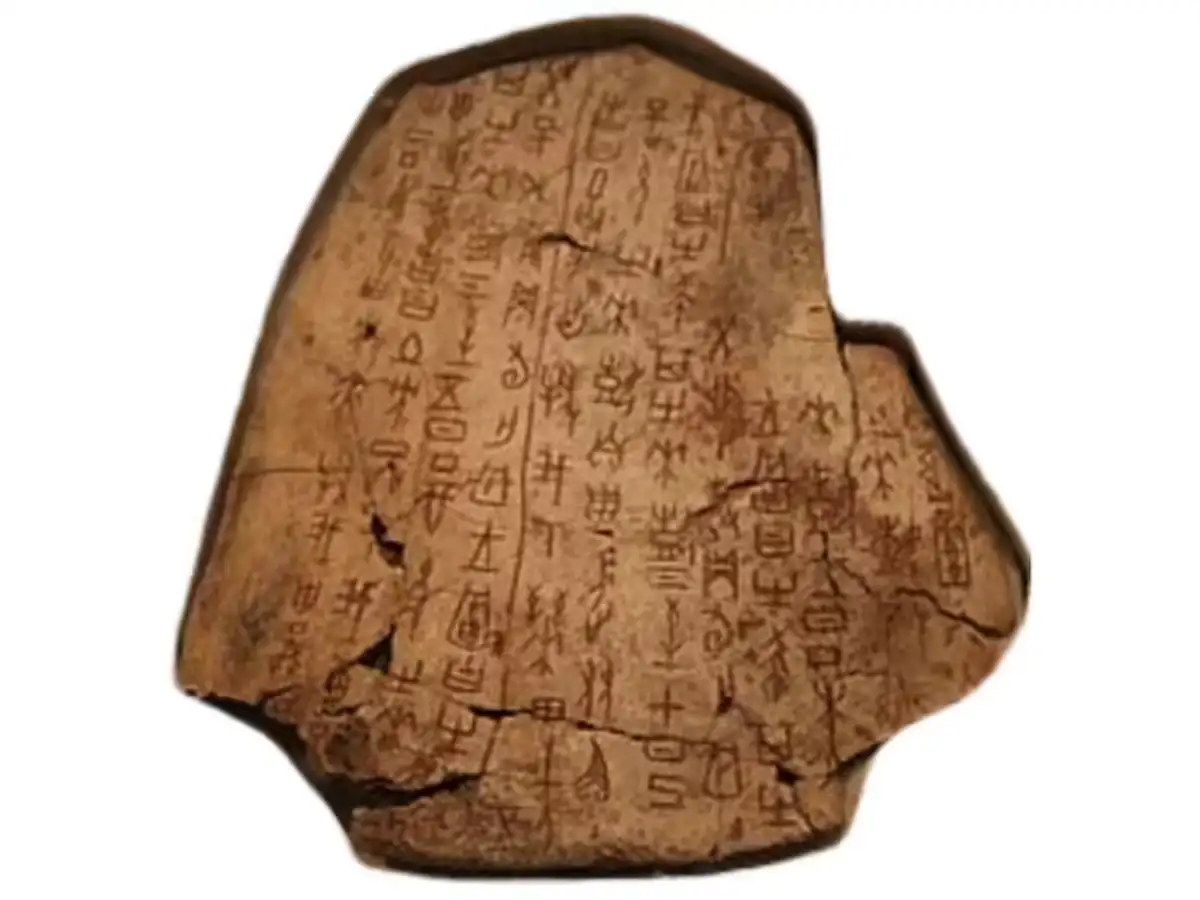
One of the most important discoveries in Chinese history began not in an archaeological excavation but in a traditional medicine market. In 1899, scholar Wang Yirong noticed unusual markings on animal bones being sold as "dragon bones", a common ingredient in traditional remedies. What seemed like ordinary medicinal material would later prove to be one of the greatest archaeological discoveries in East Asian history.
The fragments, now known as oracle bones, transformed historians' understanding of ancient China. They provided direct evidence of the Shang dynasty, revealed the earliest known stage of Chinese writing and offered an extraordinary glimpse into royal life more than 3,000 years ago.
How Wang Yirong's Discovery Changed Chinese History
The story began when Wang Yirong, a scholar and official during the late Qing dynasty, examined bones that were being sold for medicinal purposes. According to historical accounts, he noticed that the markings carved into the fragments appeared intentional rather than natural.
Although Wang could not immediately decipher the inscriptions, he recognised that the symbols were extremely old and potentially significant. His observation marked a turning point in the treatment of these artefacts.
Instead of being ground into powder and consumed as medicine, the bones began to attract scholarly attention. Researchers gradually traced their origins to archaeological sites in present-day Henan Province, particularly around the ancient Shang capital of Yin.
This discovery laid the foundation for decades of research into early Chinese civilisation.
What Are Oracle Bones?
Oracle bones are pieces of animal bone, usually ox shoulder blades, and turtle shells that were used by Shang rulers for divination.
During the Shang dynasty, which ruled parts of China from approximately 1600 BCE to 1046 BCE, kings and court diviners sought guidance from ancestors and spiritual forces on matters affecting the state.
Questions concerning warfare, agriculture, hunting expeditions, weather, health, childbirth and political affairs were carved onto bones or turtle plastrons. The bones were then heated until cracks appeared. Diviners interpreted these cracks and often recorded both the questions and outcomes on the surface.
The inscriptions created through this process became an invaluable historical record.
Ancient Records of Everyday Life and Royal Decisions
What makes oracle bones particularly remarkable is the breadth of information they contain.
Unlike many ancient inscriptions that focus primarily on religious rituals or monumental achievements, oracle bone texts document a wide range of activities and concerns. They reveal details about military campaigns, harvests, royal ceremonies, illnesses, natural disasters and family matters within the royal court.
A recent study published in the journal Scientific Data highlighted the extraordinary value of oracle bone inscriptions as a source of information about political, social and religious life during the Shang period. Researchers noted that the records provide detailed insights into military expeditions, hunting activities, medical concerns and childbirth, helping scholars reconstruct aspects of daily life that would otherwise be lost.
The inscriptions effectively preserve conversations between rulers and the spiritual world, offering a rare glimpse into the priorities and anxieties of an ancient civilisation.
The Oldest Readable Chinese Writing System
Oracle bones are widely regarded as containing the earliest known body of Chinese writing that can be read and interpreted with confidence today.
According to research indexed by PubMed, the inscriptions represent a fully developed writing system rather than a collection of primitive symbols. This finding is particularly important because it demonstrates that Chinese writing had already reached a sophisticated stage by the late Shang dynasty.
The characters recorded on oracle bones show clear evidence of structure, consistency and grammatical organisation. Many of these ancient symbols evolved into forms that can still be recognised in modern Chinese writing.
For linguists, oracle bones provide a crucial link in understanding how one of the world's oldest continuously used writing systems developed over thousands of years.
Confirming the Existence of the Shang Dynasty
Before the discovery of oracle bones, some historians questioned whether parts of China's early historical traditions were entirely reliable.
Ancient texts such as the Records of the Grand Historian described the Shang dynasty and listed its rulers, but there was limited archaeological evidence to verify these accounts.
Oracle bone inscriptions helped resolve this uncertainty.
The inscriptions contain the names of Shang kings and details about royal succession. By comparing these records with later historical documents, scholars found remarkable consistency between the archaeological evidence and traditional historical accounts.
Research highlighted by Princeton University notes that more than 150,000 oracle bone fragments have been recovered. Together, they form one of the largest and most important archives from the ancient world.
The discovery provided concrete evidence that the Shang dynasty was not merely legendary but a historical civilisation with an organised government, established religious practices and a sophisticated writing system.
Why Oracle Bones Remain Important Today
More than a century after Wang Yirong's discovery, oracle bones continue to play a central role in Chinese archaeology, history and linguistics.
Modern technologies, including digital imaging, artificial intelligence and database analysis, are helping researchers study fragmented inscriptions in greater detail than ever before. Scholars continue to identify new characters, reconstruct damaged texts and uncover fresh information about Shang society.
The bones also serve as a reminder of how historical breakthroughs can emerge from unexpected places. What were once sold as medicinal ingredients are now recognised as priceless artefacts that transformed our understanding of ancient China.
A Discovery That Began With Curiosity
The story of oracle bones demonstrates the power of careful observation. Wang Yirong did not uncover a lost city or excavate a royal tomb. Instead, he noticed something unusual in objects that many people overlooked.
His curiosity helped preserve evidence of one of the world's earliest writing traditions and opened an entirely new chapter in the study of Chinese history.
Today, oracle bones remain among the most significant archaeological discoveries ever made, offering an unparalleled window into the politics, beliefs and daily lives of people who lived more than three millennia ago.