Boston free Black man gravestone : In 1729, a formerly enslaved man named Boston was buried in Boston, Massachusetts. Nearly 300 years later, his gravestone was rediscovered and restored, bringing his story back into focus.
Who was Boston, the free Black man buried in 1729
Boston had once been enslaved and was also known by the names Sebastian and Bastian.
Historical records show that he and his wife, Jane Lake, had a daughter named Jane, who was baptised at Boston's First Church in 1701, as per Livescience. Although they were married and had children, both Boston and Jane were enslaved and lived in different households.
Boston was likely freed in the early 18th century, sometime after the 1702 death of John Waite, who had enslaved him.
By 1708, he appeared on a list of free Black people and had built a reputation as a hardworking handyman. He was also well-known enough to have an obituary published in the New-England Weekly Journal when he died, something rare for enslaved or freed Black people in colonial America, as per the report.
How was Boston's gravestone found nearly 300 years later
Kelly Thomas, director of the Historic Burying Grounds Initiative for the Boston Parks and Recreation Department, spotted the gravestone during a restoration project at the Granary Burying Ground.
She was reviewing photographs of the cemetery's headstones when she noticed that one stone had only a single name.
That clue led to historical research showing that Boston's enslaved name had been Sebastian and that he was also known as Bastian.
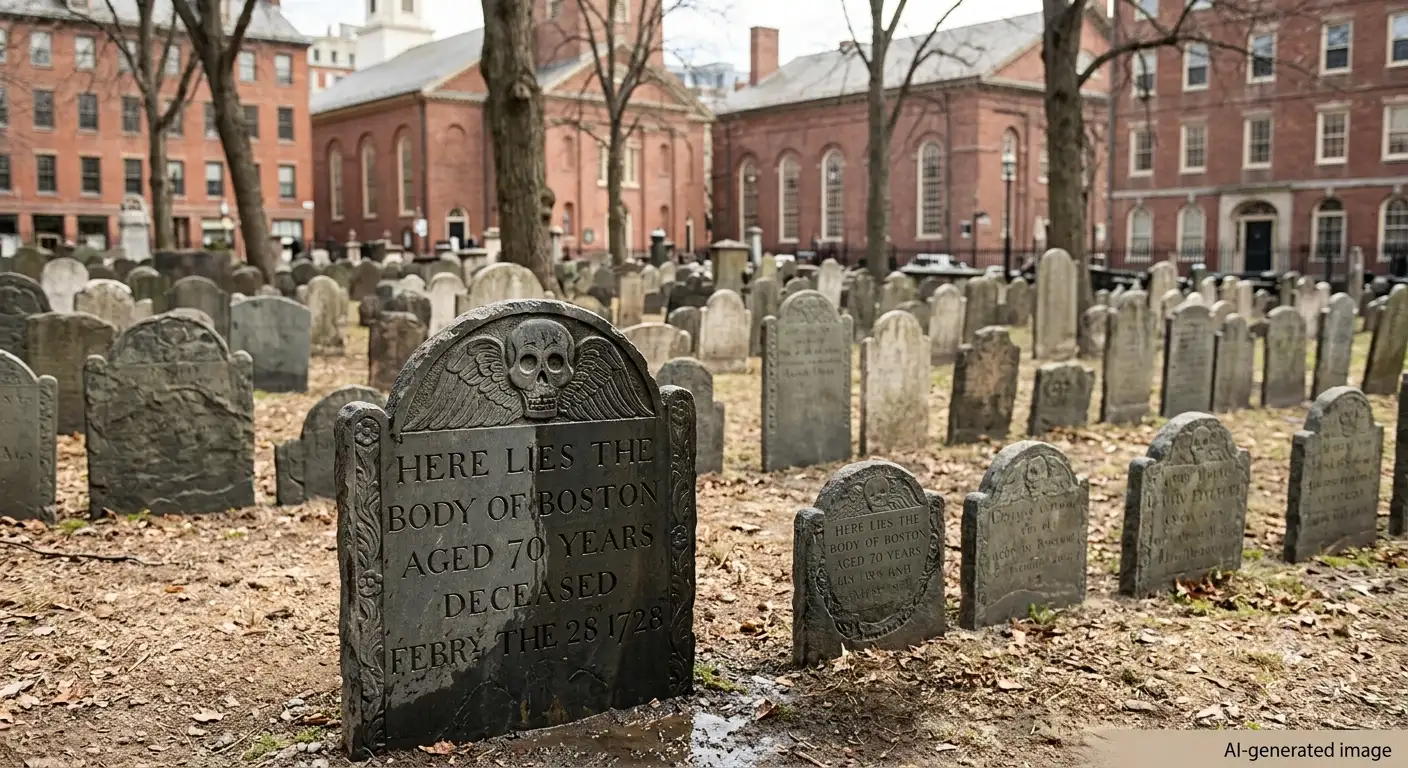
The stone itself carries the name Boston, along with his age and date of death. It also features a death's head, a stylised skull with wings, a common image on 17th- and early 18th-century tombstones in New England.
The inscription reads:
“ Here lies the body of Boston, aged 70 years, deceased February the 28, 1728 ,” as quoted by Livescience.
Because the American colonies used the Julian calendar before 1752, the date corresponds to February 28, 1729, under the modern Gregorian calendar.
Why Boston's 1729 tombstone matters
During a speech on July 4, Michelle Wu, the mayor of Boston, said, "That discovery is likely one of the oldest gravestones of a free Black person in America," adding, "It's been there all along. We just had to go look and share the story," as quoted by Livescience.
The stone was found at the Granary Burying Ground, a cemetery established in 1660 that contains more than 5,000 graves.