After almost three hours on a muddy road with deep water-filled potholes that could swallow a car, the vehicle turns off and through a checkpoint. The dense bush that has lined the road soon gives way to wide open spaces. The grass is dotted with tukuls and long horned cattle. Fields of sorghum and maize tower 10 feet high. This is Mapel.
In this remote corner of South Sudan’s Western Bahr el Ghazal (WBG) state, Mapel Primary Health Care Centre (PHCC) is one of the 83 health facilities in WBG where the Health Pooled Fund (HPF) is supporting the Ministry of Health to provide much needed health care services for the community.
Word has been spreading in the community about the PHCC and its services. It is 11.30am and many women have come to seek treatment for themselves and their children.
Rosa, 22, has been feeling unwell for a few days – dizzy, feverish and aching. She came this morning and is now resting while on a drip waiting for her lab test results. Her eight month old son Murko is with her.
He was born here at Mapel PHCC. She decided to give birth here after seeing others from her community return safely from delivering their children here – unlike those that deliver at home who sometimes die in childbirth, she said. South Sudan’s maternal mortality rate is the highest in the world.
Mapel is one of just two facilities in the Jur River county offering basic emergency obstetric and neonatal care (BeMONC) services. When serious obstetric complications arise women must be transferred to Wau Teaching Hospital three hours away. HPF is supporting an upgrade to this facility to provide more comprehensive emergency services which will prevent the need for many of these referrals to Wau and save many more lives.
HPF is also working with the county health department to improve the pharmaceutical supply chain through proper management and storage. This helps not only to prevent stockouts of essential medicines but also safeguards the efficacy of the medicines.
The availability of good quality medicines and promise of safe deliveries by skilled birth attendants are building community confidence in the facility. More and more people have begun to attend regularly. Right now, the PHCC sees 100-200 patients per day.
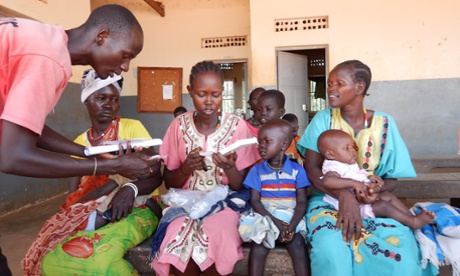
A group of seven women sit on benches outside chatting as they wait patiently for drugs from the dispensary. They say they come here any time they or their children are sick.
One of the women, Anginek, said “When I come here I get good medication which always cures me and my children. But when you go to the traditional healers the children do not improve.”
Another woman, Akela, with a baby on her knee, gestured around her at the other women and their children. “All these children were born here,” she said.
“When you are pregnant and come for antenatal visits, the health workers explain we should come back here to deliver because it’s safer. Afterwards we keep coming back for immunisation and when we are sick because we trust them to make us well.”
HPF is funded by the governments of the UK, Australia, Canada, Sweden and the EU
Content on this page is paid for and provided by Crown Agents a sponsor of the Guardian Global Development Professionals Network