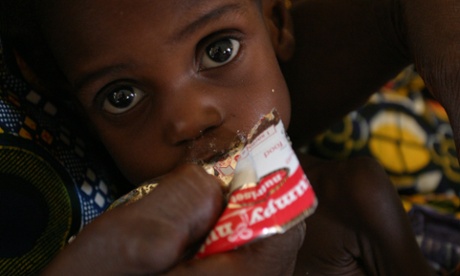
Walk into a pharmacy, small shop or supermarket in Abidjan, the largest city in Cote d’Ivoire, and you’re likely to see Marie Konate’s brightly coloured children’s cereals for sale. Marie’s company Protein Kissèe-La (PKL) gets feedback from customers bi-annually but most don’t comment on the fact that they contain 11 vitamins and seven minerals. “Customers might tell us that the cereals are too sweet, or not sweet enough,” she says. “Or parents who buy our cereals for under-fives comment on how they can see their children growing, but they don’t mention the vitamins and minerals.”
According to the National Nutrition Programme, malnutrition is responsible for 54% of deaths and over a third of ailments among children under five in Cote d’Ivoire. In this country, food fortification is mandatory for certain products. Since 2010, Marie has brought powder containing a blend of vitamins and minerals – called premix – for her product from the GAIN Premix Facility (GPF). Globally, premix sourced by the GPF has helped to improve the health of 150 million people who have consumed it through staple food products in the past year – even if they’re not aware of it.
“We have a real problem with malnutrition here and food fortification is a necessity,” says Marie. “People don’t have enough fruit in their diet and if they do eat vegetables, they are too cooked and the vitamins and minerals are lost. They don’t need to change their diet to get the nutrients they need if they eat our cereals; people are used to eating maize-based products. Before the GPF, we couldn’t be sure of what was in the premix we were buying or how much it would cost. Now, we can get quality, affordable premix within around four weeks of ordering it through GAIN.”
Providing quality micronutrients
Food fortification is a priority for GAIN, an organisation focused on finding solutions to end malnutrition within our lifetimes. The Geneva-based foundation launched the GAIN premix facility in 2009 so food producers like PKL, and others, have access to an easier, more cost effective way of procuring high quality premix. As well as cereals, popular fortified end products are flour, vegetable oil, biscuits, sugar, condiments, soy or fish sauce and salt. In July 2014, the facility turned five. To date, it has sourced around $47m worth of premix and micronutrients in more than 40 countries.
“The GPF has gone to scale,” says Greg S. Garrett, Director of Large Scale Food Fortification at GAIN. “There’s no other specialist facility that offers its customers the chance to procure quality premix, obtain credit to buy it and receive relevant technical assistance.”
To ensure quality and choice, the GPF currently has 21 certified premix blenders and 40 certified micronutrient suppliers. GPF partners with a company called Intertek to audit potential blenders and suppliers, checking that they meet minimum standards. “We provide feedback to companies who fall below the required standards to improve their criteria. GAIN is able to facilitate this due to their impartiality,” says Sandra Meixner, Head of Analytical Customer Service at Intertek. “Organisations might not succeed because of water, hygiene or storage problems, which lead to bacteria in the premix or micronutrient raw materials.” Intertek also checks a sample from every order a customer places with the GPF, which GAIN, not the customer, pays for. This process is vital because it ensures that the premix contains the correct level of micronutrients that will benefit people’s health.
London-based Crown Agents, manages the GPF’s procurement process and credit function. Thanks to seed funding from the Dutch government and the Bill & Melinda Gates Foundation, the GPF has provided extended credit to businesses like Baktygul Djangazieva’s Kyrgyz Association of Salt Producers (KASP) in Kyrgyzstan.
Baktygul’s company started working with the GPF in 2010 to help local producers get quality potassium iodate to iodize salt. Iodine is essential for healthy brain development in young children and iodine deficiency can negatively affect the health of women. In Kyrgyzstan, it became mandatory to iodize salt in 2001 and studies show pregnant women especially still need more iodine in their diet in the country. KASP and GAIN’s partner UNICEF recommended that the organisation start working with GAIN to source quality potassium iodate.
“Before we worked with GAIN, our salt producers had to pay for potassium iodate up front and it was also a lot in taxes,” says Baktygul. “Cash flow for the business was difficult. Through the GPF, we can buy potassium iodate on credit and we can pass on the lower costs to our customers and people who need iodized salt in Kyrgyzstan.”
The GPF now supplies almost all of the World Food Programme’s approved suppliers with premix for products like Super Cereal, a fortified porridge for adults and children.
Read the full feature and more about how food fortification is reducing malnutrition.
Content on this page is paid for and provided by GAIN sponsor of the Guardian Global Development Professional Network.