.jpg?width=1200&auto=webp&trim=0%2C175%2C0%2C175)
A nearly century-old bridge spanning the Mississippi River between Iowa and Wisconsin is set for implosion this Friday, a rare event paving the way for a modern successor.
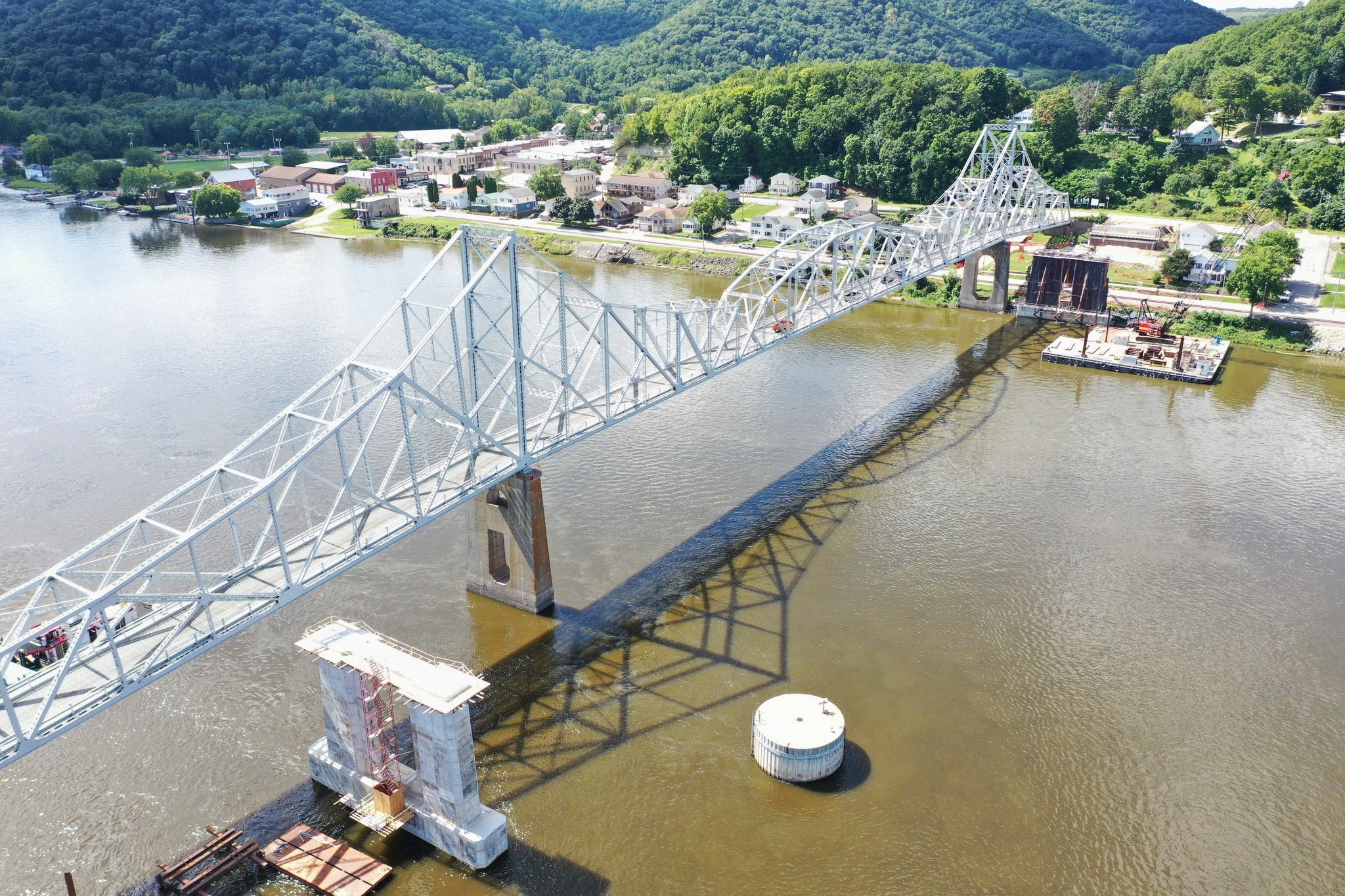
Known as the Mississippi River Bridge, or Black Hawk Bridge, it was finished in 1931, linking Lansing, Iowa, with Wisconsin.
Its distinctive cantilever design, featuring a central arch and two tower-like trusses, made it a local landmark.
Lansing Mayor Michael Verdon noted its deep connection: "It carries a lot of sentimental value to, I mean, literally tens of thousands of people."
The bridge, which ceased operations in October, served as the sole crossing for approximately 30 miles (48 kilometers) in either direction, handling around 2,100 vehicles daily.
Drivers are currently using a ferry service while construction on the new $140 million replacement proceeds, anticipated to open in 2027.
Despite its cherished status, the bridge's narrowness often created challenging conditions when two large lorries met, Verdon explained. Furthermore, its piers and the river's geography meant barges occasionally collided with the structure.
Officials are expecting a large crowd to witness the implosion, he said. A live video will be available online.
The center span will be imploded first, followed by the eastern section later in the day. The western section will be disassembled in the future because parts of the bridge extend over homes and the railroad.
Some parts of the bridge have already been removed, but an implosion is the most efficient way to remove the largest portions of the superstructure, Iowa Department of Transportation spokesperson Daniel Yeh said.
Residents plan to salvage material for keepsakes and to construct a tribute to the bridge in the city, Verdon said.
Lansing, which has a population of 968, has deep roots as a river town with a history of steamboats, fur trading and commercial fishing, the mayor said.