CHICAGO _ Staring at the Rio Grande, Karina hesitated.
The 11-year-old girl didn't know how to swim, and she'd only just met the adults who were bringing her from Honduras to the U.S. _ the ones then handing her an inner tube. She didn't want to scare her 8-year-old brother who was traveling with her, she recalled.
Karina waded into the water, becoming one of tens of thousands of children in recent years who have crossed the U.S. border illegally and alone.
Nearly 60,000 children came across the border without their parents during the fiscal year ending in September, according to the Administration for Children and Families. Thousands landed in Illinois, where 2,300 kids last year were placed by the agency in juvenile detention centers, called shelters, as they awaited a decision on whether they'd be released to relatives in the U.S., remain in detention or be deported.

Many, like Karina, land in Chicago, in one of nine shelters run by Heartland Alliance, a nonprofit that helps immigrants with housing and legal assistance. She spent a month in the shelter a few years ago before being released to her mother, whom she hadn't seen in eight years.
"This place is nothing like Honduras," Karina said one afternoon last month, sitting on a swing in a quiet playground near the home she now shares with her mother and brother in a nearby state. "There, I had to grow up fast."
The number of children who crossed the border alone last year surpassed a peak in 2014 of more than 57,000.
So far, 2017 shows no ebbing _ in the first three fiscal months ending in December, U.S. Customs and Border Protection picked up more than 21,000 children at the border.

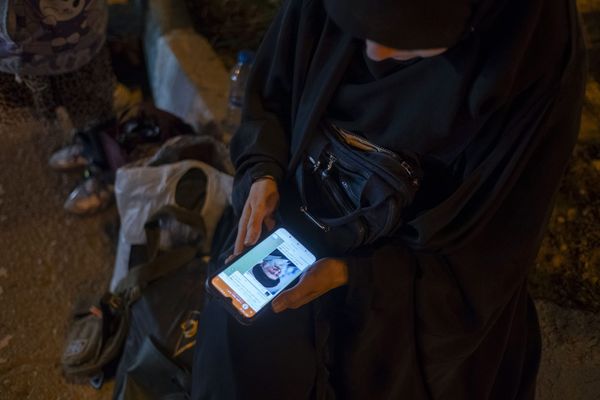
Some crossed rivers with addresses of relatives tucked into plastic bags. Others spent weeks or months traveling on foot through jungles, or packed like sardines on trains and in trucks, often fleeing violence in their home countries.
Just how many more will come, and how many will be allowed to stay, is unclear under the new president's administration.
President Donald Trump has promised to increase deportations and reduce border crossings. While his January executive order directed the Department of Homeland Security to ensure unaccompanied children are properly processed and cared for in custody _ guidelines reiterated last week in a memo issued by DHS Secretary John Kelly _ their futures remain uncertain.
The memo estimated that 60 percent of minors who cross the border alone are placed with a parent living in the U.S. illegally, and instructed federal agencies to explore whether those children are still eligible for special protections.

"We're worried about how this is going to impact our kids," said Maria Woltjen, director of the Young Center for Immigrant Children's Rights, a program based at the University of Chicago Law School that provides advocates to children in local detention centers. The 60 volunteers and law students handle the most vulnerable cases _ babies, trafficking victims, children who've experienced trauma.
When the Young Center was started in 2004, 70 unaccompanied children were in one Chicago shelter. Nearly every child under 13 was assigned an advocate. Now, there are about 500 children in local shelters, and as more cross the border, fewer can be helped.
The DHS memo also seeks to enforce laws against people who smuggle or traffic children into the U.S. Advocates said parents who hired a smuggler might fear deportation if they claim their children and instead might choose to leave them in custody.
"I think it actually could increase the vulnerability of the children," said Lisa Koop, associate director of legal services at the National Immigrant Justice Center, a Heartland program that provides legal assistance to immigrants. In a statement last month, the center's executive director, Mary Meg McCarthy, called the Trump administration's immigration proposals "draconian" and an "affront to American values."
Unlike other young immigrants who came to the U.S. illegally at least a decade ago, most unaccompanied minors like Karina who have arrived in the recent surge do not qualify for Deferred Action for Childhood Arrivals, an Obama administration program that has granted deportation reprieves and two-year work permits to 750,000 immigrants who arrived in the U.S. as children. To qualify, immigrants must have lived in the U.S. continuously since 2007.
Hans von Spakovsky, a senior legal fellow at the Washington-based conservative think tank the Heritage Foundation, said unless unaccompanied children can make a legal case to stay, they should be deported to discourage others from sending kids alone.
"Those who are here who have a parent illegally in the country, they should be reunited with that parent, but they both should be sent back," he said. "We need to do everything we can to discourage folks from doing this, because a lot of the routes they take are extremely dangerous."