Governments across advanced and emerging economies are facing increasingly difficult fiscal choices as prolonged military conflicts drive up defense spending and reduce the space available for social and development programs, according to analysis from international institutions and reporting on recent IMF assessments.
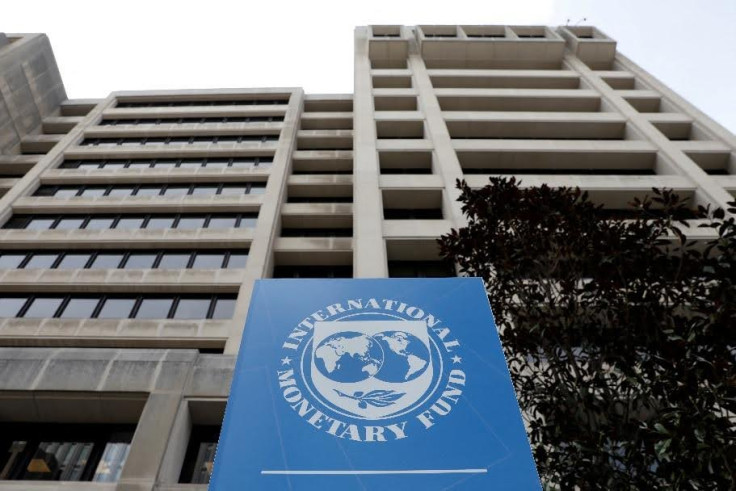
CNBC reported that the International Monetary Fund (IMF) has flagged a growing "guns versus butter" dilemma, where rising security demands are increasingly competing with domestic spending priorities such as healthcare, education and welfare support. The concern comes at a time when multiple geopolitical conflicts, including the war in Ukraine and tensions involving Iran, are keeping global defense budgets elevated.
In its April 2026 World Economic Outlook chapter on fiscal risks, the IMF said governments facing conflict-related pressures are often forced to increase military spending while simultaneously dealing with weaker tax revenues and higher borrowing costs. The organization noted that this combination tends to widen fiscal deficits and push debt levels higher, particularly in economies already carrying pandemic-era debt burdens. The IMF said this pattern has become more visible as geopolitical tensions have persisted beyond short-term shocks.
The IMF also stated that defense-heavy fiscal shifts can reduce the "fiscal space" available for long-term investment in social protection systems and public services. It warned that while military spending is sometimes unavoidable in conflict conditions, prolonged increases can distort budget structures if not offset by revenue gains or spending adjustments elsewhere.
The Washington Post reported that the IMF's latest outlook highlights how global economic conditions are being reshaped by ongoing conflict-related disruptions, including energy price volatility and trade route instability. According to the outlet, economists tracking the IMF data have pointed out that higher energy costs and supply chain disruptions are feeding into inflationary pressures, which in turn make it harder for governments to maintain broad-based social spending.
Separately, PBS NewsHour reported that the IMF has downgraded parts of its global growth outlook, citing the economic fallout from the Iran conflict as a contributing factor. The PBS report noted that the disruption of energy markets and maritime transport routes has had spillover effects beyond the immediate conflict zones, particularly for import-dependent economies.
The IMF itself has said in its blog analysis that wars tend to have lasting fiscal consequences, including sustained increases in public debt and long-term shifts in spending priorities. It noted that while defense spending can support short-term economic activity, especially in industrial sectors tied to military production, the longer-term effects depend heavily on how governments finance that spending and whether it crowds out other productive investment.
In Europe, the Russia–Ukraine war continues to shape defense budgets, with several NATO member states maintaining elevated military expenditure compared with pre-2022 levels. Policy discussions among European finance officials, as referenced in IMF-linked policy briefings, have increasingly focused on how to balance security commitments with fiscal sustainability rules that limit excessive deficits.
The IMF has also cautioned that higher interest rates in many advanced economies are compounding the challenge. Borrowing to finance defense expansion has become more expensive, reducing the flexibility governments previously had when debt servicing costs were lower. This has led to renewed debate over whether some countries will need to adjust social spending plans to maintain fiscal stability.
Economists cited in IMF working papers argue that the long-term economic outcome of higher defense spending depends on efficiency and allocation. While military investment can stimulate specific industries, the IMF has repeatedly stressed that sustained imbalances in favor of defense spending can limit productivity-enhancing investment in infrastructure, education and healthcare.