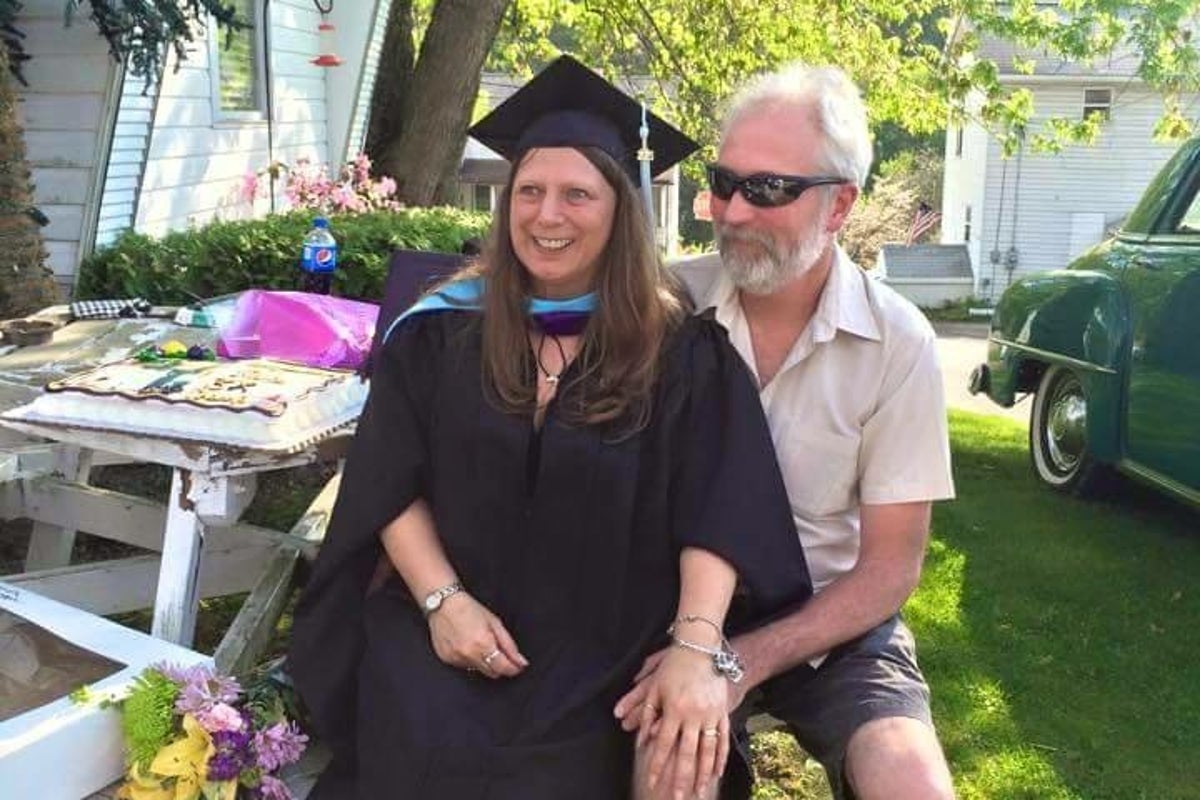
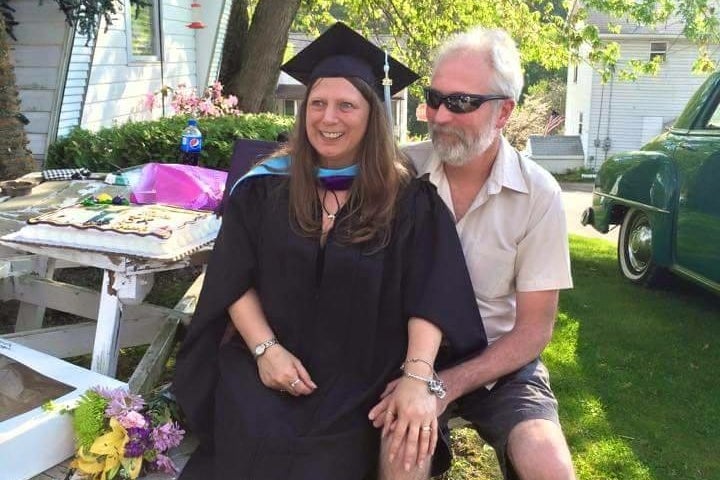
Marie Nickle has been working her whole life, and now approaching 61, she has been thinking more and more about what her dream retirement looks like.
“I would like to spend more time with my family and my husband. We don't really spend a whole lot of time together because everybody is at work most of the time,” she said. “We like to travel, we like to go to the beach, and we like to camp.”
But for Nickle, retirement may remain a dream. She is one of millions of Americans in their 60s who fear they’ll never be able to retire due to a mountain of student loan debt. Some are still carrying debt from their own college years decades ago, while others took out loans for their children or went back to school themselves later in life.
“We want to retire so we can enjoy life, but we can't, and I don't know when or if we ever can,” Nickle, who went back to school to earn a master’s degree in special education when she was 49, told The Independent.
Student loan debt is commonly thought of as a young person’s problem. But borrowers aged 35 and older outnumber them, according to the latest Department of Education data on federal student loan debt. There are 24.6 million borrowers aged 35 and older compared to 20.2 million under that age, the data shows.
Older people also owe more money than younger people, on average. Americans over 50 have approximately $47,500 in student loan debt compared to an estimated $27,300 for under-35s, according to the data.
Collectively, 9.5 million Americans over-50 owe close to half a trillion dollars in federal student loan debt. And there are 1.5 million more people over 62 years old with student loan debt today than a decade ago, according to the education department.
“Borrowers are taking longer to repay their loans, and that's why we're seeing more older borrowers,” explained Betsy Mayotte, president and founder of The Institute of Student Loan Advisors, a nonprofit that offers free advice to consumers.
Another reason, Mayotte said, is the rise in non-traditional students. “So, not someone right out of high school going to college, but someone in their 30s or 40s going back to college trying to get better employment,” she said.
The Independent spoke with three Americans in their 60s who are entering their golden years with punishing amounts of student loan debt.
The three, all members of the grassroots advocacy group Student Loan Justice, said that despite making tens of thousands of dollars in repayments, their student loan balances have swelled due to interest accumulated over the years.
In addition to accruing interest, others have been hit with steep penalties for falling behind on payments, leaving them with balances in the six figures. A record 9.5 million Americans are more than nine months behind on their student loan payments, analysis from The Associated Press revealed this week.
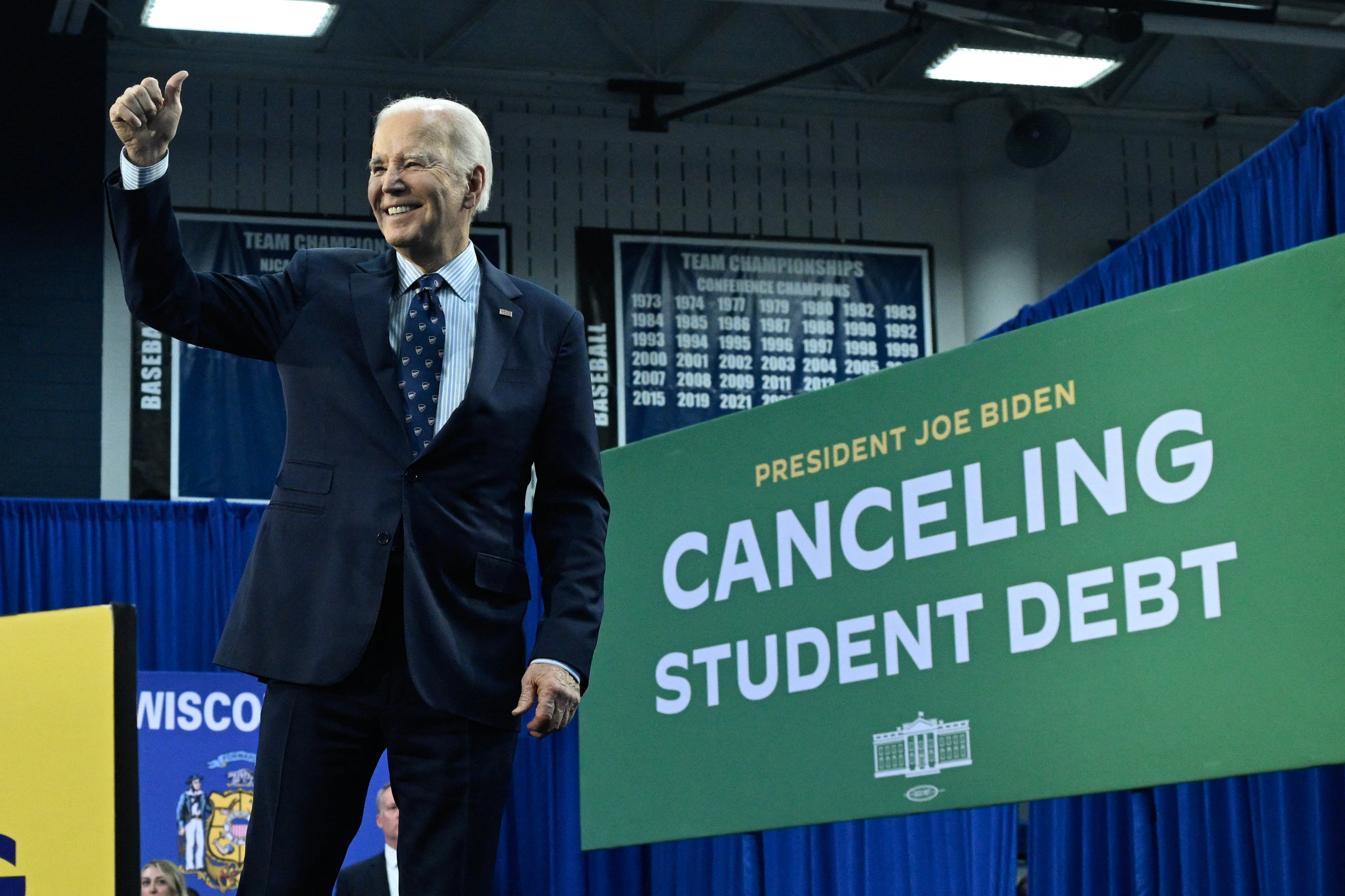
The student loan system also saw a major change this month by the Trump administration, limiting the amount Americans can borrow while restricting their repayment options. The overhaul also axed the Saving on a Valuable Education, or SAVE plan, a Biden-era initiative that calculated monthly payments based on income and a borrower’s family size.
“I have been working in this industry in a policy and advocacy role for over 25 years,” Mayotte said. “I have researched student loan policy back to the 60s, and I could say truthfully, without feeling like I'm being dramatic, that the past five years have been the most chaotic policy in the history of the program.”
She added: “It's even difficult for experts to keep up lately. So, if it's hard for experts to keep up, how do we expect the general consumer to?”
‘People need to understand how this is really tearing lives apart’
Nickle, from Pennsylvania, went back to school in 2015 to make the jump from teaching assistant to special education teacher, and took out a federal student loan for $73,000 to cover her studies.
The mom, 60, said she was inspired to get her master’s because of her son, Alex, 37, who is disabled. “If I have a child in my classroom with a disability, I'll fight for them,” she told The Independent.
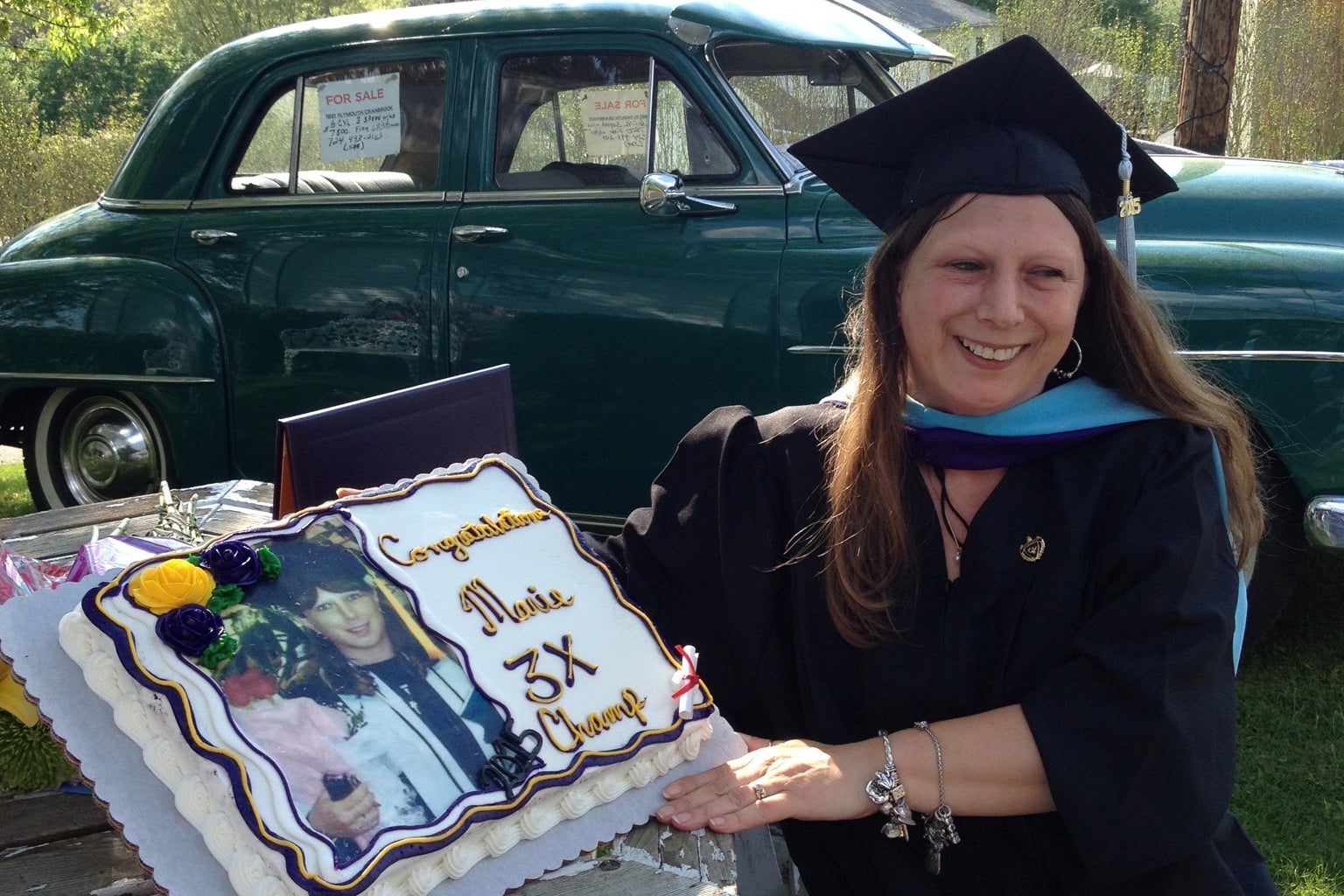
Despite making monthly payments of around $250, the accrued interest saw the balance peak at $100,600. Nickle said she has paid back more than $75,000 but still owes approximately $25,000.
“It's sad…I'll talk about it with my husband and we say we’ll never be able to retire unless I can get something done about this loan,” Nickle said. “People need to understand how this is really tearing lives apart.”
Under the Biden-era SAVE plan, Nickle said her payments were manageable. “It was an affordable payment. It was wonderful,” she said. But the Trump administration ended the SAVE plan July 1 - and Nickle, like millions of others, has seen her payments jump: in her case, to $600 a month.
‘There are people who have the funds. I was a single parent’
Between 2011 and 2016, single parent and teacher Diane took out Parent PLUS loans totaling approximately $60,000 on behalf of her children, now 29 and 26, to cover their undergraduate degrees at four-year colleges in business management and physical therapy, respectively.
Parent PLUS loans tend to come with a higher interest rate and limited repayment options, something Diane said she wished had been made clearer to her at the time. Her balance stands at approximately $120,000, she told The Independent.
“The loan will outlive me. It's just the way it is,” the 61-year-old who lives in Torrance, California, and asked The Independent that her last name not be used for privacy reasons.
The Parent PLUS loan program was launched in 1980 and aimed at higher-income parents sending their children to more expensive private schools. But over time, more lower and middle-income families started using the loans as the price of public education increased.
It left many parents saddled with debt they’ve been unable to pay off. In 2016, more than 200,000 families earning less than $40,000 took out a Parent PLUS loan, according to an NBC News report at the time, citing federal data.
“There are people who have the funds. I was a single parent, I didn't have it. I wanted to give my children an education, so I didn't have much of a choice,” Diane said.
Diane, a transitional kindergarten teacher at a Title 1 school — a federally funded program which supports children from low-income families — is currently on an income-driven repayment plan. Her monthly repayments are around $80.
“Luckily, my payments are totally manageable,” she said. “But [the total debt] is going to outlive me.”
She added: “I would love to do a little bit of travel, and not have to worry about working forever. But I don't see retirement in my future.”
Diane said that being a part of the Student Loan Justice community, which describes the system as “viciously predatory,” has made her realize she’s not alone.
“For a long time I did feel like, what a stupid thing I did. How could I have done this?” Diane said. “But now I'm like, ok, I'm not the only one.”
“It makes me want to do something for the future and ask, ‘How can we move forward and try to change things?’” she added, calling for clearer guidelines and more support from the government to navigate the complex system.
Mayotte said that consumers have to make decisions based on the information in front of them.
“There definitely is some personal responsibility with respect to finances,” she said of the negative judgement older borrowers often experience when it comes to decisions they made decades ago.
“But with what's been going on with student loans for the past five or six years, even borrowers that do pay close attention to their finances and what's going on, they could not have predicted what happens with SAVE and some of this other stuff.”
‘I'm just gonna die with student loan debt’
Arizona grandmother Carol Henderson-Dahms, 60, graduated with a bachelor’s degree in advertising in 1990 before returning to school in 2002 for her master’s, which left her with approximately $28,000 in student loan debt overall.
Over the course of her working life, she has made minimum monthly payments and despite paying back more than $100,000 - she still has a balance of $82,000 today because of the amount of interest accumulated.
“I honestly feel I'm just gonna die with student loan debt. I've always paid, I've never defaulted,” she said. The 60-year-old said the only time she didn’t make a payment was, like millions of others, during the pandemic.
“Whatever choices were available to me, I always chose the lowest payment,” said the self-employed consultant, whose clients include non-profits and the federal government.
And while Henderson-Dahms doesn’t regret going to college, she wonders what she would have done if someone sat her down at 18 years old and warned her of the potential pitfalls of only paying back the lowest monthly amount.
“I think when I was 18, if somebody said, ‘Hey, this is like credit card debt. Your interest builds up, and don't stay on those low payments very long…I don't know what I would have done because of life, rent, kids, childcare and everything else. But I think there could have been a middle ground,” she said.
She described her debt as “snowballing” over the decades, having been passed around so many different federal student loan servicers—companies who are contracted by the government to handle the loan on its behalf.
“They have switched me through so many servicers that I can't even count,” Henderson-Dahms said. “The interest just keeps capitalizing.”
Now she has moved to an income-driven repayment plan and pays just over $300 a month. In 11 months, she said the monthly repayments will jump to anywhere between $800 and $1,100 because her income was higher this year.
“At this age, I’m trying to think about putting more in my 401k so I can actually retire; my husband's retired already. But with having a payment of that size, something would have to give,” she said.
When she thinks of her ideal retirement, it still involves working with the causes she supports now.
“I love to work,” Henderson-Dahms said. “I help a food bank, a crisis pregnancy center, a senior center... so basically, I would do what I still do, just volunteering. But at some point I feel like the debt is something that's going to infringe on my ability to decide when it's time to stop.”
Mayotte said that student loan debt policies are being written “with the assumption of a younger person being the borrower.” She also raised concern that policymakers do not understand the scale of the problem for older Americans.
“Today in 2026, when people think student loan debt, the picture in their mind is a 20-something,” she said. “And that's just not the case.”