
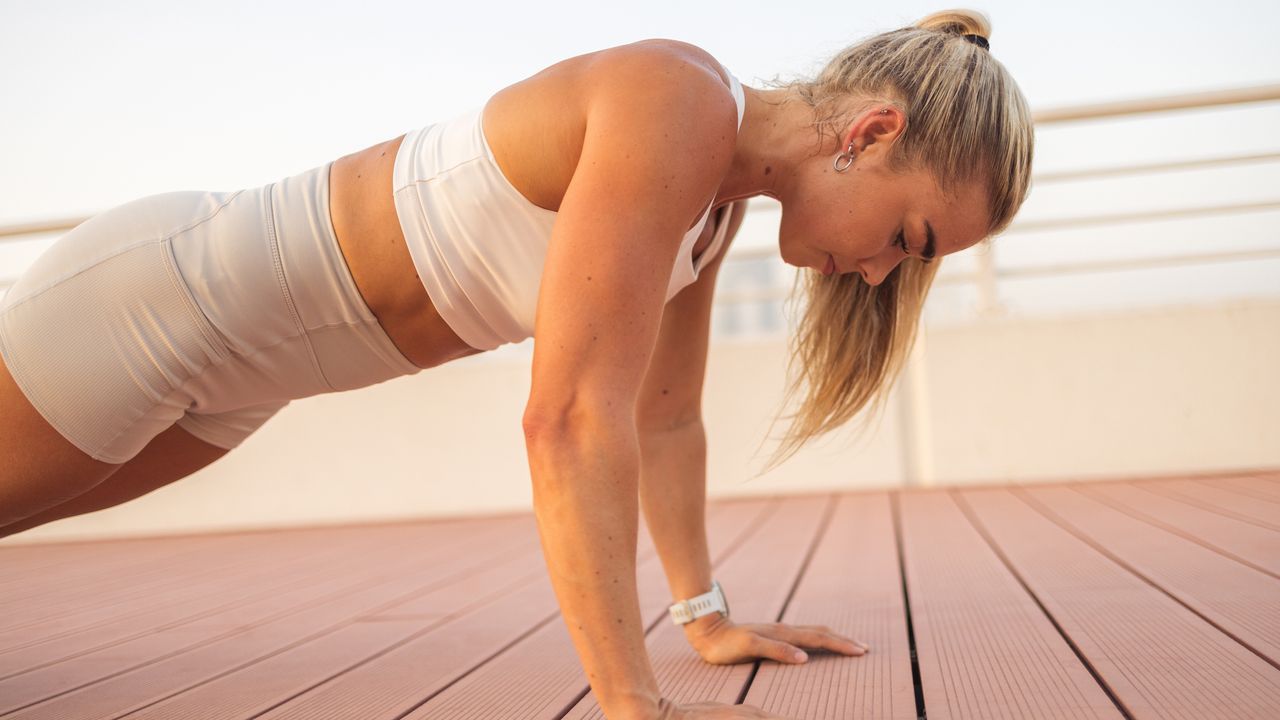
Completing a perfect push-up is an admirable goal for anyone. Being able to push your bodyweight off the floor in one fluid movement is a fantastic marker of strength.
That said, the move is deceivingly challenging, requiring good core, back and shoulder stability. Sagging hips in a push-up is a no-no.
Since recovering from a spinal injury, I’ve been doing one particular move to help me rebuild the foundational strength needed for push-ups: the scapular push-up.
The scapular push-up isolates your shoulder blades and teaches you how to retract (squeeze them together) and protract (spread them apart), which prepares your shoulders for a push-up—particularly the top end of the movement—without the load. This can be done in a high or low plank position without bending your elbows.
This movement targets the serratus anterior, a muscle that’s crucial for shoulder stability and is recruited to perform pushing, pulling and carrying movements—whether you’re in the gym or navigating everyday life. It also strengthens your upper back, which also supports overall shoulder health.
Recently, I’ve been incorporating different scapular push-up variations into my routine, at least twice a week. I recommend starting with the beginner-friendly version on your knees, below, and progressing as your strength improves.
How to do a scapular push-up from your knees
Sets: 2-3 Reps: 10-15
How to do it:
- Get on your hands and knees with your shoulders over your wrists and your hips over your knees.
- Retract: Keeping your arms straight, squeeze your shoulder blades together letting your chest sink slightly toward the floor.
- Protract: Press your palms into the floor, pushing your upper back up and spreading your shoulder blades apart.
- Continue moving between these two positions with control.
Trainer tips: Keep your arms straight throughout. Pause briefly at the top and the bottom of each move.
Make it harder: Progress from your knees to a low plank position on your toes, elbows and forearms. Once you can control the scapular push-up from your elbows, progress to a high plank position that requires more core strength. Eventually, perform the scapular push-up from a bear hold position, challenging your deep core muscles, back and hip stability.