
Spurred by revelations that the gunman who killed five people at an Aurora manufacturing plant in February bought his weapon despite a prior felony conviction, Illinois Democrats are moving to extend the use of fingerprint background checks for prospective gun owners.
That would close what state lawmakers and former federal law enforcement officials say is a loophole that could be allowing criminals to purchase firearms.
Three bills filed in the Illinois General Assembly would require authorities to collect fingerprints from people applying for state gun licenses or, alternatively, allow people seeking a state Firearms Owner’s Identification card to provide their fingerprints to the Illinois State Police as part of their background checks.
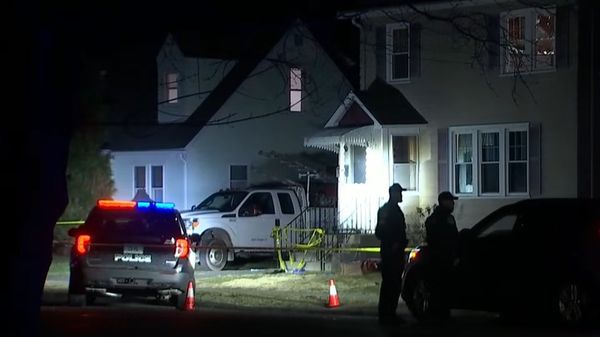
On Feb. 15, Gary Martin, who’d just been laid off after 15 years at the Henry Pratt Company in Aurora, shot and killed five company employees, including a 21-year-old Northern Illinois University senior who was on the first day of an internship there, and wounded six others, including five police officers, before being killed in a shootout with police.
The Illinois State Police later acknowledged it had erroneously given Martin a state Firearms Owner’s Identification card in 2014 after a required background check, based solely on his name and birthdate, didn’t turn up anything that would disqualify him under the law from owning a gun.
Later, though, Martin applied for a concealed-carry permit and also submitted his fingerprints. The law gives people the option to do that to expedite the process.
With his fingerprints now in hand, the state police found Martin had a 1995 felony conviction in Mississippi, where he went to prison for beating and stabbing a former girlfriend.
So they revoked Martin’s FOID card. But by then, he already had used it to buy the Smith & Wesson pistol he used in the Aurora shooting.
“If legislation like this had been passed before, it might have kept that gun away from this person. It might have saved lives,” said state Rep. Jennifer Gong-Gershowitz, D-Glenview.

On the same day of the shooting, Gong-Gershowitz had proposed legislation to require fingerprint background checks to obtain a FOID card.
“There’s nothing worse than feeling it’s too little, too late,” she said.
The shooting put a spotlight on what some former federal law enforcement officials and other experts say is a weakness in how millions of gun buyers a year are screened nationwide. They say fingerprints help the agencies that screen gun buyers more effectively search state and federal criminal databases to weed out people with similar names and to spot applicants who lie on a form or present a fake ID.
Under federal law, though, only buyers of particularly destructive weapons — such as machine guns — must undergo fingerprinting. At least six states have extended this to also include purchases of handguns. But in Illinois, as in most of the country, handgun buyers are checked just through basic biographical and descriptive information.
“It’s a massive hole,” said Mark Jones, a former agent with the federal Bureau of Alcohol, Tobacco, Firearms and Explosives who is senior policy director for the Illinois Council Against Handgun Violence in Chicago. “The question is: How many guns slip through it? There’s so much opacity it’s difficult to understand the scale.”

There is a dearth of research on how many prohibited gun owners pass a background check because their fingerprints were excluded from the search. Research that’s been done regarding employment and occupational licensing checks has found that troves of records are missed when criminal background checks are based on just a name and biographical information. Even checks using Social Security numbers —typically optional when buying guns — are vulnerable to errors, experts say.
“Fingerprints would improve the accuracy of the system. We know that, so why aren’t we doing it?” said Joseph Vince Jr., who previously ran the ATF’s Crime Gun Analysis Branch and is a criminal justice professor at Mount St. Mary’s University in Maryland. “We’ve handcuffed enforcement of the laws, and the public is paying the price.”
In 1999, a federal task force looked at the accuracy of the FBI’s flagship criminal history records system, called the Interstate Identification Index. The researchers analyzed more than 93,000 background checks done for licensing and employment purposes in Florida and found that searches using biographical information didn’t turn up nearly 12 percent of applicants with fingerprint-verified criminal histories.
That included more than 260 people who mistakenly would have been given permits to carry concealed firearms if not for fingerprinting. Those people collectively had faced charges for more than 550 offenses, including assault and robbery. But those records were missed by the biographical search.
“One should consider that a high profile case from a missed identification could result in far-reaching repercussions,” the researchers wrote.
Every year, prospective nurses, teachers, taxi drivers, real estate brokers, youth sports coaches and millions of other job-seekers are screened through the index. Under federal law, they are required to submit their fingerprints for the check — a measure aimed at keeping dangerous individuals from working with children, the elderly and other vulnerable populations.
The index is also one of the primary systems used to vet gun buyers, but Congress has exempted them from the fingerprinting requirement.
Over the past two decades, Democrats in Congress have tried and failed to extend fingerprinting requirements to include gun buyers.
Last year, U.S. Sen. Chris Van Hollen, D-Maryland, and U.S. Rep. Elizabeth Etsy, D-Connecticut, proposed legislation to give states grants to set up licensing systems, with fingerprinting required to get that money. Van Hollen said he plans to reintroduced the measure this year.
“What came out of Aurora shows that, at the very least, we should add the fingerprinting requirement to the national criminal background check process,” Van Hollen said. “Fingerprinting is required as part of the background check process for certain areas of employment, for certain occupational licenses, and that’s done to ensure the accuracy of the system, right? I’m not sure why we would want a less accurate system when it comes to keeping guns out of the hands of dangerous people.”

Illinois is one of the few states where people have to obtain a license or a permit before buying a handgun but don’t have to supply their fingerprints with the application.
“We know we’re missing people, but we don’t know how bad it is because some of these prohibited gun owners don’t get caught,” said Phil Andrew, who worked for more than 20 years as an FBI agent before becoming director of violence prevention initiatives last year for the Archdiocese of Chicago. “We only know about the ones that go bad because they go bad horribly. But there could be more ticking time bombs out there.”
Responding by email to questions, Illinois State Police officials called the lack of fingerprinting for FOID cards a “weakness in the system,” noting, for instance, that criminal records can be missed in the background checks if people gave police a phony name when they were arrested.
“Put simply, people do not always give law enforcement accurate identifying information,” the state police said.

The Illinois State Rifle Association didn’t respond to requests for comment. But the efforts to pass fingerprinting requirements are sure to face opposition from gun rights advocates. After the Aurora shooting, the association called the possibility of requiring fingerprints for gun ownership “an out-and-out attack on the Second Amendment.”

Last month, state Sen. Julie Morrison, D-Deerfield, filed an amendment that would extend the amount of time the state police have to decide whether to grant an application for a FOID card from 30 days to 90 days. But if an applicant agrees to provide fingerprints, the deadline for that decision would be 60 days, speeding the process.
Morrison said she is considering revisions to bring her legislation in line with a bill filed Monday by state Rep. Kathleen Willis, D-Northlake, that would make fingerprinting mandatory.
Both of their proposals would require private gun transactions to be conducted through a licensed dealer and do more to try to ensure that people whose FOID cards are revoked surrender their weapons.

Morrison and Willis both called reforming the FOID card system a priority.
“Fingerprinting increases our ability to look at records in other states, so it’s a huge advantage and one I think Illinois needs to seriously look at,” Morrison said.
A recent report by the Johns Hopkins Center for Gun Policy and Research cited research showing that stricter licensing laws are associated with drops in gun trafficking and firearms-related deaths. And it recommended that Illinois go beyond requiring fingerprinting and also mandate that FOID card applications be filed in person and that licenses be renewed every five years instead of the current 10.
Cassandra Crifasi, an assistant professor at Johns Hopkins University in Baltimore who co-authored the report, cited research linking stricter gun-licensing laws to drops in gun trafficking and firearms-related deaths. Crifasi said fingerprinting is an inconvenience but said it gives examiners “another layer of information to screen out prohibited people.”
Crifasi lives in Maryland, which adopted fingerprinting requirements in 2013. The law there also requires four hours of safety training before anyone can obtain a license to buy a handgun.
Crifasi said she completed the training at a gun store one evening after work in 2015. From the store, Crifasi submitted her application online, pressing her fingertips onto a pad to provide her fingerprints. She said her license arrived about a month later.

“I didn’t think it was a big hurdle,” said Crifasi, who owns several handguns — her favorite is a .380-caliber Bersa Thunder — and is a regular at a gun range. “In the grand scheme of things, it isn’t that much to ask to make sure it’s a little bit harder for people who shouldn’t have guns to get them.”
Brian Freskos is a reporter for The Trace, an idependent, nonprofit news organization dedicated to expanding coverage of guns in the United States.