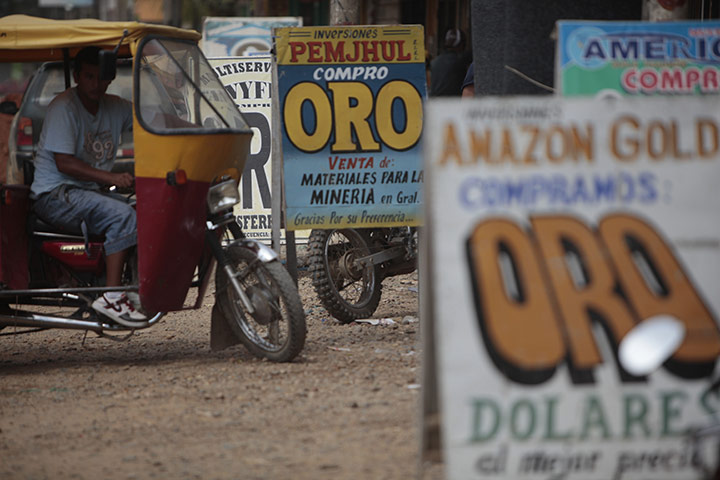
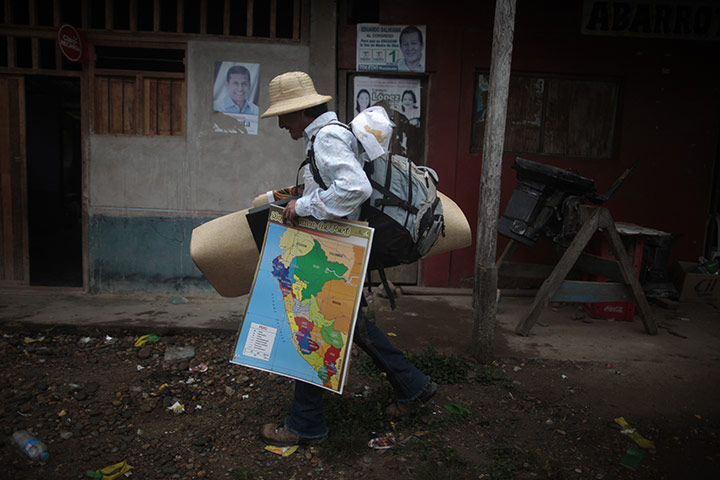
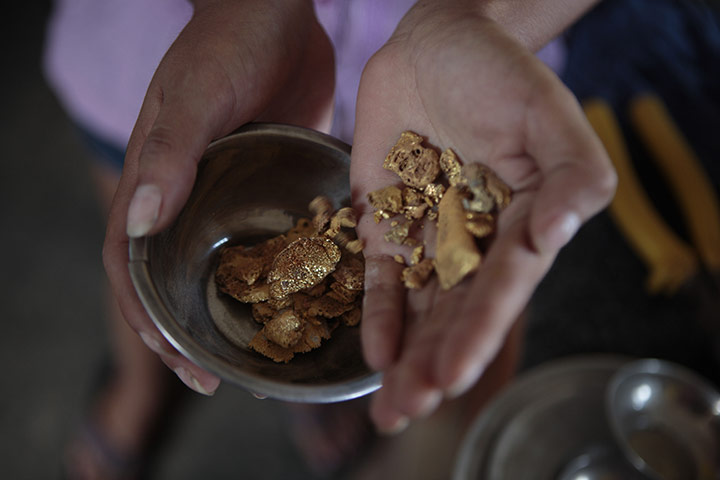
Signs advertising stores that buy gold fill the streets in Puerto Maldonado in the state of Madre de Dios, Peru. The rising price of gold has led to a dramatic increase in the number of small-scale mines operating in this region of Peru that borders Brazil and Bolivia. Around 40,000 small-scale miners are working in Madre de DiosPhotograph: Esteban Felix/APA vendor walks with a map of Peru for sale in Mazuco, Madre de Dios. Illegal gold mining camps have sprung up across the state. The camps are a few minutes by motorcycle from Mazuco, a town that lacks running water, electricity, sewers and police, but has many machinery shops, petrol stations and brothelsPhotograph: Esteban Felix/APA mine employee shows gold nuggets at a gold-buying store in Puerto Maldonado. It is often the very poor who work in this dangerous businessPhotograph: Esteban Felix/AP
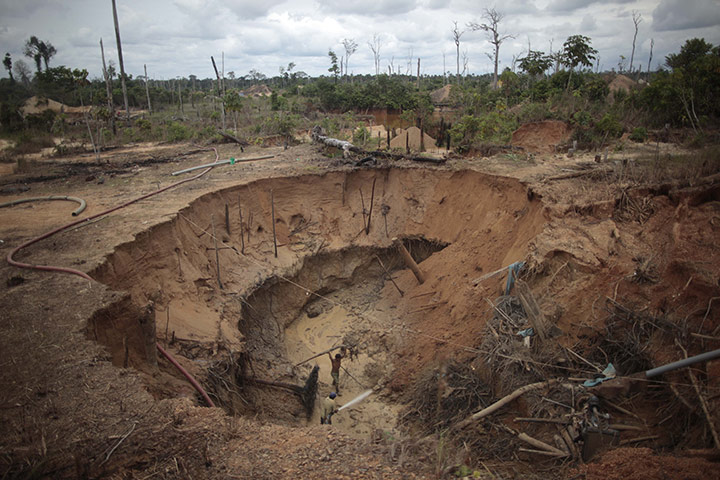
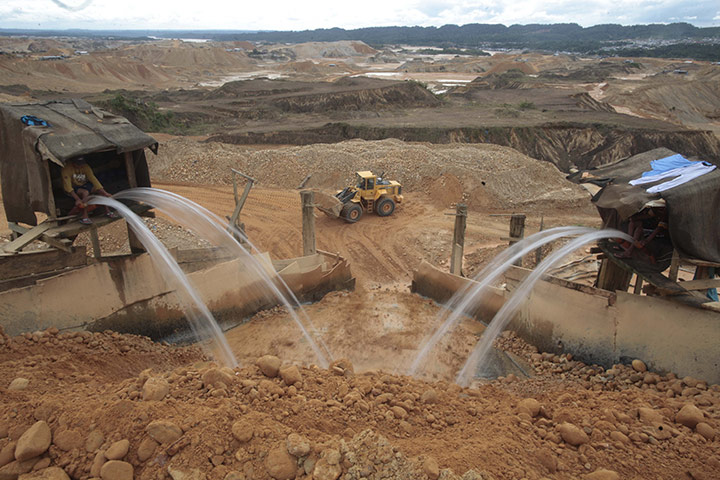
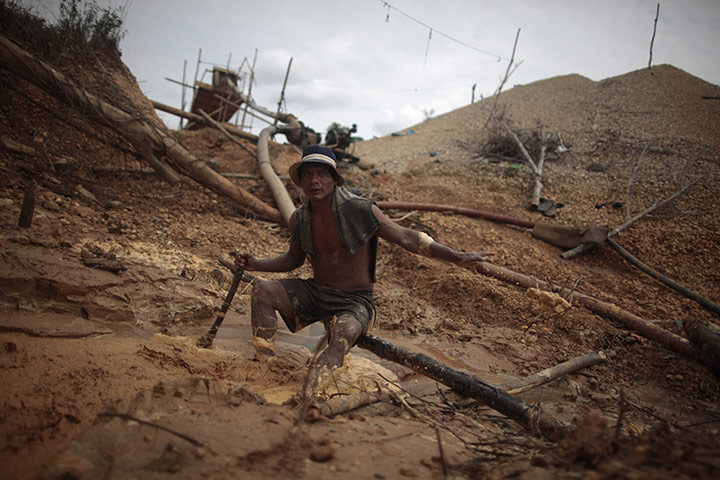
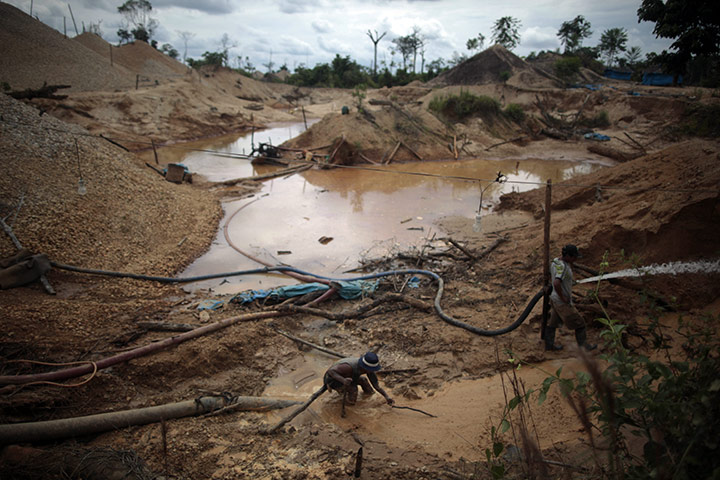
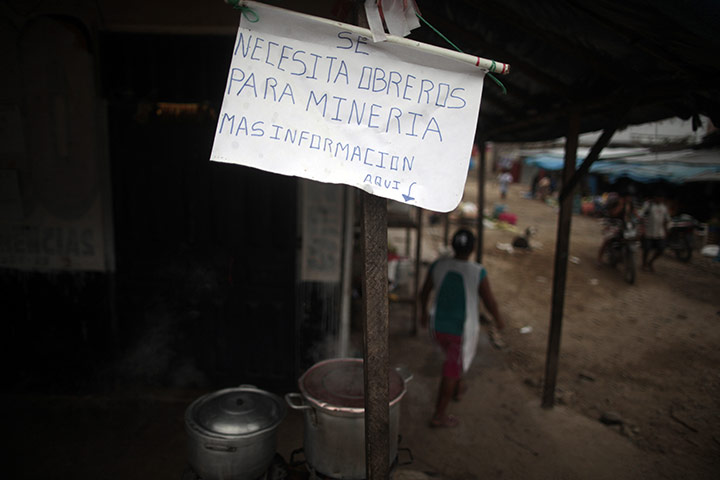
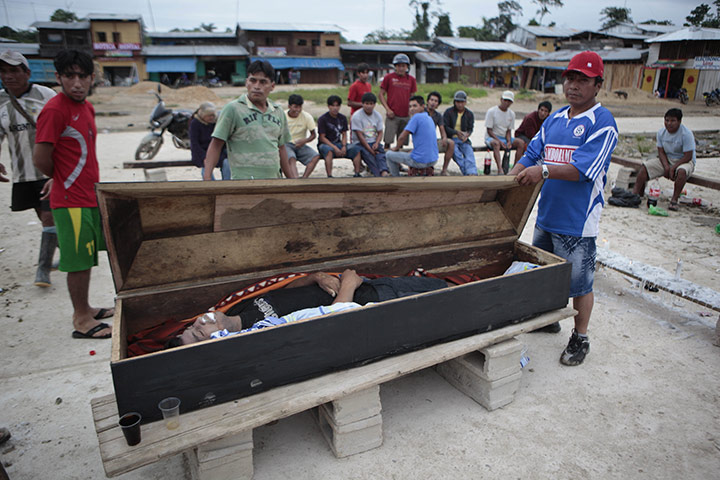
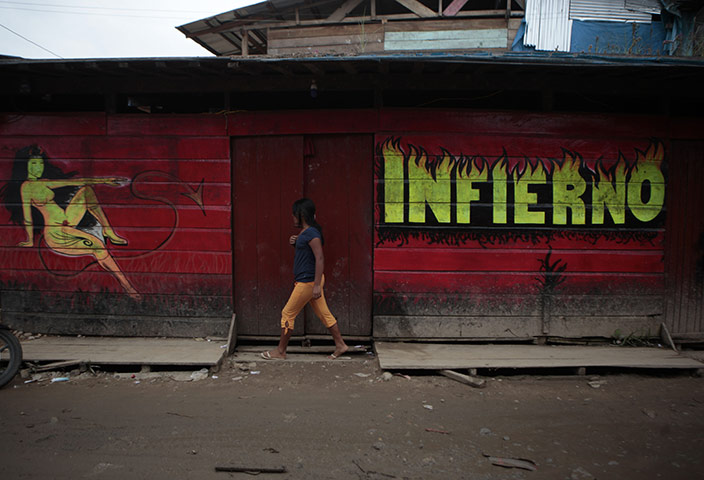
Miners work inside a man-made crater in Madre de Dios. Government efforts to halt the illegal mining have mostly been futile. The informal production is unrecorded, untaxed and carried out on public land, where claims are awarded by regional officials, who often become rich in the processPhotograph: Esteban Felix/APMiners work at a legal gold mining concession in Huaypetue in Madre de Dios. The mines are believed to have led to the destruction of 180 sq km (70 sq miles) of jungle in the statePhotograph: Esteban Felix/APA miner works inside the crater of an illegal gold mine. Madre de Dios state prides itself on its biodiversity and attracts eco-tourists for its monkeys, macaws and anacondas. But an estimated 35 tonnes of mercury is released annually by miners in this state alone, scientific studies showPhotograph: Esteban Felix/APA study of mercury levels inside shops in the state, conducted by Luis Fernandez, a Stanford University environmental scientist, were found to be 20 to 40 times the maximum acceptable levels set by the World Health Organisation for occupational exposure. Outside, they were 10 to 20 times the maximum for ambient exposurePhotograph: Esteban Felix/APA sign in Spanish reads ‘mine workers needed, more information here’ in Mazuco. Many of the migrant workers arrive with very little or no moneyPhotograph: Esteban Felix/APGold miners cover the coffin of a fellow miner who died working as a 'diver'. Divers use a hose to extract gold from a crater. A wake is held for the dead man in the street because he did not have a home in Madre de Dios. Most miners depend heavily on people who have secured the right to work a claim, and buy the equipment and fuel needed to mine, in order to secure a job. 'Some come looking for a better life. Others come looking to escape from justice,' said Feliciano Coila, a lawyer who works in the state's child protective services. He frequently has to rescue children from the mines, whose parents have sold them into servitudePhotograph: Esteban Felix/APA woman walks past a brothel called Hell, in Delta Uno in Madre de Dios. The increasing number of miners in the state has led to a rise in the number of brothels in the areaPhotograph: Esteban Felix/AP
Sign up to read this article
Read news from 100’s of titles, curated specifically for you.