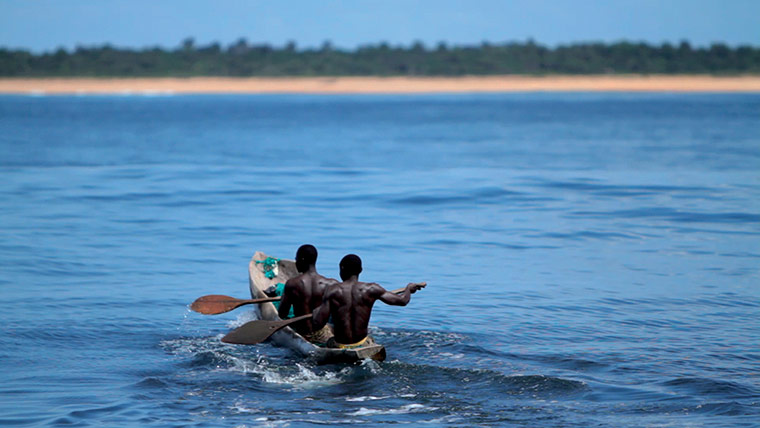
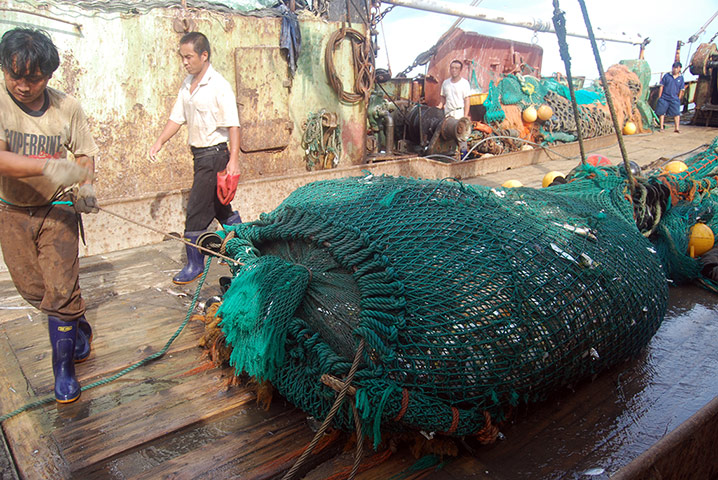
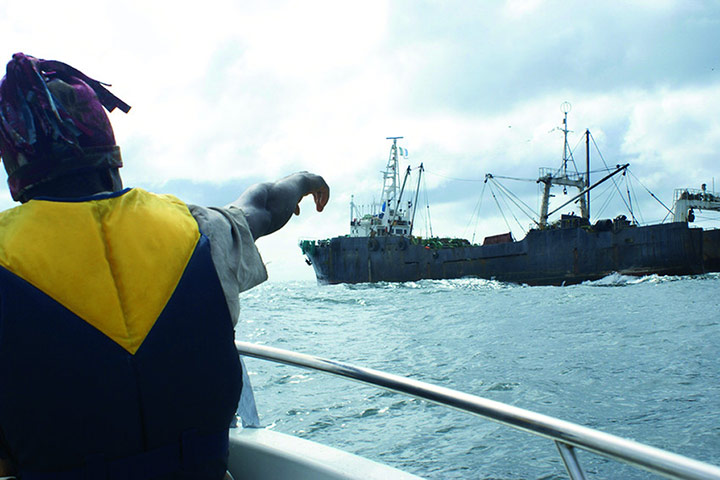
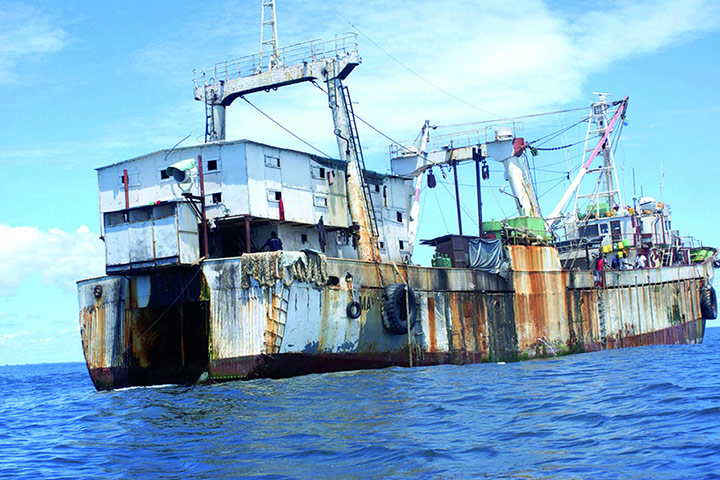
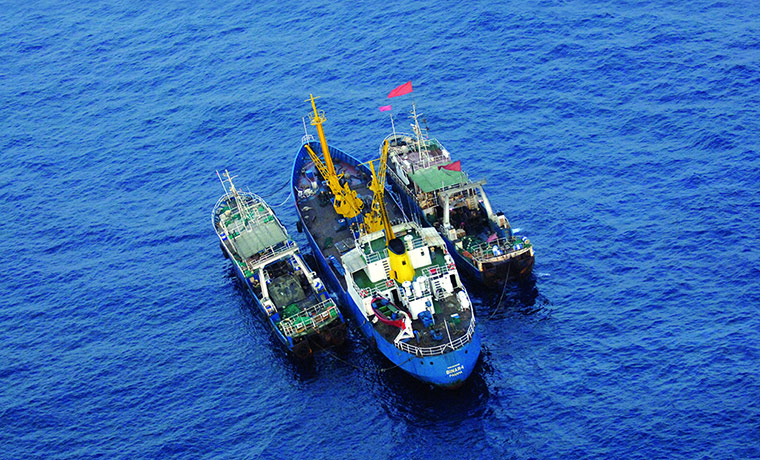
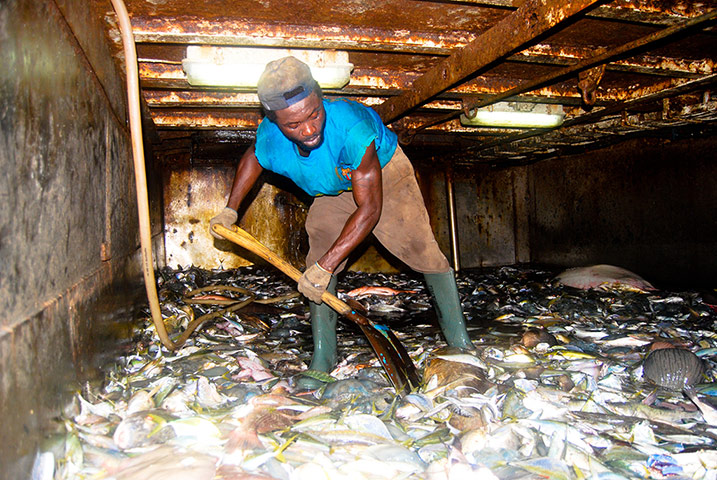
Fish represents 64% of the animal protein consumed in Sierra Leone. Currently 70% of the population lives below the national poverty line and 46% are undernourishedPhotograph: Susan Schulman/EJFPirate fishing in west Africa severely compromises livelihoods of coastal communities. In Sierra Leone an estimated 230,000 people are directly employed in fisheriesPhotograph: Grain Media/EJFVessels engaging in illegal, unreported and unregulated (IUU) fishing compromise the health of fish stocks and the marine environment. Ninety per cent of vessels documented by EJF in west Africa are bottom trawlers, which drag heavy trawl equipment along the seabed, resulting in damage to the bottom habitat and high levels of by-catch, including vulnerable marine life such as sharks and turtlesPhotograph: EJF
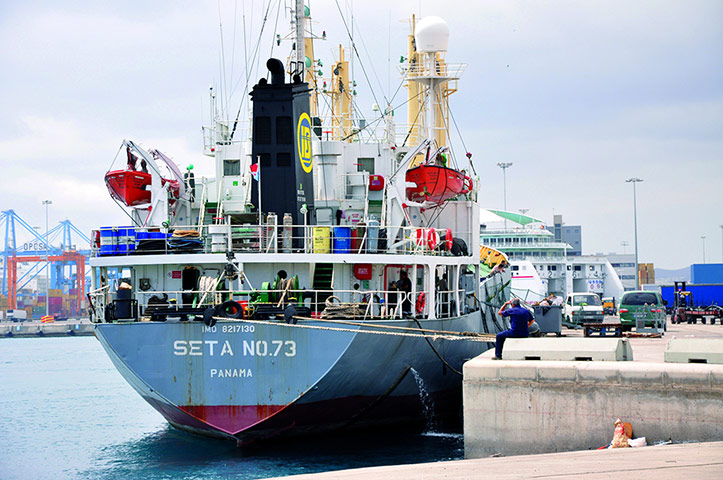
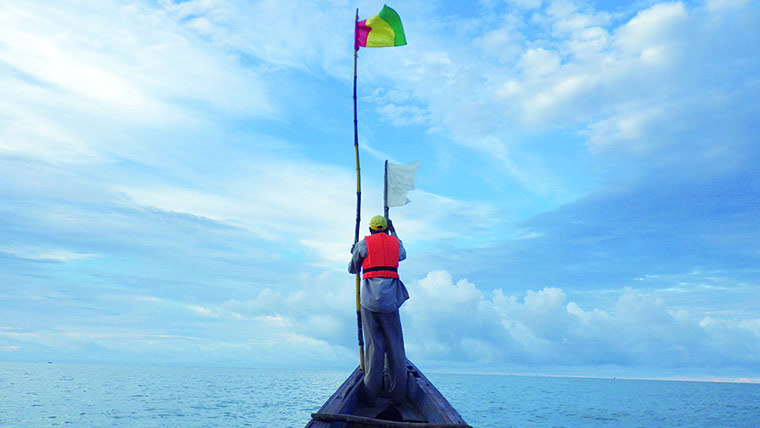
Between 1 January 2010 and 31 July 2012, EJF’s community surveillance project in southern Sierra Leone received 252 reports of pirate fishing by industrial vessels in inshore areas. EJF’s local staff filmed and photographed 10 different vessels operating illegally, and transmitted the evidence to the Sierra Leone government and European authorities. Nine out of 10 of the vessels are accredited to export their catches to the EUPhotograph: EJFEJF investigations show that many industrial fishing vessels are out of control: fishing well inside exclusion zones, attacking local fishers, refusing to pay fines, covering their identification markings, using banned fishing equipment, transhipping fish illegally at sea, refusing to stop for fisheries patrols, bribing enforcement officers, fleeing to neighbouring countries to avoid sanctions, and committing labour violations. The vessel pictured, Medra, was responsible for a violent attack on a local fisher, in which he was knocked unconscious with an iron bar while trying to retrieve his fishing hooks that had become entangled in the trawler's netPhotograph: EJFEJF staff in Sierra Leone documented Marcia 707, a South Korean-flagged canoe-support vessel, illegally deploying canoes into the Inshore Exclusion Zone (IEZ) near Sherbro Island. After interviewing the crews of the canoes, EJF learned that they were from Senegal and that at least three of the crew were 14 years old. The boys recounted how they had been picked up by the SouthKorean vessel in Senegal and that they were at sea for three months at a time, deployed to sea eachday in their canoes before returning to the mother ship at night to unload fish destined for the EU. EJF staff boarded Marcia 707, where they observed the makeshift structure housing up to 200 people, including the 14-year-old boys, in cramped and unsanitary conditions.Photograph: EJFIn March 2011, EJF tracked illegal fish caught to the Spanish port of Las Palmas aboard Seta 73, a Panama-flagged cargo vessel. The fish were released following a four-month investigation and heavy lobbying by foreign fishing fleets and the fish processing sector. Panama has since fined Seta 73 $200,000 for its illegal activities and the European commission is reportedly considering whether to ban the vessel from exporting its catches to the EUPhotograph: EJFIn addition to fish destined for the EU market, EJF has documented increasing volumes of illegal catches that are transhipped at sea onto large refrigerated cargo vessels destined for East Asia. In one incident, EJF infiltrated an illegal transhipment in the Guinea and Sierra Leone border area, but was unable to prevent the fish from being imported into South Korea due to the lack of international co-operation and inadequate port state controlsPhotograph: Pierre Gleizes/Greenpeace/EJFThe European commission’s directorate-general for health and consumers (DG-SANCO) certification should signify that the vessels have met the strict EU hygiene standards that authorise them to export their catch to the EU. However, EJF’s investigations on board pirate fishing vessels such as Apsari 3 (pictured) reveal that fish is very often handled and packed in extremely unhygienic conditions, therefore posing a risk to consumers and the workers on boardPhotograph: EJFUsing the evidence gathered in coastal communities, the Sierra Leone government has begun a crackdown on pirate fishing. Ocean 3 (pictured) was fined US $90,000 and had its catch confiscated (valued at US $60,000). However, the vessel escaped, still owing US $20,000 in fines to the authoritiesPhotograph: EJFThis fisher is on his way to document an illegal trawler in Guinea. Since the crackdown on pirate fishing in Sierra Leone, many of the vessels have relocated to Guinea to continue their activities. The west African country has few working patrol boats and no way of tracking the movements of the vessels at sea, but communities are trying to apply the same methods used in Sierra Leone to combat pirate fishingPhotograph: EJFThe lack of a Global Record of fishing vessels and a Unique Vessel Identifier (UVI) enables unscrupulous operators to change their vessels’ names or to 'flag hop' to avoid detection and sanctions. This makes it difficult for coastal countries to ascertain whether vessels have histories of IUU fishing and whether they are managed by legitimate operators. For example, Kummyeong 2 (pictured), documented by EJF as fishing illegally in Sierra Leone in December 2011, was identified three months later in Guinea operating under a new identity. EJF travelled to Guinea in March 2012 where they identified Kummyeong 2 anchored at sea, one mile from the port of Conakry. The vessel had erased its name and painted a new name, Conosu, on its hull. Sierra Leone now considers it a fugitive, and efforts are ongoing to make sure it returns to face a fine for its illegal activities. EJF is campaigning for the vessel to be banned from exporting its catches to the EUPhotograph: EJF
Sign up to read this article
Read news from 100’s of titles, curated specifically for you.