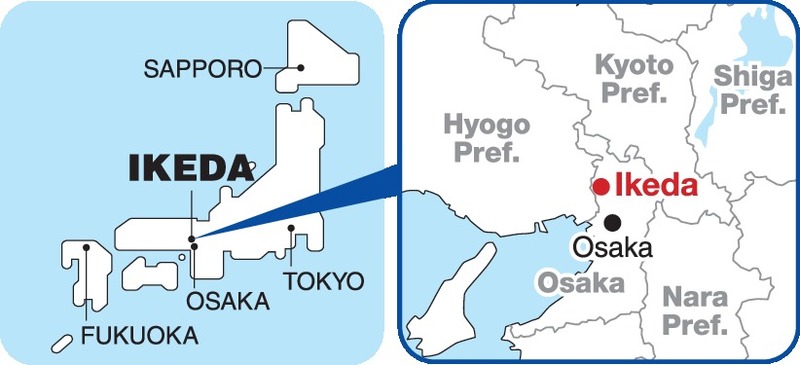
IKEDA, Osaka -- When it comes to Osaka in the Edo period (1603-1867) appearing in Kamigata rakugo storytelling, one may think of such places as Senba, a town where merchants played an active role, and the Shinmachi courtesan's district (currently Nishi Ward, Osaka). Actually, Osaka Prefecture's Ikeda is among places that are necessary for Kamigata rakugo. Famous classic rakugo stories are set in the city, such as "Ikeda no Shishi-kai" (The purchase of a boar in Ikeda) and "Ikeda no Ushihome" (A flattered cow in Ikeda). In recent years, the city has been catching the hearts of rakugo lovers as a town of rakugo.
Learning from the pros
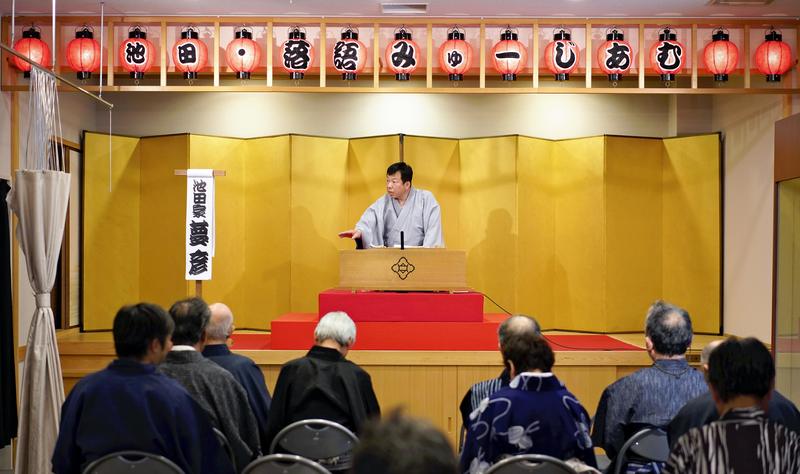
On May 12, a course to nurture amateur rakugo performers was held at the Ikeda municipal Rakugo Museum, where materials related to Kamigata rakugo are exhibited, near Ikeda Station on the Hankyu Takarazuka Line. In the course, students learn storytelling skills from professional rakugo performers. A student wearing kimono sat on the koza stage and said, "Then, why don't you wake up early tomorrow and go to Ikeda?" The student was performing "Ikeda no Ushihome," in which a ne'er-do-well flatters an old man's cow to fool the man into giving him money. He told the story in a lively rhythm, making other participants laugh.
The course is a one-year program, with 66 men and women currently enrolled. They range from elementary school students to those in their 90s. Taishi Ishisaka, 6, a first-grade elementary school student in Minoo, Osaka Prefecture, performed a rakugo story winsomely while skillfully using difficult terms. "I like making people laugh," he said.
To nurture amateur rakugo performers, the museum sends students of the course to perform at nursing care facilities, schools and elsewhere. It also holds a rakugo tournament for adult amateurs. Yasuko Urata, a producer at the museum, said: "Rakugo makes both the performer and the audience happy. We would like to offer opportunities where ordinary people try rakugo storytelling more easily so that rakugo will become a part of our lives and people will laugh more often."
Not only does the city of Ikeda appear in rakugo stories, but there is also a monument to storyteller Katsura Harudanji at Juraku Temple in the city. The temple has ties with Katsura Harudanji III. (Katsura Harudanji is a myoseki name that is inherited by Kamigata rakugo performers.) In spring every year, the Katsura Harudanji school holds a rakugo performance called the "Ikeda Harudanji festival" together with a Buddhist memorial service.
In 2006, the Tenma Tenjin Hanjotei theater opened in Kita Ward, Osaka, as the first postwar joseki, or permanent theater, for Kamigata rakugo. Hoping to more widely popularize rakugo from Ikeda, the Ikeda municipal government opened the Rakugo Museum in April 2007. The museum exhibits a diorama depicting scenes from "Ikeda no Ushihome" and description panels introducing Kamigata rakugo. There is also a place to watch or listen to about 1,500 DVDs and CDs of rakugo performers so visitors can fully enjoy rakugo. About 30,000 people visited the museum in last fiscal year.
Rakugo-related products
Taking advantage of the opening of the museum, stores and restaurants around the facility are working on town revitalization using rakugo. Ikeda 3C Co., a town revitalization company funded by the Ikeda municipal government and others, launched the "Ikeda Brand Juku" academy, and since 2008 has promoted a campaign called "Itten Isseki" (One store for one rakugo performance) in which restaurants and shops offer products related to rakugo stories.
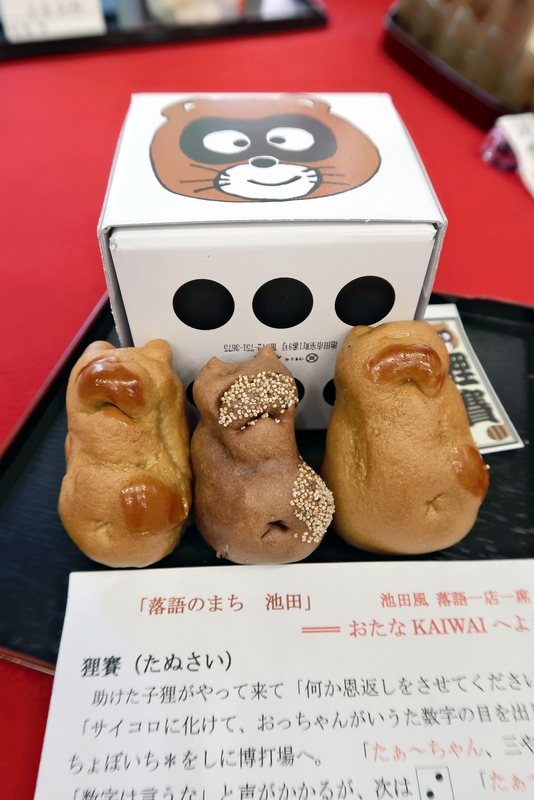
Curry restaurant Oyaji Curry, for example, offers boar meat curry in honor of the rakugo story "Teppo Yusuke," in which a man spins a tall tale about having been attacked by a boar. Izakaya pub Bonba offers a rice omelet with beef, alluding to "Otamaushi," a rakugo story in which a beautiful but deceitful woman named Otama -- whose name suggests the Japanese word for egg -- is fated to trade places with a cow. Confectionery shop Kogetsu took a hint from the story "Tanusai," in which a tanuki raccoon dog disguises itself as lucky gambling dice as a token of gratitude to someone who helped it, selling three kinds of cute tanuki-shaped manju steamed buns.
At first, 22 restaurants and stores participated in the campaign, and the number has increased to 70 at present. Hirohiko Yamawaki, 63, owner of Kozuki and chairman of the academy, said: "The number of customers other than locals has surged, while we now have connections with other stores. I think the city is now more recognized as a town of rakugo."
In areas around Hankyu-Ikeda Station, an event called Ikeda Rakugo Bar is held every year. In the event, people catch rakugo performances while bar-hopping. Izakaya pubs, cafes and others set up yose spaces for rakugo performances, where customers can watch rakugo performed by amateur rakugo storytellers. The event was held in late May this year, and a large number of rakugo lovers participated.
"The city of rakugo" seems to have taken root in the community. "To keep it fresh, we would like to plan new projects. We also want to disseminate information through social media in order to increase repeat customers," Yamawaki said.
The lively facial expressions and lighthearted laughter of people learning rakugo made me again recognize the charms and depth of rakugo as a traditional art. "The circle of rakugo" that spreads in Ikeda will do more than just heal the minds of people tired by their busy lifestyles. It also has the power to revitalize the community.
Read more from The Japan News at https://japannews.yomiuri.co.jp/