
Have you ever noticed how rooms that are designed with recurring elements feel much more harmonious and cohesive than rooms designed without? That's because of the rule of repetition.
Repetition is a principle of interior design that can help create spaces that not only look visually appealing, but feel balanced and well thought-out. Because of how simple it is, many people design their homes according to the principle of repetition without even realizing it. It can help establish rhythm, flow, and ensure balance in any room.
From incorporating the same colors, textures, and patterns within a space, to embracing similar furniture, decor, and even architectural features throughout a room, repetition works to make any scheme look and feel united, balanced, and put together.
What is Repetition in Interior Design?
Repetition is a powerful tool that can be used in design to help develop a cohesive interior scheme. According to interior designer Karin Bennett, it can bring a sense of clarity and calmness to a space.
'Our eyes naturally look for patterns, so when certain elements repeat, a room feels more intentional and grounded,' Karin tells me. 'There’s a psychological aspect to it as well, a space can feel right even if you cannot immediately explain why. Within a single room, repetition creates flow and visual order. Across an entire home, small decisions repeated with purpose, like consistent trim profiles or a recurring wood finish, help the spaces feel connected rather than like a series of unrelated rooms.'
How to Create Repetition in Interior Design
It's important to clarify that the principle of repetition in interior design doesn't mean every single element in a room needs to match, as that would make the space feel overwhelming. Instead, repetition is all about creating cohesion – think repeating colors here and there, textures that connect from across a room, and even furnishings that complement each other.
One of the most simple (and probably most common) ways to utilize the principle of repetition in interior design is to style a few matching pillows within your living room – the pillows' pattern or color will create a sense of visual cohesion in the space.
However, repetition can be less obvious, too. For instance, using the same flooring style through multiple rooms is an example of repetition, as is decorating with small accessories in the same material. Repetition is all about creating a sense of flow that can make a room (and an entire home) feel connected.
Lots of interior designers rely on repetition to help them create stunning spaces. We spoke to a few to find out how to use repetition in interior design for guaranteed decorating success. Find their advice, below.
1. Consider the Color Scheme

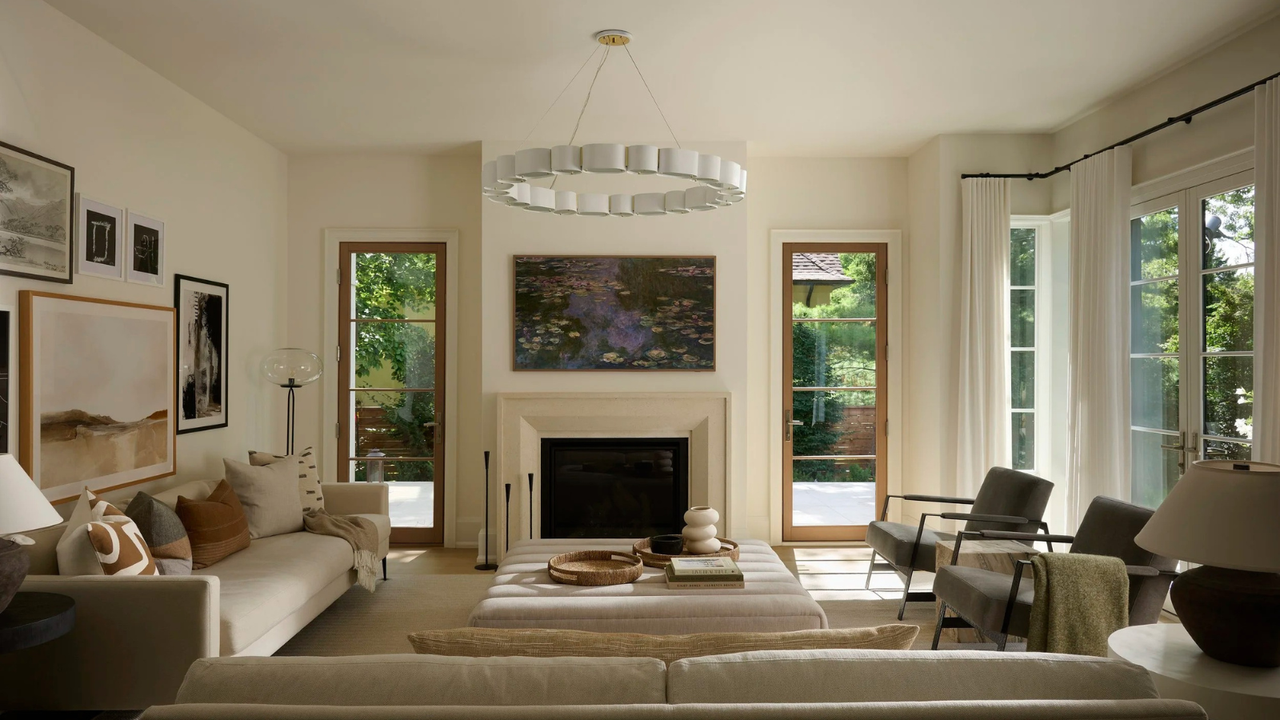
According to Karin, color is an easy and approachable element to repeat because 'it immediately creates a sense of connection,' the designer explains. 'When a color appears more than once in a space, even at different saturations or finishes, the room feels intentional rather than pieced together.'
The neutral living room above designed by Karin is a great example of the impactful nature of repeating colors in interior design. Shades of brown, tan, cream, and black repeat throughout the room to create connection and calming cohesion in the space.
'In our work at Karin Bennett Designs, we often use the same color on walls, trim, and ceilings, varying the sheen to add depth without introducing visual noise. From there, we’ll echo that color in a few key moments throughout the room so everything feels cohesive and layered,' Karin explains.
Repeating specific colors and incorporating varying shades of those colors in one room is a simple way to create an impactful design scheme in any room.
Not only can this blanket provide warmth on a chilly winter day, but it can also act as a repetitive color feature in a room with other similar-toned decor.
This linen table lamp is as chic as they come. Style it on a side table in your living room and let its fresh tan color accentuate other shades throughout the room.
Styled on a couch with other, similar-toned pillows, this tan pillow cover will enhance the sense of repetition in the room, and the cohesion this design principle creates.
2. Pay Attention to Patterns
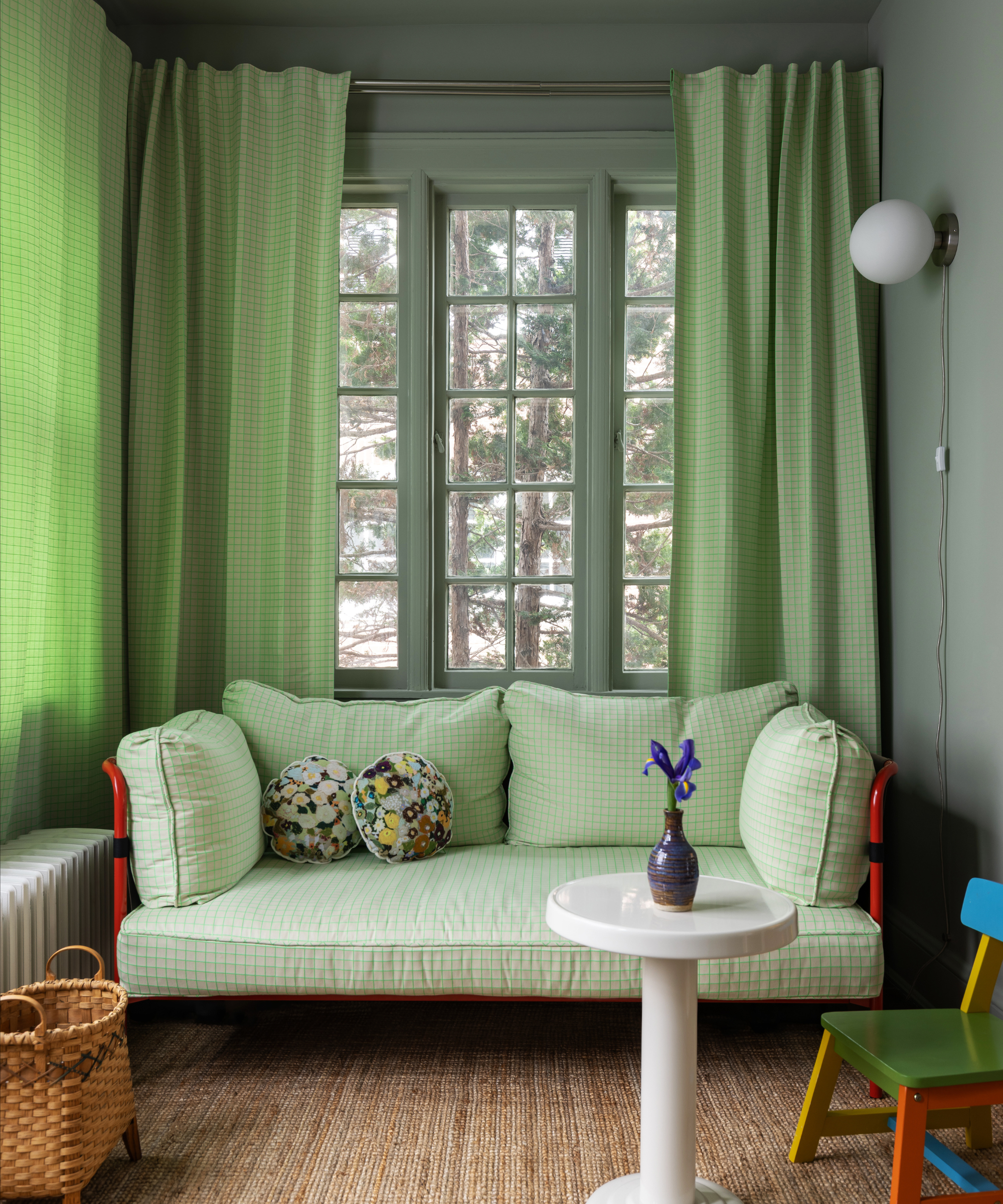
'One of the most effective ways to incorporate repetition is through pattern and fabric, and utilizing it in multiple ways in the same room,' interior designers Robin Heller and Jen Levy of design studio Surrounded by Color tell me. That's just what the design duo has done in the sitting room above with Maharam's Bright Grid fabric.
As you can see, Robin and Jen used this fabric for the curtains as well as the sofa cushions. 'It sets the whole tone for the space and because it's repeated, it doesn't bowl you over the head with its bright colors and graphic pattern,' they explain. Plus, this neon green print is tastefully complemented with the soft green wall color – an example of repetition through color.
Robin and Jen explain that using the design principle of repetition with pattern in fabrics allows the main pattern to become a neutral – allowing space for other colors and patterns to be incorporated to the room's design as well.
3. Repeat Key Textures and Materials
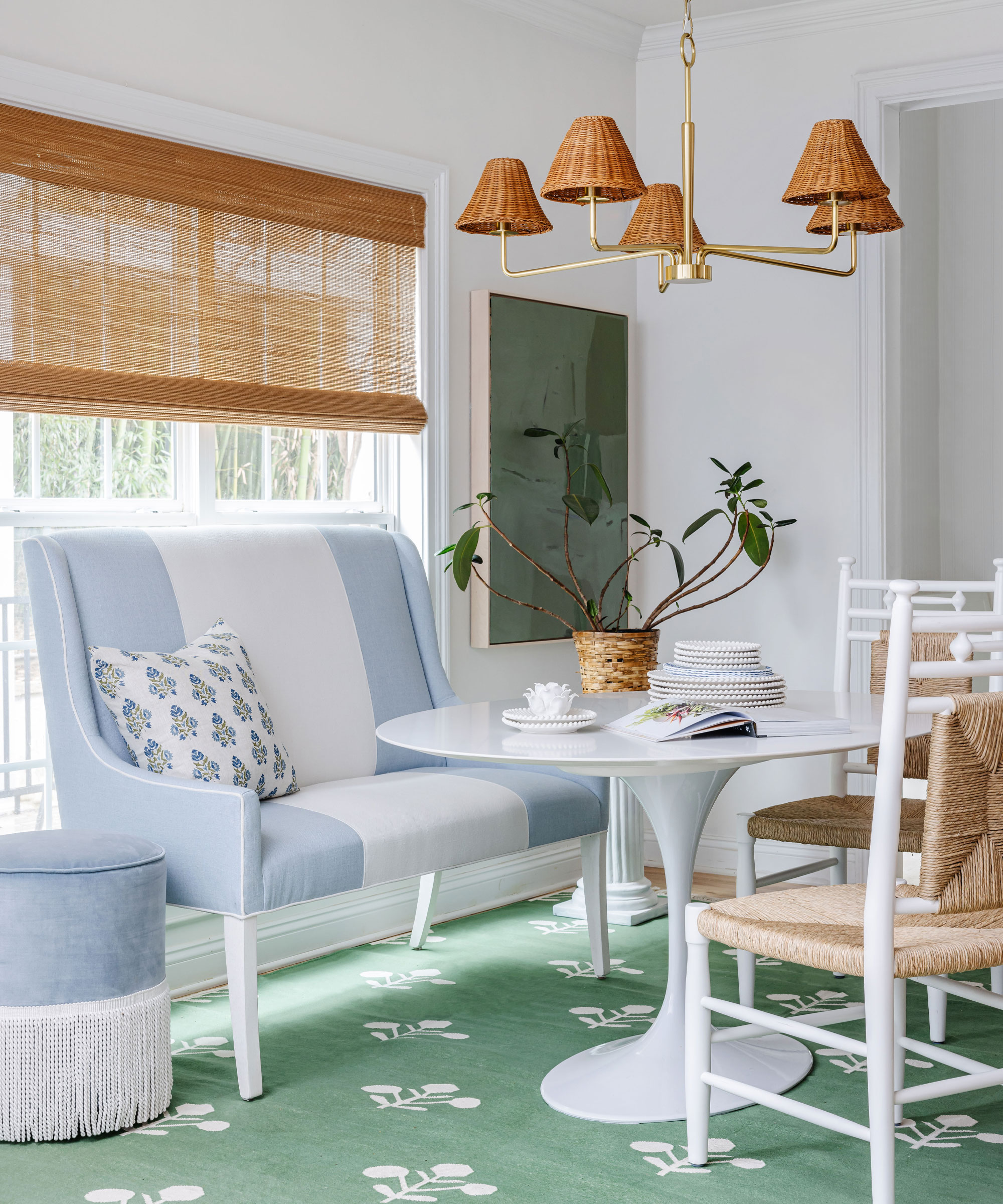
Another way to incorporate the principle of repetition in your home is by repeating the same textures or materials throughout a space. Not only will this make a room texturally rich, but it'll create a level of cohesion, too.
The dining room above, which is filled with elegant furniture designs from Society Social, is rich in material and textural repetition. The chairs, the window covering, and the pendant shades all repeat the same woven material and exude a texture that's visually appealing and benefits the room.
Aside from the material repetition, there's also some colors that repeat throughout this room, further establishing a sense of harmony throughout the space. Soft blue is repeated in the ottoman, the bench, and the pillow, while green is repeated in the rug and the artwork. All together, these examples of repetition only make the design of the room more appealing.
In a room with other woven elements, woven blinds like this jute bamboo shade can help establish a sense of cohesion through texture.
Not only can this table lamp bring natural elegance to a room, but its woven shade can complement other woven elements to create visual harmony in a space.
Though meant to be practical, chairs can enhance the cohesion of the room based on their style. In a dining room with other woven elements, this chair can play into the repetition in a stylish manner.
4. Look to the Rules of Symmetry
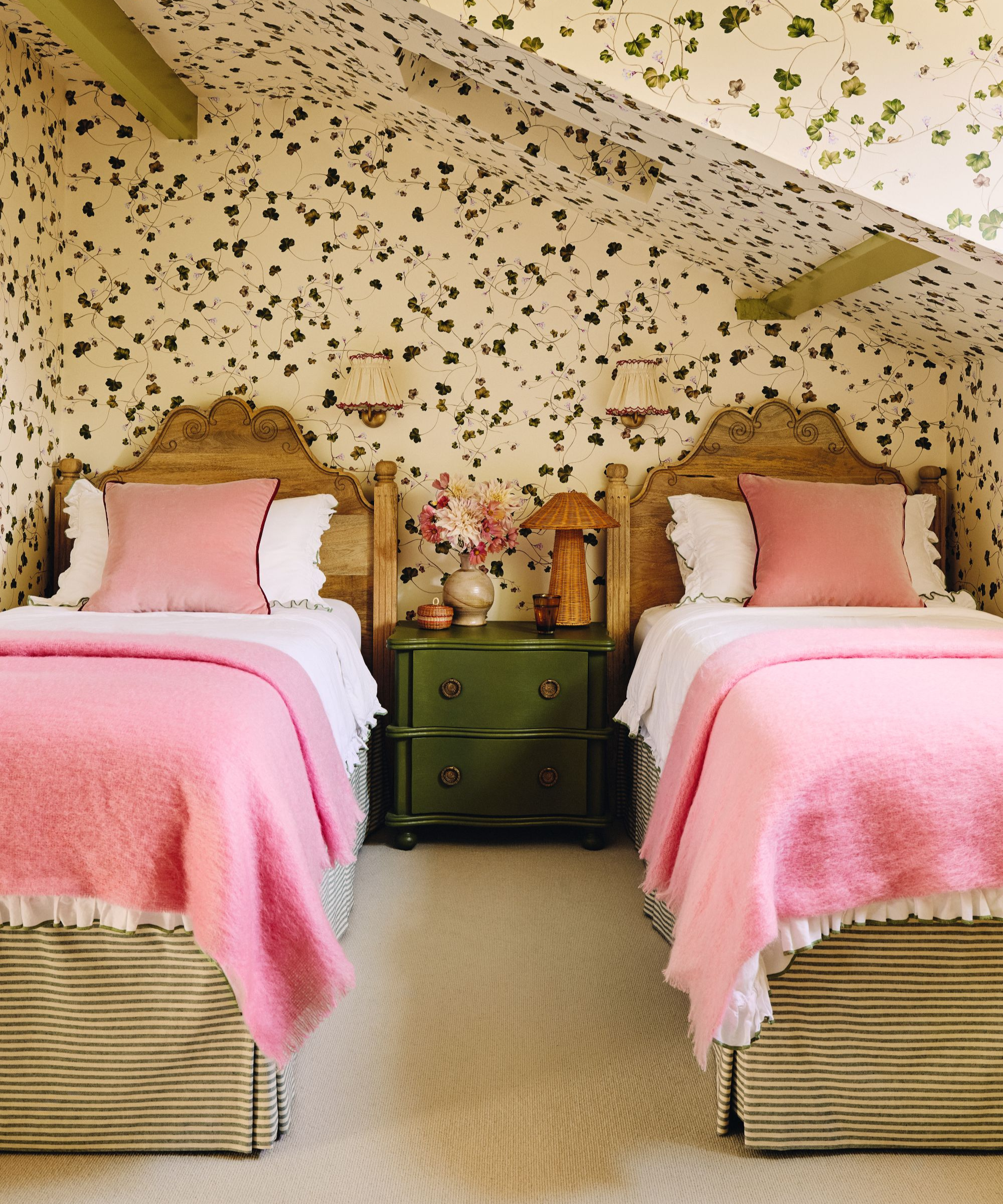
'In the world of interiors, the composition is as significant as color or texture. A good composition can capture the imagination, creating a sense of harmony. Balance is a key ingredient to a successful composition, as the eye unconsciously seeks out symmetry,' designer Kit Kemp explains.
Symmetry is like repetition in that it's an interior design principle that can help establish cohesion and harmony in a space. The only difference – symmetry usually involves perfect mirroring while repetition has a bit more freedom. However, symmetrically designed spaces always have some elements of repetition incorporated in their schemes – like the twin bedroom above.
In this scheme, the symmetrical design involves repetition in color, texture, pattern, and furnishings. The use of symmetry and repetition here creates a sense of balance in the room. Not only is it visually appealing, but it's a space that feels comfortable thanks to its repetitive design and symmetrical layout.
5. Create Repetition Through Furniture and Decor
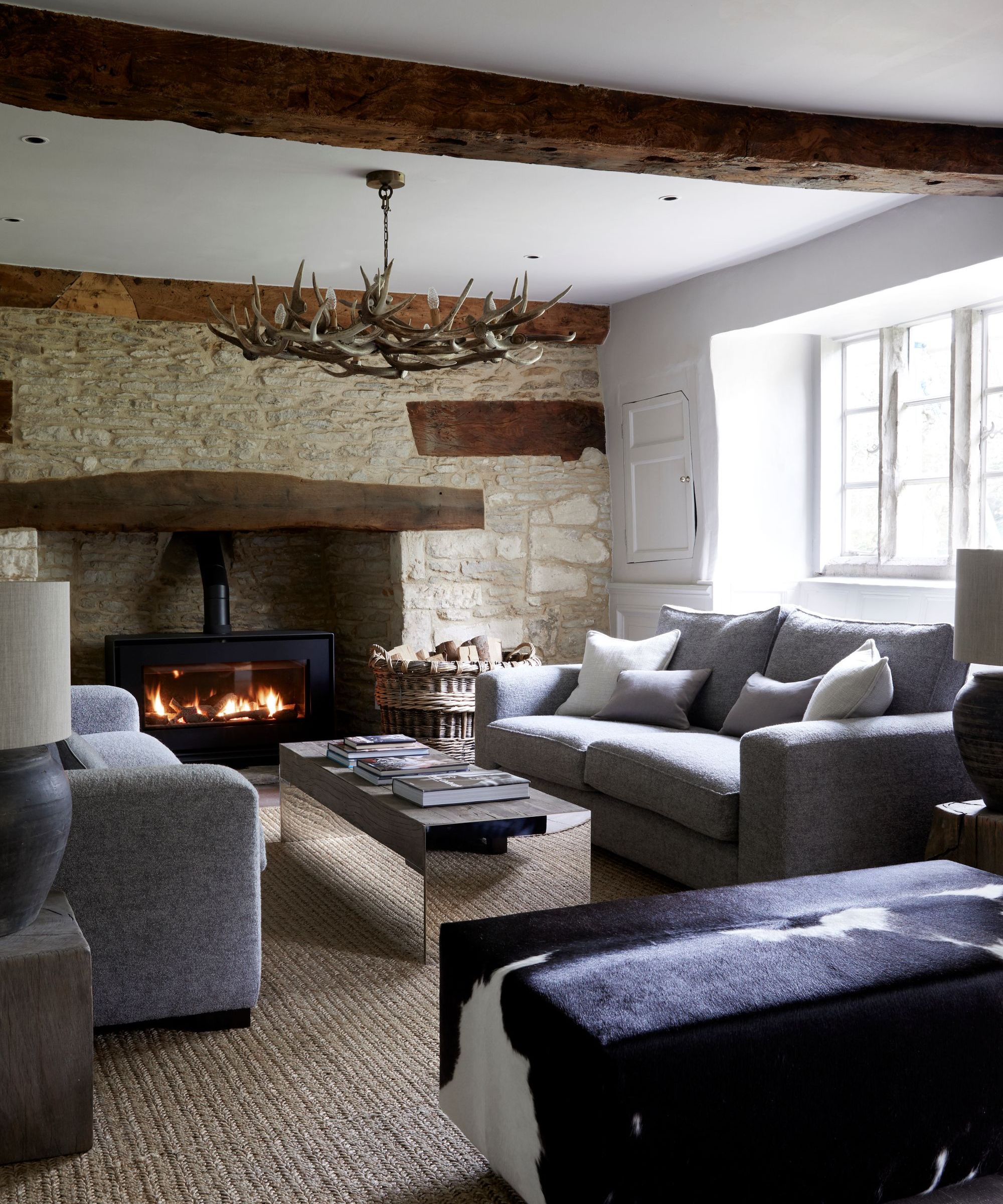
Another easy way to use the principle of repetition in interior design is through matching furniture and decor. Like in the image above, this cozy living room is designed with two matching couches, end tables, and lamps – repetitive features that create a sense of harmony in the space.
Of course, your furniture doesn't have to exactly match to create a harmonious atmosphere. In fact, some designers even say that matching furniture is an interior design 'don't'. However, some repetitive elements can be beneficial to the overall design of a room, like two matching ottomans, matching sconces on a wall, or even matching sofas. Just try to avoid buying a 5-piece matching living room or bedroom set that can drain a room of personality and variety.
To avoid the scheme looking too 'matchy-matchy', think about how you can be subtle with repetition through similar colors, finishes and materials, instead.
6. Don't Forget the Accessories
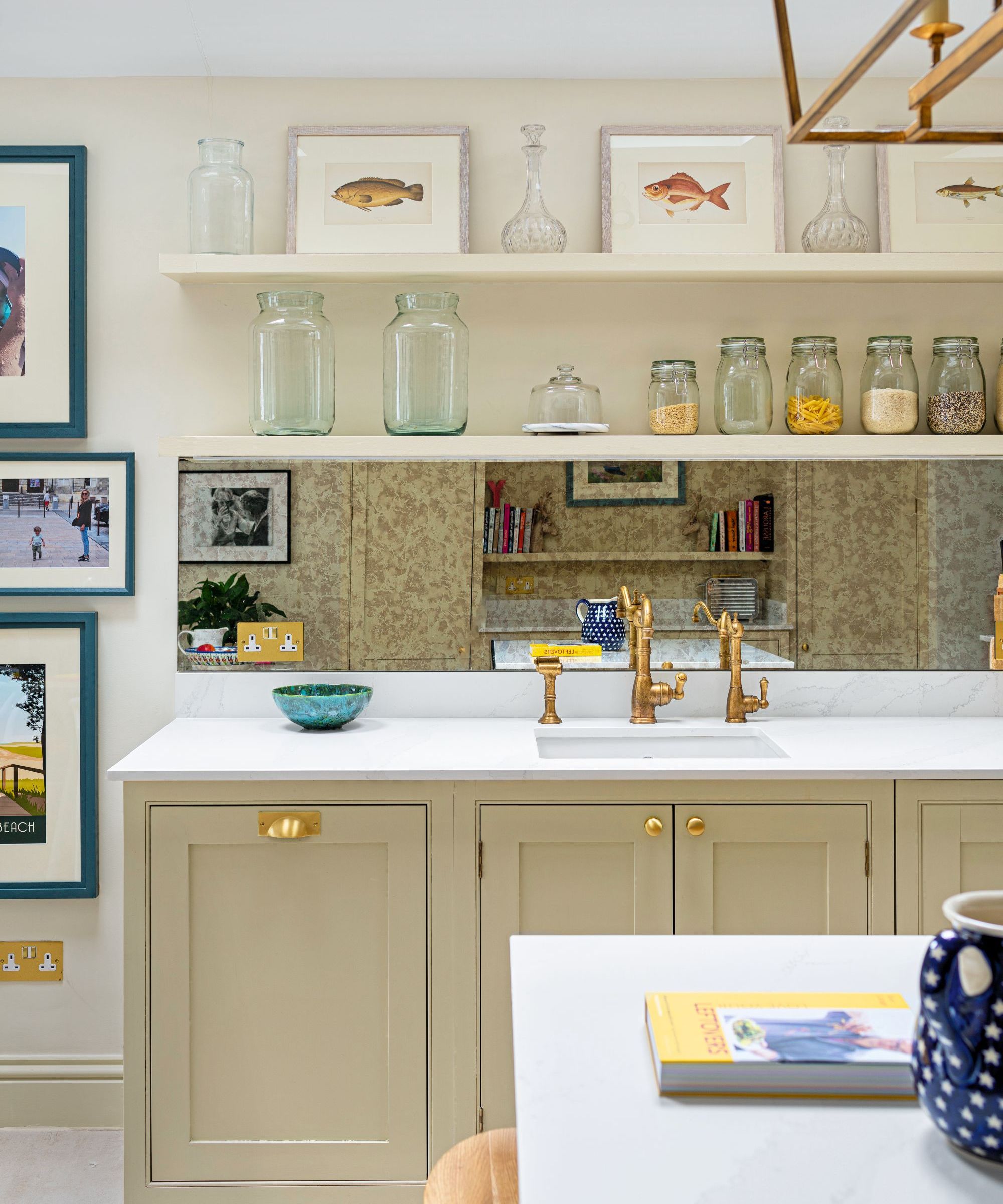
Interior designer Jen Dallas explains that repetitive decorative accessories serve as a great way to refresh a room. 'Adding a new throw or pillows on a living room sofa and then using the same pillow color in the artwork above the fireplace and maybe a vase on the mantle' is a good example of decorative repetition, she explains.
This type of repetition can be applied to many other rooms of the house, too, like the kitchen. In the kitchen above, the two open shelves set the scene for repetitive decorative accessories. The bottom shelf features a collection of glass jars for storing food while the top shelf features carafes and artworks that create a sense of harmony against the wall. Plus, the gold accent details act as a form of repetition, too – from the cabinet knobs to the faucet and even the outlet covers.
Never underestimate the importance of decorative accessories, such as vases, jars, books, artwork and more. These objects act as the finishing touches that can bring together a whole scheme.
One decanter is chic in its own right. But two decanters will create a sense of stylish repetition. Get one for decoration and another to hold your favorite drink.
Although not identical, these hummingbird artworks can act as a repetitive feature to style in your kitchen – on shelves, on the walls, or leaned against the backsplash.
For food storage or simply decorative appeal, this set of three jars is a stylish choice to place on your kitchen counter or shelves. And together they can help establish a sense of repetition.
7. Embrace Architectural Features
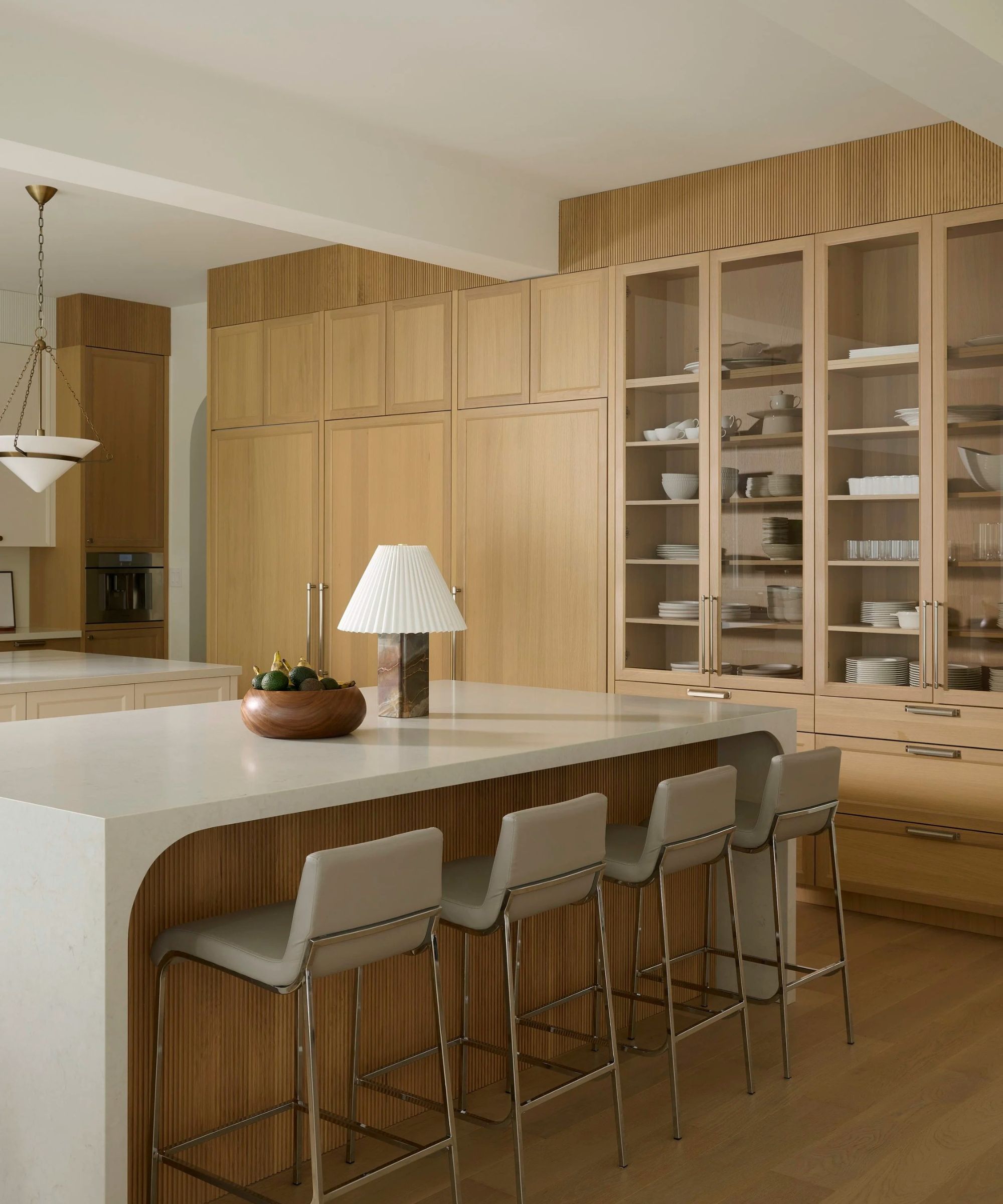
If you're lucky, your home might already have repetition built into its design in the form of architectural features like beamed ceilings, columns, alcoves and more. According to interior designer Alison Wilkinson, 'when creating repetition, use architectural elements to your advantage.' Highlighting these elements or uniting them into your scheme can make for a beautiful design feature and enhanced, organic repetition.
Karin Bennett used architectural elements to her advantage when designing the kitchen above. Here, she used a subtle curved motif as a repetitive architectural element. 'The front of the kitchen island featured a gentle radius, which was then echoed in the rounded edges of the lampshade and bowl, and also in the pendant light above the adjacent island,' Karin explains. 'This subtle repetition softened the architecture and introduced a sense of flow, making the kitchen feel calm, welcoming, and thoughtfully designed.'
This type of repetition is much less obvious than a repeating color or texture, but it's nonetheless an impactful design choice that creates harmony in a space.
8. Assess the Rhythm of the Space
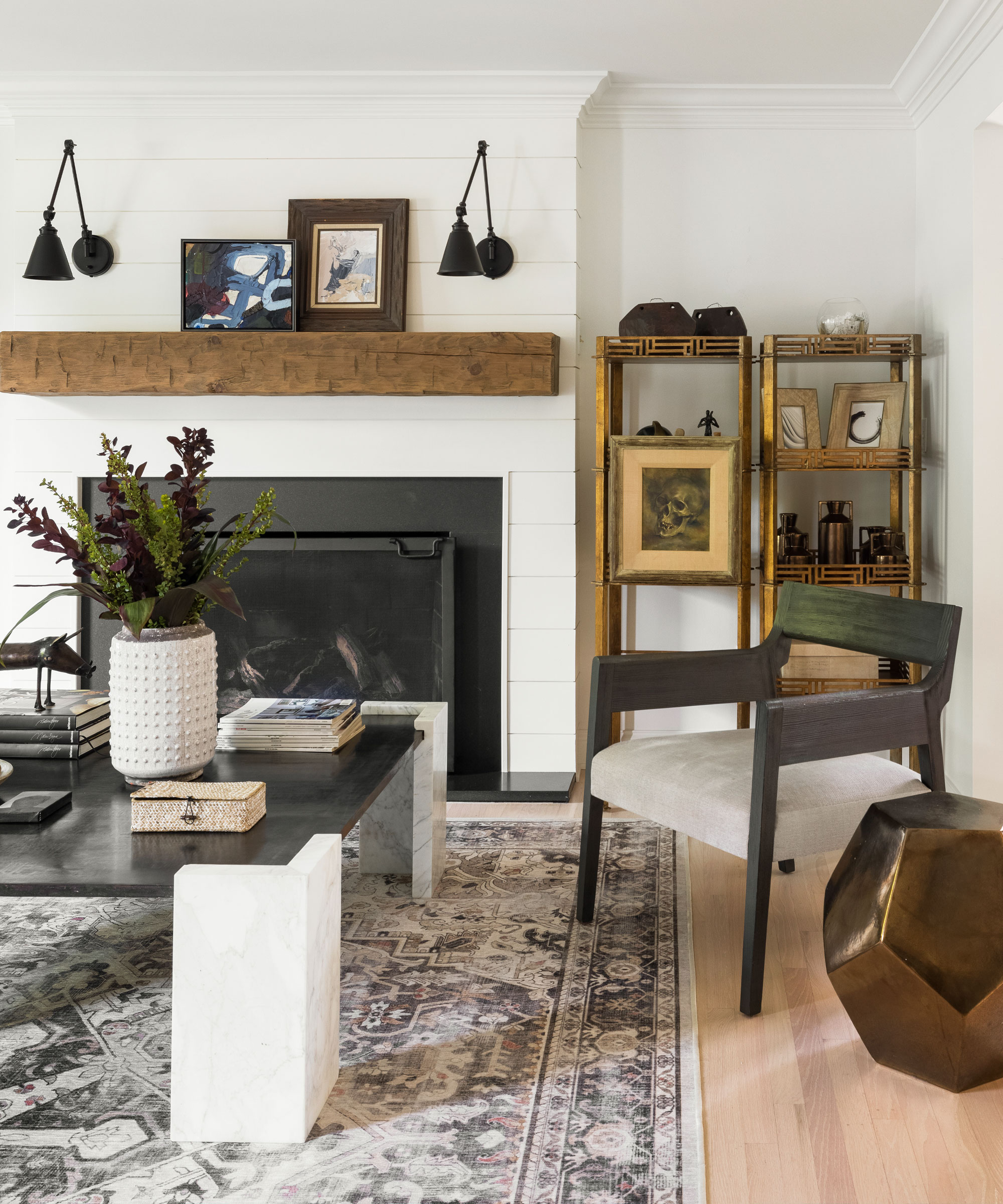
'Using repetition is the easiest way to create a rhythm for interior spaces. I like to use color or texture in my interiors. It is amazing how your eye connects all of the “dots” and fuses the elements together to create a design,' says Jen Dallas.
Just like repetition and symmetry, repetition and rhythm go hand in hand. Both serve the function of interior design principles that establish movement and harmony in a space.
Repetition can sometimes be created instantly, such as with a few quick and easy tweaks with accessories, but it can also be a longer, more curated process that creates a rhythmic flow over time. Pay attention to the design features that repeat, and consider removing anything that disrupts the rhythm of the space.
FAQs
How Do You Balance Repetition and Contrast in a Design Scheme?
According to Karin Bennett, balancing repetition and simultaneously ensuring contrast in a room is so important, but it can be hard to do. 'I see repetition as the foundation of a room, it’s what makes the space feel approachable and put together. But if everything matches perfectly, the room can feel flat or staged, so contrast is what gives it life,' Karin tells me. 'I like to introduce surprises into a room whether it’s an unexpected pattern, or a unique shape, these create tension and visual interest. The trick is repeating enough key elements to establish harmony, while letting those contrasting touches bring personality and depth to a room.'
Why Is Repetition in Interior Design so Important?
The interior design principle of repetition is essential for successful and well-balanced design schemes. Repeating elements like color, shape, material and pattern can make a space look and feel more cohesive and inviting.
As we have explored, there are many ways in which you can incorporate repetition into a design – from obvious color or pattern pairings and symmetrical styling to subtle repetition established through the use of similar materials and textures.
Ensuring that there is plenty of consistency and conversely, enough contrast in a space will make for a successful interior scheme that is rich in visual interest and cohesive in design.