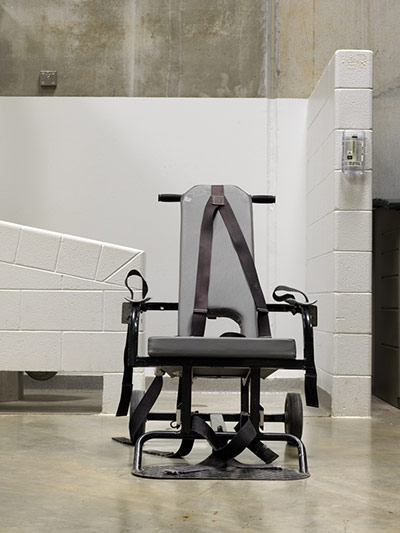
Clark was under constant supervision in the camps, and was escorted everywhere he went. Though he usually shoots on film, he was required to use a digital camera so that his images could be inspected at the end of each day. He was forbidden to photograph many subjects and it was only after negotiation that he was allowed to picture this chair, used to force-feed detainees
Photograph: Flowers East, London
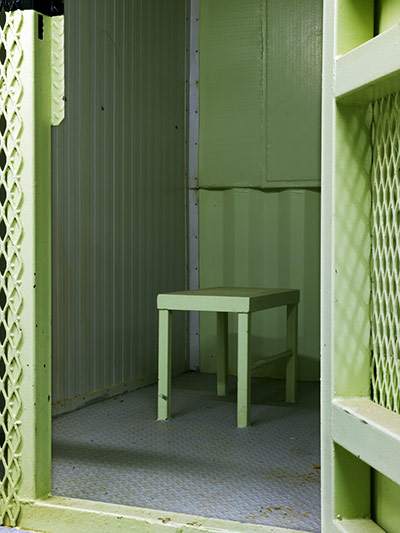
The extent to which guards controlled prisoners’ lives far exceeded Clark’s expectations. Access to mail and the use of a blanket, for example, could be dependent on how co-operative inmates were. Even the thickness of a mattress could be determined by how compliant a prisoner was Photograph: Flowers East, London
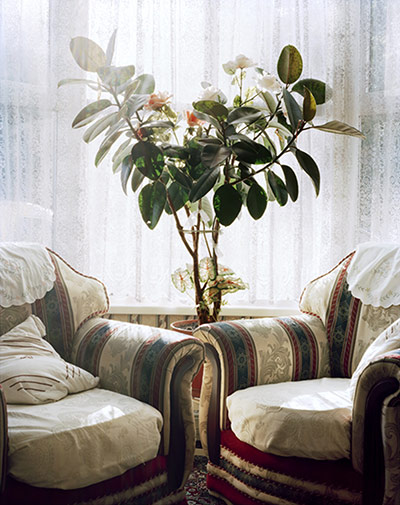
Clark’s project began when he visited the UK homes of former detainees; the domestic interiors offer a telling contrast to the scenes from Guantánamo. Antimacassars, net curtains, windows and natural daylight gain a new significance when compared with the harsh light and stark surfaces of the prison Photograph: Edmund Clark/Flowers East, London
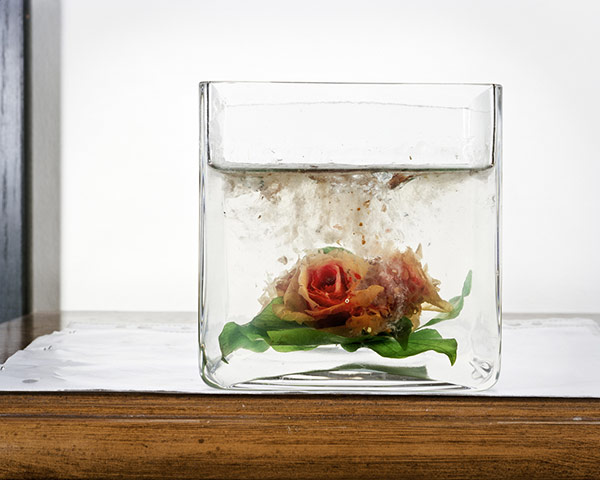
As in his earlier prison project Still Life Killing Time, Clark was drawn to motifs that allude to transience and the passage of time. For those detained without trial – for indeterminate sentence – the symbolism of a decaying flower can be rich in meaning Photograph: Flowers East, London
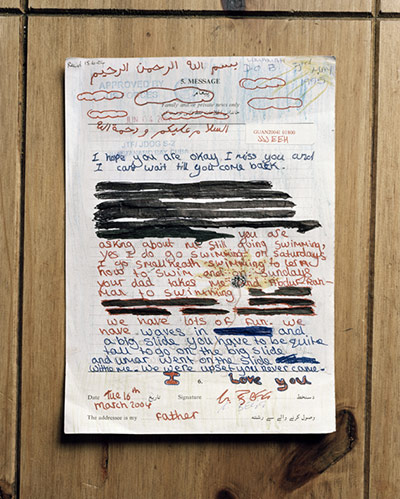
Former detainees often retained mementos of their confinement. Here, a daughter’s censored letter to her incarcerated father keeps alive the memory of imprisonment Photograph: Flowers East, London
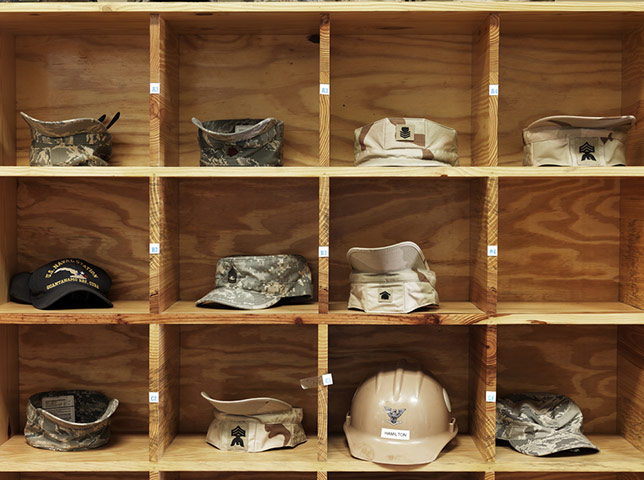
As well as documenting detainees, Clark was also interested in describing the lives of the American military community at Guantánamo. 'In one sense,' he says, 'it’s the last outpost of the cold war, which lives behind its own razor wire separated from Cuba.' The numbered canteen shelves suggest an exacting regime Photograph: Flowers East, London
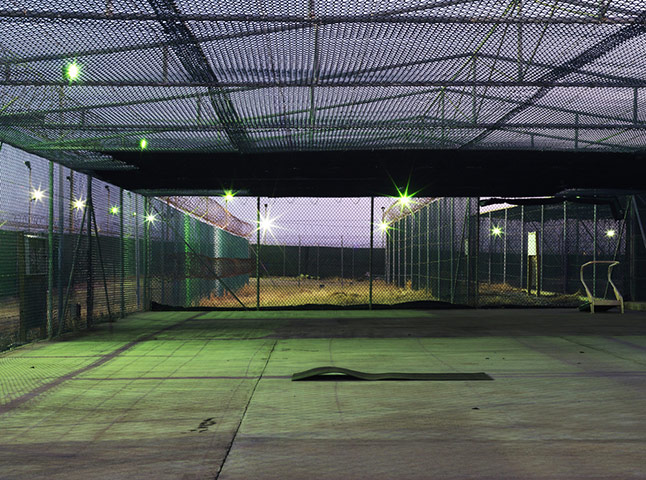
Guards and detainees are almost entirely absent from the photographs – deliberately so. 'We’ve seen lots of pictures of people in orange jumpsuits,' says Clark, 'and plenty of photojournalistic long lens imagery of Guantánamo, and I’m not really sure what that tells anyone. In a way it just reinforces our paranoia, our fear and our suspicion. I wanted to go and photograph areas of personal space … and use that as a way of making people think beyond the representations, the demonisations, and the process of dehumanisation that these people went through' Photograph: Flowers East, London
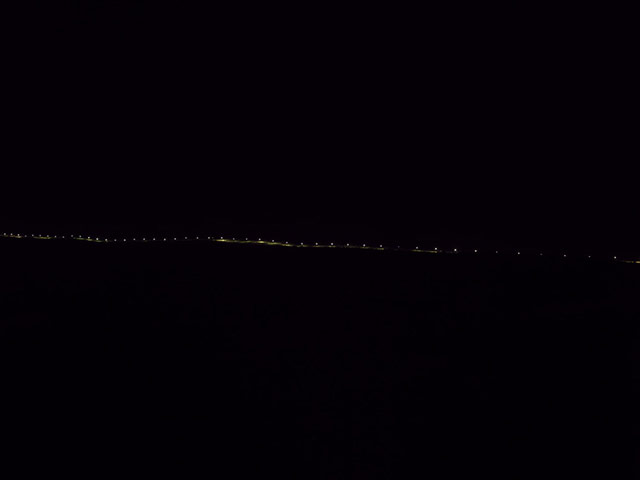
Clark’s project takes its title from a quote from former prisoner Binyam Mohamed: 'If the light goes out unexpectedly in a room, I am back in my cell.' Despite President Obama's pledge to close down the camp within a year of coming to office, some 200 prisoners remain incarcerated at Guantánamo Photograph: Flowers East, London