Those who flee conflict zones in search of a safe haven run because they want no part in the violence that has destroyed their communities. It is for this reason that they are prepared to embark on “back door” routes that carry a high risk of death.
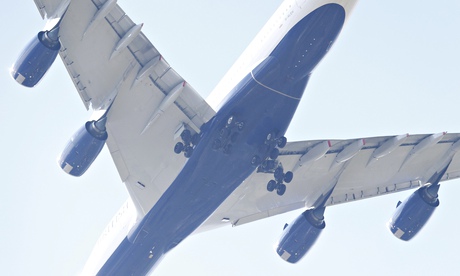
The extreme lengths people will go to, just to stay alive, are vividly demonstrated in the case of a dead man discovered on the roof of a west London office building last week. He is thought to have plunged to his death after falling from the undercarriage of a British Airways plane flying from Johannesburg to Heathrow. A second man was discovered in a critical condition clinging to the undercarriage of the plane. If the suspicion about how the dead man came to be sprawled on the roof is correct, it is inconceivable that he would not have been aware of the exceptionally dangerous journey ahead of him, nor of the horrible death that awaited him if it all went wrong.
Like these two men thought to have stowed away under the plane, tens of thousands of people are desperate enough to board unseaworthy boats which could toss them overboard at any time. To do so they pay smugglers far more than it would cost a wealthy person from a safe country to book a berth on a luxury cruise liner.
The death toll of those trying to cross the Mediterranean by boat has been unacceptably high. But it is not the only method refugees are using to flee, with the UN estimating 60 million people are currently displaced by war and conflict. Some manage to obtain false documents enabling them to leave their countries by plane, others travel by lorry or on foot. Their journeys have attracted fewer headlines but can be no less deadly. The double whammy of the dangers back home combined with the determination of governments like ours to keep out as many people as possible, acts as a particularly sinister form of population control.
According to the UN, in 2014 86% of refugees fled to poorer and less developed countries. These countries don’t seem to complain as loudly as we do about those arriving on their shores. Missing from the statistics are those who die while trying to flee and never reach their destinations. Not only those who drown in the Mediterranean or fall horrifically from the undercarriage of planes, but others who escape from prisons or tiptoe through forests and back roads, only to be caught, arrested, and sometimes killed before they have even managed to cross the border out of their home country.
However many measures we take to barricade ourselves in with the message “Sorry, we’re full”, there will still be people who are determined enough to find a gap in our increasingly sophisticated fences. The survival instinct is tattooed into our DNA and no human being can claim a greater right to life than another. Those fleeing poor, war-torn areas have exactly the same yearning for life as we in richer and more peaceful regions have.
Fleeing conflict and persecution has all too often become a deadly game of Russian roulette. It is time for safe countries all over the world, both rich and poor, to work more pro-actively with UNHCR and other refugee agencies that bear witness to the situation on the ground in conflict zones; they can provide authoritative testimony to the Home Office and its counterparts abroad about who is or is not in genuine danger.
We shoulder some responsibility for some of the conflicts raging across the globe, and therefore have an obligation under international law to provide a percentage of those whose lives are at risk with safe passage. Refugees should be divided up among nations in a fair and orderly fashion and escorted to safety through the front door, rather than being forced to risk their lives by embarking on highly dangerous journeys. And, as refugees from Kosovo and the former Yugoslavia have shown, as soon as peace is restored, many will return home.