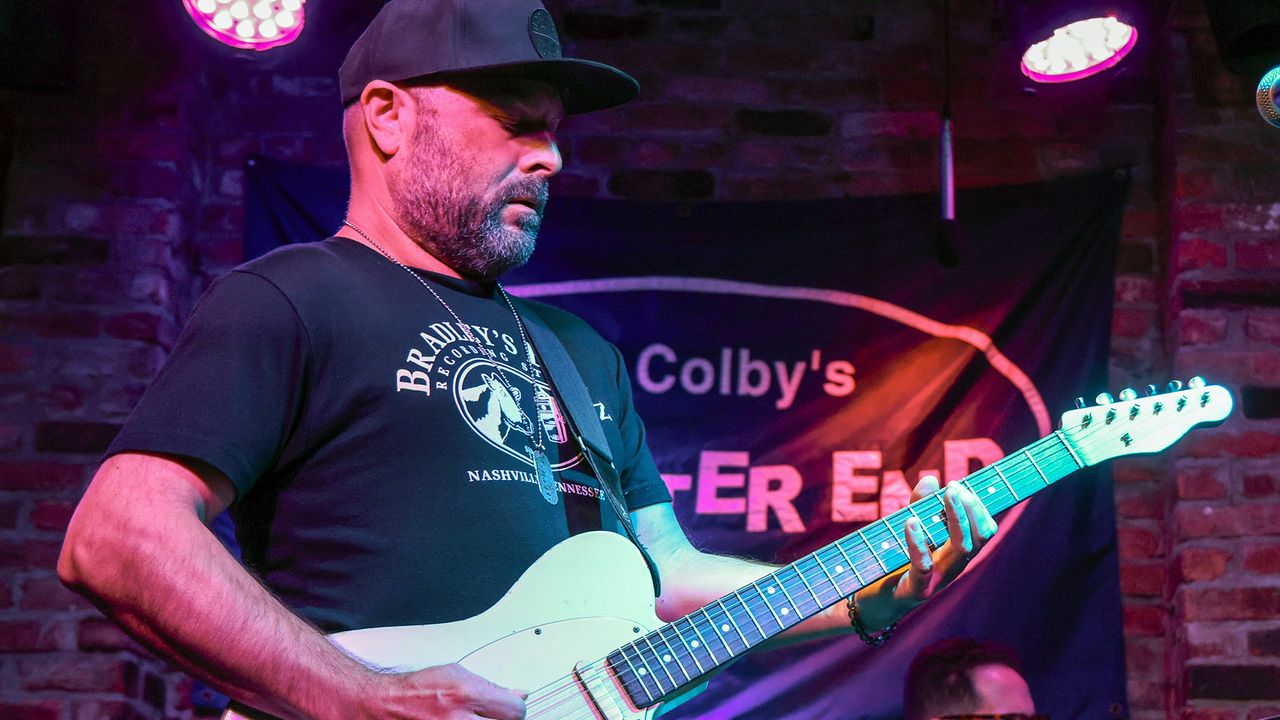
When we think of guitarists with the name Guthrie, two probably come to mind first – English fusion virtuoso Guthrie Govan, and Nobels ODR-1-toting Nashville session ace Guthrie Trapp, who’s worked with everyone from Dolly Parton and John Oates to Alison Krauss and Garth Brooks.
“I haven’t really listened to the other Guthrie, to be honest!” laughs Trapp. “I guess we live in different worlds and come from different backgrounds. But I do know he’s a very respected player.”
Having grown up in a bluegrass household with very little Top 40 music, and benefiting from the guidance of his musician uncle Jerry, Trapp was molded from a young age. And while the 46 year-old is often typecast as a country player, he points out that, to have a longstanding and meaningful career in music, you need to think a lot broader.
This is well documented in his ArtistWorks School course, The Guitar Styles of Guthrie Trapp, which was recently relaunched. It’s a roundup of the most important things he’s learned, with tips and guidance on how to navigate through all kinds of musical situations.
“I don’t consider myself a country player,” he tells Guitar World. “I played in a country band with Don Kelley about 25 years ago, and I got pigeonholed. I’ve been trying to get away from that ever since! I just like music, you know?
“Of course, American roots music, bluegrass and traditional blues is important to me. I didn’t really idolize the big rock guitar players because I didn’t know any of them.”
Did any big rock guitarists that impress you later on?
Mark Knopfler was a favorite because his lines spoke to me. I’m not a diehard Pink Floyd fan, but I’ve always loved David Gilmour’s playing. Fast chops are impressive when you’re young, but that stuff doesn’t last. What does last is songs and melodies. Shredding is amazing but nobody can do that forever. Your hands will slow down, so you better learn how to play melodically.
Your approach is less singular and more contextual to the music situation.
It’s good to have speak different languages. If all you want to do is sound like Stevie Ray Vaughan, you’re kinda fucked. There was only one of him and he did it better than anyone else.
The same goes for Eric Johnson or B.B. King. But honestly, I couldn’t care less about guitar players. I’ve kinda heard it all at this point, you know?
From an alternate picking perspective, country guitar is one of the hardest styles out there. How did you develop those techniques?
If you play those lines sloppy, it won’t work. The whole down/up thing came from the flatpickers. For the younger crowd who might not know Tony Rice and David Grier, I’d say Billy Strings is doing that right now.
You have to alternate-pick those lines because they’re from fiddle tunes. And 99 percent of everything should come from your ear. If you just focus on theory without knowing how to make music, it’s like a chef who can chop perfectly but can’t actually cook.
At this point I like to zoom out and wonder, “Why are we doing any of this? What’s the point of pedals or theory?” I find the “why” gets diluted by the “how.” The goal should be to write a song, record it and let others enjoy it.
You usually stick with boutique T-style guitars made by companies like Floyd and Russ Pahl, going into vintage Fender amps via a Nobels ODR-1, or your signature JTO pedal made by J. Rockett Audio.
Here in Nashville we all love the original Nobels pedals, which sound better than the reissues. They’ve shot up in price – I used to get them for $100 and Uncle Larry [aka Tom Bukovac] would pick them up for $30. Now they’re upwards of $1,500.
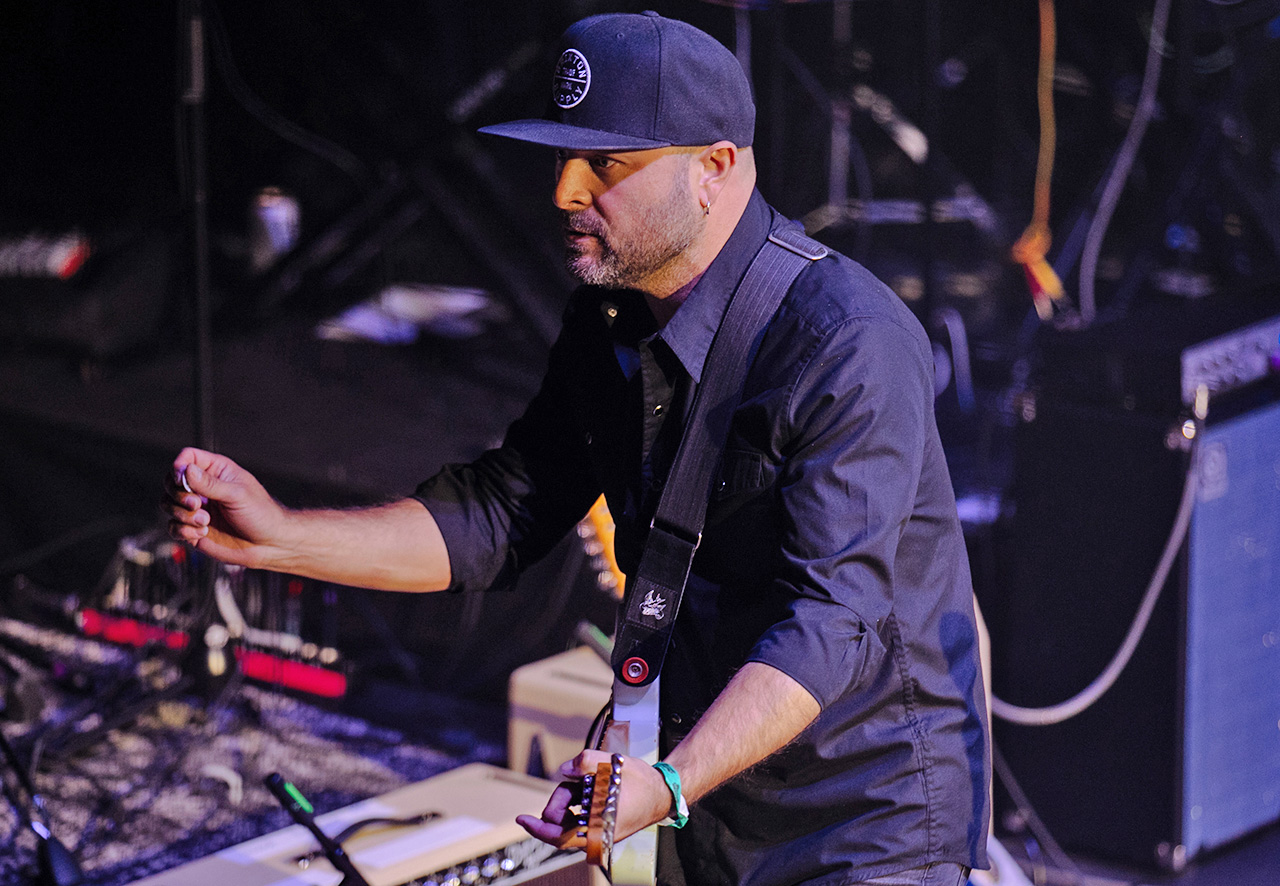
After playing it for 20 years, the Floyd guitar’s done. I had it refretted a while ago and it got weird. I gave the Russ Pahl guitar back because I wasn’t using it. I’ve moved on to this Dan Strain Danocaster that Uncle Larry sold me. Then there’s this 1969 335. Now that’s a good guitar.
So you’re pretty minimalist when it comes to gear?
Billy Gibbons’ email had been sent six days before. I thought I’d blown it!
I don’t have many electrics. There’s a Gretsch that Zac Brown gave me that I don’t use much. I’ve probably got the smallest collection out of any working musician in Nashville! I don’t own a Strat, Les Paul or anything with P-90s.
I have everything I need. You’ll never hear me do anything high gain unless I’m told to. The Nobels works great through my 1966 Fender Pro Reverb. I don’t even use my signature overdrive anymore.”
What else is on your pedalboard?
There’s my Boss tuner and Xotic RC Booster. Then I go into the Nobels, a tremolo, a Strymon Brigadier delay and a Strymon Lex. There’s also a Strymon Cloudburst synth reverb for intros. I love my EarthQuaker Dispatch Master, which is a delay and reverb.
I just got a Tomkat Super Day Dreamer which is another badass delay and reverb. I’m a big fan of having both together – it creates this cool ambient world.
I’m not into any digital things with memory banks where you need to program a bunch of shit. I’m old school! There are no amp modelers with me – none of that garbage.
Have you ever tried one?
I did play through a Fractal or Kemper once. I flew in and had to go straight to this stadium to play the kickoff riff. They supplied all the gear, including the guitar.
I plugged it into this box and realized that if you try to play with dynamics, the thing will stop tracking. It wanted signal the whole time, which felt like insanity to me.
But I saw Mark Knopfler twice on his last tour; he was using digital modelers and sounded so fuckin’ incredible, I was in tears. Of course his tech had it all dialed in. Uncle Larry once told me that good tone is heavy. When you pick up an amp with a proper transformer and good speakers, it’s not going to be light.
Billy Gibbons is a fan of your playing. How did you meet?
I’m not a fan of that “this is my office today” mentality. It isn’t about clocking in and out
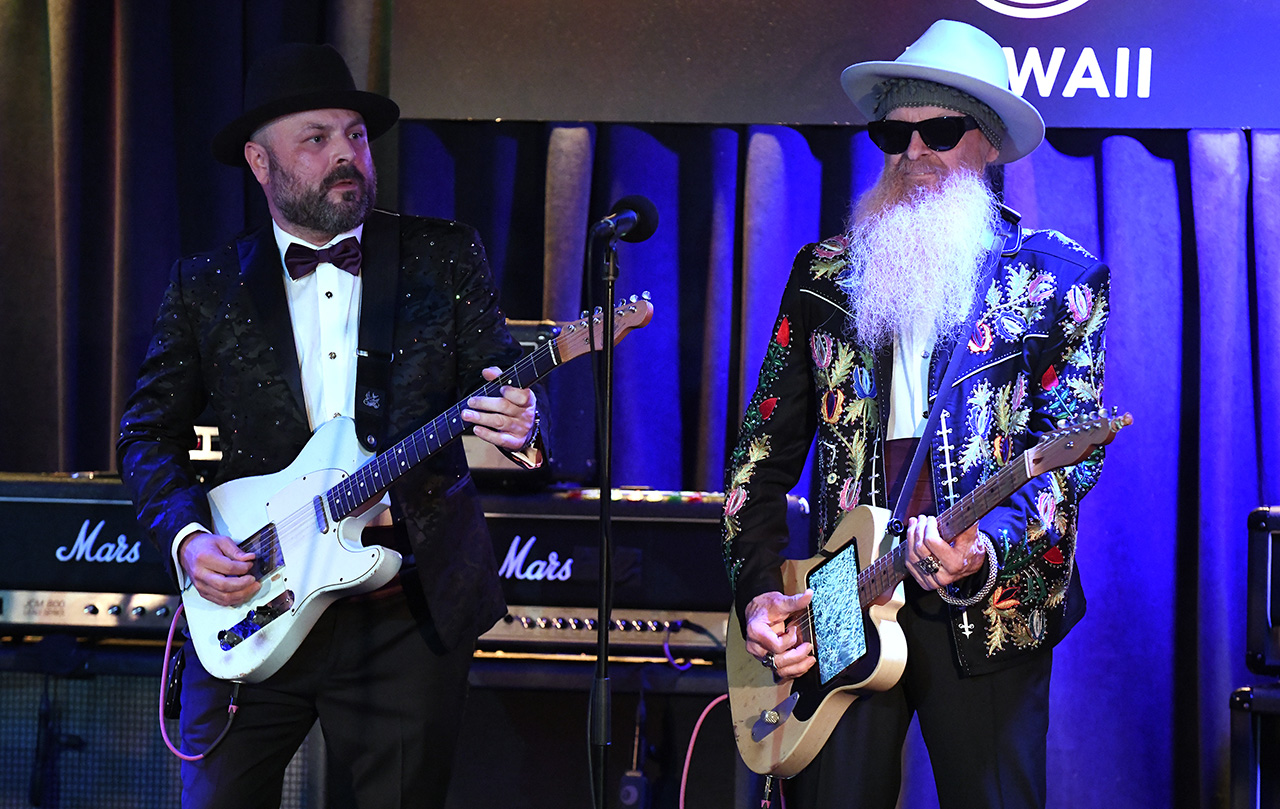
I met him at Todd Sharp’s amp shop eight years ago. During Covid I got an email from him – I thought I’d ended up on his newsletter by accident! But he wanted me to be a special guest for his lifetime achievement award at the Ole Opry House.
The email had been sent six days before. I thought I’d blown it! I replied immediately and we had a call soon after. He said he’d been checking me out and wanted to jam.
What did you learn about him?
He’s every bit as cool as he looks, if not 10,000 times cooler! He’s one of the most generous people I’ve ever met – always sending me crazy shit like hot sauce, knives, dice and pedals. He’ll chat to and take photos with every single person he meets.
We went to the grocery store once and he ended up talking to this woman for 45 minutes about tamales. She was in tears, being such a huge fan. There’s only one Billy Gibbons walking the planet. He’s less about music and more about humanity.
How important is theory for a career as a session guitarist?
I avoid a lot of that stuff. I don’t look at this as a day job. I’m not a big fan of that “this is my office today” mentality. It isn’t about clocking in and out. I don’t play for anybody, but I do play with a lot of great people. It’s about having dignity.
You have to own your shit to get anywhere. The only originality we have left in this world of AI is ourselves. I tell young people to get themselves out there in an authentic way. The only thing you have left that’s original is your story.
You released an album called In Stereo with Tom Bukovac last year. What did you bring out of each other?
It was original because we were only making music for ourselves. We’d occasionally walk into a $2,000-a-day studio with zero ideas, so we’d grab some acoustics and start playing. That’s fresh creativity.
I don’t want to play another train beat or blues shuffle in A. Don’t regurgitate the same old shit that’s been beaten to death. I don’t want to pay homage to country and blues; that’s been done. I respect those styles enough to leave them alone.
Remember that the guitar neck is a super-conducting lightning rod for building relationships that could change your life. That’s the bigger picture with this shit. It’s not about how tall the frets are on your Telecaster.
Music is a language. Think like that and you’ll be better off than anyone who only knows how to shred through A minor pentatonic.
- The Guitar Styles of Guthrie Trapp is available now at ArtistWorks.