1 Everything Ever Written (2015)
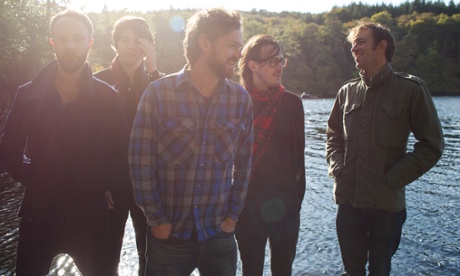
New records represent who you are now – and they include all the different versions of you leading up to that point. At times this is our most mellow record and at others, our most chaotic – consistently though, it is our most confident. We were 18 when we formed the band – that was 20 years ago now – I’d like to think at least musically, we have aged gracefully and naturally. We are not in a rush anymore. Self-produced over an 18-month period, Everything Ever Written is a labour of love. After our break, we took our time to get all the songs the way we wanted them to sound. We have two new members, Andrew Mitchell and Luciano Rossi, who have both added so much. The band is re-energised: it is a new version of an old band.
Key tracks: Collect Yourself, Come on Ghost
2 Warnings/Promises (2005)
This record represents one of the most creative and productive periods in the band’s history, and maybe also the most fun I’ve ever had recording. Written in the Scottish Highlands, it was recorded in Sunset Sound Studios in Los Angeles over a glorious two-month period in the summer of 2004. We rented a house in West Hollywood with a pool and lemon trees in the garden and lived out our Laurel canyon fantasies: cruising down Sunset Boulevard, weekends in Topanga canyon, pool parties and trips to Big Sur. The studio was full of great sounding old vintage gear, and producer Tony Hoffer brought in loads of cool extra musicians to enhance the songs and sound – pedal steel, strings, female vocalists – our Byrds and Crosby, Stills and Nash influences were finally allowed to shine through. None of us wanted to leave.
Key tracks: Too Long Awake, El Capitan, As If I Haven’t Slept
3 100 Broken Windows (2000)
A fan favourite, and the earliest of our albums I can listen to now and still enjoy. It has the right balance of distortion and melody – very stark and Scottish sounding, oblique lyrics full of references (Gertrude Stein, post-modernism, crofting, Scottish mountains), vague black and white artwork – all the ingredients for an album that will stay with you, if it hits you at the right time in your listening life. We were improving as musicians and songwriters all the time, but not so much for the album to lose its raw edges. 100 Broken Windows debuted in the Top 20, our tours were selling out, and there was a real feeling of some kind of momentum behind the band. An exciting time.
Key tracks: Roseability, Little Discourage
4 The Remote Part (2002)
This debuted in the charts at No 3 behind Oasis and the Red Hot Chilli peppers. We were on Top of the Pops, magazine covers and the spotlight was on us. It was a strange period, but one that we had been moving towards for five years. Not that we were prepared; in fact, we were at our most unprepared and fractured. Bassist Bob Fairfoull walked out of the band and we played some truly terrible gigs in front of very large crowds – we just weren’t up to it, and so the spotlight moved on. In hindsight, this was probably for the best. The record itself was good enough for the masses, although its slick production was not to everyone’s taste – but it sounded good on the radio. To me, American English still sounds like it could have been a worldwide hit. It wasn’t of course.
Key tracks: You Held the World in Your Arms, American English, In Remote Part/Scottish Fiction
5 Captain (1998)
This survives the test of time on youthful zeal and punk rock spirit. How producer Paul Tipler managed to get this out of us in three days I don’t know. We couldn’t really play, let alone play in time – our concerts at the time had a real reputation for teenage chaos and excitement – but in a studio it sounded like a mess, or “a flight of stairs falling down a flight of stairs”, as NME famously put it. Somehow in a cheap demo studio in south London, Paul whipped us into shape and this mini album captured some of that live spirit, made it listenable, and put us on plenty of those Bands to Watch lists that year. It also got us out in a van on tour. The title track is still regularly in our live sets.
Key tracks: Self-Healer, Captain
6 Post Electric Blues (2009)
This is the most overlooked record in our catalogue – perhaps unfairly, as it starts as well as any of them – and the first three songs are among our best. It gets a bit directionless in the latter half perhaps, but hopefully never to the point of being boring. Like its predecessor, Make Another World, Post Electric Blues was made very quickly and in some ways is a product of its circumstance. We needed a record out so we could go on tour again. This LP was initially funded by fans via a pre-order scheme and then later licensed to a label. I was sceptical of this method at first, but it proved quite liberating after years of being signed to record labels. We realised that controlling the process ourselves and selling directly to fans was the way forward. Everyone is doing it these days.
Key tracks: Younger than America, Readers & Writers
7 Make Another World (2007)
When I think back to this record, I can’t help but picture being stuck in a rehearsal space in an industrial unit in Fife, eating microwavable lasagne. Across the road there is a boarded-up housing scheme, and it’s always raining.
After leaving EMI and spending so long on the previous record, we wrote, recorded and mixed this one in our practice space in about six months. I had made a very folky solo record the year previously, which had done quite well, and I was excited about incorporating some of these new influences in Idlewild, leading on from what we started with Warning/Promises. At the time though, the rest of the band weren’t into this and wanted to make a rock record. Subsequently there was a division of tastes, and Make Another World suffers from a lack of range. There are some good songs in there, the title track in particular, but for me, a back-to-basics, unhappy, slightly claustrophobic feeling reigns supreme.
Key tracks: Make Another World, Future Works
8 Hope Is Important (1998)
It’s cruel of me to put a record at the bottom of my list that I know means a lot to Idlewild fans. However, listening to this is akin to looking at a photograph of yourself as a teenager – awkward, not quite fully formed – you know it’s you, but it’s hard to recognise that person.
Musically, Hope Is Important is caught between Captain and 100 Broken Windows and was just a bit confused generally. Maybe its charm lies in this confusion. There are certainly enough hooks, riffs, quirkiness and noisy moments to still validate it. Ultimately this record did what it needed to: it kept us in the van and on tour for a year, making us become better as a band.
Key tracks: A Film for the Future, When I Argue I See Shapes
Idlewild’s new album Everything Ever Written is available on 9 February 2015.