With the spread of the new coronavirus preventing foreign technical trainees from entering Japan, a growing number of farm houses suffering from a lack of manpower are accepting idled employees of lodging facilities and restaurants that have closed their doors.
Local ryokan Japanese inn unions and agricultural organizations are acting as intermediaries, receiving praise from both the farm and ryokan operators, saying the matching-up efforts saved them.
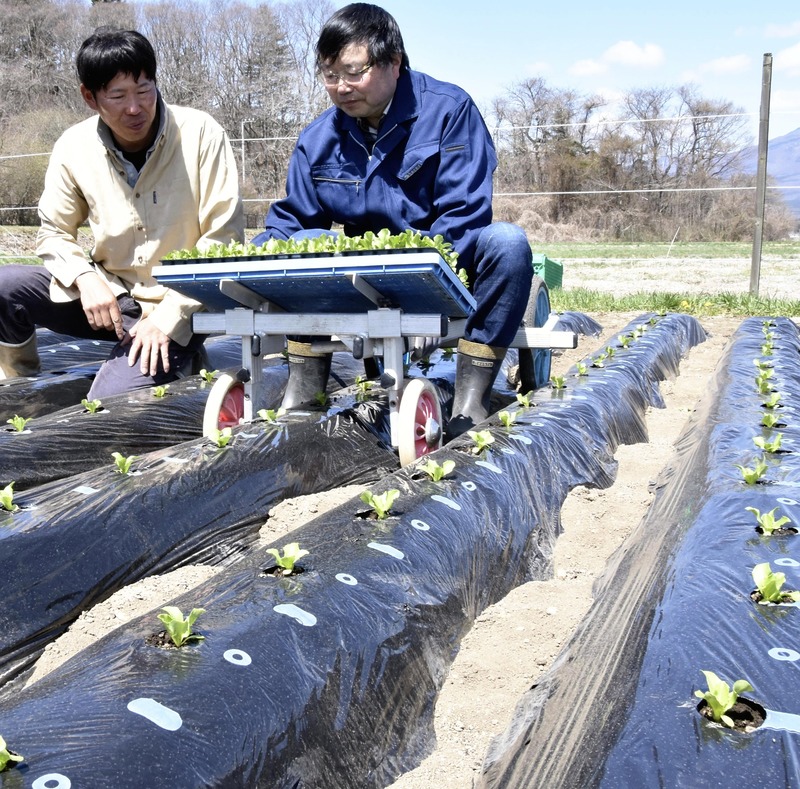
On April 24, Akihiro Ueda, a 60-year-old employee of a minshuku private inn, planted seedlings in a lettuce field in Karuizawa, Nagano Prefecture. It was the first time for him to engage in real farming activity.
"Doing physical work suits my nature," he said
Ueda's family-run inn experienced a succession of reservation cancellations in April that reduced his income to almost zero.
The Karuizawa area is one of the largest producers of highland vegetables in Japan. The Saku Asama agricultural cooperative planned to accept 94 Chinese technical trainees this year, but entry restrictions prevented them from coming to Japan.
The cooperative then approached the Karuizawa Inn Association, whose members were suffering from a sharp decline in customers due to widespread appeals for people to refrain from outings.
Together they decided that the inn association would recruit the needed manpower and the cooperative would be responsible for coordinating the workdays and making other adjustments.
After learning that the inn association was recruiting idled workers, Ueda got hired to work at a field owned by Osamu Katayama, 48, to make up for the cost of living.
"It's a great help because we were short on manpower," Katayama said.
Ueda, for his part, said he is glad that he found a job. "Once the infection is under control, I'd like to provide local vegetables to customers at the inn," he said.
According to the agricultural cooperative, there have been about 20 job applicants.
Meanwhile, in Tsumagoi, Gunma Prefecture, the Tsumagoi cabbage promotion cooperative association began an initiative to have farm houses temporarily employ workers at hotels, inns, restaurants and other establishments that have been temporarily closed. About 20 jobs have been filled thanks to the association's effort.
The Aomori Agriculture and Forestry Support Center, the public interest incorporated association in Aomori Prefecture, has also launched a counseling service.
According to the Agriculture, Forestry and Fisheries Ministry, the number of people engaged in agriculture in the nation was about 1.68 million in 2019, falling about 40% over the past 10 years.
"If we can make workers feel worthwhile by applying their experience to agricultural tourism and the development of new products, there may be some who settle in," said Kazunuki Oizumi, professor emeritus at Miyagi University, who is familiar with agricultural management.
Read more from The Japan News at https://japannews.yomiuri.co.jp/