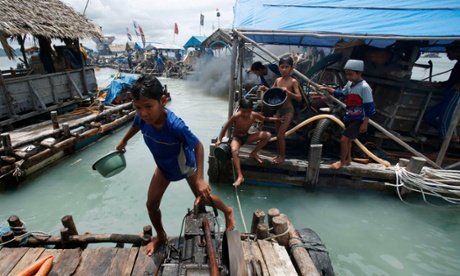
Extractive operations often occur in some of the most remote and disadvantaged areas in the world, encountering some of the most vulnerable children with profound impacts on their lives.
Inherently, the potential human rights impact of both mining and oil and gas operations are often linked to their proximity to local communities. Yet, knowledge of the specific impact on children has been limited.
UNICEF carried out a study to analyse and better understand the impact of the extractive industry on children. As part of this research, UNICEF engaged directly with companies to understand the extent to which companies are addressing potential negative or positive consequences for children through their policies and management systems. (See the Children’s Rights in the Mining Sector and the Oil & Gas Scoping Study.)
Beyond the issue of child labour, companies often encounter challenges in understanding how children could be affected directly, rather than only as a result of the sector’s effect on the broader family or community unit. This oversight to differentiate children as a distinct stakeholder group from adults means that specific impacts on children may not be identified.
As reflected in UNICEF’s reports, the extractive sector has the potential to have both adverse and positive impacts on children. Some key impact areas of the sector include, but are not limited to:
Land access, use and acquisition
Construction and land use or acquisition is vital for extractive activity, but if it is not managed well, it can create significant socio-economic issues to which children may be most vulnerable. Direct impacts may include the loss of homes and the lack of access to schools and hospitals, and can lead to the loss of livelihoods and income for communities and families.
In-migration
The in-migration of labourers can significantly change the demographics within a local area. The sudden and potentially dramatic increase in population will increase pressure on basic services and social infrastructure, and will also increase demand for goods and services, often resulting in inflation. In-migration increases the exposure of children to the risk of sexual exploitation and violence, and can lead to an increase in the rate of child pregnancy.
Environmental impact
Children are more vulnerable to localised environmental impacts of the extractive industry due to their progressive and incomplete physical development. Localised environmental consequences of mining can include dust, erosion, adverse effects on ecology and biodiversity, and the contamination of soil, ground and surface water by chemicals from the mining process, including cyanide, arsenic, sulphuric acid, mercury and heavy metals. Environmental impacts of oil and gas activity range from climate change and macro-level oil spills to smaller-scale effects associated with operational-level pollution and waste.
Employment
Because large-scale mining operations do not directly hire children, the greatest risk of child labour in the sector is within the supply chain. This risk is heightened during construction, when a company maintains relationships with a large number of contractors and suppliers, who must be closely monitored to ensure strict adherence to the company’s code of conduct prohibiting the use of child labour.
Safety and security
As traffic increases on the roads, particularly during construction, there is an increased likelihood that children will be injured or killed in accidents. Safety and security concerns also arise through the recruitment and use of both public and private security guards, who must be trained and monitored to prevent the use of violence against children who are accused of trespassing or theft.
Positive impacts
Extractive companies can have significant positive impacts on children and have the potential to operate as a force for social progress and the progressive realisation of children’s rights, particularly through:
- Transparent and full payment of mining revenues to the host government
- Socio-economic benefits, such as local employment and supplier development
- Corporate social and community investment
It is vital for these activities to build on the community’s assets and needs, and to be strategically aligned with the host government’s national and sub-national development plans. In addition, sustainability should be designed into activities to ensure they have a positive impact on children long after the closure of company activities.
UNICEF recommends a number of key steps for extractive companies to manage their potential impact on children:
- Include an explicit commitment in human rights and/or relevant company policies to manage impacts on vulnerable stakeholders, including children.
- All consultation, including negotiations on land use and acquisition, should be undertaken with community representatives, including those who represent children.
- Ensure that children and women are identified as vulnerable stakeholders when carrying out social and/or human rights impact assessments, and that the scale and severity of impacts on children as a result of company operations are well identified. Liaise with host governments and third parties, including UNICEF, in increasing access to data on children, particularly in remote areas.
- Ensure children and families are able to access company grievance processes, including providing them with information on how the mechanisms work.
Moreover, to enhance positive impacts, UNICEF recommends the following:
- Ensure all resource revenues are paid transparently and in full to the host government.
- Carry out social investment and community development programmes in collaboration with partners, such as the host government and non-governmental organisations, to ensure sustainability.
- Participate in national and sub-national platforms on key issues, such as education, to ensure corporate development projects tie in with national and sub-national strategies as articulated through national social development plans and national action plans on business and human rights.
Ensuring that children are considered as a key stakeholder group is crucial to ensuring that a company actively commits to identifying and managing its impacts on children. More broadly, companies should assess their potential impacts on children with the view of making progress towards their sustainable development objectives, particularly because children are the future communities which will grant the company’s social license to operate, are the future labour pool from which a company will find employees, and represent the future leaders who will be setting the agenda for the next generation.
Content on this page is paid for and provided by UNICEF, sponsor of the business and child rights hub.