The election of Liberal Democratic Party President Yoshihide Suga as Japan's new prime minister has elevated the public's interest in leadership. What is an ideal leader in today's society? Leading primatologist Juichi Yamagiwa offers his views on the subject.
-- Sole leader
Any entity will always have only one leader. I sometimes wonder why. Taking a look at Caesar, Napoleon, the first Qin emperor, Churchill, and many other great leaders in the past, as well as Donald Trump, Xi Jinping, and Vladimir Putin among the top leaders today, it shows no organization has had two leaders. This is because people think any organization, particularly political organizations, is like a pyramid, with only one person who sits at its top, no exception. In fact, this is the logic of monkey communities as well.
Each monkey community has a boss, not a leader.
A leader is the top person who gathers the expectations of the people who make up an organization and leads these people by trying to meet their expectations. In contrast, a boss rules a community by using their own power and runs the community as they want without regard to what their people want.
In a community of Japanese monkeys, the priority in getting food and space depends on each member monkey's level of superiority, thus prompting the boss to always show off his power.
The reign of the boss, however, is short-lived as he loses his position to another monkey when his power wanes. In human society, bosses can similarly be deposed in coups and wars.
-- Females dominant
Then, what about great apes, which are systematically closer to humans?
Orangutans do not have leaders at all because both males and females live a solitary life.
Gorillas live in family units, and females seek the right males for them. Males are chosen and then relied on by females. Thus, male gorillas are close to leaders. Males are not expelled by other males who have taken their positions, and sometimes team up with their own mature sons to create structures with multiple leaders. The leader male carefully watches the females and children in their groups and if danger is imminent, the leader is the first among the community members to face it.
Chimpanzees are a little more complicated. Chimpanzees have a similar species called bonobo, which form communities contrasting to those of chimpanzees. Both chimpanzees and bonobos live in groups consisting of dozens of males and females, and only females move from one group to another group.
The presence of males, however, is quite different between them.
When male chimpanzees are excited, the hairs on their entire body stands up. Males form parties with a coalition relationship and compete with each other. The dominant party takes the lead, and the strongest male of the party becomes the leader. The other members acknowledge the leader's superiority and always greet him by showing respect. If the coalition relationship among the male members is weakened, the leader is expelled from the position.
With respect to bonobos, males are weaker than females. Males do not form coalition relationships with each other. They get along peacefully with neighboring bonobo groups and rarely fight each other.
Chimpanzees fight between male factions, while bonobos create a female-dominant, leaderless community.
-- Ordeals of prime minister
Now, taking a look at the Japanese politics once again, I think it is similar to what chimpanzees have. The power of factions has greatly influenced the outcome of the recent presidential election, and high-profile politicians are all male.
Once the new president was elected and named as the new prime minister, however, the responsibilities of, and the public expectations for, politics falls on the prime minister as the sole leader. In reality, the people's attention is focused on the prime minister alone, although the power relationships among factions drive politics. In fact, we have seen many cases related to political failures where, in each case, the prime minister alone was always blamed, and once he resigned, those to be held responsible for the failure were no longer questioned. I think this is not a good way to do things. I also think the media are heavily responsible for having fueled these moves.
For a small organization, it is vital to choose a leader who can pay attention to every member, like in a gorilla community. A leader chosen this way would not mind risking their lives to ensure the safety of their people.
Leaders in local government became quite noticeable when dealing with the threat from the coronavirus as their decisions can quickly reach their people. On the other hand, the central government is driven by factions and party dynamics, and as we have seen in the recent election, a president or a party representative cannot be elected by the general public.
It cannot be said that a leader chosen this way is the center of the people's expectations. Moreover, this country is too big for a prime minister to look after every corner of it. The people's attention is attracted only to factional strife and the pursuit of party interests, all of which result in a lack of enthusiasm to follow a leader. It has led to many loudly voicing their discontent online, sometimes violently.
-- Choose multiple leaders to play different roles
Then, what form of politics is desirable in the 21st century? I think it is a society based on decentralization and solidarity by using family and community bonds. Human beings have never abandoned the family system at any point in history. This is proof that family has continued to exert a great deal of power as an organization capable of being empathetic and being held accountable. Although the family system has domestic violence and other negative aspects, it has not lost its power even today. A number of families come together to form a local community. A number of communities come together to form a society. Through this expanding process, we must consider how we choose a leader and what roles they should have.
One solution is to choose multiple leaders who can lead people in line with their expectations and have them play different roles of a leader, instead of engaging in factional warfare from beginning to end for the sake of obtaining the top seat.
Electing a sole leader can cause power to become concentrated in that leader. This system creates factions that intend to benefit from that power.
If we create a system that enables multiple leaders to fulfill their respective roles, work together, and have their work thoroughly evaluated, it will avoid placing too many expectations on a sole leader and will prevent people from expressing their discontent only to the leader. In other words, I suggest building a society that has the characteristics of both the gorilla communities and bonobo communities, mixed together.
Why, then, are there no female national leaders in Japan yet? This is because people's image of factions and leaders is so biased that they tend to come up with only male leaders. However, the world beyond Japan is gradually choosing female leaders.
Some female top leaders gained popularity by implementing appropriate measures to deal with the coronavirus pandemic. They include Angela Merkel of Germany, Jacinda Ardern of New Zealand and Tsai Ing-wen of Taiwan. For some reason, female leaders are perceived as being non-authoritarian and empathetic in their approach to convincing people. I think this factor worked well amid the coronavirus pandemic.
In Japan, more and more women are becoming the leaders of local governments, including Tokyo Gov. Yuriko Koike. This may be a sign that Japanese people are becoming weary of men's ambitions to get power by relying on factions. It may not be long before Japan has a female top leader.
-- Yamagiwa's profile
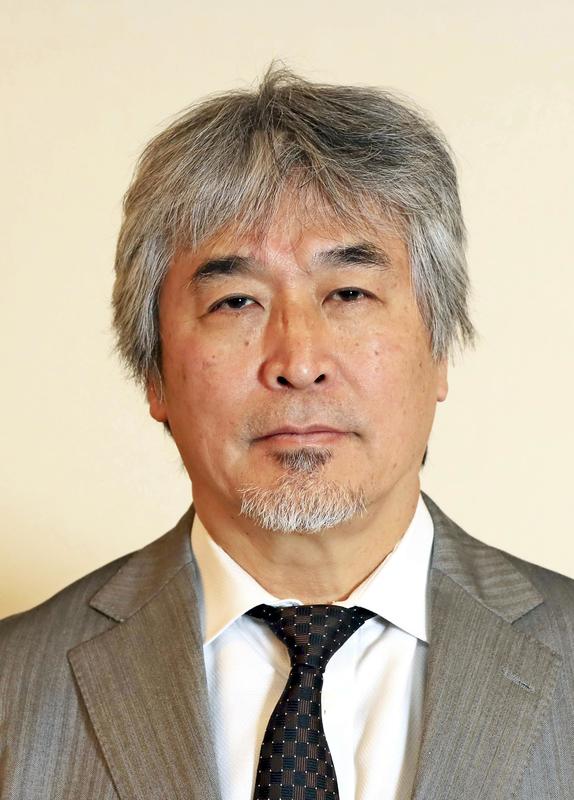
Born in 1952, Juichi Yamagiwa, who just resigned Sept. 30 as president of Kyoto University, is president of the Science Council of Japan. He is renowned for his gorilla study. He also served as president of the International Primatological Society and president of The Japan Association of National Universities. He authored "Evolutionary History of Human Family" (Kazoku Shinkaron) and many other books.
Read more from The Japan News at https://japannews.yomiuri.co.jp/