BOISE, Idaho — In September 1957, the Idaho Statesman spoke to 12 Idahoans with one question: "Are you planning to take advantage of the Asian flu vaccine when it is made available?"
By that time, the 1957 influenza pandemic, often dubbed the Asian flu, had made its way across the world and killed thousands. By early 1958, it had killed at least 70,000 in the U.S., with 20,000 cases of the flu in Idaho alone, State Historian HannaLore Hein said.
A vaccine, though, was on its way. Nearly everyone interviewed by the Statesman said they planned on getting the jab and were confident in its effectiveness. "I believe everyone should do everything possible to keep the disease from getting a foothold in Boise," Ann Gragg said.
Some said they had received many vaccines in the military, while others said their workplaces were planning on vaccinating all employees.
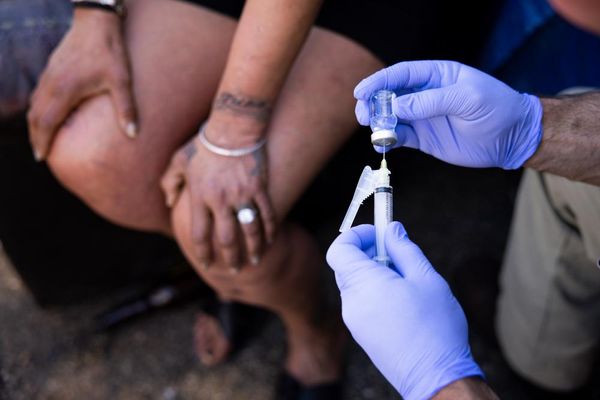
For Hein, the answers given by Idahoans then mirror the same thoughts some today are having about the COVID-19 vaccine. But while other vaccine rollouts in Idaho have had controversy, none have seen the massive pushback and sharp tenor displayed during the rollout COVID-19 vaccine, historians interviewed by the Statesman said.
"The level of vitriol and anger and the sort of political football that we see now, you don't see back then," said Bob Reinhardt, assistant professor of history at Boise State University. "It's of a level that's just totally different now."
Historians said Idaho's vaccination numbers historically have fallen in line with the majority of other states. The same can not be said of the current pandemic.
Fifty-two percent of eligible Idahoans have been fully vaccinated against COVID-19, one of the lowest rates nationwide, according to state health figures. Such counties as Boise, Idaho and Payette have vaccination rates well below 40%.
Hospitals in the state are overflowing with COVID-19 patients, nearly all of whom are unvaccinated. Crisis standards of care were approved two weeks ago, allowing hospitals to ration care to the sickest patients if need be.
It wasn't always this way in Idaho. Reinhardt said. Vaccines, and pandemic-related restrictions, were more readily welcomed in past decades.
During the Spanish flu pandemic of the late 1910s, the residents of Challis quarantined the entire town, with armed guardsmen preventing outsiders from entering to block them from introducing the flu to the town, according to an article in the now-defunct Idaho Republican, a Blackfoot newspaper.
In 1951, the annual state health report emphasized "the importance of proper diet, of vaccinations and immunizations." The state had previously seen a six-fold increase in whooping cough cases, leading to a large immunization effort with more than 40,000 vaccines given to children.
The Legislature in 1978 passed a law mandating vaccines for all Idaho students, which included multiple exemptions for students to opt out. Reinhardt said it passed with little controversy.
As recently as 2019, an estimated 73% of adult Idahoans had received tetanus shots in the previous 10 years, which was higher than the estimated national average of 71%, according to data from the Centers for Disease Control and Prevention.
Reinhardt said these instances refute the idea that Idaho has always been a state firmly opposed to government overreach, and that the state had previously had taken a much more active approach toward encouraging vaccinations.
"People would like to see it. They'd like to say, 'Idaho's always been like this,'" he said. "But that's, frankly, not true."
Gov. Brad Little has spoken about the benefits of the vaccine, but has maintained that Idahoans should "choose" to get it and that it should not be mandated. Other prominent politicians, such as Lt. Gov. Janice McGeachin, have spread misinformation about the vaccine and called Little's promotion of the shot "shameful."
What changed? Hein said two factors have led to major changes in attitudes: prior vaccines were geared more toward children, and social media serve as powerful vehicles for spreading misinformation
Hospital officials in Idaho have said misinformation and conspiracy theories online have led to many people not getting vaccinated. Hein said misinformation that spread during previous pandemics did so much more slowly and across fewer channels.
Hein said previous efforts focused on children were largely successful because shots could be given inside school buildings by a nurse for illnesses to which children were especially prone, such as polio, whooping cough and measles.
"I think that certainly impacted the general consensus of whether vaccines were good or bad," Hein said.
In 1955, as some of the first of Jonas Salk's anti-polio vaccines were being shipped to different states, some newly vaccinated Idaho schoolchildren began showing symptoms of the disease, such as paralyzed limbs.
A probe eventually found that 28 Idaho students contracted polio from live viruses inside the vaccine and then spread it to an additional 69 children. The state postponed the vaccine's rollout as a result, according to news articles at the time.
Hein said that, while other Western states saw similar cases, the number of accidental infections in Idaho was remarkable.
But instead of backing away from the vaccines, the state doubled down.
The state poured thousands of dollars into studying new shipments of the vaccine to ensure they would be safe. The state health department opened its first virus laboratory in Boise to study polio and the effectiveness of vaccines.
The Legislature in 1957 allocated $100,000 — nearly $1 million today after inflation — to purchase polio vaccines, and more than 500,000 shots were distributed by 1958. Hein said the number of inoculations was impressive given the previous outbreak.
"That's a real moment of success in Idaho's vaccination history to have overcome such a serious breach of public confidence in the public health system," she said.
Vaccinations have been on the rise in Idaho during the latest COVID-19 surge. The number of first doses administered has increased 15% since Aug. 1, compared with a 9% increase June 1-Aug. 1.
Yet, hospitals beds continue to fill up with the unvaccinated. State health officials now fear they could see a worst-case scenario with as many as 1,900 new hospitalizations a week in November, up from 774 on Sept. 24. Reinhardt said this hesitancy in Idaho and the rest of the country is unprecedented.
"There's actually a longer history of acceptance of the idea that public health requires an individual to perhaps sacrifice some liberties in the name of the common good," Reinhardt said.
Despite the obvious obstacles, Reinhardt said he has optimism when he sees the dedication displayed by health care workers today, which he said reminds him of the successful eradication of smallpox in the 20th century.
"The reason that it happened was that public health workers and volunteers stayed at it until it was done," he said. "I think we have that now."
———
(Idaho Statesman reporter Ian Max Stevenson contributed reporting.)