
Ventilation in the ACT's intensive care units could put non-COVID patients at risk of contracting the virus, the nation's peak medical body says.
ACT Australian Medical Association president Walter Abhayaratna has told Australian Community Media negative pressure rooms, controlling airflow to stop infectious particles circulating, were needed to slow outbreaks in hospitals.
But with negative pressure rooms scattered throughout Canberra Hospital, he warned the ACT's rooms could be unusable, or force patients without COVID-19 into close proximity to those carrying the virus.
Ventilation in Australia's hotel quarantine system has been blamed for a number of leakages, as COVID seeped from room to room. Dr Abhayaratna said that flaw also applied to many of Australia's intensive care units.
"The ideal conditions for managing patients with Covid would include adequate PPE, but also adequately ventilated rooms with negative pressure. That would ensure that patients outside the room are not affected by the droplets that carry the virus," he told Australian Community Media.
A Canberra Health Services spokesperson said there were 40 negative pressure rooms across the ACT's public health system, and 51 other spaces in "mechanically controlled isolation areas" at the COVID-19 Surge Centre.
"The ACT is well prepared to care for COVID-19 positive patients. The ACT health system is bolstering negative pressure room capacity with future planning and development by incorporating negative pressure rooms within new fit outs and refurbishments, when appropriate to the model of care," they told Australian Community Media.
Canberra Hospital accounted for 35 of those rooms, but just five were located in the ICU ward and another four were in the Emergency Department.
The remainder, spread throughout the hospital, would either be unusable or see COVID-19 patients treated next to others, Dr Abhayaratna warned. "That will not allow an efficient and safe cohorting of COVID patients if there are more than small numbers [of cases]," he said.
The Australian and New Zealand Intensive Care Society said ventilation was critical to reducing the spread of airborne diseases.
"We recommended that in an intensive care once all negative pressure rooms and standard rooms are exhausted, then consideration could be given to moving patients to a facility with available negative pressure rooms and standard rooms," it said in a statement.
"If not possible, patients should be cohorted in areas that are physically separate to areas containing non-COVID-19 patients.
"ANZICS is also currently discussing future intensive care design in detail so that we are ready for the next pandemic."
But ANZICS was confident Australia had sufficient resources to answer a rising demand for ICU, noting the federal government was working with all states to increase capacity.
And as NSW and Victoria struggled to bring Delta outbreaks under control, Australia was braced for a spike in ICU admissions.
But Dr Abhayaratna warned the country would face an uphill battle to modify its existing ICUs if hospitals were overwhelmed.
"There are insufficient beds in most hospitals with that type of ventilation. It is very difficult to retrofit negative ventilation. This poses an infrastructure challenge that will take years to address," he said.
"This would mean that capacity to look after large numbers of Covid patients would be limited in the meantime."
More than 170 people were in ICU across Australia, the majority in NSW and four in the ACT, including a man in his 20s on a ventilator.
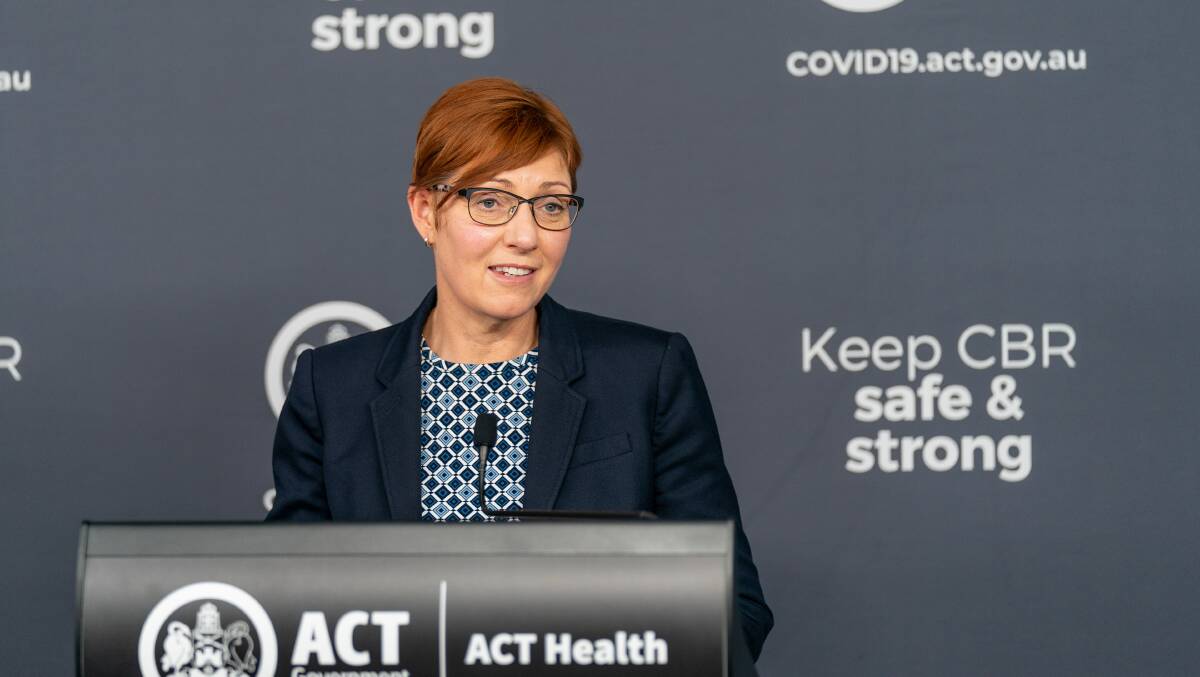
ACT Health Minister Rachel Stephen-Smith on Thursday revealed the territory's public healthcare system had 28 ICU spaces available as a baseline. She said the ACT's "flex" and "surge" capacity, which incorporated private hospitals, added an extra 110 beds if necessary.
"That really reflects the planning that was done last year to ensure that we could triple the number of ICU beds should they be required," she said.
But Dr Abhayaratna warned the ACT's ICU system was "pretty much full already" before the pandemic. He said an influx of patients would have a flow-on impact for people booked into ICU after routine surgery.
"Those people then cannot have their surgical procedures. [So] if we have our ICU filling with COVID patients, it's at the expense of something else," he said.
"At the moment we haven't got spare beds in to be giving away."