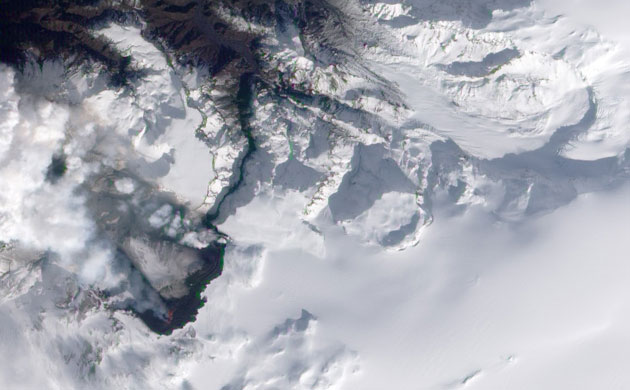
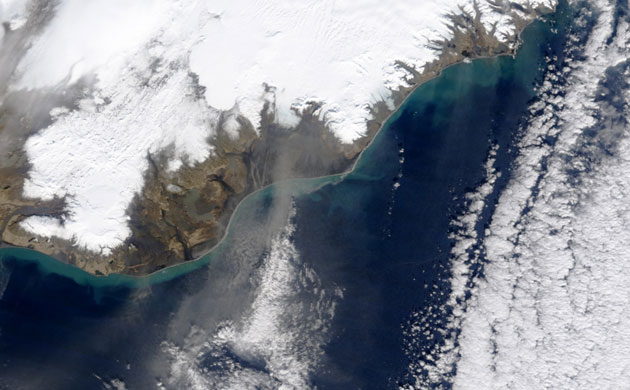
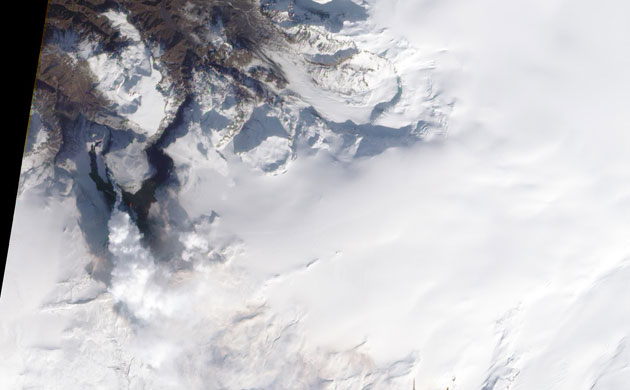
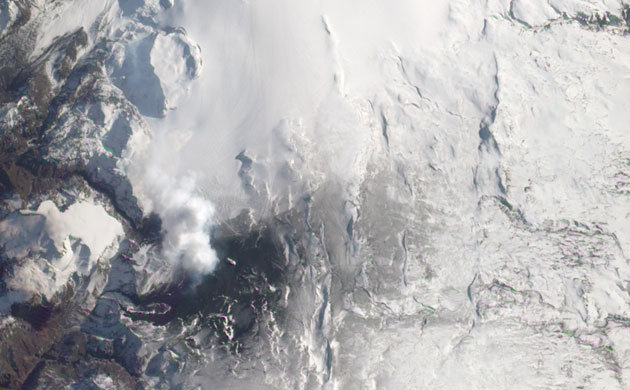
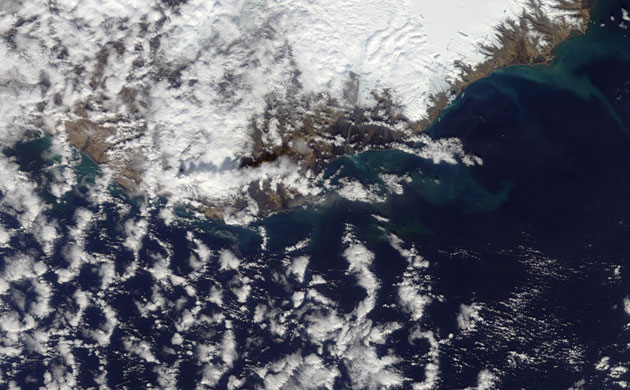
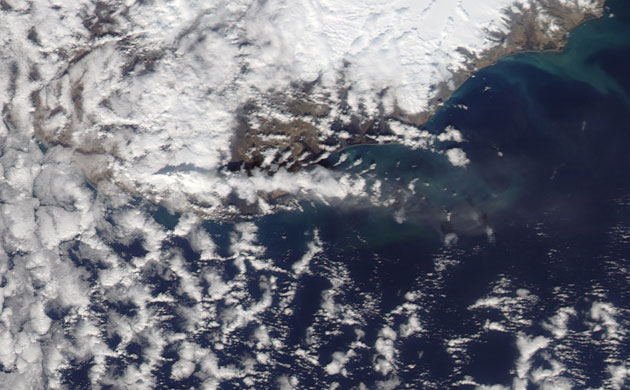
24 March 2010: The Eyjafjallajokull volcano bursts into life for the first time in 190 years when a 500 metre fissure in the Fimmvorduhals pass to the west of the ice-covered summit Photograph: E0-1/NASA26 March 2010: The eruption persists into its second week, with lava continuing to spew out and spill into nearby canyons Photograph: MODIS/NASA1 April 2010: A new fissure to the north-west of the original rupture indicates the volcano is still going strong Photograph: EO-1/NASA
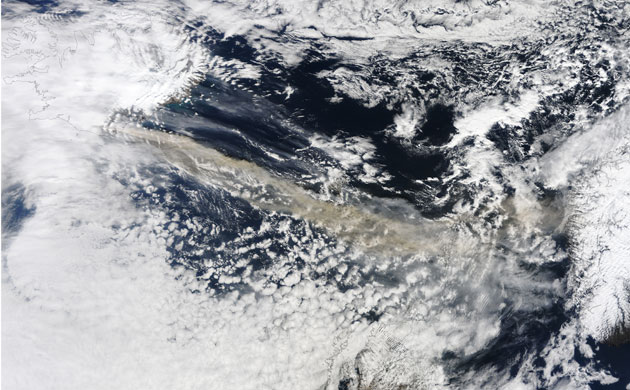
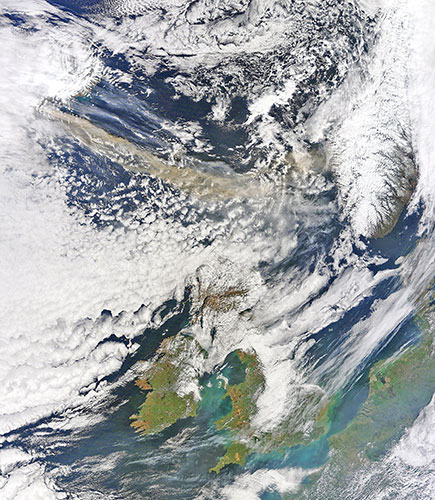
4 April 2010: The eruption enters its thrid week, with several distinct fissures joining up into a single big vent. The vent is hidden under a volcanic plume of mostly steam. Lava flows reach several miles north from the vents Photograph: ALI/E0-1/NASA14 April 2010: After two weeks the original eruption seems to be dying down, but earthquakes suggest the volcano is still pushing magma out into the same channels. The Icelandic Civil Protection Department orders evacuations of towns and farms near the volcano due to flooding caused by the melting snow and sub-glacial eruption Photograph: MODIS/NASAApril 14 2010: By afternoon the plume has reached more than 60 miles from the eruption site and the London Volcanic Ash Advisory Centre (VAAC) reports ash at altitudes of 6,100 metres (20,000ft) and higher Photograph: MODIS/NASA15 April 2010: Authorities in the United Kingdom, Ireland, France and Scandinavia ban all non-emergency flights as the ash plume spreads. The plume's tan hue indicates a fairly high ash content Photograph: MODIS/Aqua/Nasa15 April 2010: An image issued by the University of Dundee from Nasa's Terra satellite shows the ash plume travelling from Iceland to the north of the UK Photograph: NEODAAS/University of Dundee/PA
Sign up to read this article
Read news from 100’s of titles, curated specifically for you.