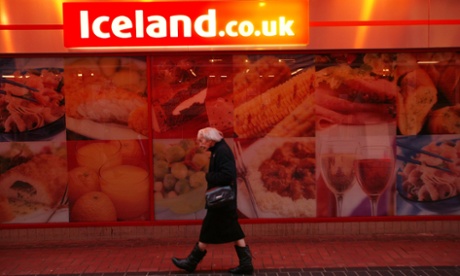
Annual profits at Iceland have slumped by a quarter as the frozen food retailer warned of an “exceptionally challenging” year for the supermarket industry.
Iceland said sales were hit by a triple whammy of food price deflation, competition from discount chains and changes in shopping habits. The retailer’s like-for-like sales were down 4.4% in the year to 27 March. Earnings excluding tax, interest and one-off items fell to £150m from £200m the year before.
Iceland is trying to reinvent itself after completing a £950m refinancing last summer, to repay loans issued in a management buyout led by chief executive Malcolm Walker. Last summer the company took on discounters by reducing the price of 800 frozen food items from £1 to 89p. Walker said executives realised price-cutting alone was not enough so the company also focused on improving the quality of Iceland products.
The retailer has launched new store formats and product ranges, upgraded packaging, rolled out online shopping across the UK and overhauled its marketing. Walker said the changes were beginning to have a positive impact on sales and profits towards the end of the financial year.
Iceland opened 30 new stores in the UK last year, including six larger Food Warehouse stores, and now has 872 outlets. The Food Warehouse stores are more than double the size of a typical Iceland store and sell extended ranges of luxury and speciality frozen food, chilled meat and fresh products. New ranges of meat, fish and frozen bread were tested at the Food Warehouse before being rolled out in most Iceland stores.
The company noted that all the “Big Four” UK supermarket groups lost market share in the past year, mainly to the German discounters Aldi and Lidl. Established grocers have also lost ground to pound shops, convenience stores, online retailers and more upmarket grocers such as Waitrose.
Walker said: “This has been an exceptionally challenging year for the group, and for the UK food retailing industry as a whole. In the face of food price deflation, intense competition and significant change in consumers’ shopping habits.”