STERLING, Va. — As LIV Golf attempts to reimagine itself for the future, one aspect of the league that appears to be part of the plan going forward is the team format that was part of the business model from the beginning.
Given the struggles to attract ownership, the difficulty in branding some of the teams and their places, the ridicule that came with some of the team names and the lack of impact the team structure has generally had since LIV’s inception, that focus seems surprising.
And yet LIV Golf CEO Scott O’Neil doubled down on it Tuesday during his first official comments since the Public Investment Fund of Saudi Arabia last week decided it would pull its funding after this year.
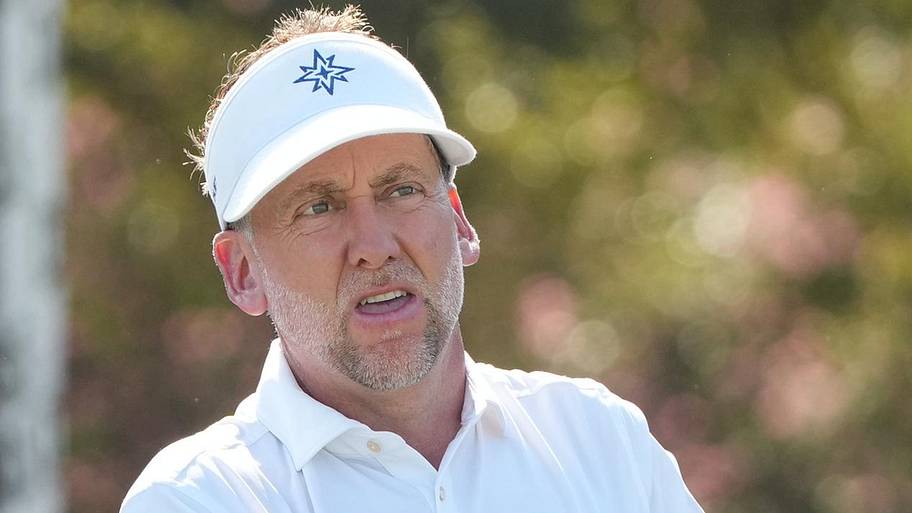
And so, too, did Ian Poulter, the English golfer and Ryder Cup star who won 12 times on the DP World Tour and has found himself in various squabbles with the circuit for whom he toiled a majority of his career.
“Look what happened in Australia. Look what happened in South Africa,” Poulter said Wednesday at Trump National D.C., referring to two of LIV’s most successful events. “Look, we’ve been able to have 10 teams that are actually profitable this year. And look at the fan base that we’ve grown. And look at what we’ve done inside the ecosystem of golf.
“Bringing more kids into the game of golf. More families coming. There’s so many positives in a five-year window of what we’ve been able to achieve. It’s remarkable. From nothing and all headwinds. It’s been five years of headwinds from Day 1. They’ve given every bit of restraint that they could possibly push our way. I actually think we’ve done an amazing job, I really do.”
"LIV 2.0" remains a work in progress
LIV Golf is going to need a positive attitude such as Poulter’s, and it is perhaps topped only by that of O’Neil, who put forth a bold, confident front in a Tuesday news conference despite acknowledging that the league needs to reset and establish a new plan going forward.
Poulter, 50, referred to it as “LIV 2.0” and he acknowledged there will likely need to be some changes. Purse sizes? Number of events? He couldn’t say.
“He’s on the back foot, right?” Poulter said of O’Neil in advance of LIV Golf’s Virginia event, which begins Thursday. “But that's when he does his best work. So in the position he’s in right now, it’s free and clear for the job, the pathway that he needs to do to move this business forward, right? There’s no more restrictions [from the PIF].
“This business will run the way it’s going to run from now ’til the end of the season. And now Scott’s job, the two new people coming in [on the LIV board] ... extremely successful in what they’ve been able to achieve with private equity funding in numerous different sports businesses. It’s going to be different. The product will have to change somewhat.
“What does that look like? I don’t know. He doesn’t know at the minute. He’s trying to piece that together.”
But to Poulter, it clearly involves the teams. He’s a co-captain of the Majesticks along with Lee Westwood (the other co-captain, Henrik Stenson, was narrowly edged out by Poulter at the end of last season’s race to avoid relegation) and believes there is a place for it—although he hinted at other ways of going about it.
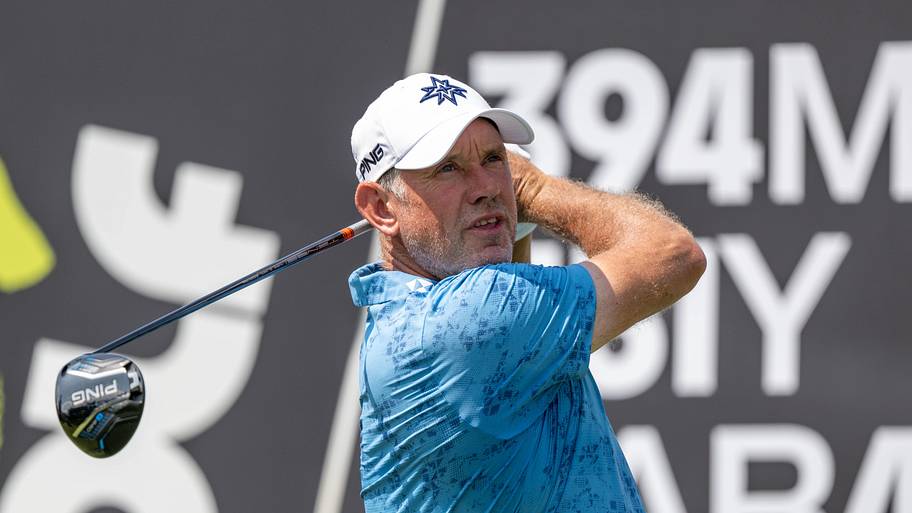
“I think there’s opportunity with potentially different models of how they could sit within the system of golf with franchise teams,” he said. “Does it sit at the back end of the year? Does it sit partially at the back end of the year and in the middle of the year? There’s so many different scenarios that are being played out right now, which is all being discussed. And as soon as they can sort of nail down where they want to take it, then it goes out to private equity.
“And they’ve got a short period of time to raise some money. It’s not like that's the problem. In the world we’re in, we can sit here and doom-and-gloom and we don’t have a lot of time. This is business. This is when smart people can get their hands dirty and actually get into the weeds and try and make a 2.0 version. This is exactly what he’s got.”
Poulter noted that with private equity, there will be changes—and pointed to the PGA Tour, which two years ago went to a for-profit model with investment from Strategic Sports Group that is seeing a change to the business including the potential for contraction of tournaments.
LIV might have to cut back from 14 tournaments and its $30 million weekly purses and cut back on many of the frills that come with a LIV event.
Poulter wondered if a team golf concept might work across golf if there were cooperation across all the various entities—something that is lacking at this point.
“Does it work if some PGA Tour players can move in to play in the back end of the year possibly? And therefore a chunk of the guys can go and play and help their TV renewal valuation?” Poulter said. “We can all work together in some way to make the calendar for the whole year look good? Whether that be international, whether it be in the U.S. or whether it be in Europe.
“There’s opportunity everywhere you look from that. So is it going to get there? I don’t know.”
Poulter, after making eight figures on LIV, is unconcerned about his own future
It LIV doesn’t survive, Poulter doesn’t seem too concerned. He mentioned following son Luke’s golf career at the University of Florida and beyond as he attempts the pro game, along with other interests.
In four-plus years on LIV Golf, Poulter has earned more than $11 million in prize money in addition to any upfront signing bonus he received. Not counting the European Tour, he earned more than $28 million in official prize money on the PGA Tour.
Poulter bemoaned his fate with the DP World Tour, where he played for nearly 30 years, and a 15–8–2 record in seven Ryder Cups, with a 6–0–1 record in singles and playing on five winning teams.
Unlike his LIV colleagues Jon Rahm and Tyrrell Hatton, who were allowed to appeal fines and suspensions beginning in 2024, Poulter was not afforded that opportunity when he first joined LIV Golf in 2022, leading to the court resolution that was upheld in 2023 and led to the tour’s right to impose fines and suspensions.
Poulter never paid fines accrued early on, feeling they were “unjust.”
“I’m not giving you a sob story, right? But like, I don’t have to do anything,” he said outside the Trump National D.C. clubhouse. “I’ve got enough money to never play golf again.
“I could put my clubs down tomorrow and sustain the lifestyle that I’ve had forever ... and that was established over the last 28 years. I haven’t been stupid with my money. So, look, I could do anything I want to do.”
For now, that will be LIV Golf and seeing where it goes.
“What we know of private equity means the opportunity now lies ahead for Scott, for us, is to build a 2.0 version,” Poulter said. “That’s for us, the players, the captains, to sit there and evaluate. And I’m hoping what gets put down as a finished article can go out to market as soon as possible. It’s not there yet, right? It’s not there yet.”
More Golf from Sports Illustrated
- Luxury Golf Developer Cabot Announces Its First Resort Combining Two Outdoor Passions
- Why Michelle Wie West is Making an LPGA Return This Week at Her Own Event
- How Rory McIlroy Refocused After His Second Masters Win
- 2026 Truist Championship Preview: Field, Course, History, Tee Times, How to Watch
This article was originally published on www.si.com as Ian Poulter Has Thoughts on What LIV Golf Needs to Do Next.