
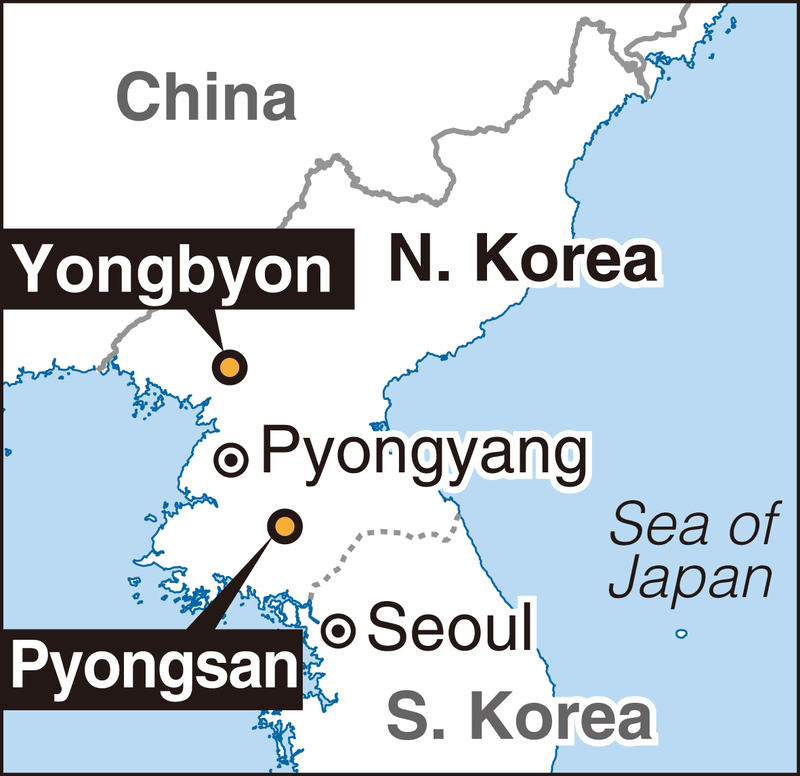
GENEVA -- The International Atomic Energy Agency compiled its annual report on Monday, which expressed concern that North Korea is continuing its nuclear development, pointing out signs of operations of a 5,000-kilowatt graphite-moderated reactor located in Yongbyon as well as a nuclear reprocessing plant facility over the past year.
The report will be presented by IAEA Director General Yukiya Amano at the organization's General Conference in September. Yongbyon is located in the northwest of North Korea.
The IAEA has confirmed the operation of part of the nation's nuclear facilities even after the April summit meeting between North Korea and South Korea, in which the two countries agreed on "complete denuclearization," which underscored the fact that the reclusive country is still making efforts to maintain its nuclear development capability.
According to the copy of the report obtained by The Yomiuri Shimbun, the IAEA condemned North Korea as the circumstances violate U.N. Security Council resolutions that require the nation's abandonment of nuclear and missile programs. The report gave a detailed description of the reality of the nation's nuclear development based on satellite observations and information analyses over the past year.
A graphite-moderated reactor is a facility to produce weapons-grade plutonium by burning uranium fuel. After burning uranium fuel -- which takes years -- spent fuel is removed from the reactor, from which plutonium may be extracted at a reprocessing plant.
According to the report, discharge of vapor -- a sign of the reactor operating -- was confirmed at the Yongbyon graphite-moderated reactor, as well as draining of warmed cooling water. Its operation has been suspended several times after the currently used nuclear fuel was put into the reactor in December 2015. This time, the burning of the uranium fuel is believed to have been conducted for a longer period compared to in the past.
Meanwhile, signs of operation were confirmed at a steam heating facility, located next to a reprocessing plant in Yongbyon, from late April to early May. However, a longer operation period is needed to extract plutonium from spent fuel. Thus the operation could have been part of preparation to start the reprocessing plant, or aimed at maintenance.
In the second half of last year, a water intake dam was constructed at a river that runs beside the Yongbyon complex. A pump room to draw water was established at the dam this year, which could be aimed at installing new cooling equipment that uses water extracted from the dam in a light-water reactor, which is under construction, or installing it in the graphite-moderated reactor, to enhance the ability of the facilities.
The IAEA also confirmed continuing nuclear activities at other areas, including a fuel processing facility and a uranium enrichment facility located at the Pyongsan mine in the south of the country.
The IAEA report backs up findings of 38 North, a U.S. study group on North Korea. Since March, 38 North has confirmed repair work on assistant cooling equipment of the graphite-moderated reactor through analysis of satellite images. It also confirmed drilling in a river bed that runs nearby the facility, conducted through the end of July.
Read more from The Japan News at https://japannews.yomiuri.co.jp/












