On one level, Sitting in Limbo is about my brother, Anthony Bryan, a UK citizen who was unlawfully detained by the Home Office and threatened with deportation to Jamaica, a country he hadn’t been back to in more than 50 years. I wrote the story to highlight his disgraceful treatment and honour all those who suffered during the Windrush scandal. On another level, it’s about me. I am part of the Windrush lineage, after all; so, as with most of my work, it was really an excuse to write about myself.
Although heavily based on facts, Sitting in Limbo is, in the end, a work of fiction. That is my usual modus operandi. I create fiction by instinct – novels are my stock in trade – but with this story I knew I had to adopt a different approach. Yes, I wanted to make things up, use my imagination, tell the story as I saw it as opposed to how the facts dictated, but at the same time, I wanted to stay as close to my brother’s experience as possible.
The first and perhaps most difficult challenge was how to thread a line between truth and invention without compromising on either. The subject matter posed a different kind of challenge. Anthony’s story is so overtly political that even a fictional retelling could be dismissed as anti-government propaganda. Some writers and directors have made entire, fruitful careers from this approach to storytelling, Ken Loach being arguably our most celebrated, but I’ve never seen my work in that way. The writer as political activist is something I’ve always tried to resist because it risks fostering the egotistical notion that writers are unduly important – that we are at the centre of things, not the story we are trying to tell. The writer, in my view, must be absent, in as much as it’s possible to be.
So much had been said about the Windrush scandal by the time I sat down to write Sitting in Limbo, I feared the nation had reached saturation point. There was a moment, which had to be seized, and I thought I might have missed it. Talking to Anthony made me think otherwise. During our conversations, as he recounted what happened to him in a halting, almost embarrassed way, I realised I had a responsibility to get his story out there. He and my other siblings even teased me about it: as the only writer in the family, what use was I if not to tell a story like this?

Joking aside, I was dubious. Though he wears it lightly, Anthony has been traumatised by his ordeal. How would he feel about dredging it all up again? How would I feel? I needed to tread carefully, and I did, but there was always a feeling in the back of my mind that I might be doing more harm than good. I still feel that way and perhaps I always will.
It’s one thing deciding to write a film about the Windrush scandal; it’s quite another to convince a broadcaster that there is an audience for it. “Black” stories have always been regarded as niche, difficult to market. I was surprised, then, when I found such enthusiasm for the project at the BBC, and subsequently from audiences. The film has clearly struck a chord. Among all the acclaim it has received, there were a number of comparisons on social media made to Cathy Come Home. This is high praise indeed but, at the risk of sounding immodest, I can see the similarities.
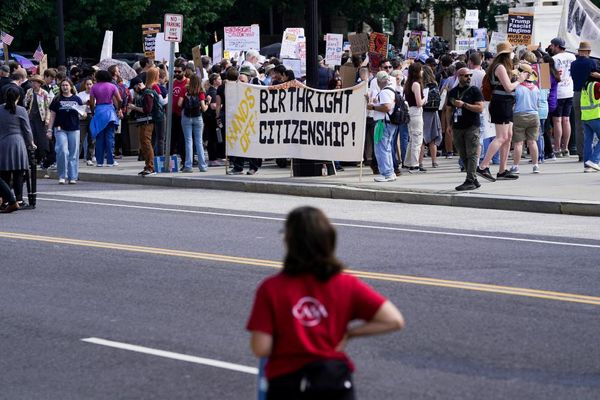
Directed by Ken Loach, Cathy Come Home acquired almost mythic status for the way it highlighted the plight of the homeless (and other social issues) in Britain in the 1960s. It caused an outcry among viewers, 12 million of them, and led to heated discussions in parliament. Sitting in Limbo has provoked a similar reaction. Whether I like it or not, it’s a political film. It has stirred debate, brought the Windrush scandal back into focus, put the government on the defensive once again and led to renewed calls for the victims to be compensated. It has become a rallying point for activists. Some people have even accused the BBC of putting the film out just to coincide with the anti-racism demonstrations sweeping across the world. Of course, it had been scheduled quite some time beforehand.
There was no way we could have foreseen such an extraordinary convergence of events to so starkly highlight the similarities between racial politics in the US and the UK: BAME workers disproportionately affected by Covid-19, police brutality towards the black community, the Black Lives Matter protests, the toppling of statues in both countries.
Amid all of this, Sitting in Limbo dropped like a bomb and I’ve been dealing with the fallout since. The reaction has been overwhelmingly positive and has taken me by surprise. It’s gratifying to see something you’ve worked on so hard affecting people in a profound way.
My fear, however, is that in all that noise, my brother’s story has become somewhat lost. I’ve been doing what I can to prevent this from happening but I’ve now decided to step back and allow the film to make its own way in the world. This is one of the most painful parts of writing, knowing when to let go of something you’ve worked on over a long period. It requires an acceptance that it doesn’t belong to you any more – that it never did.
Stephen Thompson is a novelist, screenwriter, documentary film-maker and editor of the Colverstone Review.