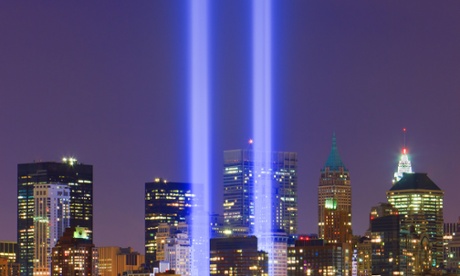
“Where’s the other tower?” I asked nobody in particular.
Fourteen years ago, I stood with dozens of others on the roof of the tallest building on the highest part of Columbia University’s uptown Manhattan campus, staring at the scene unfolding 150 blocks downtown.
An hour beforehand, as I drowsily conjugated verbs in an early-morning Italian class, terrorists had plunged passenger jets into the World Trade Center’s Twin Towers, the Pentagon and a field in Pennsylvania.
Though I had been initially oblivious to the nightmare that had begun nearby in lower Manhattan, every American within a country mile of a television set that morning knew what happened to the South Tower before I stood on that rooftop, gazing at the billowing smoke and enormous clouds of dust engulfing downtown.
Someone replied simply: “It’s gone.”
Two distinct traumas occurred on 11 September 2001: one for those in and around the sites who felt and breathed the attacks; and another for the hundreds of millions who experienced the day’s events as a TV show broadcasting close-ups of death and destruction on an infinite loop.
As I came to understand from watching replays later, those Americans far away from the attacks bore witness to the horror from every camera angle, listening to every eyewitness account from dust-caked survivors, experiencing every desperate on-air plea from those hoping to find a missing person who would almost certainly never come home.
TV viewers were reminded of their own daily routines, the landmarks they visited, the flight plans they made, the people they loved the most, and were plagued by the thought that is the very goal of terrorism: what if it happened to me?
I was closer to Ground Zero than the vast majority of Americans, but I understood almost instantly that the attacks categorically did not “happen” to me.
Unlike the vast, distant TV audience, I could race to a rooftop and see “what if” in front of my eyes, and it stood in horrific contrast to the rest of that day: famously beautiful weather; crowds of people perfectly untouched by the unfolding tragedy passing the time at sidewalk cafes; and a distant, dark cloud of disaster floating in the cloudless sky beyond the downtown skyscrapers.
I was about as close as anyone to the attacks who still did not experience the crushing emergency of having my life ended – or even really upended. Still, the fear and anger voiced by out-of-towners I talked to rang dissonant to me: how could they mourn the dead and curse the perpetrators with such conviction when they experienced 9/11 from their living rooms?
This realisation came crashing down on 12 September. That day, the steady winds blowing smoke and dust away from campus changed direction, and I experienced 9/11 in new ways: smelling the stench of burning jet fuel, tasting the acrid grit of demolished buildings, squinting through the murky brown haze of thousands of lives reduced to ash.
The emergency had passed, but there was no escape from its aftermath.
And yet, I had lost nothing on 9/11, and existing so close to unimaginable loss drove home how much I really had. I felt none of the terror the nation and world felt, because I stood at the narrow divide between feeling terrorized and knowing the true cost of terrorism.
My experience was, in fact, more unique than I could fathom at the time. I had neither faced death myself, nor did I watch others face death live and up close in two dimensions on a cold TV screen.
Just 150 blocks from Ground Zero, I had escaped the very worst of both traumas visited upon America on 9/11, and I received a bittersweet gift in staggeringly short supply that day: perspective.