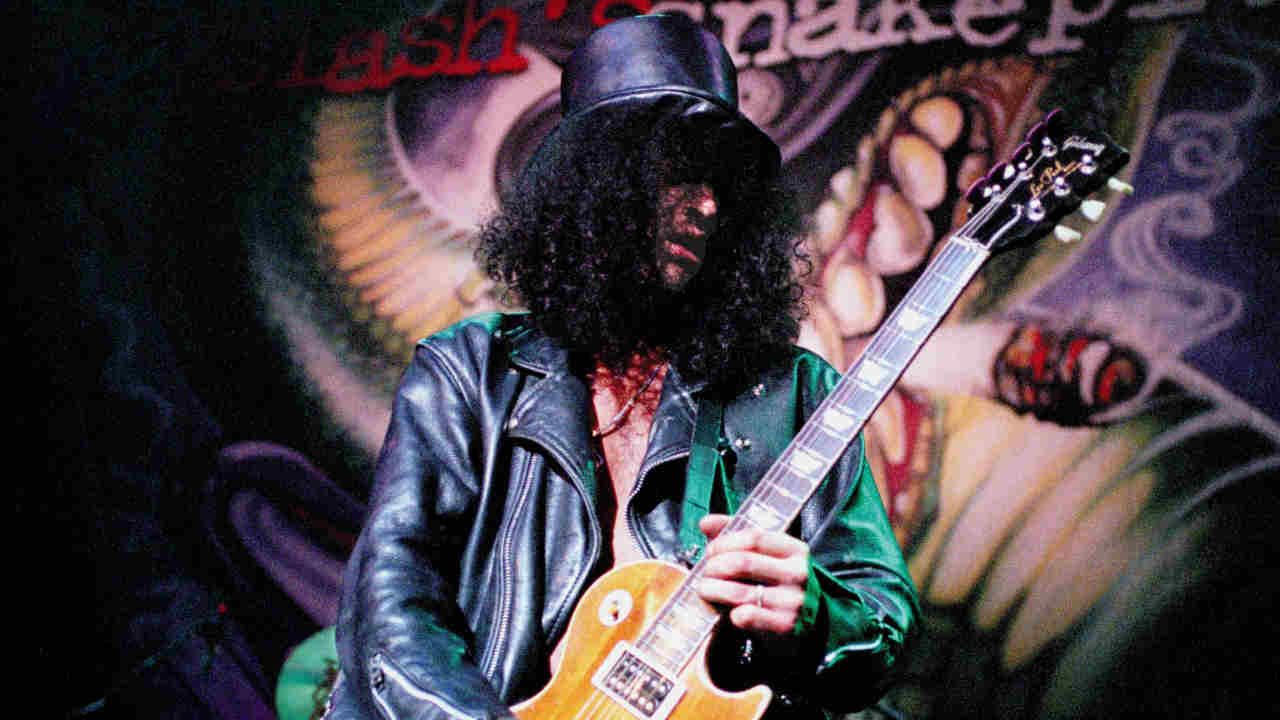
Already an iconic figure, with one of the most recognisable images and guitar styles around, Slash stepped out of the vast shadow of Guns N’ Roses to become leader of his own band – and master of his own destiny – with Slash’s Snakepit.
It began in 1994 when he started jamming with GN’R drummer Matt Sorum on a series of back-to-basics songs that would form the basis for what would be the Snakepit’s debut album, 1995’s It’s Five O’Cclock Somewhere, although at that point, Slash saw the whole thing as no more than a way of filling in time before Guns N’ Roses went back into action.
“This isn’t some sort of solo project,” he explained at the time. “Really, what we’re doing is getting song ideas together. They’ll probably all end up on the next Guns album anyway. So, talk about me going solo is totally off the mark.”
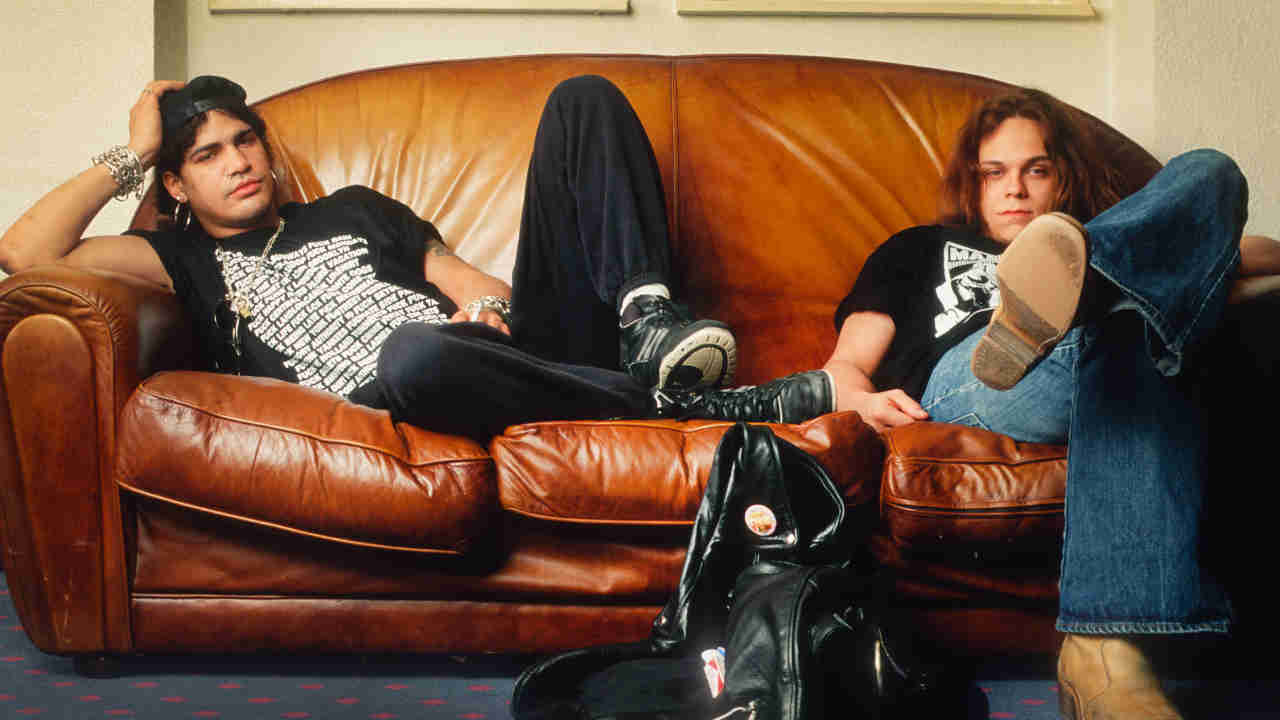
However, as things began to develop it appeared obvious that what Slash was doing belonged in its own setting. In came GN’R rhythm guitarist Gilby Clarke, Alice In Chains’ bassist Mike Inez and vocalist Eric Dover, previously guitarist with cult power-pop band Jellyfish.
“Eric’s amazing,” said Slash in 1995. “He’s got the voice I’ve been looking for to complete the band. You know, getting the right guy out front gives the whole thing some sense.”
Slash wanted to call the band just Snakepit – the guitarist was famous for his collection of snakes, but his label, Geffen, insisted on adding his name for marketing purposes.
Released in February 1995, three-and-a-half years after GN’R’s two Use Your Illusion albums (at the time their most recent collection of original material), It’s Five O’Clock Somewhere didn’t sound like it was a collection of songs that were just lying around unused.
On the contrary, they were bright, powerful, full-on rock’n’roll excursions. These suited Slash’s temperament, each track having a life-force and personality of its own, yet fitting neatly into an overall pattern. Just as the band had come together through a series of jams, so the album’s sound bore that same spontaneity. It was far removed from where GN’R were located, yet so in tune with how the band had sounded in their more exciting, formative days.
What’s more, the record actually gave Slash his own audience. Not one predicated on Guns N’ Roses hysteria, but one that could appreciate who he was and what he was trying to do. A major tour was in the offing, but in the end this was severely curtailed.
“I was ready to go out and really promote the shit out of the album,” Slash said a few years ago. “I was led to believe that Geffen would back me. But then Guns started to stir, and the label decided that had to be the priority, so the plug was pulled.”
At the time, Slash accepted this situation, because he was still seeing Snakepit as nothing more than an occasional piece of fun, something to do while he waited for further GN’R activity.
However, in 1996 Slash finally went his own way, leaving the GN’R camp behind, and resurrecting his Snakepit. This time it was no heel-kicker, but a genuinely forward-thinking, self-contained entity.
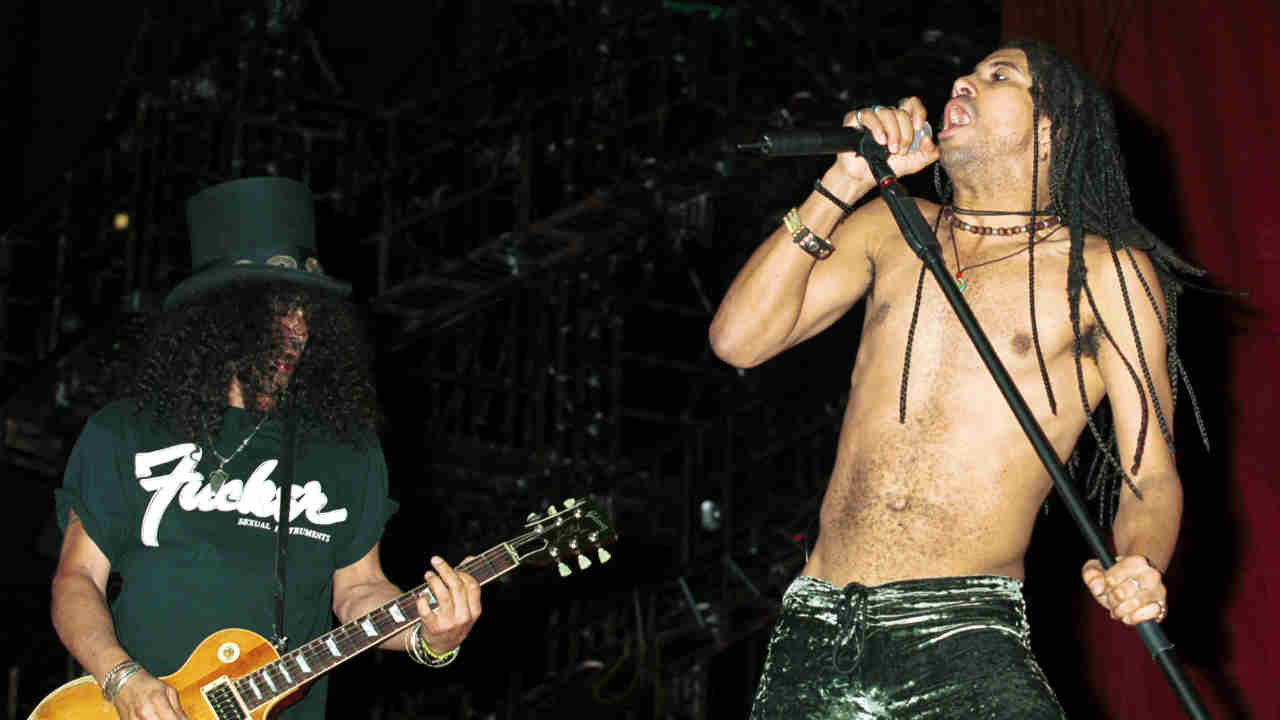
The revamped band came with a totally different line-up and mentality. Slash brought in vocalist Rod Jackson, guitarist Ryan Roxie, bassist Johnny Griparic and drummer Matt Laug for the 2000 album Ain’t Life Grand, with veteran producer Jack Douglas also coming onboard (the debut had been produced by GN’R man Mike Clink).
The result was a sharper, more focussed recording. Not that Slash and his new band had lost any of the joie de vivre that was so identifiable on the debut, but this time there was a more rigorous sense of dynamic.
With a new label, Koch, behind him, Slash was able to take Ain’t Life Grand on the road. One of the highlights on this tour was getting the chance to open for AC/DC on a few dates. There was also a major burst of club dates, with the smaller venues suiting the band far better. Here they had their own audience, packed in, with an electric atmosphere.
Sadly, the band was never able to develop any further. Slash was hospitalized, suffering from cardiomyopathy – years of drinking had taken their toll, and he needed urgent treatment to prevent the swelling of his heart. When he was discharged, the guitarist decided to end Slash’s Snakepit and move on. But this was an important step in his development, not only as a musician, but also as a more rounded person.
“With Guns N’ Roses you took a lot for granted,” he said in 2002. “There were just so many people there to look after every aspect of your life. All I had to do was get onstage or into the studio and play guitar. That was it. But when I started Slash’s Snakepit, I didn’t have all that back-up. I had to do things for myself and learn how to deal with other members of the band as a leader, not just as a musician. It was a learning curve.”
It’s easy for people to dismiss the Snakepit-era as just the stop-gap between Guns N’ Roses and his next big supergroup Velvet Revolver. In reality, though, this was a crucial bridge between these two major bands. These two albums were not only very impressive in their own right, but you can hear how Slash used the freedom he enjoyed to move his presentation and performance forward.
There’s a confidence about Slash here that tells of a musician growing and maturing. It was as if the six-string gunslinger we heard on Appetite For Destruction in 1987 was at last finding his own worth and fulfillment. While the man can play in any style he wants, Slash’s Snakepit allowed him to learn more about his own abilities and where he wanted to take them.
“Man, I love those albums,” said Slash in 2002. And with good reason.
Originally published in Classic Rock Presents Slash