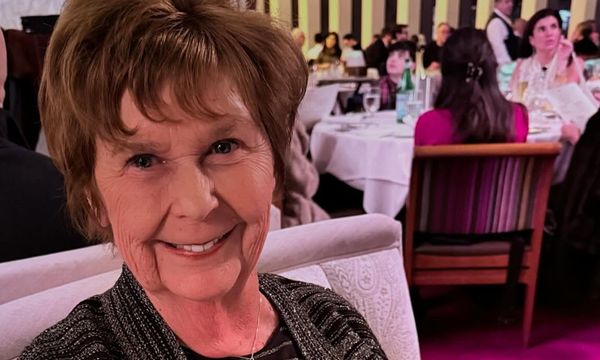
“The best part of the job, I would say, is when we co-create or ideate new products directly with the client,” says Lisa Giovetti, a recent graduate on the Tetra Pak future talent programme, currently working as an associate manager in digital marketing in Modena, Italy. “We go through an entire process of identifying a challenge and then developing a new product or solution that can help them.”
Giovetti is halfway through the two-year programme, which offers a range of roles for graduates, from product management to technical engineering. Previously, she studied business and economics in Bologna, worked with a startup, which helped develop her entrepreneurial experience, and did a marketing internship with a large company in Italy. “But I was looking for an international environment – a global, more strategic, position,” she says.
The marketing team she works with at Tetra Pak, which also includes designers and food technologists, often acts as the initial facilitator for a project, working alongside sales and technical staff. It’s a team built for fast prototyping, she says, helping to create new ideas and possibilities for market growth for a range of clients, from small-scale dairies to multinational brands: “It could be smart packaging or anything that is connected to the digital ecosystem.”
One project she’s particularly proud of, while on a work placement in the US, was for a client based in the Dominican Republic. It involved coordinating a marketing project for a milk brand, creating the software to modify the production line to create promotional packaging that consumers could collect, as well as consulting on the online marketing campaign running alongside.
“The difficulty was the velocity of the production,” she says. “It was hard to implement – we are talking millions of packages.” Every package needed to be printed with a unique code, and Giovetti’s ability to make that happen led to her being recognised for her expertise in digital marketing among her peers and managers.
Colleagues were soon requesting she share her knowledge, such as asking her to give a presentation on how to design a marketing app. “That’s where I see the success – being able to contribute to something that my colleagues have never worked on, and support them even if they are more senior,” she says. “That’s when I realised I was really part of the company, and I was really adding value.”

Those on the future talent programme are offered several rotation work placements, some of which are international. Although Giovetti had lived in different countries for much of her life as a child, she had never had the chance to travel in a professional capacity before Tetra Pak.
It wasn’t completely without challenges. “You get used to one type of leadership, and then you have to change to a completely different one, while adapting to a cultural change, too. So I learned a lot,” she says, noting how she had to adjust the way she communicated to fit in with different working cultures. “The closer you are to the client, the faster you need to communicate, so the more flexible you need to be. I had to let go of my perfectionism sometimes, and just call them or use WhatsApp, rather than sending formal emails.”
However, she soon found an international environment to be a huge benefit. “You see the industry and different parts of the world, as well as the differences there are,” she says. “I’m Italian, but I work with Lebanese people, Iranians, Brazilians – so it helps you widen your perspective.”
Her advice to new or potential programme participants is closely related to that experience – namely that networking is key to success. “Don’t be afraid to pick up the phone and ask questions,” she says. “It’s a very multifaceted company, and there’s a lot of knowledge that you’re not going to have when you start working here. It’s a very open environment, though, and people will support you, so it’s not worth being shy.”
Over the next year, Giovetti will be on a placement in Dubai and working towards a final position for when she finishes the programme. She has been able to discuss her goals and competencies with her managers from the start, to help plan the programme content along the way. “You can really influence how the programme is built for you,” she says. “You have to be proactive and take leadership over deciding where you want your career to go. Managers here will listen to you.”