
Android Central Labs is a weekly column devoted to deep dives, experiments, and a focused look into the tech you use. It covers phones, tablets, and everything in between.
Going into this review, I was prepared to be disappointed. From the onset, Samsung appears to have made no major changes to the camera system on the Galaxy S26 Ultra. It's got the same major numbers as the Galaxy S25 Ultra, which seemed concerning at first, especially when other companies are making a big deal about major camera hardware upgrades.
But it turns out that I didn't need to worry at all. Samsung's intelligent use of Galaxy AI in its cameras, along with a bit of clever tweaking to many of the lenses on the back, meant I was able to take the Galaxy S26 Ultra around for weeks without worrying about getting a good photo.
It's proof that spec sheets are becoming less and less relevant, a position Samsung has publicly taken this year. As I noted in my Galaxy S26 Ultra review, this phone is more than meets the eye, and that all starts with the camera system.
Note: To view high-quality photos, expand the photo using the icon at the bottom right of the image, then tap "View Original."
Surprise upgrades await
Over the past few weeks, I've been carrying around the Samsung Galaxy S26 Ultra alongside the Galaxy S25 Ultra, OnePlus 15, Honor Magic 8 Pro, iPhone 17 Pro Max, and Google Pixel 10 Pro XL. I typically take two phones with me wherever I go to compare cameras in various situations, which has meant I've been able to capture hundreds of photos with the Galaxy S26 Ultra in a short time.
One of the Galaxy S26 Ultra's biggest strengths is its consistency. Images are almost always perfectly balanced, with natural colors, accurate lighting, and peppered with fine detail. That 200MP main camera is the star of the show both day and night.
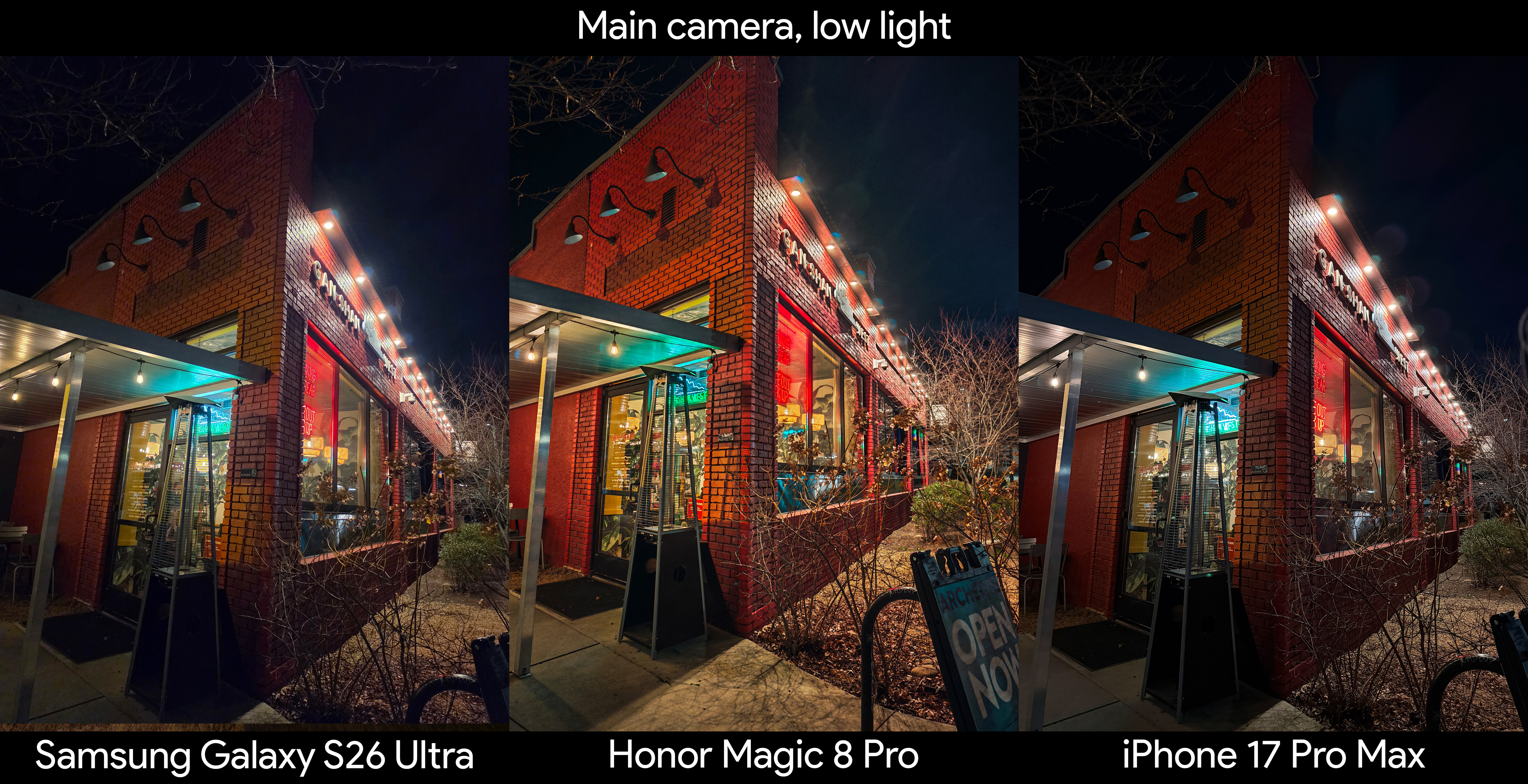
Compared to the competition's results, the Honor Magic 8 Pro often produces punchier photos with deeper, more vibrant colors and additional detail. Some may prefer this look, as Samsung phones used to be similar. Still, Honor's default camera settings often produce unrealistic representations of whatever you're trying to photograph.
The Google Pixel 10 Pro XL and iPhone 17 Pro Max, on the other hand, often match the color accuracy and optimal exposure of the Galaxy S26 Ultra, but tend to lack the fine detail that Samsung's camera produces.
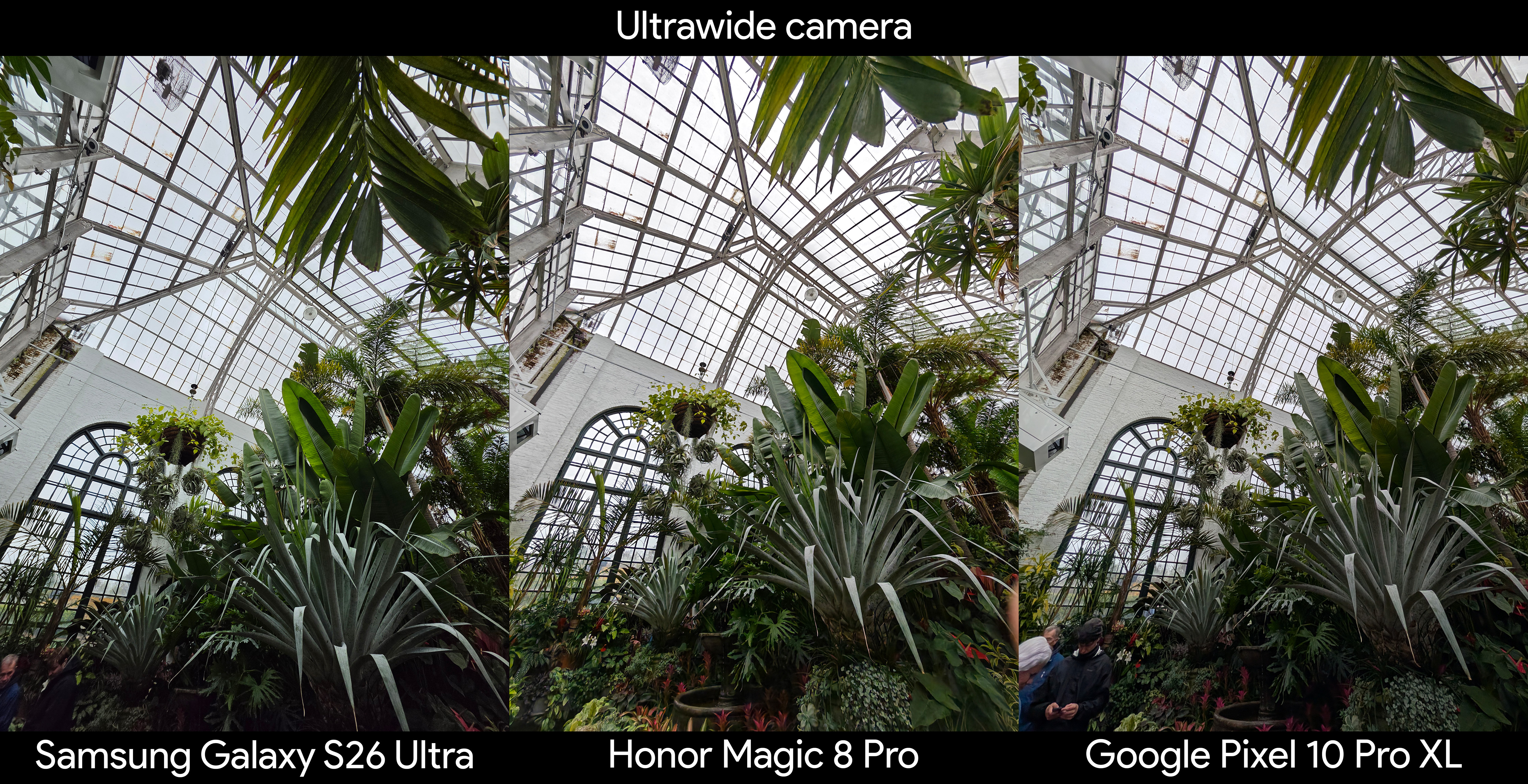
The ultrawide camera doesn't hold up as well, though. It often produces more saturated images and has less dynamic range than the competition. The example above gives you a good idea of what to expect.
Samsung's portrait mode has been industry-leading for years, and the Galaxy S26 Ultra's is better than ever in some scenarios. When taking pictures of pets or people, the Galaxy S26 Ultra's portrait mode is the cream of the crop. This year, Samsung seems to have further improved motion capture, capturing cleaner pictures even when pets or kids won't hold still.
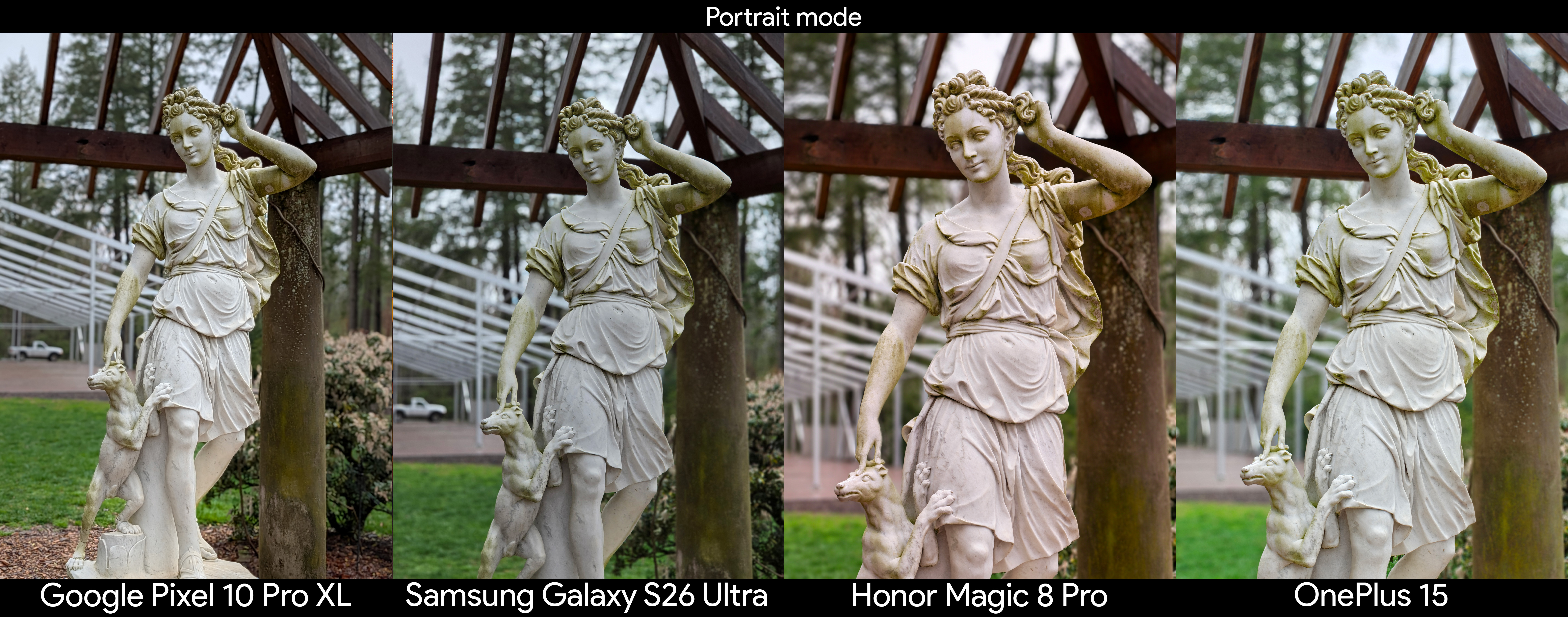
But one of my favorite ways to use portrait mode on modern phones doesn't work well on the Galaxy S26 Ultra. I often use portrait mode to create a shallow depth of field, mimicking the look of a professional camera. The S26 Ultra often struggles to understand what I want in these situations, while phones like the Honor Magic 8 Pro and Google Pixel 10 Pro XL get it right almost every time.
I've been incredibly pleased with the consistency of the Galaxy S26 Ultra's camera. It might not always be the best in any one specific area, but overall, its images are often considered the best median result.
The ultrawide camera is used in conjunction with the main camera to deliver ultra-smooth, ultra-stable video capture. Samsung's previous Steady Shot system is available alongside a new Horizon Lock option, which does exactly what it says on the tin. In the video example above, I rotate the phone side to side using all three stability settings to showcase the effectiveness of each option.
Horizon Lock isn't necessarily "better" than the existing Steady Shot system. Still, it's an impressive option that uses digital cropping and multiple sensors to deliver the most stable video you'll find anywhere, even if Motorola was the first to offer it.
Space Zoom comes back to Earth
While the telephoto quality on this phone is excellent overall, it doesn't always match the greatness produced by Samsung's biggest competitors. No, I'm not talking about Apple or Google, two companies that produce similar telephoto quality to Samsung's; rather, I'm referring to competition from Chinese OEMs that have been pushing telephoto camera specs recently.
Let's begin with the good, though. Samsung has improved zoom clarity beyond 5x by using a new All Lenses on Prism (ALoP) concept for the 5x telephoto zoom camera. This reduces distortion compared to traditional lenses, such as the one on the Galaxy S25 Ultra.
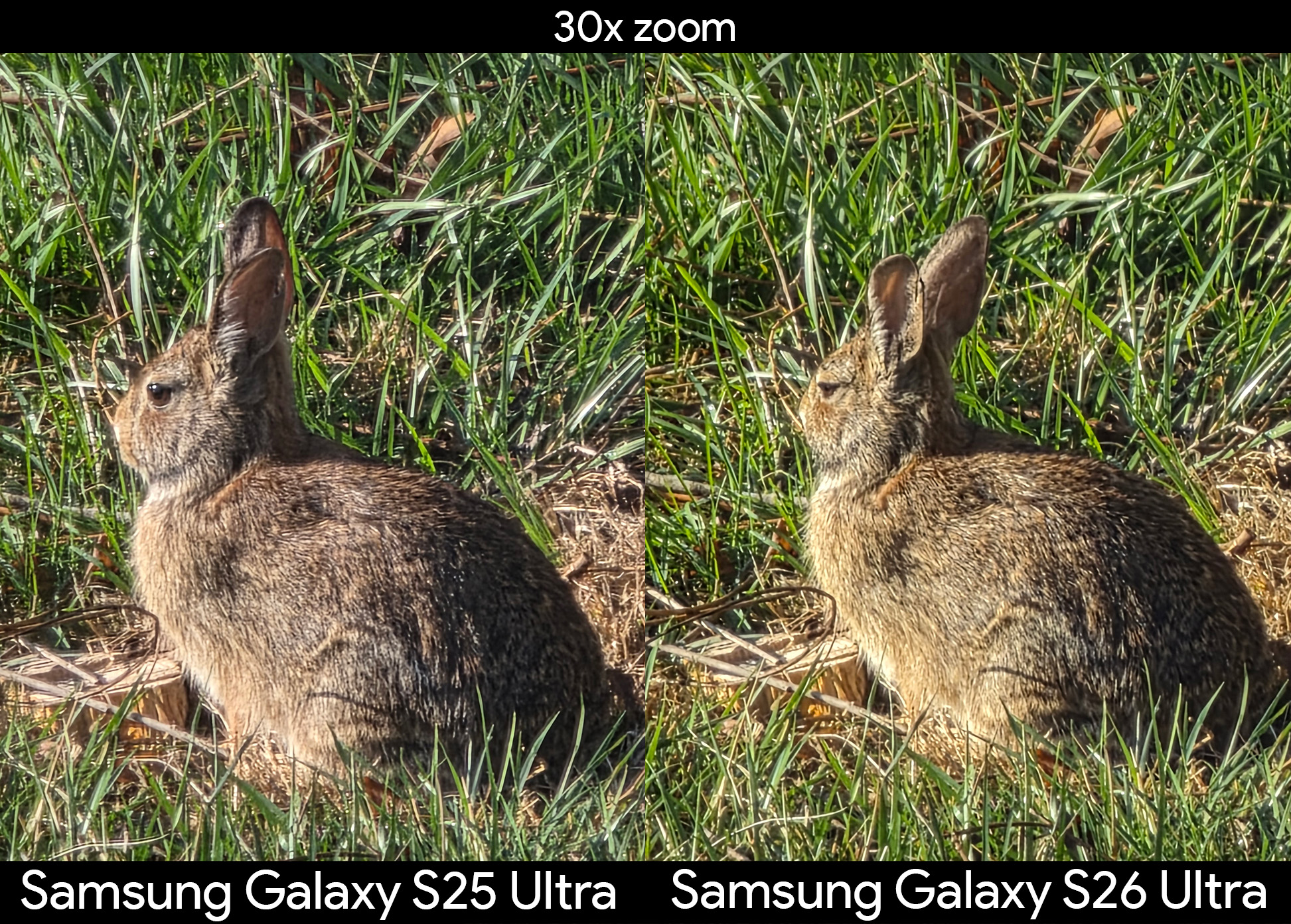
When it comes to telephoto quality, there is simply no replacing physics. AI can do a lot to enhance a photo and create details that should be there, but it still can't replace the look and feel of a photo taken with better hardware.
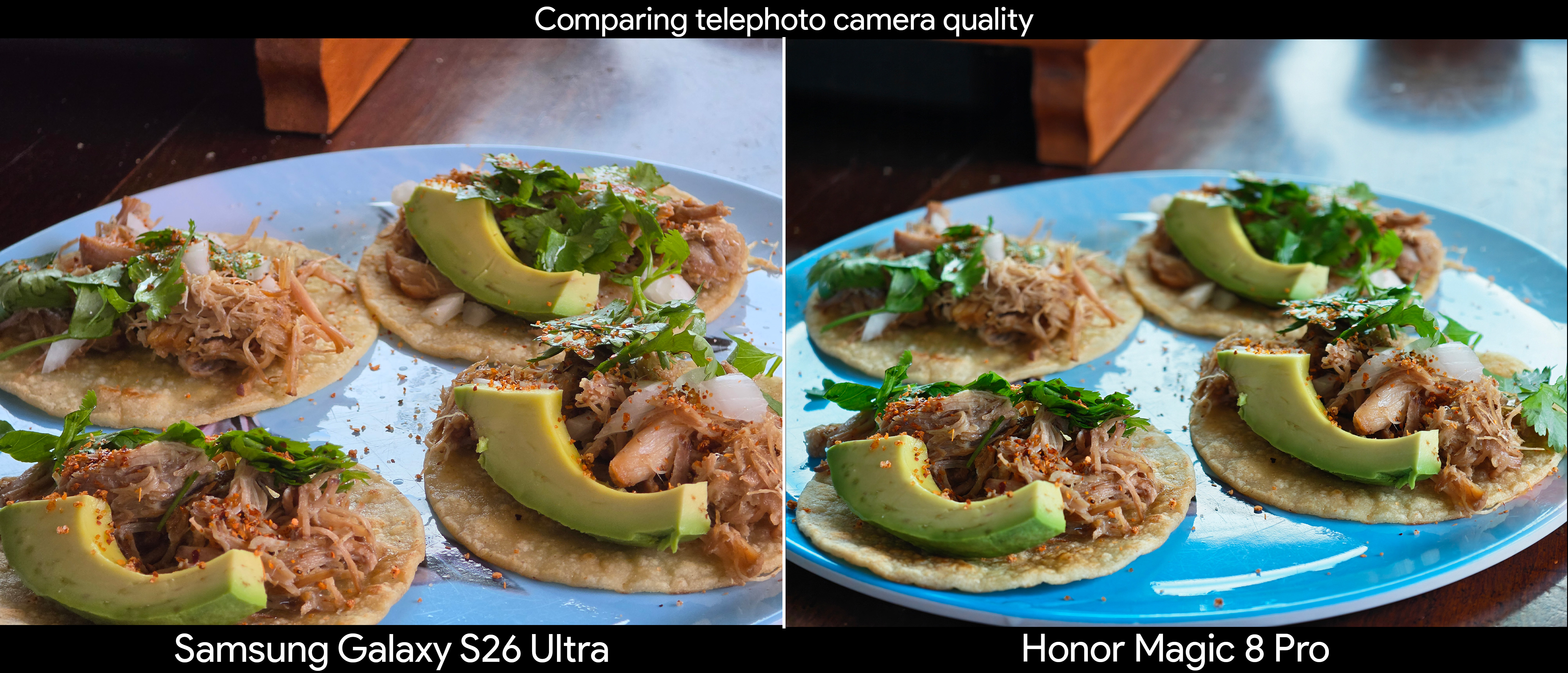
Phones with larger sensors or lenses that physically zoom in more will deliver better results than the Galaxy S26 Ultra, but it might not matter much in the end. The Honor Magic 8 Pro often performs better in zoom quality, but Samsung's results aren't bad by any means and are the best the company has produced to date.
Not "Ultra," but very close
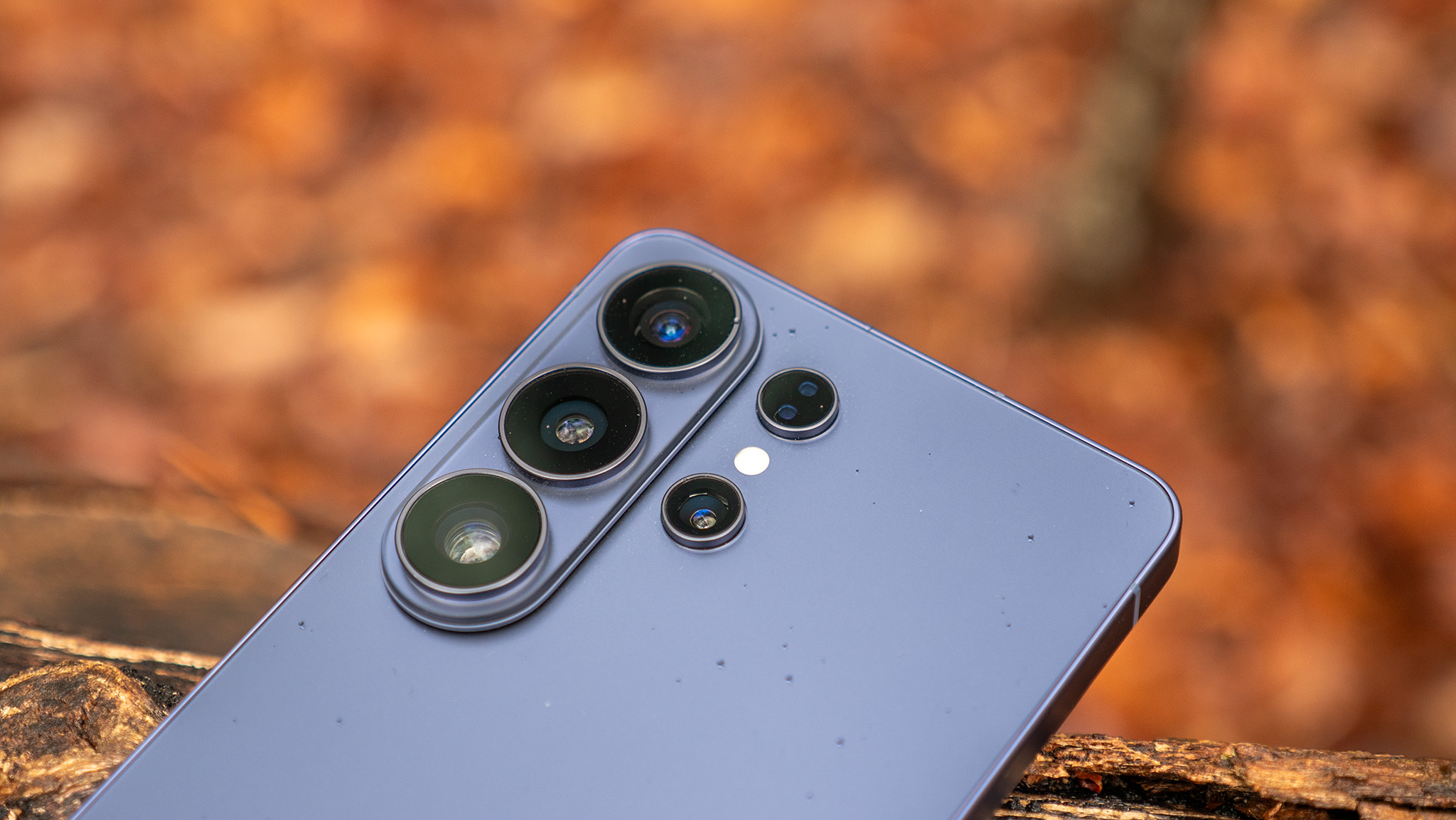
The Galaxy S26 Ultra isn't "the best" in any specific area, but it's so consistent in its results that this doesn't really matter. Samsung's Galaxy S26 Ultra often delivers realistic results, even if they aren't the highest quality possible from a smartphone to date.
I expected slightly better performance from this phone's telephoto sensors, given that it's "ultra" branded, but the performance from 3 of the 5 sensors is top-notch, and the two telephoto sensors are often excellent, and that's what really matters at the end of the day.
Samsung's best flagship yet comes with an impressive new display type and cameras that are better than ever. See what you've been missing with epic zoom detail and a camera that's more consistent than the competition.