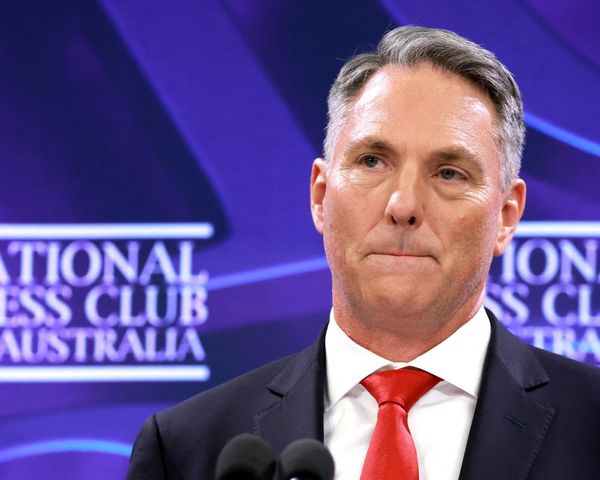
It has been a lively start for Chris Bryant, the new shadow culture minister. After the MP told the Guardian that we can’t “just have a culture dominated by Eddie Redmayne and James Blunt and their ilk”, Blunt expressed his frustration colourfully, calling the MP a “prejudiced wazzock” and “classist gimp”.
In fact, there were those who had greater cause for irritation. “I think a lot more museums, galleries, arts companies need to pay not just lip service to or tick the box of diversity, but embed themselves in a much wider community to increase access,” Bryant also opined. A few more months in the job may persuade him of the facts: most subsidised arts organisations are run by burning idealists (it’s not something to do for the money) who believe furiously in the importance of bringing their work to all parts of the society that they serve.
Which isn’t to say that everything is OK. Of course it is not. There is a two-to-one imbalance between men and women who work in the subsidised theatre, for instance. Colour-blind casting on our stages is now frequent, though not universal, and much remains to be done. (This is particularly pressing on TV, as Lenny Henry has rightly pointed out.) Look too at the directors of our most prominent national museums and galleries. Most of them are men – elegant, besuited white men – who look the part. They look the part because men like this have always done the job. This is not to decry the skills of these men – whose ranks may soon be swelled by Gabriele Finaldi, the much loved and respected deputy director of the Prado who is heavily tipped to take over the National Gallery. But it’s clear there is a problem: Britain’s museums are full of talented women curators, few of whom rise to directorships.
Some of these problems can be fixed through care and positive action. Fundamentally, though, if the arts are to be equally open to all, then this country needs be become more equal. Sure, the arts organisations cannot and should not throw their hands up in the air and declare defeat. (Scrutiny of the composition of boards of trustees is a good place to start.) But the root cause of a lack of diversity in the arts – in audiences, practitioners and administrators – is not the theatres, museums and orchestras themselves. It is the result of is the economic and political choices this country has made about the resources we devote, and the respect we accord, to artists and the arts.
Late last year I visited Newcastle and Gateshead, cities in the frontline of public sector cuts. Here I heard about the efforts of Lorne Campbell, artistic director of Northern Stage, to keep the channels of opportunity clear for both audiences and artists. His burning mission was for his theatre to be an open, civic space for the people of the city, whatever their age, income and background; and to provide an environment where artists from the north-east (a part of British society not overburdened with public schoolboys) had the resources to develop and improve their work.
Cuts and a depressed economy were making this more difficult to achieve. Campbell was particularly anxious about the young companies – artists in their 20s – that Northern Stage mentors. The position of these artists was precarious; losing them would mean a “narrowing of the cultural ecosystem”, said Campbell, that would “lead to a monoculture”.
I spoke to some of these young artists. One worked five jobs on zero-hours contracts to subsidise her art. Is this, I wondered, really how we treat the artists in our society? Apparently it is, for on average, according to reports published last year, composers make under £4,000 a year for their music and artists under £10,000 for their art. If we don’t expose all our children to the arts, if we don’t give them a thorough arts education, if we don’t fund arts organisations properly, and if we don’t reward our artists, then it’s not surprising if those making art, and those enjoying and running the arts, do not represent the full richness of British society.
Robert Hewison’s recent book Cultural Capital charts how the arts made a Faustian pact with Labour from 1997. They were given a hike in funding amounting to £290m; in return the arts were required to be a tool of Labour policy, hastening social mobility, and bringing economic and educational benefits in their wake. That was all very well when the money was flowing in. It is not any longer, and Labour has said that it would not restore the coalition’s £83m cuts. The Faustian pact is broken. As the tide of funding ebbs away, the real enemy of diversity in the arts is revealed to be not artists and arts organisations, but political decisions. And yet it is said that we get the politicians we deserve.