
Yes. Wearing the Asus ROG Xreal R1 glasses does make me look like I’m about to make you choose between the blue pill and the red pill. But stick with me here, because what you’re looking at are the most ambitious AR glasses to date (for better and for worse).
Tech-wise, you’re getting something similar to the Xreal One Pros — Sony Micro-OLED displays with that smaller prism optic and the X1 chip for all your display controls and 3D capabilities handled locally on the device. And a 57-degree field of view with a little fringing at the edges, but not so much that it ruins your watching (or playing) experience.
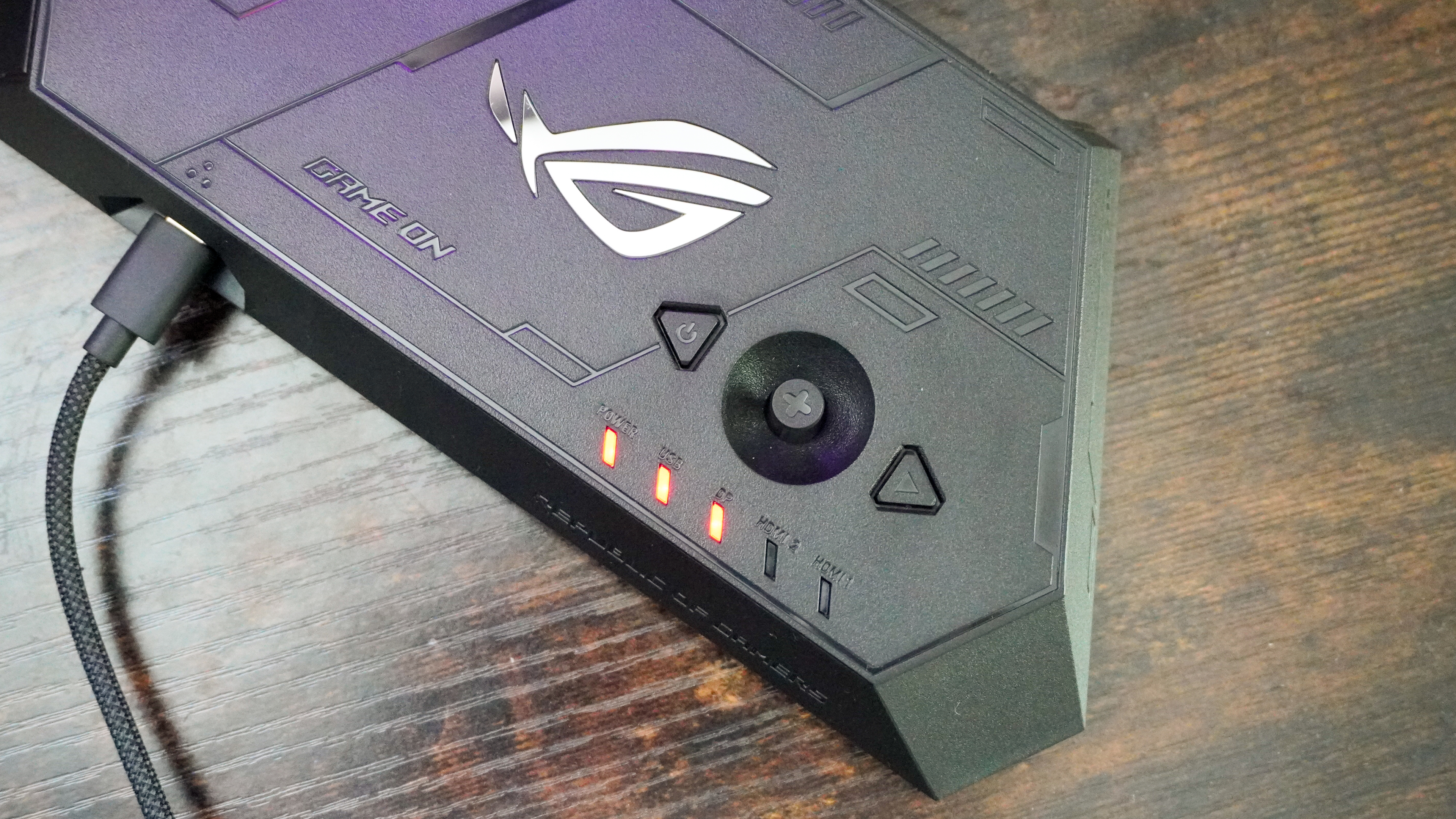
But with Asus ROG in tow, the real secret weapon here is the dock that connects directly to your gaming PC. This enables full 240Hz gameplay at 1080p (on paper), and the frame rate is unlike anything you can get from any AR glasses today.
It’s a nice little experiment between the two companies that almost pays off, until you see the compromises made to picture quality to get to that higher refresh rate, such as cutting the resolution and a whole lot of screen tearing.
Then there’s some of the awkwardness in that tie-in — whereas Xreal products were updated easily via the company’s website, it now takes a separate app to install them (which isn’t the most reliable on the first try). Plus, the menu interactions are a little weird, as all the buttons are deactivated once you use the dock.
But the most painful part is the price: $849. This limits them to gaming pros, who would want a better picture at 240Hz. And for those gaming on the go, this becomes an unnecessary expense in the face of the One Pros (if you wanted to stay Xreal) or the superior Viture Beast for plugging into your handheld.
I’ve had complicated thoughts while testing them over 15,000 miles of travel, 30 hours of play in hotels, offices, and bars, and 20 hours docked at home. So let me take you through them.
Asus ROG Xreal R1 AR Glasses: Cheat sheet
- What is it? This is a premium pair of gaming AR glasses. Beyond the standard USB-C connectivity into your phone, tablet, laptop, or gaming handheld, you get a dock with HDMI and DisplayPort to connect to consoles and PCs easily.
- Who is it for? This is for pros who are well-versed in AR glasses and gaming enthusiasts seeking only the fastest frame rates.
- What does it cost? You can pick up a pair for $849 / £749 .
- What do we like? They’re the most advanced AR glasses in terms of capability (240Hz), including that dock in the box, which is a nice touch for making the glasses more usable at home, and with Xreal One Pro levels of picture quality, they still look great.
- What don’t we like? Unlocking 240Hz does expose some screen tearing and a drop in fidelity, updating or controlling them is more awkward now in an Asus x Xreal tie-up, and that price is massive.
Xreal One Pro AR glasses: Specs
Display |
Sony 0.55-inch Micro-OLED display, 171-inch virtual screen with 1080p resolution, 120Hz refresh rate (240Hz when connected to the dock), 57-degree FOV, up to 1,600-nits of perceived brightness, software/hardware hybrid IPD adjustment |
Audio |
Dual speakers tuned by Bose |
Chip |
Xreal X1 Chip with Optic Engine 4.0 |
Dock connectivity |
HDMI 2.1, DisplayPort 1.4 |
Price |
$849 |
Asus ROG Xreal R1 AR glasses: The ups
And so, my first long-haul flight came. I was hoping I’d have enough time before leaving to test the dock, but that’s the nature of the job sometimes! I packed them, sat myself right at the back of a fully-booked economy class, and transformed my experience into First Class at the push of a button.
Still a great screen
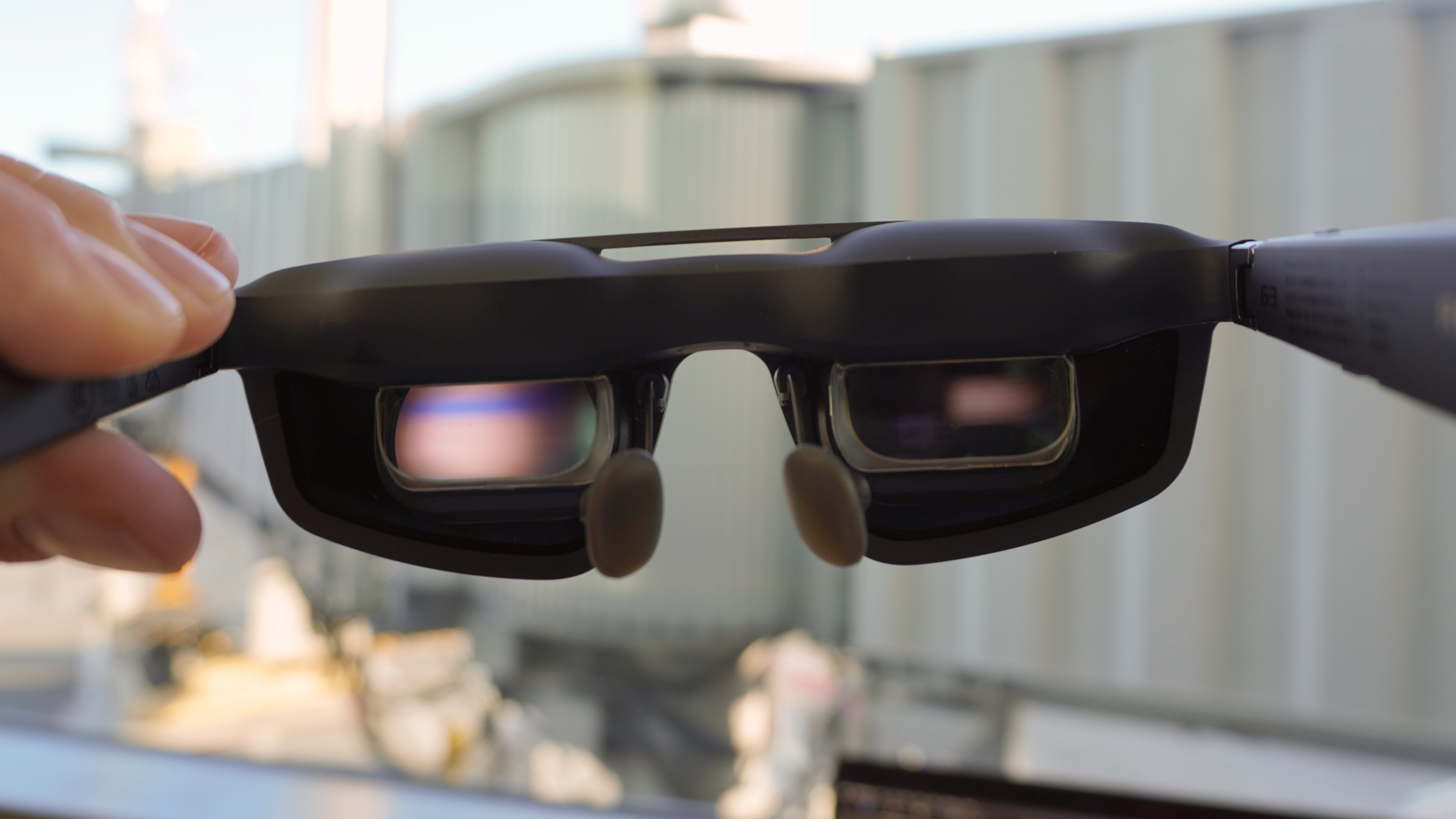
On the face of it, this is still the same screen tech that you find on the Xreal One Pros, and while the Viture Beast does have an advantage in color, the R1 continues to take a bit of a lead in all-around crispy detail.
These glasses can simulate a 278-inch display at 5 meters away — not that you should, because the end result is crazy. I ended up going for 171 inches so I could see the edges comfortably without any of the edge blurring causing problems.
But whatever I was doing, be it typing this review on my flight over to Computex, watching “The Boys” season finale, or playing 007 First Light on my Steam Deck, these glasses kept up handily with their 1080p resolution, 120Hz refresh rate, and impressive brightness.
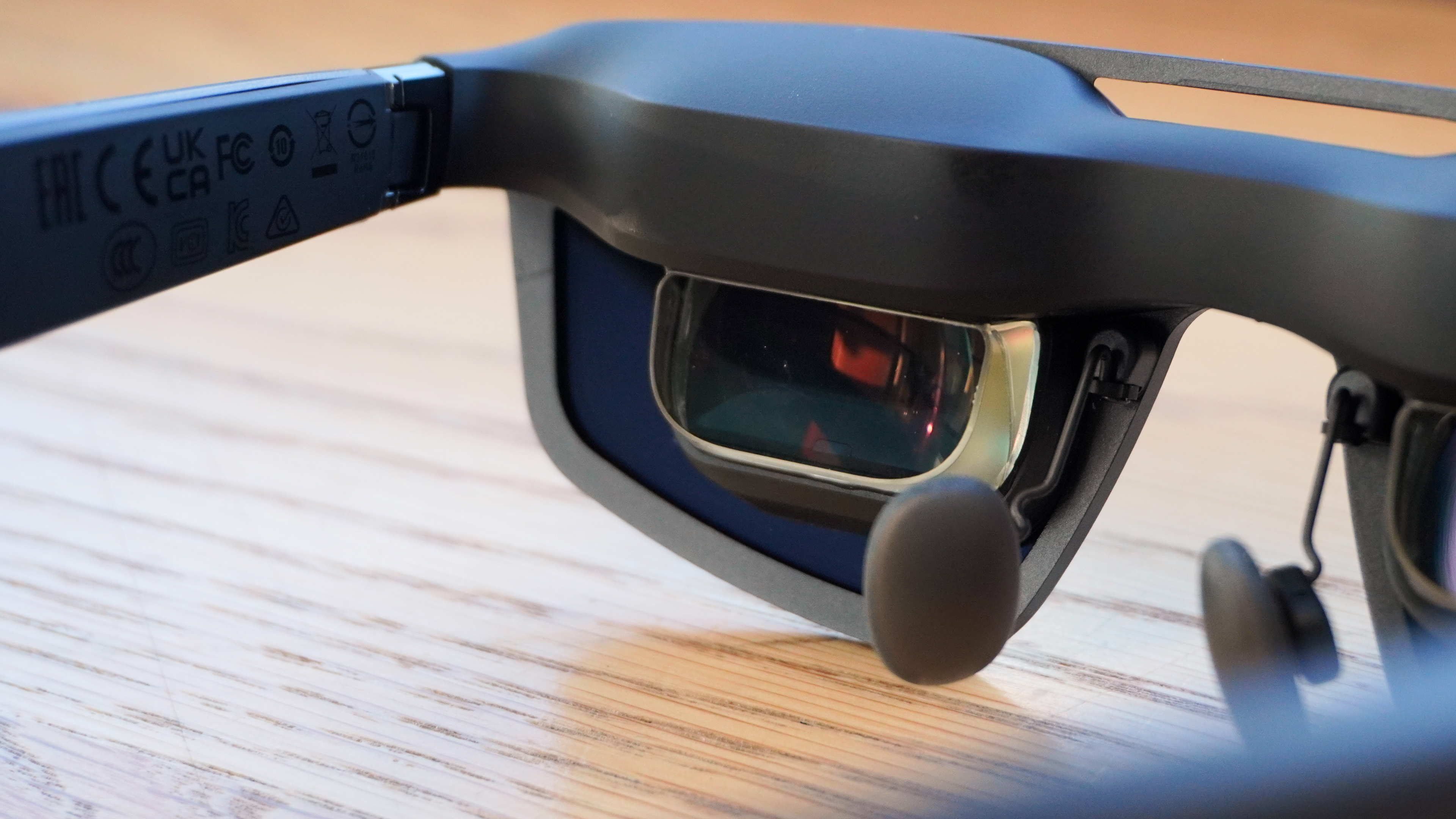
Of course, that’s where the X1 chip comes in to make things interesting. Only this time around, the options have grown dramatically. With the Xreal 1S, I had an ultra-wide and the ability to turn my content from 2D to 3D in real time. Now, there are many other display aspect ratios to play with (even vertical if you really hate your neck), and it all comes together to make these an effective spatial extension of your portable workspace.
Oh, and shout-out to the deep electrochromic tint along the front of the lenses — making them feel like a blindfold when set to max, but also turning off if I have the picture anchored in front of me when I turn my head to talk to someone.
Also, speaking of tracking, these don’t pass the plane test (to be expected, as they don’t have the full-blown 6DoF tracking that would make it happen), so keep them on Smooth Follow mode if you’re on the go. But in static locations, that tracking is rock solid.
Bold looks, comfortable wearing
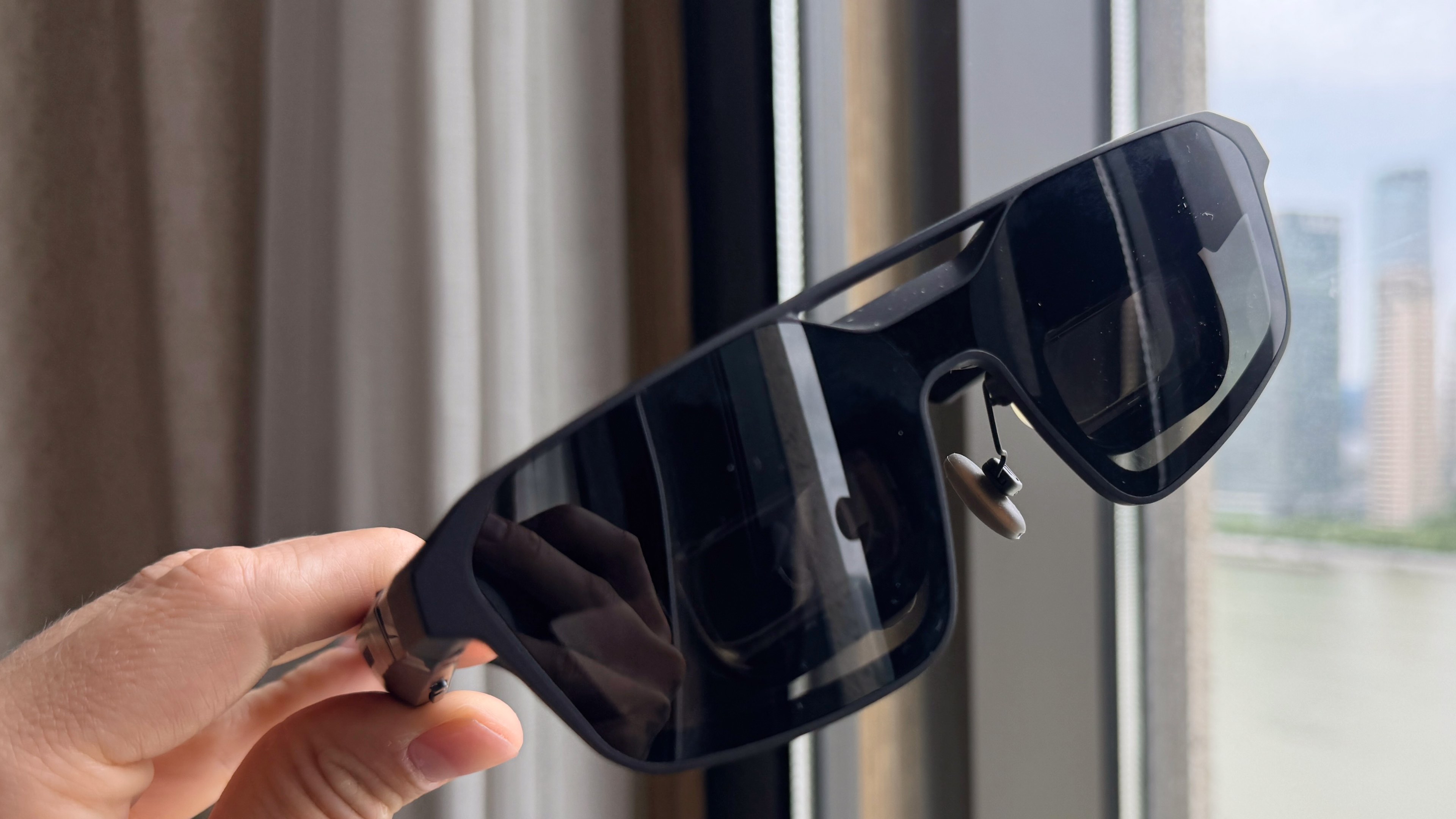
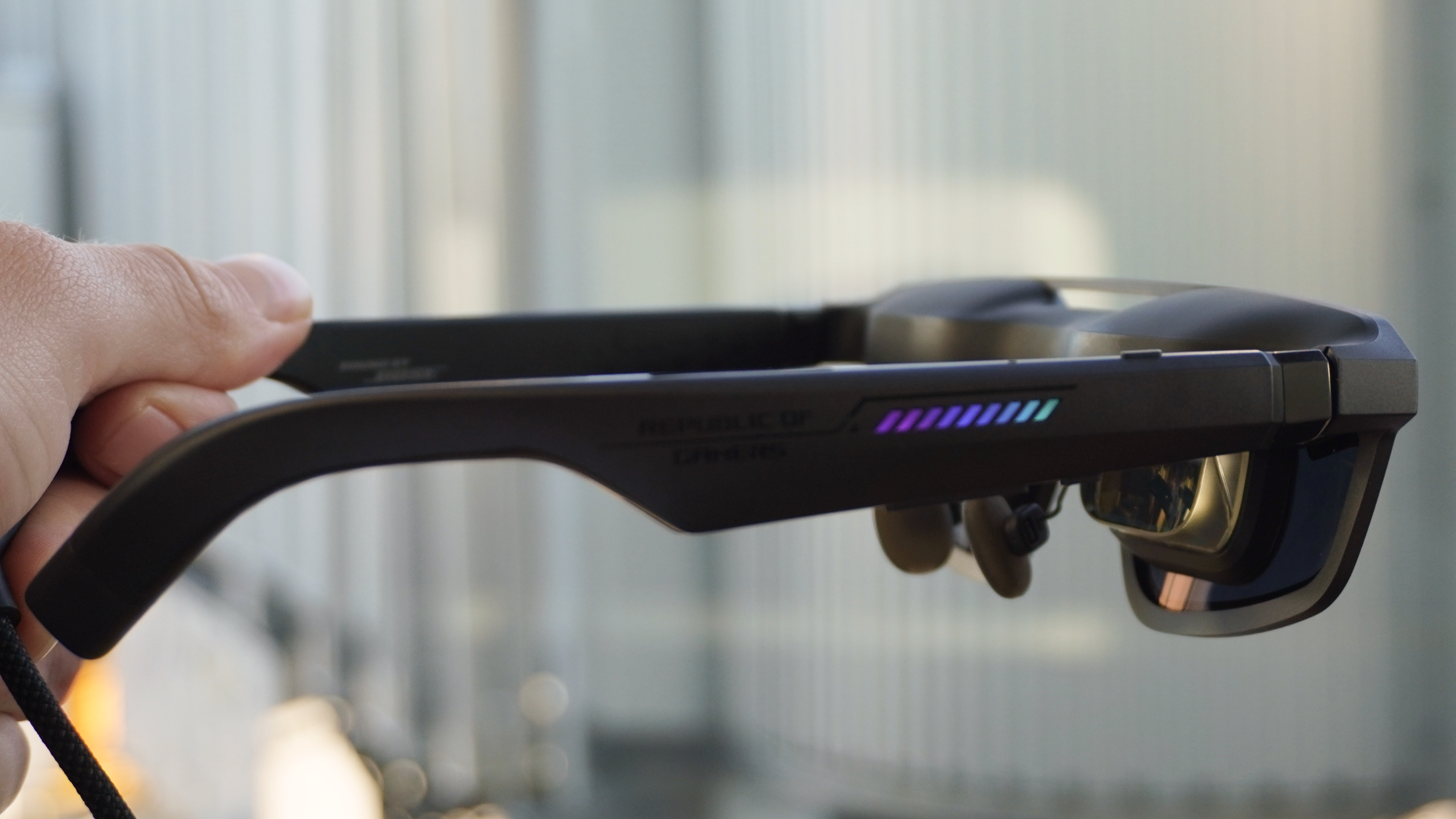
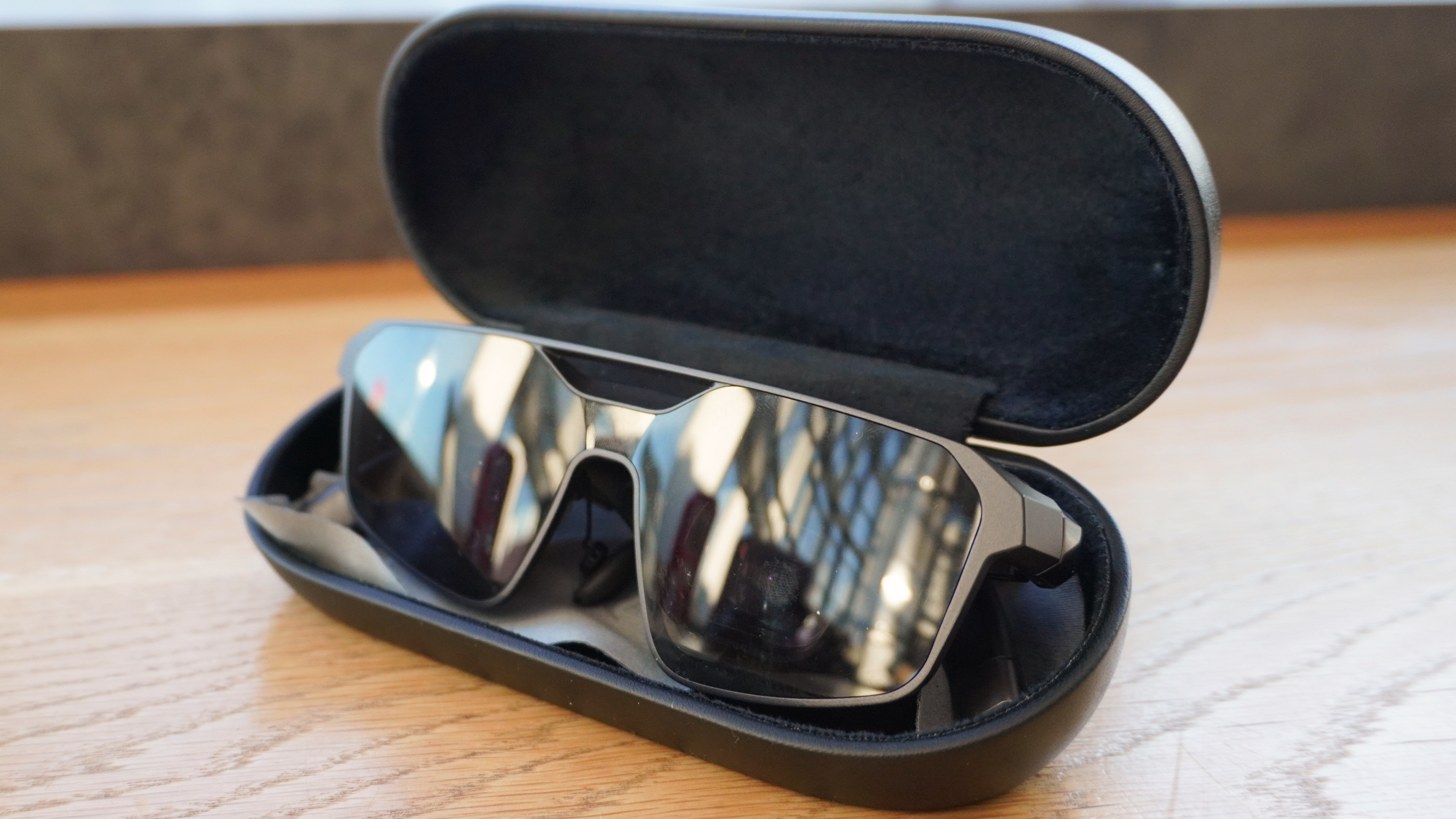
If you like The Matrix, chances are you’ll love this aesthetic. I quite enjoy it, but I can totally understand it’s not going to be everyone’s cup of tea.
Much like the super shiny RayNeo Air 4 Pros with that Batman mask, they do maximize the attention being drawn to you. I did see some odd double takes on people’s faces on the plane, so entirely your call on whether you’re comfortable with that.
But ultimately, this design makes for a comfortable pair of glasses that sit on just the right part of your nose, neither too high nor too low, and give you the full picture. Adjustable stems can reorient the picture, and the weight distribution is nice across the whole range of specs, so you can comfortably wear them for hours on end.
Button placement feels logical too, with the addition of a mappable shortcut button (I use mine to activate 32:9 when working on my laptop, for example), and the speakers are nice and loud without any distortion (or bass for that matter, but that’s just AR glasses for you).
Gunning for the gaming monitor
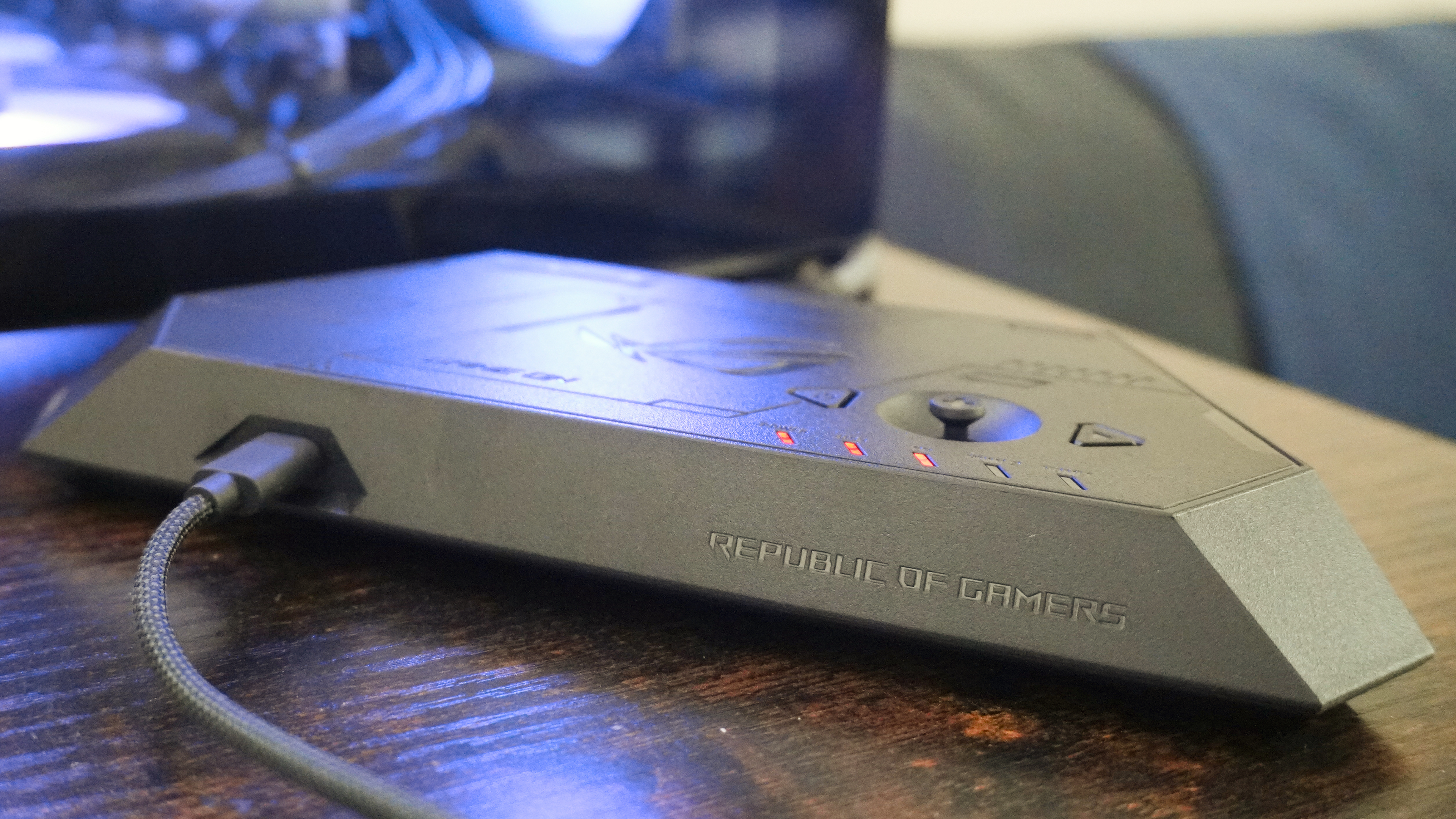
This was the part of the puzzle that intrigued me the most about the R1 glasses. Getting back from my press trip, I immediately set up the doc, went through an awkward update process (more on that later), plugged in my RTX 5080 gaming PC via DisplayPort, and got to playing.
The end result is surprising — buttery smooth 240Hz gameplay. This is a first for AR glasses, and it’s quite the experience. Flick on Dynamic Frame Gen, and you can stretch these to the fullest. There are some issues (I’ll go into them in a second), but I have to respect the fluidity.
As for the dock itself, while there are some awkward control transitions happening here where the glasses buttons turn off, and you have to use the dock, the dock controls are logically laid around a joystick — similar to what you’d see on the back of a gaming monitor.
Throw in the multiple inputs, and this is a great way to bring your various home devices together around this one wearable screen.
Asus ROG Xreal R1 AR glasses: The downs
As I got a couple of weeks into my stress testing, I noticed a few things that were weird with the R1S. One was obvious from the get-go, but the second took me a couple of games to really see what was going on.
No more simple firmware updates
This is a quick and easy one. With Xreal glasses, the firmware updates were almost always done via the company’s website. Just open the page, plug in your glasses, and boom.
With the Asus glasses, it’s a different kettle of fish. Download the update executable, open it on your PC, then connect the glasses and dock to complete the update. Sometimes it didn’t stick, and it took me three tries to get it done.
Why can’t they use Xreal’s website? I have no idea! Hopefully, this can be resolved quickly.
240Hz at what cost
So this is where I get a little more into that silky smooth mode. 240Hz is buttery for sure, but to get there, compromises had to be made — namely, in image resolution.
As Asus said on a recent subreddit post about the glasses, while the horizontal resolution stays at 1920, the vertical resolution is halved and then upscaled, which leads to a blurrier, more pixellated picture.

I mean, I appreciate my specs not melting on my face, but also, this is very noticeable. Even if you had the faster frame rate, you’d lose the competitive edge of having that in the first place by not being able to see your enemies in the distance.
Oh, and while the update did resolve some of the screen tearing, it’s still a bit of a persistent problem that can pull you out of whatever game you're playing.
$849 is a huge amount of money

This is a new all-time high price tag for AR glasses, so you need to be committed to what these offer before you buy. That’s because you could realistically buy a 1080p 240Hz gaming monitor for significantly cheaper than these specs.
And if it's the glasses side of things you want for the portability, there are many premium options for hundreds of dollars cheaper than this. These give you a very specific best of both worlds that will tickle a particular niche, but outside of that, they aren’t going to be worth it to everyone.
Asus ROG Xreal R1 AR glasses: Verdict
So after my many flights across the globe and my hours at home, I’m left feeling a little conflicted. I’ve definitely seen the future of gaming AR glasses, but the future can do with a little more time in the oven.
Because fundamentally, the Asus ROG Xreal R1 is a good pair of AR glasses — using the DNA of the One Pros and delivering something that may have divisive looks externally, but has a great-looking screen on the inside for the user.
But while the dock does add some nice home use cases to the formula, the resolution and screen-tearing issues are a problem, especially when you remember that these cost $849.
If you’re hellbent on replacing your gaming monitor and jumping into the future come what may, these are a solid pair to buy. But if I were you, I’d wait it out a little for the kinks to get worked out (and that price to hopefully come down).