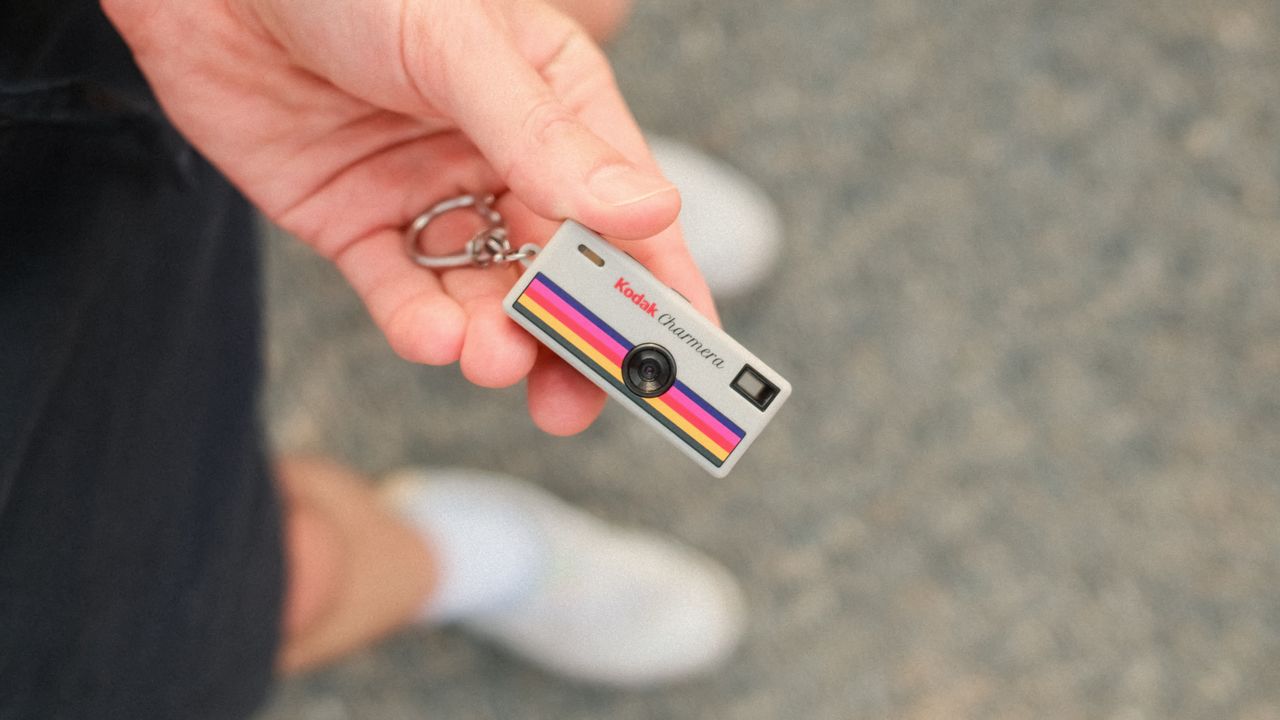
I recently took the Kodak Charmera on vacation, and I can say with some confidence that it is the worst camera I have ever used. I mean, not a fun end-of-year list bad, properly, fundamentally bad.
The Kodak Charmera is part of the new wave of keychain cameras, although created as more of a novelty toy than an actual serious photographic tool, and costing only around $35 / £35, I can't be too harsh on this adorable little thing.
Despite all the blown-out skies, smudgy detail, and the wildly unpredictable color, I actually quite like it. The results are, by any normal measure, terrible. But that is really rather the point (although Kodak probably still objects to me using the word terrible). It's not about replacing a proper camera, or even replacing a phone, but about making images that feel less polished.

There are a dozen reasons why less clinical photos are making a comeback; a rejection of the unhealthy idea of perfection pushed by social media, a desire to capture more “authenticity” in images, a way to go back to when technology was fun and not an existential threat to privacy and livelihoods, or like me, it just is a nostalgic trip back to how I remember pictures looking when I was young.
While its photos might not look technically good, they do look like memories. They have that late-1990s, early-digital-camera quality and are somehow more emotionally convincing for it. A beach shot taken on one of the best camera phones will look perfect, but the same scene through a camera like this can look like a photo from a childhood holiday pulled from an old relic of a hard drive.

Is it just poserism? Maybe partly. Deliberately choosing bad image quality when you have a far better camera in your pocket is performative, and there is no point pretending otherwise.
But as a tiny camera for making deliberately imperfect, nostalgic snapshots, I understood it, and enjoyed it more than I expected to. The photos are dreadful, but in an age where every image is being made cleaner, sharper, and more computationally perfect, maybe there is room for a camera that gets almost everything wrong.