When a healthy woman began experiencing severe body aches and chills at her home, she initially shrugged it off as a passing winter illness. However, within days, her condition rapidly deteriorated, forcing emergency doctors to make a split-second decision to save her. What started as a seemingly routine recovery soon transformed into an intense medical battle that nearly cost her everything.
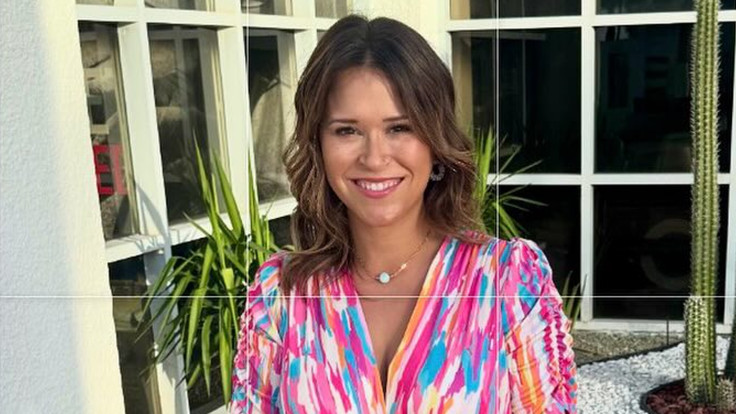
A Virginia Beach mother is opening up about her terrifying medical crisis to help others recognise the subtle signs of a hidden killer. At just 31 years old, a perfectly healthy Audrey Leishman mistook her initial symptoms for a standard bout of the flu. That misdiagnosis quickly turned catastrophic, forcing her into intensive care for nearly a fortnight as doctors placed her in a five-day induced coma just to keep her alive.
Turning her survival into a mission, Leishman—wife of professional golfer Marc Leishman—now runs the Begin Again Foundation to ensure other families don't suffer the same fate. Her advocacy also includes a newly penned children's book aimed at teaching readers how to recognise the subtle symptoms before it is too late.
Mistaking a Deadly Killer for the Flu
Solo parenting while her husband was away on the road, Leishman first noticed something was wrong one evening as she watched over her 19-month-old and three-year-old boys. 'I had never actually had the flu before, but I was achy, feverish and cold. And so I thought, this seems like the flu,' she told Fox News Digital during an on-camera interview.
Over the following days, her condition took a dangerous turn as a soaring temperature was accompanied by severe gastrointestinal distress. 'At one point, I actually thought I was going a little bit crazy, because my right elbow and left big toe started hurting – it was the most random thing. I hadn't injured myself,' she said. 'I was really confused as to what was going on.'
A concerned friend stepped in to demand medical help after finding Leishman suffering from nosebleeds and physically incapable of looking after her toddlers. The gravity of the situation became clear at Urgent Care, where staff immediately called for an emergency ambulance upon discovering her collapsing blood pressure alongside a spiking heart rate and fever.
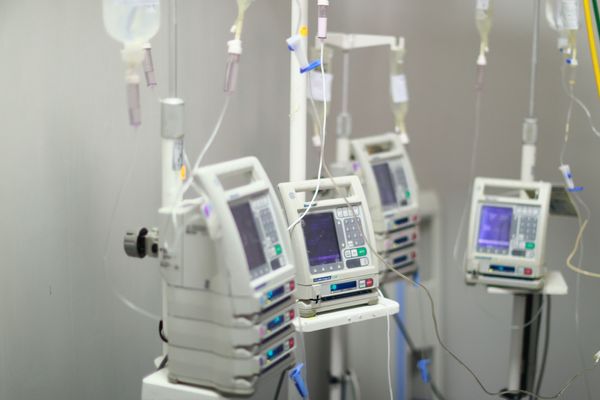
A Desperate Battle in the Intensive Care Unit
Reflecting on how much hospital diagnostic protocols have improved since her crisis, Leishman recalled a starkly different medical landscape a decade ago. 'They took a very long time to figure out what was going wrong with me,' she explained, remembering how initial clinical assessments mistakenly pointed toward an autoimmune disorder.
'They kept testing me for different things. Eventually, they admitted me, and I was in the ICU for a total of 10 days – five of which were in a medically induced coma.' The infection rapidly escalated, ultimately triggering a severe case of acute respiratory distress syndrome.
'I very much remember not being able to breathe,' Leishman recalled. 'That was by far the scariest part. It got to the point where I had to pause between every word to take a breath, and it was basically like sipping air.'
The Long and Costly Road to Recovery
Medical staff later revealed to Leishman that the odds were heavily stacked against her ever regaining consciousness. 'When I finally did wake up, it was quite the process of relearning how to walk again, dealing with at-home physical therapy and being on a PICC line (peripherally inserted central catheter),' she shared.
The initial twelve months of her rehabilitation proved to be an immense uphill battle. The first year of recovery was 'very difficult,' she said. 'My immune system was so compromised that I was sick constantly.'
Although Leishman has reclaimed her health, she notes that lingering side effects mean her memory 'is not what it used to be,' alongside a higher susceptibility to exhaustion. While the definitive trigger for the infection was never formally established, medical professionals suspect it stemmed from the recent removal of her IUD.
'I did have the diagnosis of toxic shock syndrome, but I also had tonsillitis, strep throat, a UTI and pneumonia,' she said. 'I was a very, very sick person.'
Launching a Foundation From Financial Aftershocks
Stepping out of the hospital, Leishman was struck by a jarring realisation: almost no one actually knew what sepsis was. That glaring gap in public knowledge drove her to launch the Begin Again Foundation.
'I had never heard of sepsis – and I realized that was why I almost died,' she shared. 'If I had known what the symptoms were and what to look out for, I would have sought treatment earlier.'
Then came the financial aftershocks. The sheer volume of incoming bills—covering everything from at-home nursing visits and heavy antibiotics to physical mobility gear like a walker—left her reeling.
'I learned that sepsis is the most expensive hospitalization bill there is,' Leishman said. 'I remember thinking, "What if we didn't have the money to afford this?"'
'In a time when people are struggling, if I can help ease that burden – even just the tiniest bit, so they can focus more on the recovery – it is my absolute passion and honor to continue to do that. And that is the main focus of the organization.'
Educating Parents and the Next Generation
Turning her ordeal into a tool for the next generation, Leishman authored a children's book titled Katie Koala's Biggest Fight. The story follows a young girl who falls ill after an injury, but thanks to her mother's quick instincts and an early trip to the doctor, her sepsis is caught well before it can turn fatal.
'My goal for this book is that it will be in both little hands and their parents' bigger hands ... and that by reading this story, they learn about what sepsis is and what symptoms to look out for,' she said. 'I've read too many stories of parents who did seek treatment, who took their child to the doctor, and were told it was just a virus.'
For parents, Leishman believes the single most powerful tool is a simple, direct question. Next time your child is seriously ill, just ask the doctor: 'Could this be sepsis?' She added, 'Just asking that question could lead them on the path to run a different lab panel or look at the symptoms in a different way.'
If there is one crucial takeaway Leishman wants to leave people with, it is that sepsis does not discriminate—it can trigger from absolutely any infection, no matter how minor it seems. 'The most common causes are respiratory infections, UTIs and kidney stones, but it can happen from a cut. It can happen from strep throat, the flu,' she warned.
The reality of how quickly a common illness can escalate into a fatal crisis was tragically highlighted in May, when NASCAR star Kyle Busch passed away at age 41 after severe pneumonia rapidly progressed into overwhelming sepsis.