
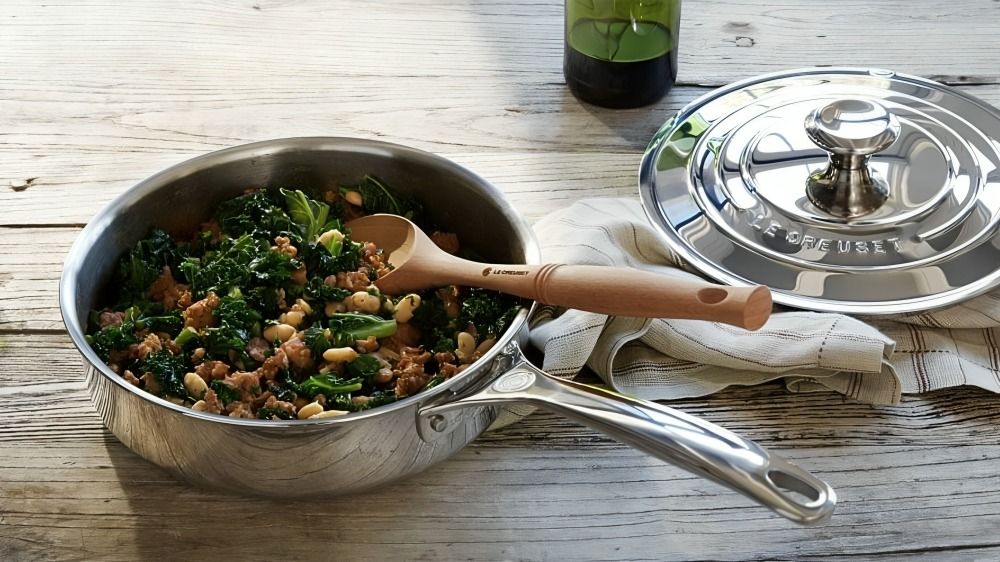
While cooking with stainless steel is now second nature, there was a time when nearly everything ended up seared to the pan. The result was stubborn discoloration that left my cookware looking worse for wear, and actually made cooking more difficult.
No amount of scrubbing seemed to help, so you can imagine my delight when I spent an evening with Le Creuset’s development chef, and she revealed her secret for restoring even the best non-toxic cookware that is in the worst condition.
The secret? A single lemon. It may not sound like much, but trust me, it can save you hours of scrubbing at the sink. Here’s how.
Le Creuset's Chef Taught Me How to Restore Stainless Steel Pans With Half a Lemon
I was given the opportunity to spend an evening learning how to use the Le Creuset Signature Stainless Steel Cookware Set under the watchful eye of their top development chef, and I had one question on my mind: 'What should I do when I inevitably ruin one?'
While her guidance and a lesson on using the Leidenfrost effect to prevent food from sticking when cooking in stainless steel have made that outcome far less likely, she assured me that even my old pans can be rescued.
All it takes is half a fresh lemon (available at Walmart). Simply cut the lemon in half and rub the cut side directly over the dry surface of the pan. It works on the same principle as cleaning with citric acid, helping break down stubborn deposits without the need for harsh chemicals or abrasive scrubbers.
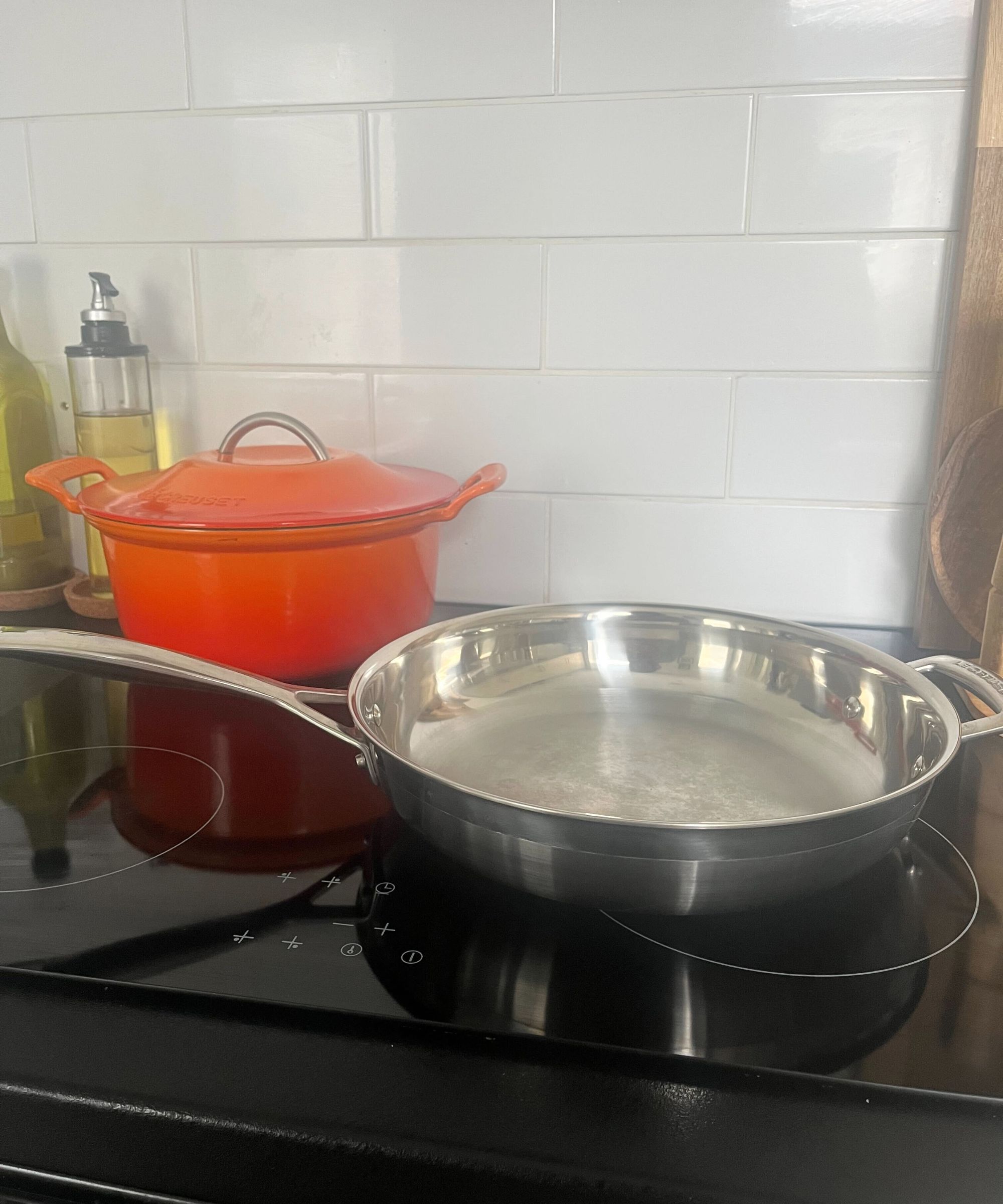
The method works on anything, from pans to cleaning a stainless steel sink, but it is by and large expert chefs' go-to method for those vital food-first surfaces.
Joanne Gallaher, co-founder and recipe developer at Inspired Taste, shared, 'Cut lemons are magic on stainless steel, especially if you sprinkle a little salt or baking soda [also from Walmart] on the pan along with it. Rub it with the cut side of the lemon, squeezing as you go.'
The method works as the citric acid breaks down residue without being too harsh, more effective than soap, but not as dangerous as an astringent chemical product.
'I’ll rinse my pans with warm water after giving my pot or pan a good scrub, then give it a quick dry,' Joanne adds. 'The shine should come back right away.'
The Cause of Discoloration on Stainless Steel Pans
Stainless steel can discolor for all sorts of reasons. Luckily, as Joanne explains, the color left behind is indicative of the cause, making it easier to treat and prevent:
- Rainbow sheen: A rainbow sheen (that resembles an oil slick) is caused by overheating the pan. 'It’s just a thin layer of oxidized metal that reacts to high heat, and it’s completely harmless.'
- Yellow or brown patches: These typically come from some oil that’s gotten a little too hot and stuck to the surface, and it may feel a bit sticky. Citric acid works wonders for shifting these when soap doesn't.
- White, chalky buildup: This comes from minerals in water, and it usually appears after letting a pan air dry. If any linger, cleaning with lemon juice should be more than enough to restore the shine.
What to Shop
How you clean and care for your cookware can have a profound impact on its performance over time.
To help keep your heirloom pieces looking and performing their best, I’ve rounded up six of my favorite tools to ensure your investment cookware items can be cared for and passed down through generations.
All prices were correct at the time of publication.
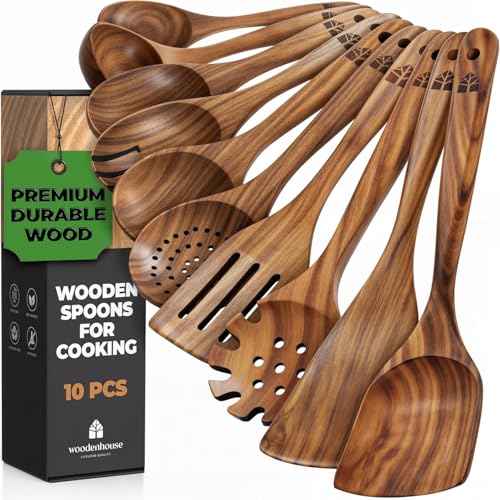
Avoid any metal utensils in your pans, no matter their construction. These teak tools will not damage your cookware, and they're non-toxic. Handwash only to prevent the dishwasher's heat and harsh detergents from stripping the wood of its protective oils.
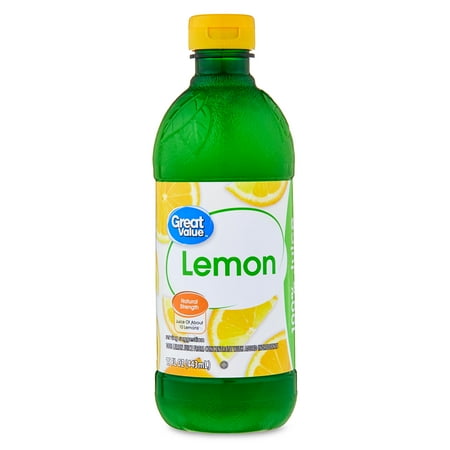
If you don't want to keep fresh lemons to hand for the sole purpose of cleaning, a bottle of lemon juice can do a similar job without the fresh waste. Simply apply and allow to sit, or buff with a soft cloth.
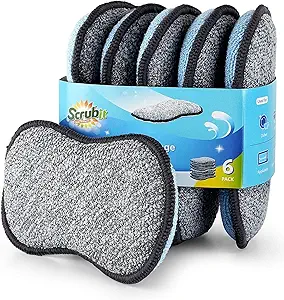
When cleaning dishes by hand, I use these machine-washable microfiber sponges. They have a soft scrubbing pad to help with build-up, but are not abrasive enough to scratch the surface of your cookware.
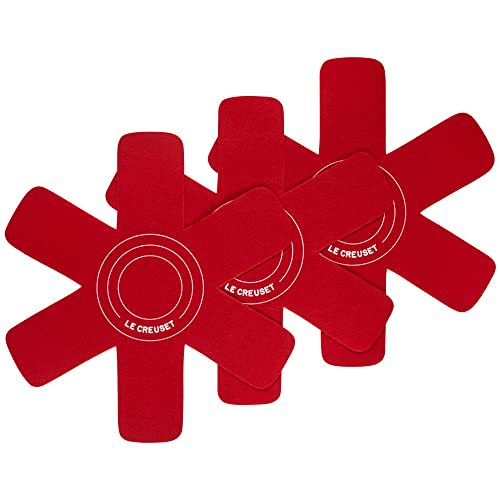
Stacking pans is the only way to fit them in my small kitchen storage. To protect the bases from scratches, I use these felt Le Creuset protectors between each pan, keeping everything from stainless steel to enameled cast iron looking its best.
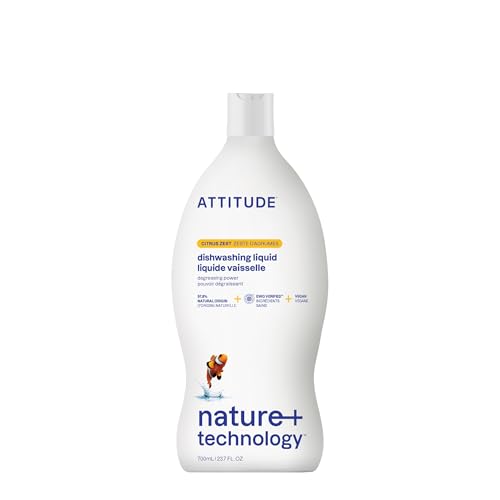
Attitude dish soap has been certified by the Environmental Working Group as non-toxic, making it the safer choice for use on cookware and better for the environment when it goes down the drain. It is a must-have in my sustainable household.
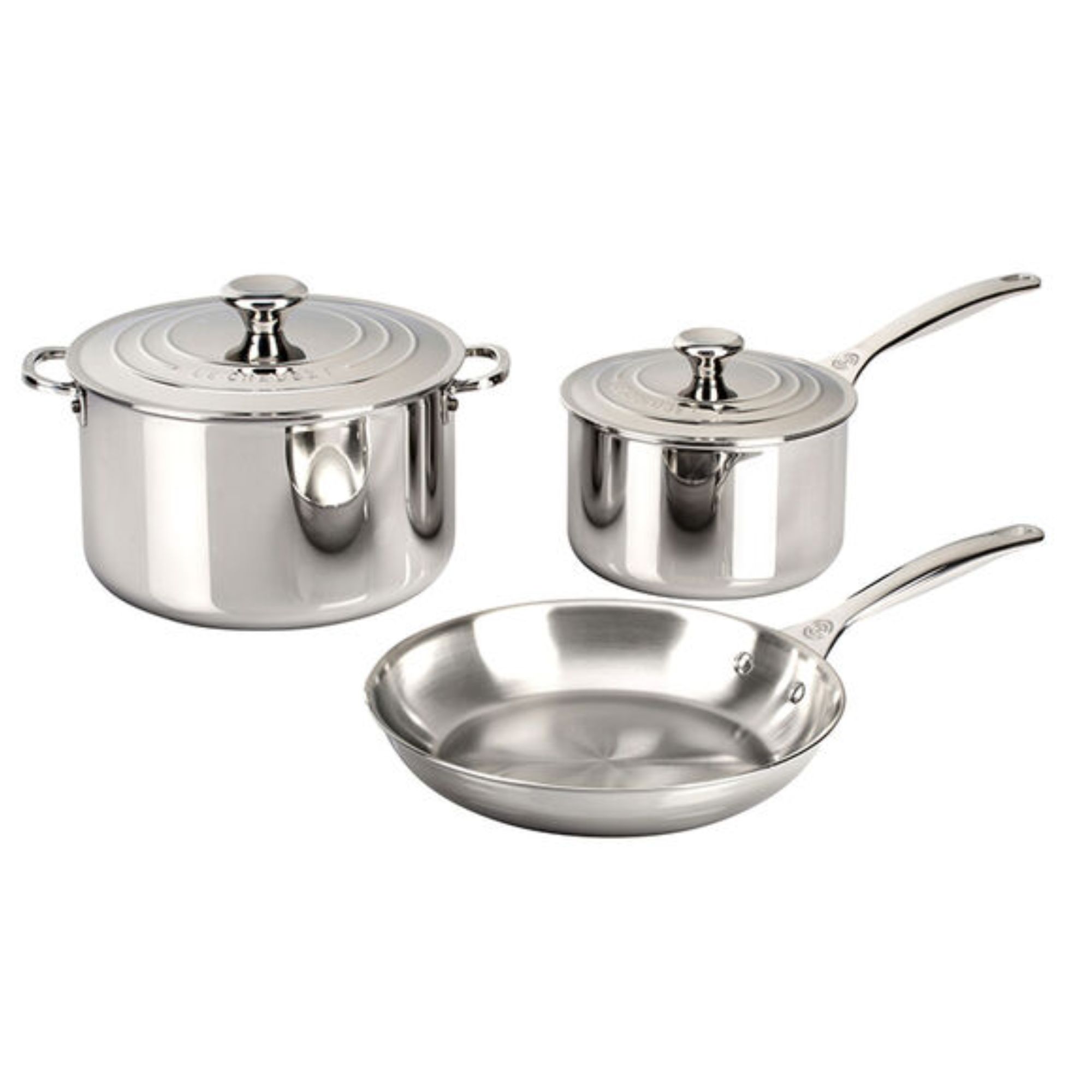
You can cook perfectly well on lower-end stainless steel pans, but having tried and tested the quality of the Le Creuset collection, I will never buy a budget version again. These heat evenly, hold their temperature, and sear wonderfully. They are a world-class upgrade that I would recommend time and again.
Meet the Expert
Whatever you do, be sure to avoid these common stainless steel cleaning mistakes when caring for your pans; otherwise, you may end up doing more harm than good.
Love the latest product news and helpful shopping advice? Sign up for our newsletter and get the latest features delivered straight to your inbox.