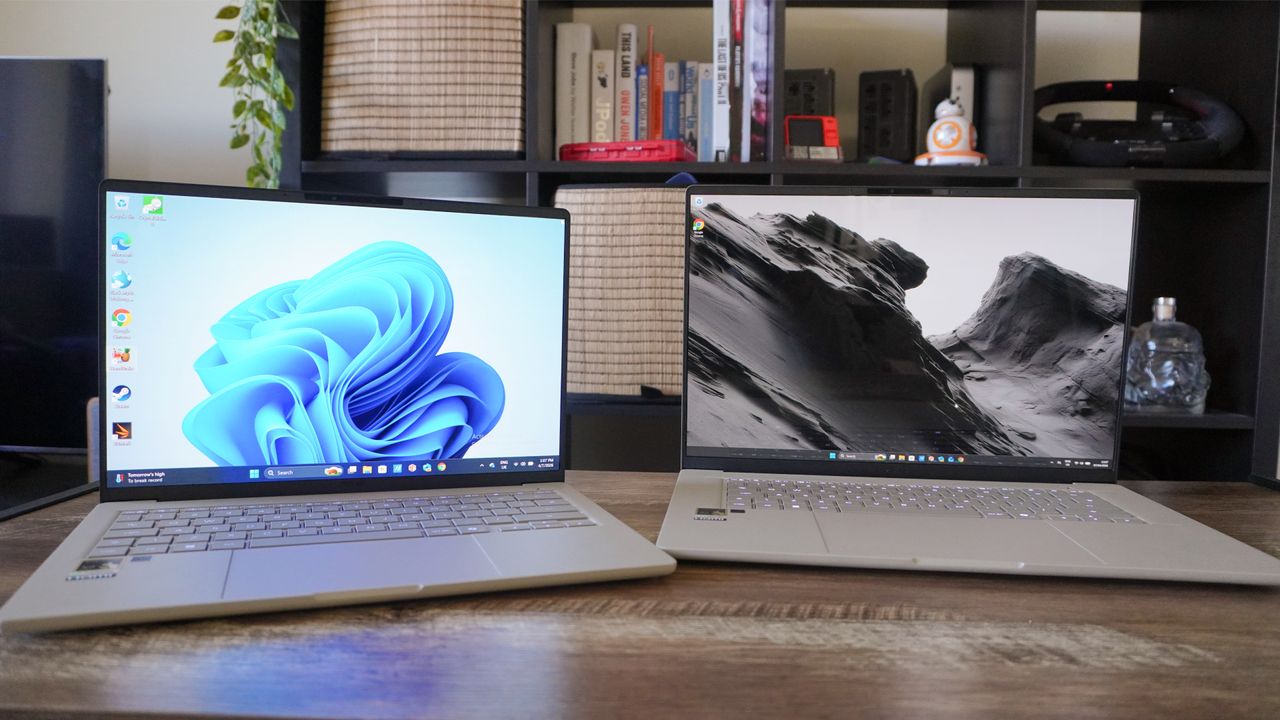
The laptop Asus really wanted to call the Zenbook Air (if it weren’t for an “easily spooked” legal team) is back in two sizes — the Zenbook A14 and A16 with Snapdragon X2 Elite upgrades under the hood. It’s clear that they have the M5 MacBook Airs in their sights, so do they take the fight to Apple and win? Not anymore.
The A14 was primed to take on the 13-inch M5 MacBook Air, and at the original price of just $50 more than Apple's laptop, the competition was tight. Now the cost has been hiked to $1,349 ($250 more), the Cupertino crew can breathe a sigh of relief as the smaller Air remains untouched atop the throne.
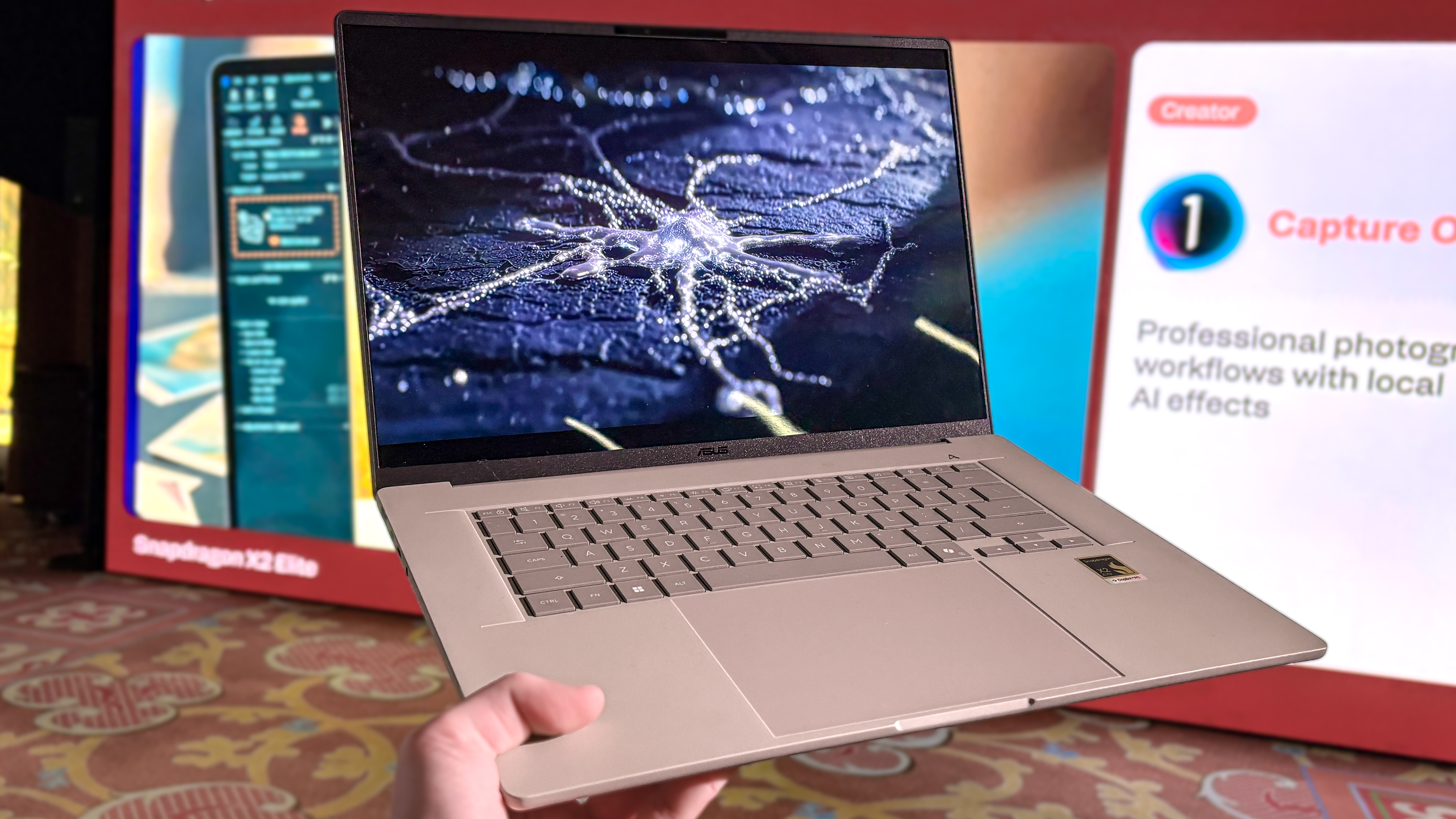
Then we turn our attention to the Zenbook A16 sporting Snapdragon X2 Elite Extreme. Now don’t get me wrong — this is a beast. As I found out testing this chip last year, and going hands-on with this 16-inch monster, the snappiness of general productivity and workhorse nature of speeding through intense tasks is impressive. Plus, you’re getting all of that in the lightest big laptop I’ve ever held with a mouthwatering screen.
But with great power comes less than great battery life, and in the face of the 15-inch M5 Air, this falters quite sizably while being significantly more expensive. Add to that a price bump of $100 to $1,699, and it's clearly competing more with the M5 MacBook Pro.
Like I said when I reviewed the first-generation model last year: to beat the MacBook Air, you must become the MacBook Air. For 24 hours, that margin had narrowed, but after an "error was made on [Best Buy's] end when sharing pricing information," it's becoming a little more clear cut that the A14 is a miss for Asus again, but the A16 has a fighting chance in its own right. Let me explain.
Asus Zenbook A14 & A16: Cheat sheet
- What is it? The Zenbook A14 and A16 are super-thin and light 14-inch and 16-inch laptops.
- Who is it for? This is for those who are always on the go and need a machine that keeps up with them.
- What does it cost? This laptop starts at $1,349 for the Snapdragon X2 Elite A14, and $1,699 for the X2 Elite Extreme-armed A16. In the U.K, you can buy the A14 for £1,599 and the A16 for £2,099.
- What’s good about it? Same as last year, these are gorgeously upmarket, thin and light systems that pack impressive performance and stamina (the latter specific to the 14-inch model).
- What’s not so good? Tiny speakers on both of them. The battery life on the A16 takes a big dip when putting a same-size battery in it compared to the A14, and expecting it to run the monster X2 Elite Extreme chip. Pair that with far higher prices, and they become tricky machines to compete with the Airs.
Asus Zenbook A14 & A16: Specs
Asus Zenbook A14 |
Asus Zenbook A16 |
|
|---|---|---|
CPU |
Snapdragon X2 Elite |
Snapdragon X2 Elite Extreme |
RAM |
16GB LPDDR5x (up to 32GB) |
48GB LPDDR5x |
Storage |
512GB SSD (up to 1TB) |
1TB SSD (up to 2TB) |
Display |
14-inch FHD OLED, 16:10 aspect ratio, 500 Nits brightness, 100% DCI-P3 color gamut |
16-inch 2880 x 1800-pixel OLED, 16:10 aspect ratio, 1100 Nits brightness, 120Hz refresh rate, 100% DCI-P3 color gamut |
Ports |
1x USB-A, 1x HDMI 2.1, 2x USB4 Type-C, 1x 3.5mm headphone jack |
1x USB-A, 1x HDMI 2.1, 2x USB4 Type-C, 1x 3.5mm headphone jack, 1x SD card slot |
Wireless connectivity |
Wi-Fi 7 |
Wi-Fi 7 |
Battery |
70Wh |
70Wh |
Dimensions |
12.2 x 8.4 x 0.5 inches |
13.9 x 9.5 x 0.6 inches |
Weight |
2.4 pounds |
2.8 pounds |
Price |
$1,349 |
$1,699 |
Asus Zenbook A14 & A16: The ups
Just like last year, the Zenbook A-series is one of the best hardware expressions of a Snapdragon laptop — thin, light and impressively performant both on and off the charger.
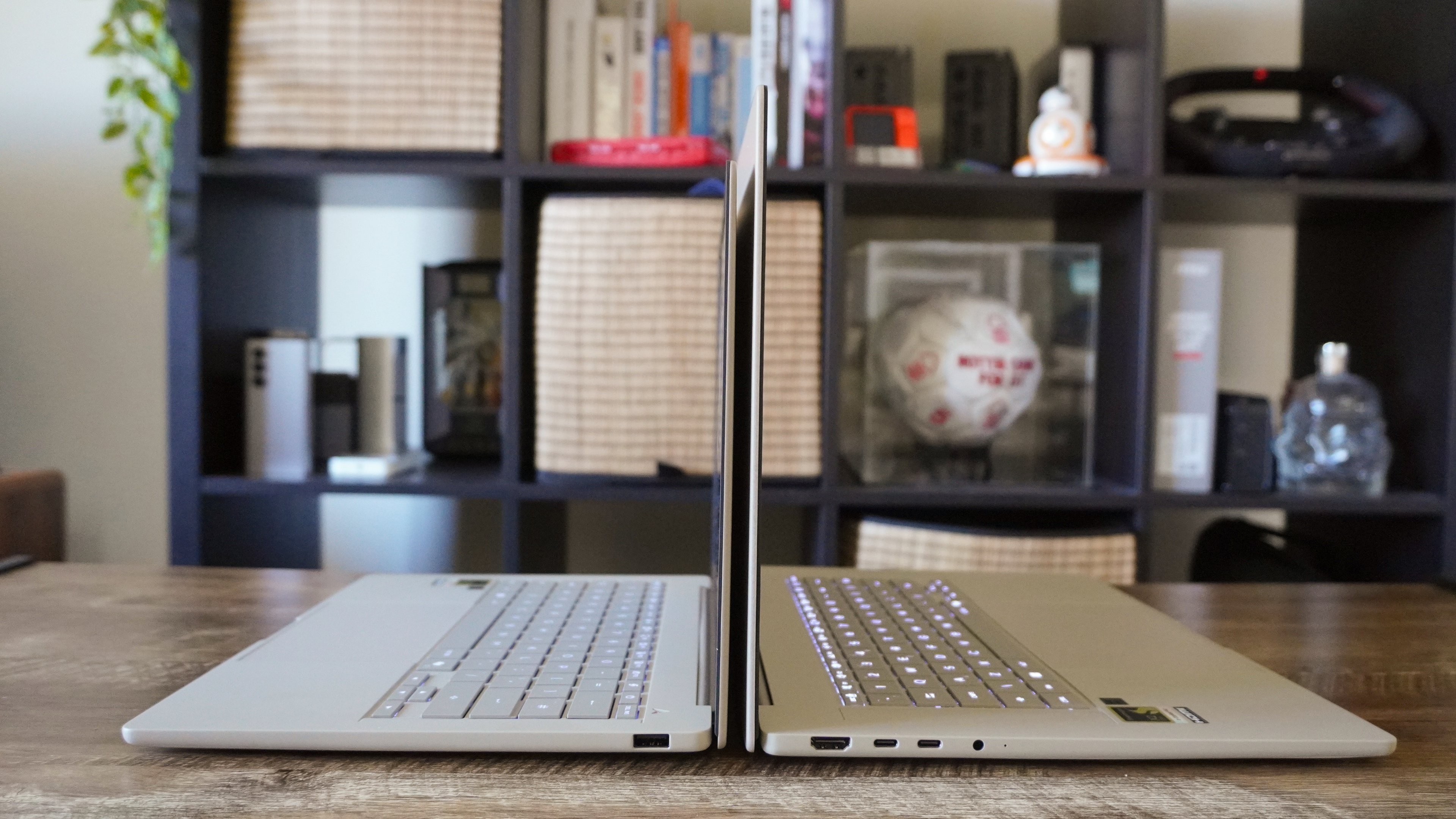
Same gorgeously svelte design
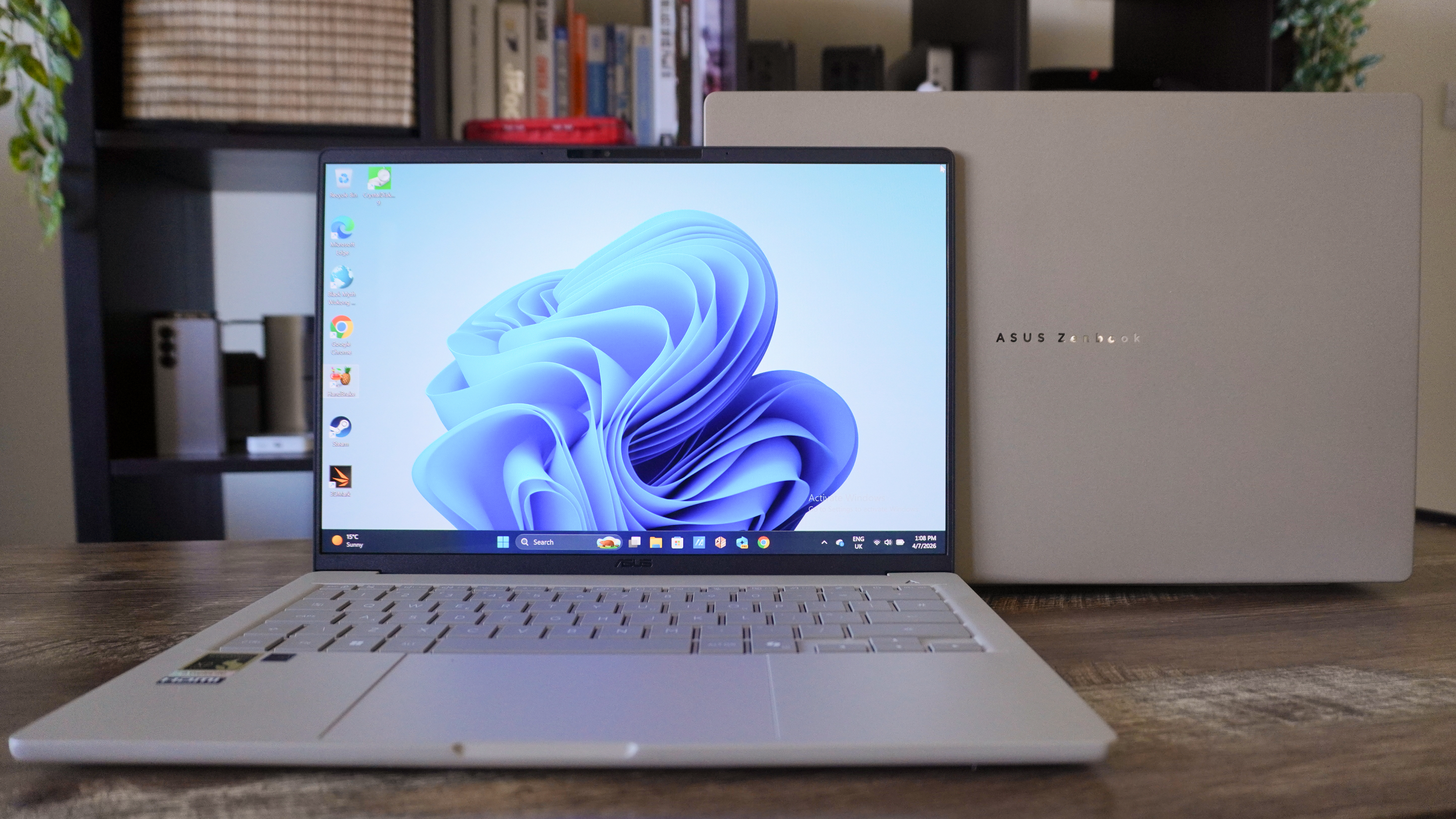
“If it ain’t broke, don’t fix it!” It’s a mantra that Apple’s maintaining with its MacBook Air design, and Asus is standing firm too — just making it significantly larger with a 16-inch model in tow too:
Laptop |
Dimensions |
Weight |
|---|---|---|
Asus Zenbook A14 |
12.2 x 8.4 x 0.5 inches |
2.4 pounds |
MacBook Air M5 (13-inch) |
12 x 8.5 x 0.4 inches |
2.7 pounds |
Asus Zenbook A16 |
13.9 x 9.5 x 0.6 inches |
2.8 pounds |
MacBook Air M5 (15-inch) |
13.4 x 9.4 x 0.5 inches |
3.3 pounds |
What’s probably most impressive looking at these numbers here is that even though the Zenbooks have bigger, better screens (more on those later), the dimensions are barely bigger and they are quite a bit lighter too.
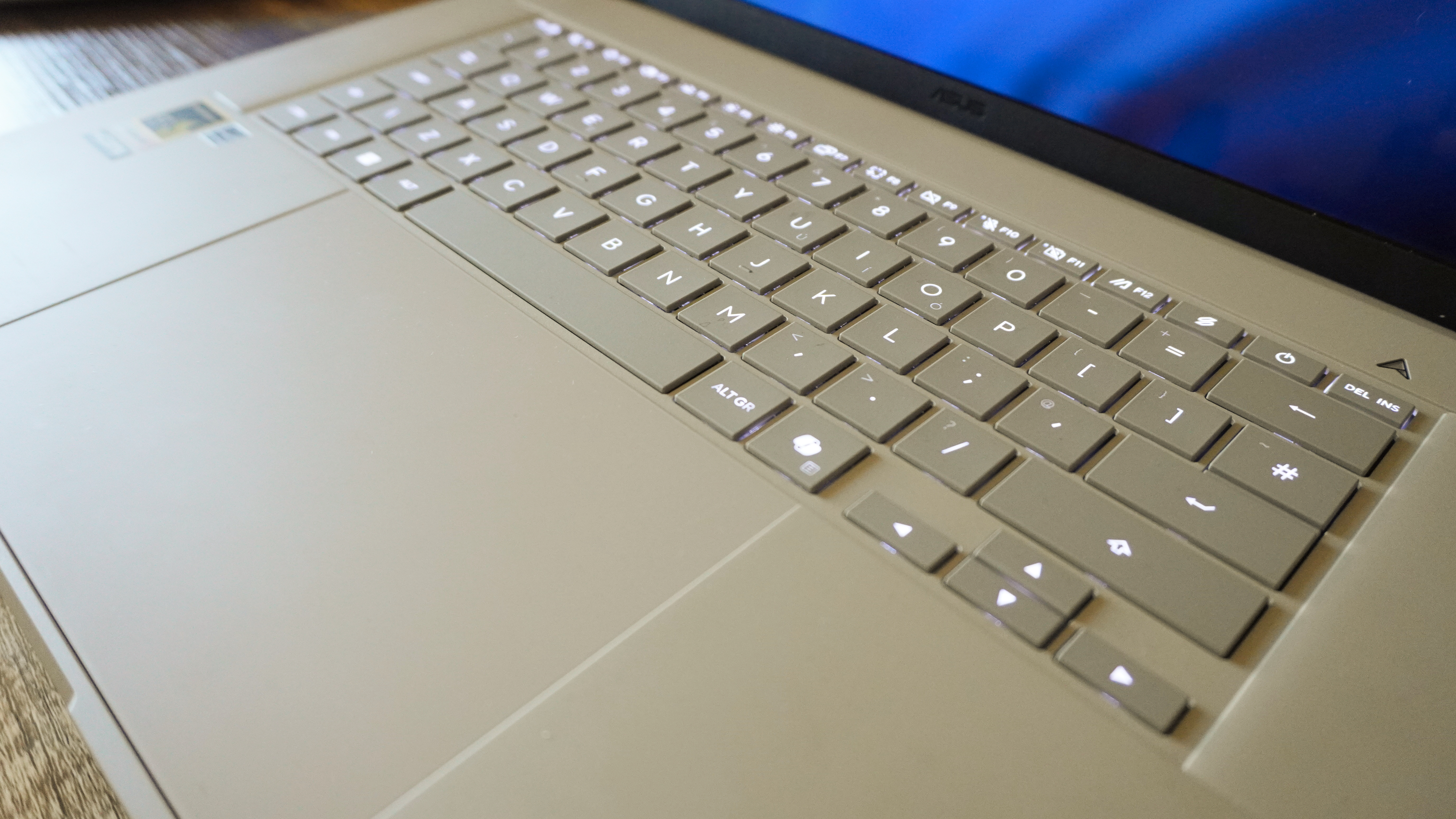
But none of these stats tells the story of the ceraluminum material used to build these machines. Just like the name says, it’s what happens when you fuse ceramic and aluminum, and the result is a fingerprint-resistant deck that feels almost like paper to the touch.
It’s a nice embrace for your wrists to lie upon as you type away, which, by the way, those keyboards feel nice with a nice tactile response to each press. Pair it with gigantic touchpads on both the A14 and A16, and all the ports you’d need (shout-out to the full-size SD card slot on the 16-inch), and you’re golden design-wise.
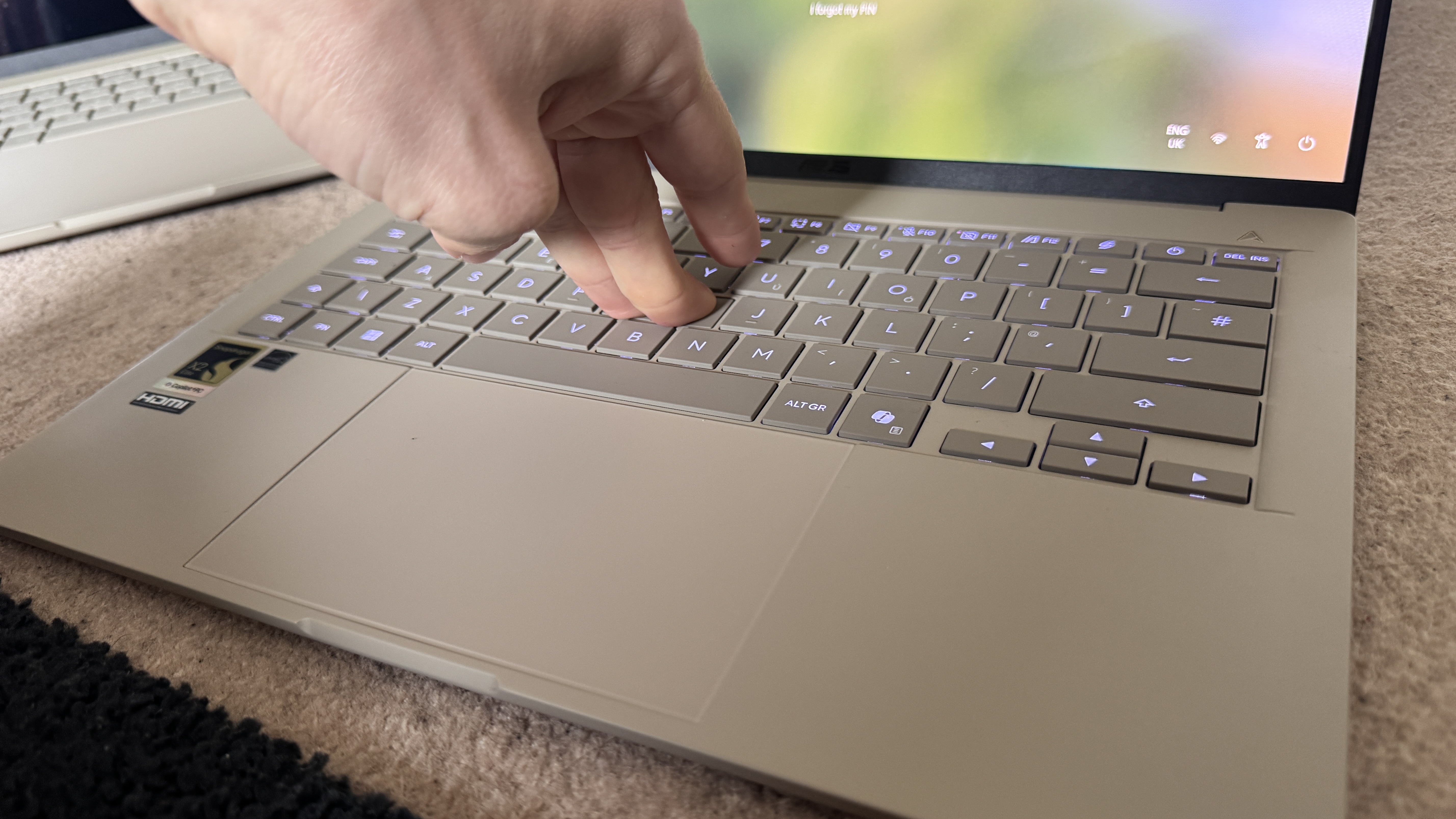
However, with the new higher price tag, there is one design issue that becomes a problem. The flex of the system and how much that lid can bend. For all the premium feel of the surface materials, this doesn't translate well into durability confidence.
Light of my life
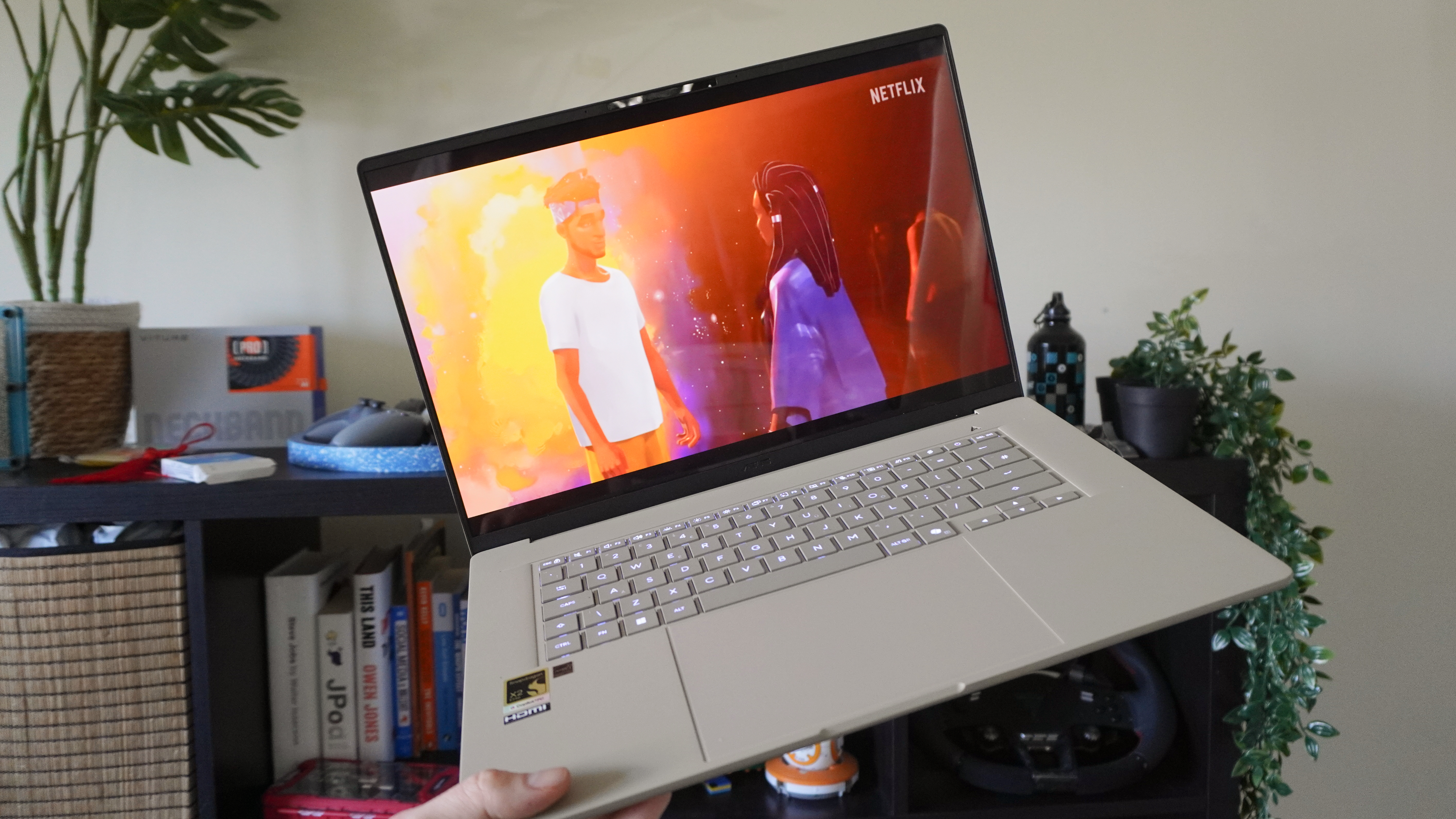
With instant-on, the moment you open these up, you’re greeted by glorious OLED across the board. It’s a flash flood of color, whatever you work on, watch, or play.
The 14-inch FHD OLED panel breathes more life into your day-to-day compared to the LCD panels you see on the Air — making up for the lower resolution by bringing more vibrancy to everything you’re doing. Meanwhile, that massive 16-inch 2880 x 1800-pixel display feels buttery smooth at 120Hz, ultra bright and mightily gorgeous as colors melt off the screen.
Laptop |
Average display brightness (nits) |
DCI-P3 color gamut (closer to 100% is better) |
|---|---|---|
Asus Zenbook A16 |
429.4 |
84.6% |
MacBook Air M5 (15-inch) |
454.8 |
83% |
Whether you’re binge watching, dealing with a workload that requires color accuracy or even gaming (more on that in a second), these are great screens.
Unleashing a beast
Let’s get to it. These are the fastest Windows laptops I’ve ever tested, and X2 Elite well and truly takes the fight to Apple M5, while the X2 Elite Extreme breezes past it in some key areas — performing somewhere between M5 and M5 Pro.
M5 may have the edge in snappy single-core performance (something that, in my own side-by-side testing of opening apps, is the difference of maybe half a second in load times), but multitasking and media processing are where this starts to take the lead. And while they do fall behind the MacBook in the read/write speeds, they edge ahead in the GPU department, too.
Test |
Asus Zenbook A14 |
Asus Zenbook A16 |
MacBook Air M5 (15-inch) |
|---|---|---|---|
BlackMagic Disk Speed Test (read/write Mbps) |
3820/2388 |
4333/2702 |
6728/6499 |
3DMark Steel Nomad |
1108 |
1262 |
1084 |
And speaking of that GPU, that’s where we get into gaming. Now, of course, Intel Panther Lake and AMD Strix Halo are in the lead here with their x86 computational wares and software integration boosting frame rates (like Intel’s XeSS multi-frame generation).
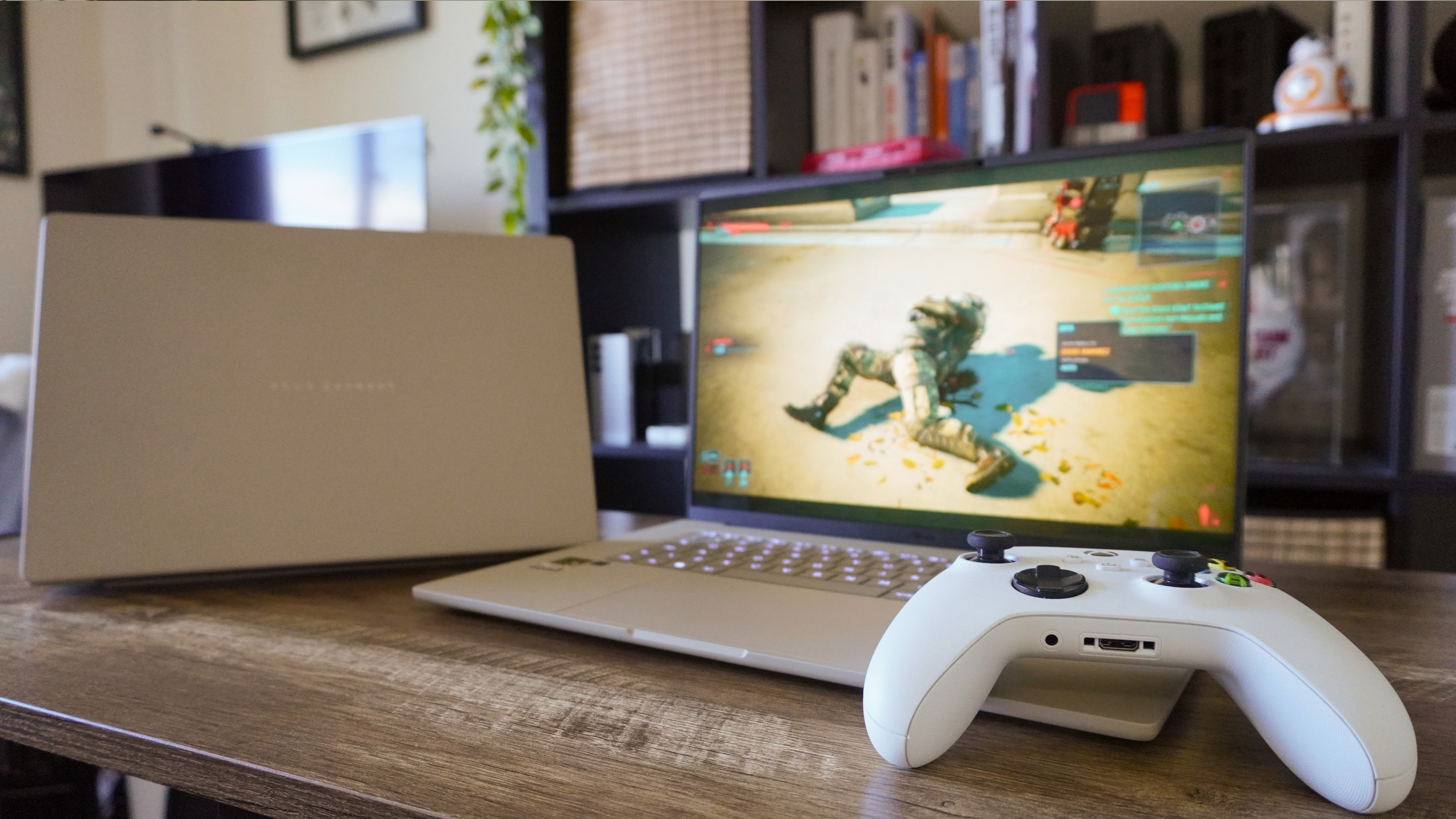
That being said, though, the GPU upgrades on X2 Elite and the improvements made to emulation happening in the background do make some great things possible! Matching the testing I did over at Qualcomm’s campus, Cyberpunk 2077 can run on the A16 system at over 75 FPS. For the A14, that’s more like 52 FPS average, but that’s still an impressive feat!
Put simply, its focus is productivity, but these can just so happen to game rather well!
Asus Zenbook A14 & A16: The downs
So the competitive gap has narrowed between Asus and Apple in many ways, but there’s one where it’s widened for the worse.
Battery woes (for the A16)
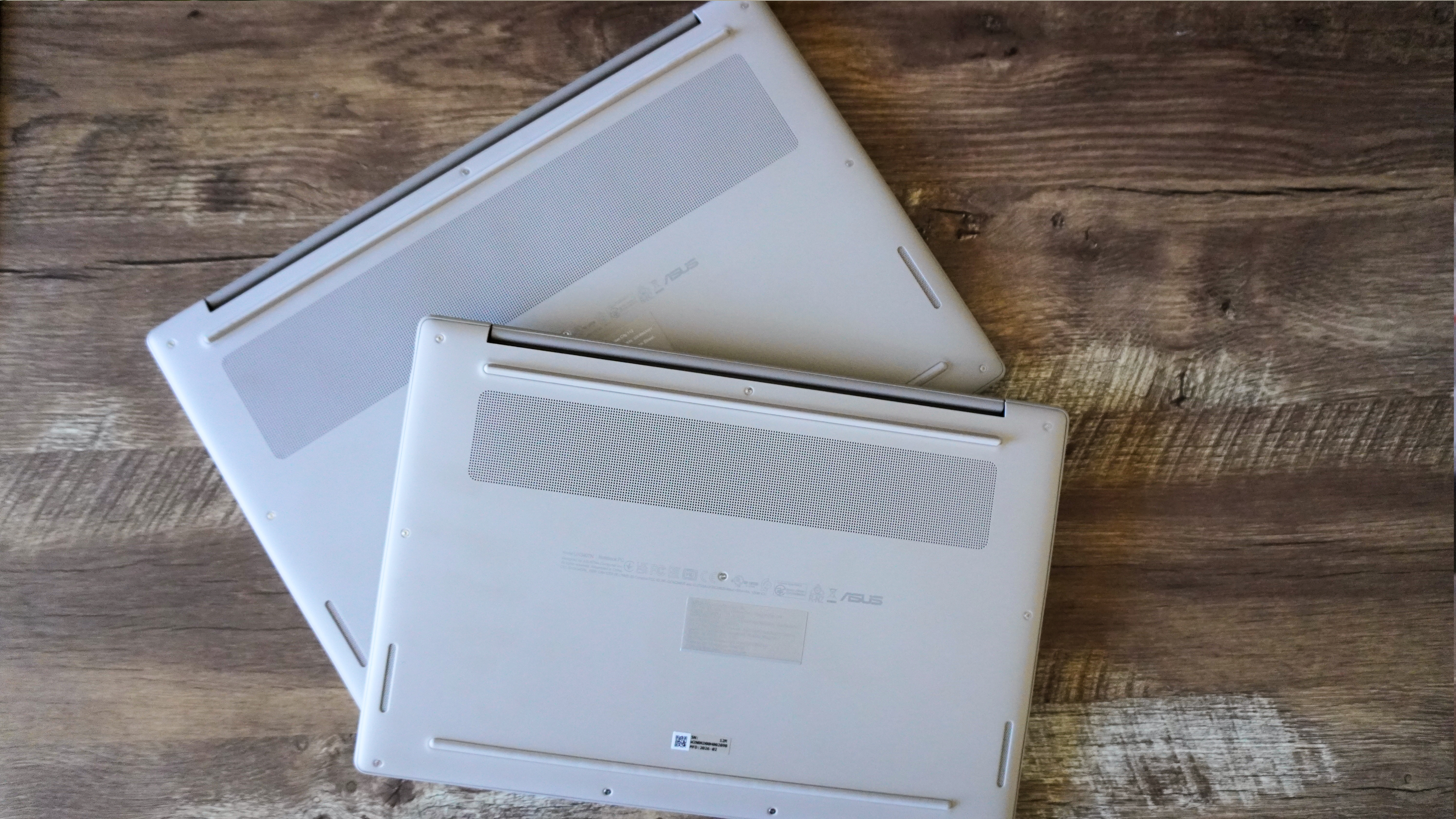
The Zenbook A14 has not gone through our lab testing. But in my general usage impressions, I’ve seen it last around twice as long on one charge as the Zenbook A16.
When it comes to getting bigger, everything else needs to be in proportion. If you upgraded to a pick-up truck, having the gas tank of a Honda Civic in there would be a terrible idea. And that is why when I got the lab test results back for the Zenbook A16, I was honestly gutted.
Laptop |
Battery life test result (hh:mm) |
|---|---|
Asus Zenbook A16 |
10:34 |
MacBook Air M5 (15-inch) |
15:37 |
Dell XPS 16 (Intel Core Ultra X7 358H) |
13:02 |
Because Asus had thought about almost everything — giving the big one the big engine, the better screen, a full-size SD card slot, and an ocean of a touchpad. But with it having exactly the same battery as its smaller brother, it’s not a stamina champ.
Keen to look into it further, I downloaded HWinfo — a great app if something feels a little off about your system to see if something is working a little too hard (or not hard enough) — and the picture became clear.
Running a Geekbench test on both and monitoring the average battery discharge rate over the test, I found the following:
- Zenbook A14: 8.9 watts
- Zenbook A16: 15.6 watts
If you’re going to do a bigger laptop with a more power-hungry chip, everything needs to be in proportion. And yes, just over 10 hours in our test will be enough for casual work, but you can burn through that much faster when you throw something more intense at it.
Pricing is a problem (again)
Like I said up above, myself and everyone else who reviewed the Zenbook A14 and A16 were hit with either a 5:30pm email (or a 10:30pm email for those of us living in the U.K.) about how Asus were "notified by Best Buy" about a pricing error.
This has led to a $200 increase on the A14 and a $100 bump on the A16 — putting them even further out of the MacBook Air's domain to compete.
At a time when value for money is everything, I understand that runs in direct opposition to the RAM crisis pressures being faced by companies to balance their books. But the original score was given based on the previous price, and it must be updated now that I'm looking at it through a new, pricier lens.
Asus Zenbook A14 & A16: Bottom line
As the Asus Zenbook A14 was put on the right track to take on the MacBook Air last year, this year’s A14 and A16 march forward when it comes to performance, but while the A16 shows up strongly with pro level performance in a skinny body, the A14 takes a step back in value for money.
For great ultra-portable all-rounders, Apple stays, and if you’re loyal to Microsoft’s OS and want that same experience, the Zenbook A14 is a good (if expensive) alternative. Meanwhile, the A16 sets a new precedent for a thin and light pro machine that bridges the gap between MacBook Air and MacBook Pro, but the stamina suffers because of it.
And with adjusted pricing showing the gap widening in bang for buck between Apple and Asus, what was a shoe-in for two of my favorite systems of the year has left me feeling indifferent.