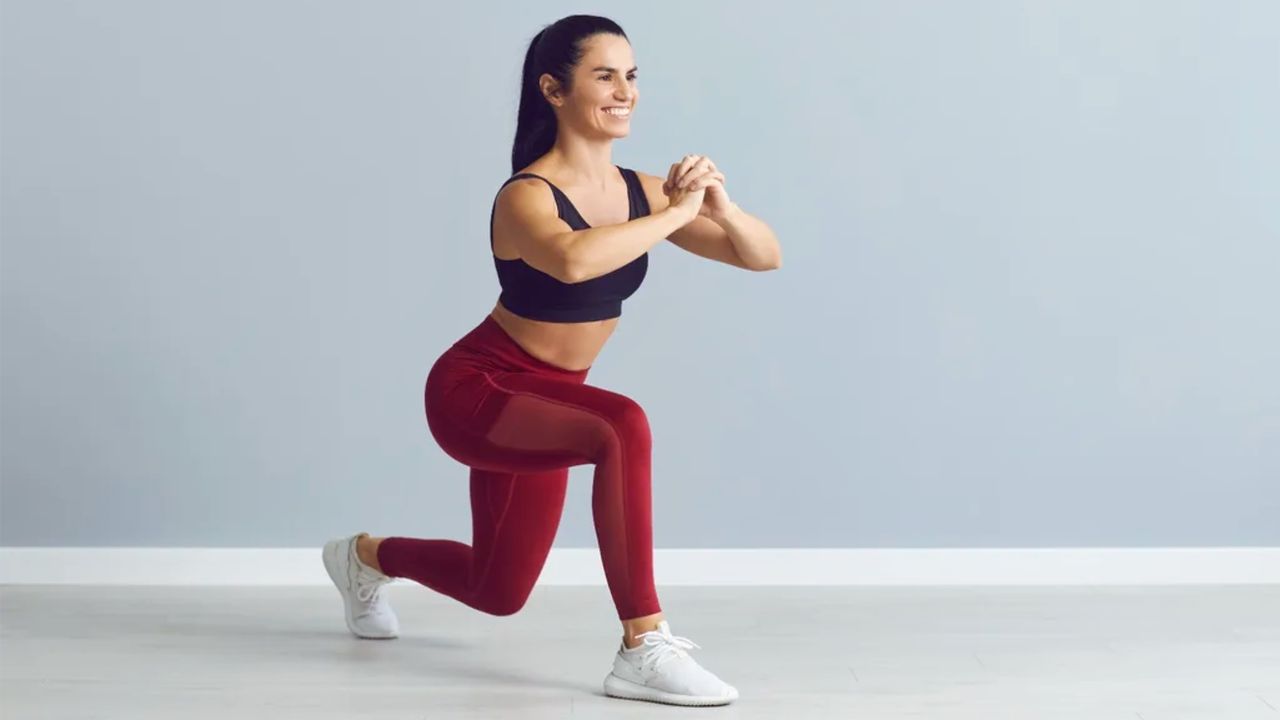
Even here in Britain, curtsying has largely gone the same way as bowing and tugging the forelock, which is to say you don’t see it happen all that often, though that perhaps speaks more to the circles I run in than wider trends.
However, even though I rarely have the opportunity or inclination to show respect to my social betters, I have been doing a lot of curtsying of late, because the curtsy lunge has become a fixture in my leg workouts.
It’s fully replaced the regular reverse lunge, in fact, because I find the curtsy lunge brings unique benefits you don’t get from the standard move, in particular, providing more of a challenge to the hips and my core stability.
How to do the curtsy lunge
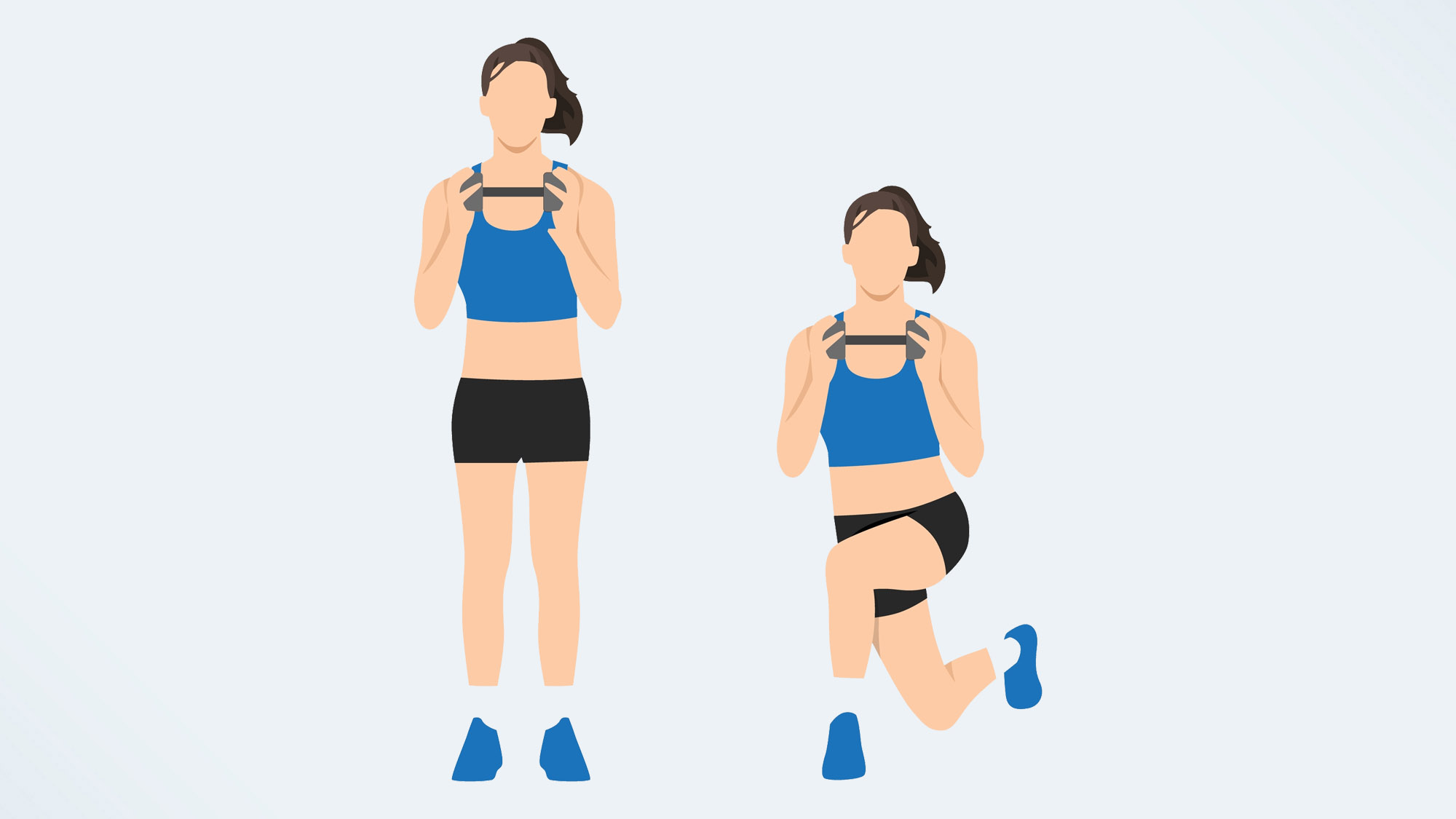
You can do the curtsy lunge without any equipment, and it’s probably wise to start by doing the move using your bodyweight only, but it’s also easy to incorporate any kind of free weight to make the exercise harder.
- Stand with your feet shoulder-width apart.
- Step your left foot back and behind your right leg and bend both knees to lower into a lunge, keeping your torso upright.
- Lower until your right thigh is parallel to the floor, keeping your core engaged to maintain your balance.
- Push through your right foot to drive back up to a standing position.
- You can alternate reps on each leg, or do them all on one side before switching.
Throughout the move, keep both feet pointing forwards and keep your hips square and facing forward, rather than twisting when you step back into the curtsy lunge.
If you’re struggling to maintain your balance, make sure that you’re not stepping too far out to the side with your back foot. If you feel like you're getting knee pain from the move, stop and get your form checked out by a trainer.
To add weight, you can hold a dumbbell or kettlebell in each hand by your sides, or one weight in both hands in front of your chest. I use a single 33lb dumbbell myself and do eight reps on each side during my workouts.
Why I prefer the curtsy lunge to the reverse lunge
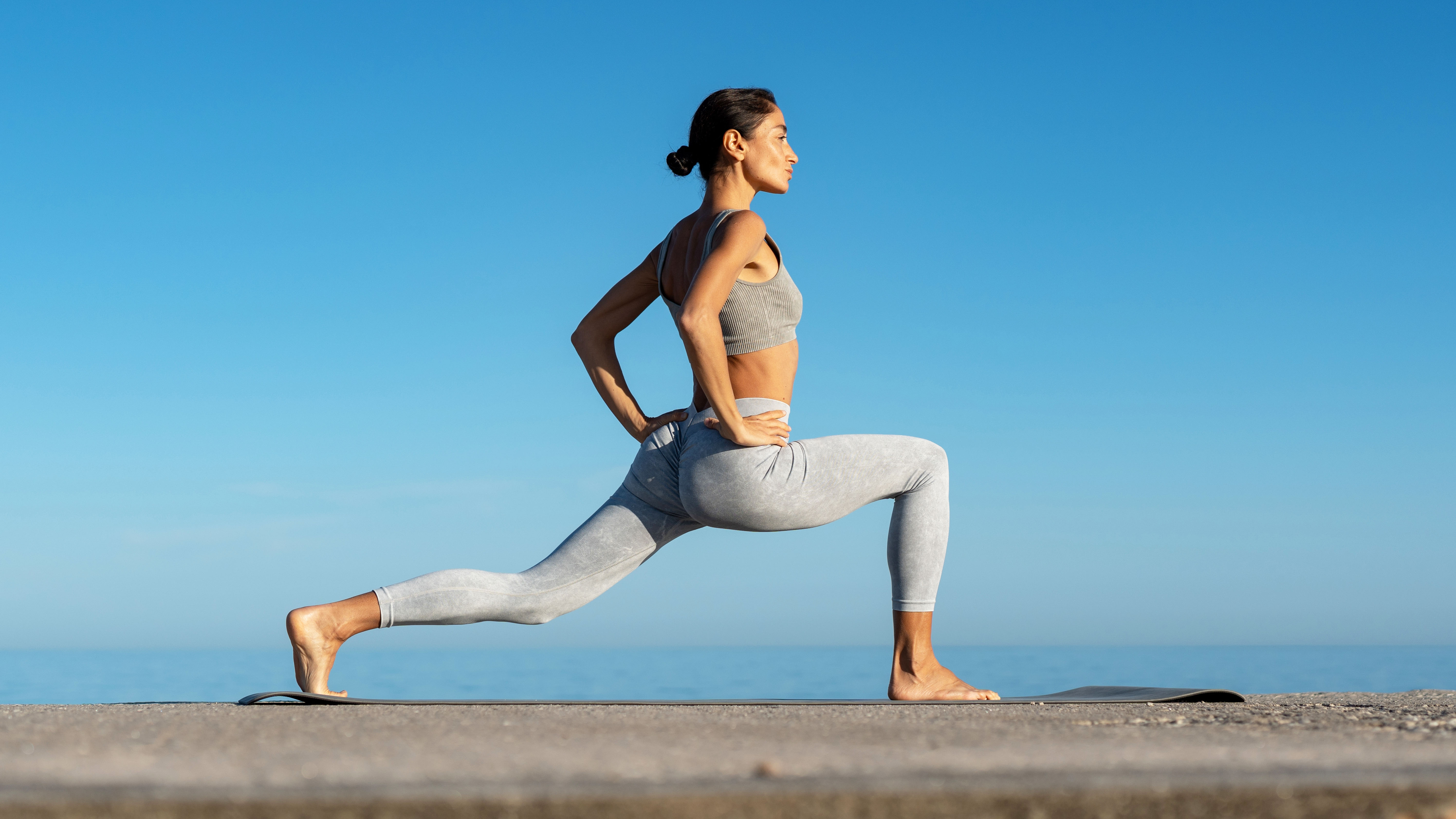
Despite the fact that almost all of my strength training is geared toward supporting my main sport of running, I’ve never really been a fan of lunges.
While I include squats, deadlifts and calf raises in most of my workouts, lunges were never a move I really enjoyed or found very effective until I started doing the curtsy lunge.
It focuses on similar areas to the standard reverse lunge, like your quads, glutes and hamstrings, but puts more focus on the outer glutes and hamstrings and really engages the hip adductors — muscles on the insides of your thighs.
This focus on the hips and glutes is valuable for me as they are areas I’m also looking to strengthen during marathon training, and the lateral movement in the exercises is also useful, because it takes me out of the forward-back, up-down planes of movement I spend most of my time in during runs and workouts.
I’m also a big fan of the extra challenge the curtsy lunge provides for my core stability, because holding the torso upright and maintaining balance while stepping back and out to the side is difficult, especially when holding a weight by my chest.
There’s no magic to the move, but it’s definitely one that I think provides a lot of bang for my buck during workouts, and as someone keen to get a lot from a few short strength sessions each week, the curtsy lunge is a great move to have in my routine.
Follow Tom's Guide fitness on Instagram for more workouts, routines, tips, and tricks.
More from Tom's Guide
- I teach people how to be more mobile: 3 low-impact back and shoulder moves that build stability and strength after 40
- According to a personal trainer, this exercise is 100 times more effective than crunches. I tried it and was humbled
- I teach people over 50 to be mobile: 3 low-impact moves that build more stability than a 30-minute walk