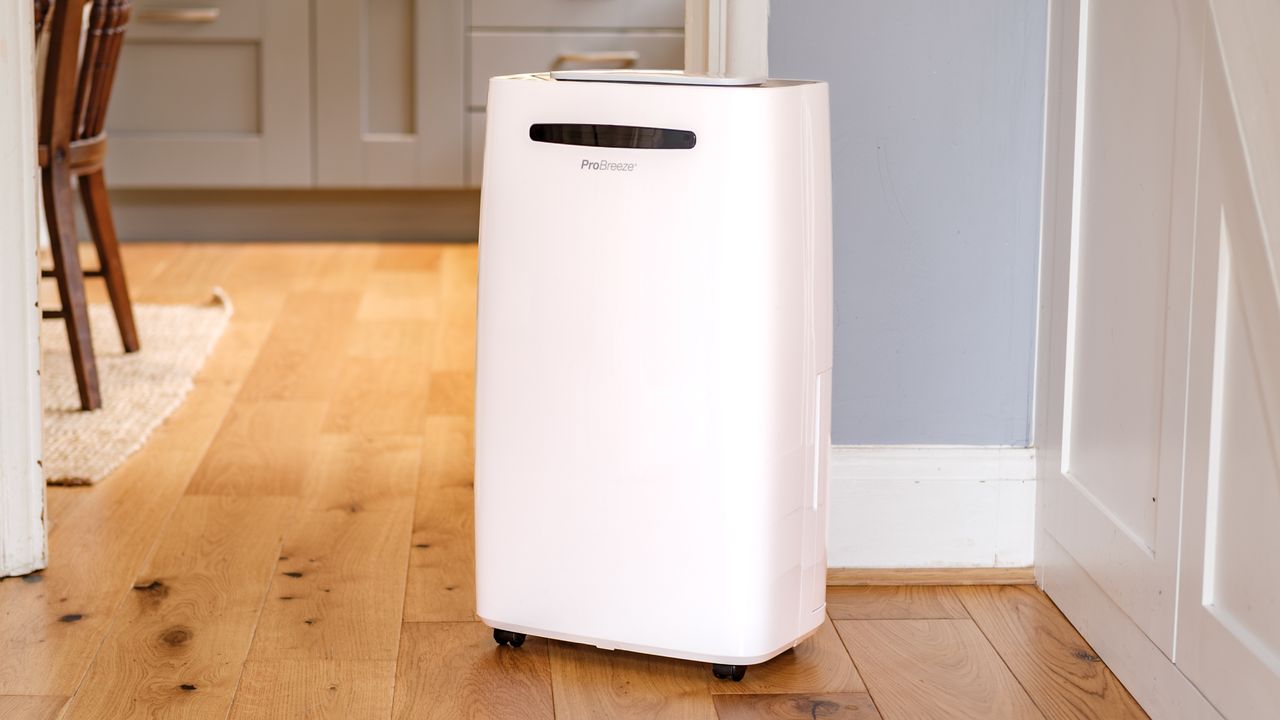
If you have a damp problem, getting one of the best dehumidifiers is a no-brainer. These helpful devices draw moisture from your air to prevent damp and mold. Not only is that good for your walls, ceilings and paint, it’s also highly beneficial for your health.
Unfortunately, my home is rather damp, especially in winter. So I’m always running two dehumidifiers (one upstairs and one downstairs) to keep things in check. Throughout winter and spring 2026, one of those was the Pro Breeze Dehumidifier, which I had for a long-term test.
The Pro Breeze is a moderately quick dehumidifier, extracting up to 50 pints / 20 liters a day, with (according to the manufacturer) a wide coverage of up to 4,000 square feet. It’s designed for larger spaces and/or an entire floor of a house. It’s fairly compact given its capacity and has some helpful features like a status LED and a handle.
It isn’t perfect, with slow operating during stress tests, slightly confusing controls and a water tank that can be awkward to refit. But could it still be worth buying? Find out in my full ProBreeze Dehumidifier review.
Pro Breeze Dehumidifier review: Specs
Price |
|
Weight |
31 lbs |
Size |
0.39 x 0.39 x 0.39 inches |
Tank capacity |
9-pint |
Daily capacity |
50-pint |
Hose included |
Yes |
Coverage |
Up to 4,000 sq ft |
Speeds |
3 |
Pro Breeze Dehumidifier review: Price & availability
The Pro Breeze Dehumidifier is available in the U.S. from Amazon for $239, which is essentially the going rate for a decent 50-pint dehumidifier. The GoveeLife Smart 50-pint Dehumidifier also costs $239, while the slower Waykar 34-pint Dehumidifier costs $228. The excellent Frigidaire 50-pint Dehumidifier costs slightly more at $279, but is an excellent performer — at full price, that’s where my money would go. However, we’ve seen the Pro Breeze drop as low as $138 at Amazon, and at those prices, it’s a solid choice.
In the U.K., where Pro Breeze is based, this dehumidifier is no longer available. However, Pro Breeze offers a much wider array of dehumidifiers in the British market, so there are plenty more to choose from.
Pro Breeze Dehumidifier review: Design
The Pro Breeze Dehumidifier isn’t going to win any awards for its design. It’s a white, upright slab — hardly prepossessing. In fairness, though, they all look like that. I haven’t seen a good-looking dehumidifier that uses wood or makes any effort to look stylish and homely. They all look like medical equipment that’s been stolen from a hospital.
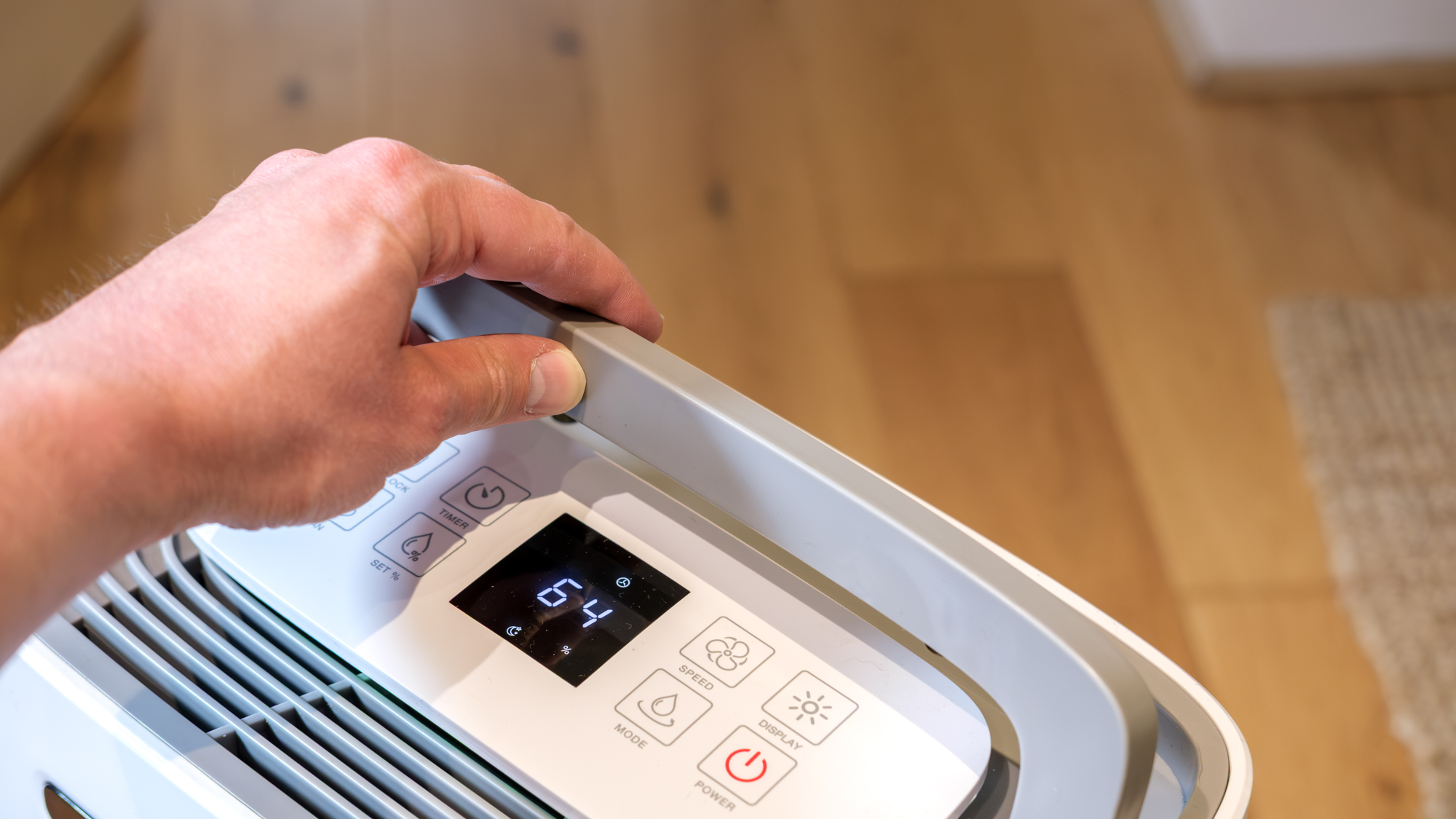
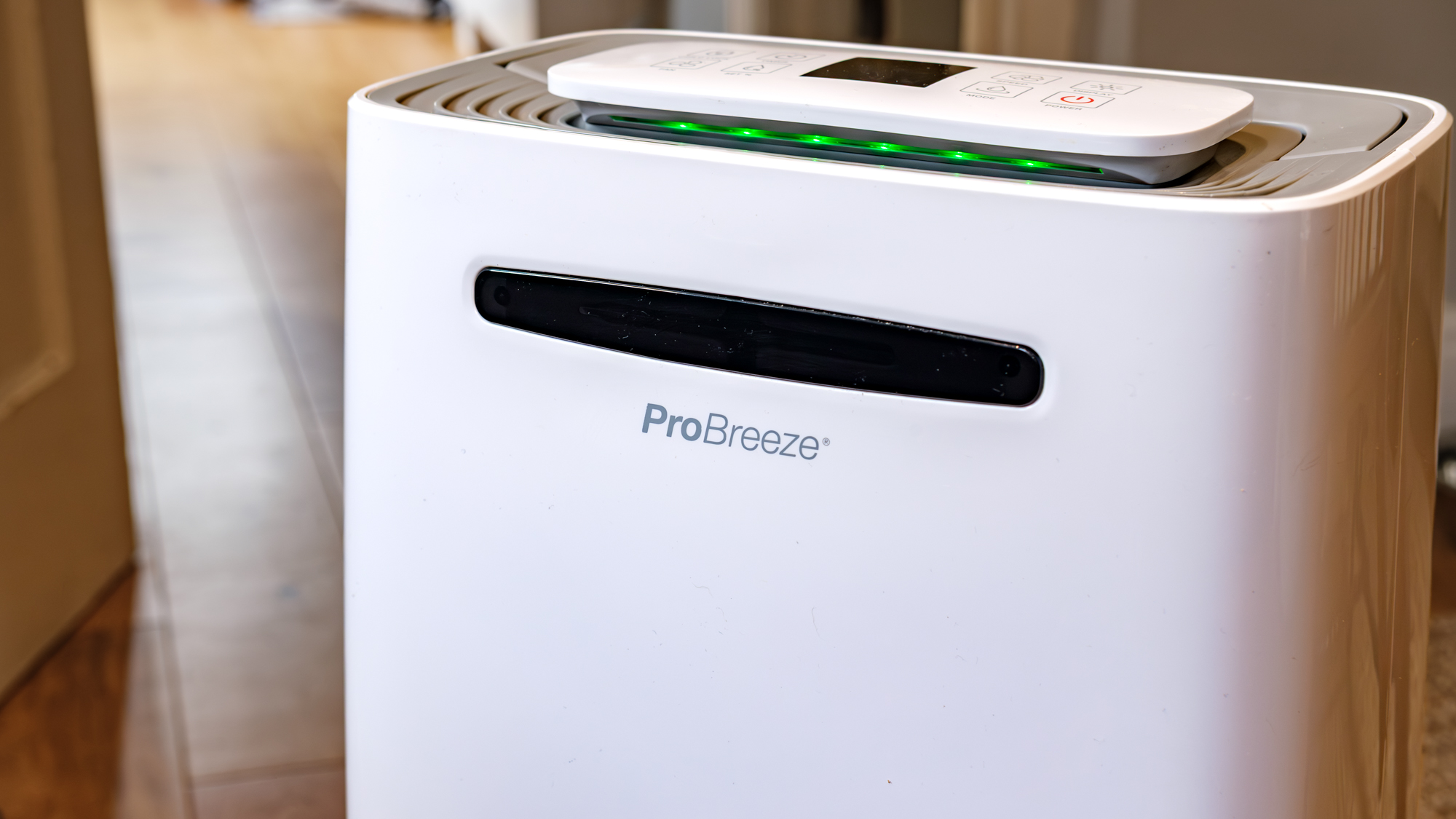
The top panel of the dehumidifier is particularly ugly and dated-looking in my opinion. My Bosch Dry 2000 (not available in the U.S.) looks much more modern with its round display and minimalist touch controls. The Pro Breeze features LED status (red, green and blue) to quickly display humidity levels — these are handy, but again, kinda ugly and dated.
It’s a fairly tall dehumidifier, but the trade off is that it’s a fairly narrow unit, giving extra versatility with placement. That said, when in use, you should always maintain a gap between any dehumidifier and walls or furniture, so they’re always placed slightly awkwardly anyway.
I like that the Pro Breeze features a handle and wheels. This makes it super easy to move around to different parts of your home if you need to target a specific area. During winter, I noticed some mold growing in a corner of my hallway, so I quickly scooted the dehumidifier across my wood floor and positioned it very near the problem spot. The wheels aren’t quite as effective on carpet, but hey, they’re still nice to have.
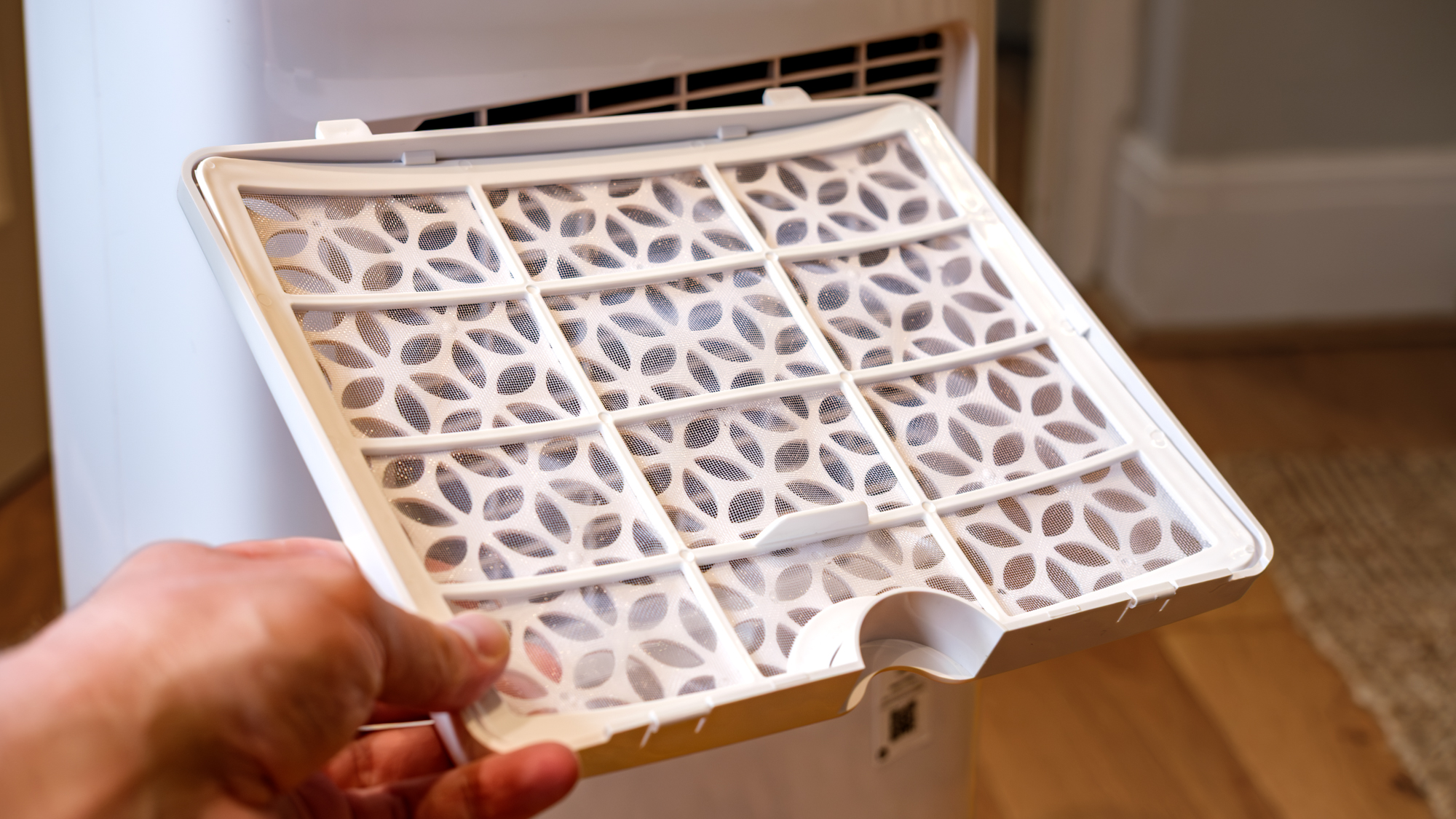
The filter is removable and washable, which is great to see, although I wouldn’t advise buying any dehumidifier without this feature. They get such heavy use that replacing filters would cost you a fortune. The GoveeLife Smart Dehumidifier and Waykar Dehumidifier also have washable filters.
Controls
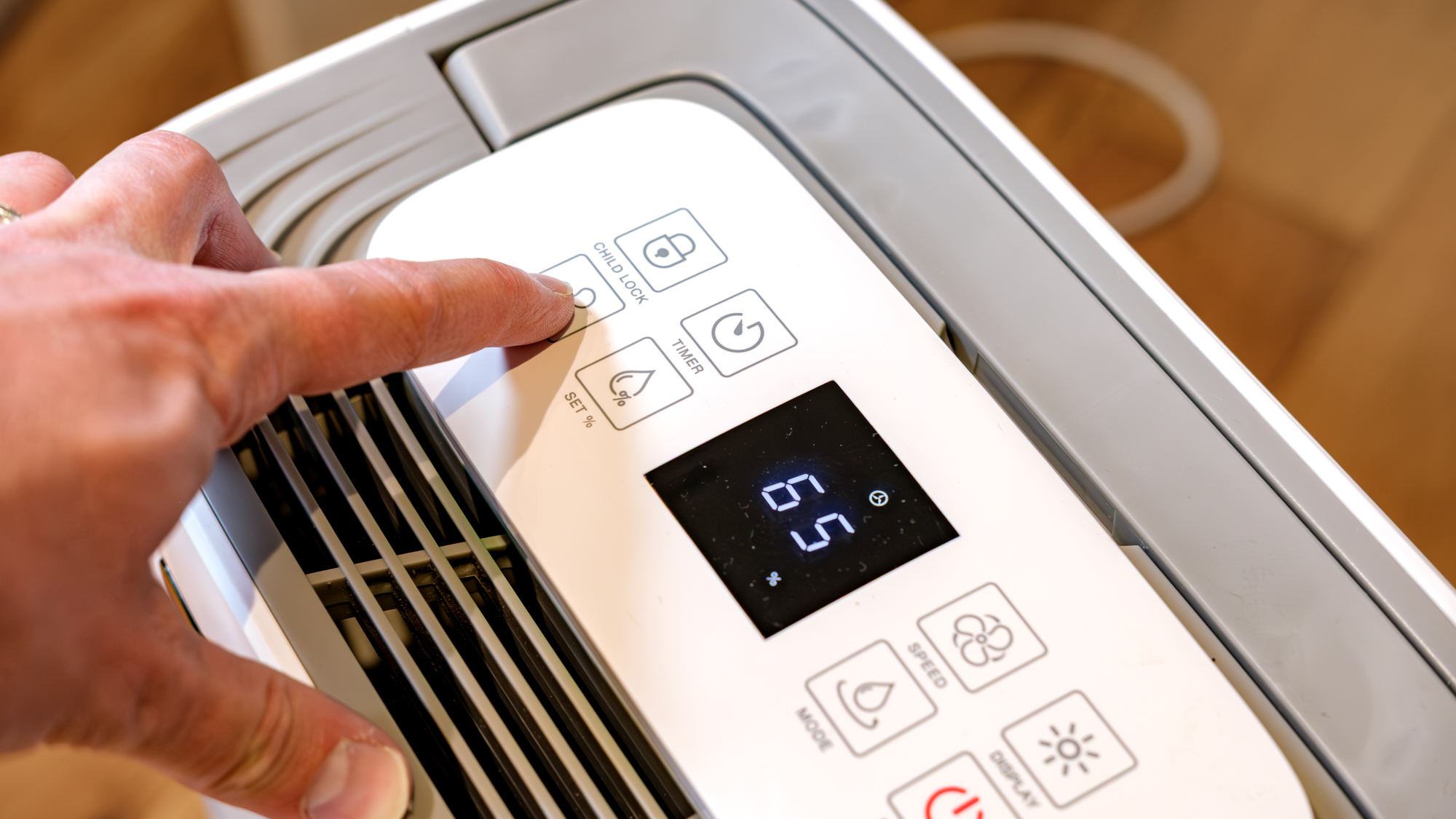
The Pro Breeze’s controls are clearly labelled and fairly self explanatory. There are buttons for everything you’ll need. However, I found the display a little confusing. There are various modes, many with similar icons, doing different things. There’s a fan speed setting, but also a high power setting — isn’t the high fan speed also the high power setting? There’s a laundry mode that does basically the same things as the high power mode.
After a read-through of the manual, I realized what these different modes were doing, and that there were subtle differences between them. But it was still a little frustrating, as other dehumidifiers like my Bosch Dry 2000 and the GoveeLife Smart are extremely intuitive and easy-to-use straight out of the box.
Pro Breeze Dehumidifier review: Performance
The Pro Breeze Dehumidifier will extract up to 50 pints of water from your air per day, according to the manufacturer, which is a lot of moisture. This will depend on specific circumstances, of course, which I wasn’t able to match in my testing. I needed to empty the tank at least once a day with it running constantly — so 9-18 pints of water per day.
Pro Breeze’s claims about the dehumidifier’s range are all over the place. The Amazon page for the 50-pint model claims it can cover spaces up to 4,000 square feet, which is enormous. However, the Pro Breeze site only claims 2,000 square feet, while the U.K. Pro Breeze site claims 322 square feet for the equivalent model. The U.K. model has slightly lower energy consumption, but the exact same 195 m³/h airflow rate as the U.S. model… So where is the circa 3,700 square foot difference coming from? It’s a mess.
Taking the top estimate of 4,000 square feet — that’d be equivalent to a whole storey in a very large house, or the floor of an office building. While this dehumidifier is good, I’m not sure those claims stack up to reality. In fact, as I’ll cover immediately below, I’m more inclined to believe the British rating of 322 square feet…
Testing
My kitchen — the most humid room in my house — measures around 270 square feet. To test the Pro Breeze, I cooked a pot of pasta and two slow-cook sauces on our induction cooker, without lids, and kept our extractor off to generate steam. On the maximum setting, it took the Pro Breeze several hours to take the humidity from red on the LED status to green (from nearly 80% back down closer to 60%). By comparison, our favorite dehumidifier for large spaces, the Frigidaire Dehumidifier, cleared a basement from 90% to 35% in just 40 minutes, although that was in a smaller 100 square-foot space.
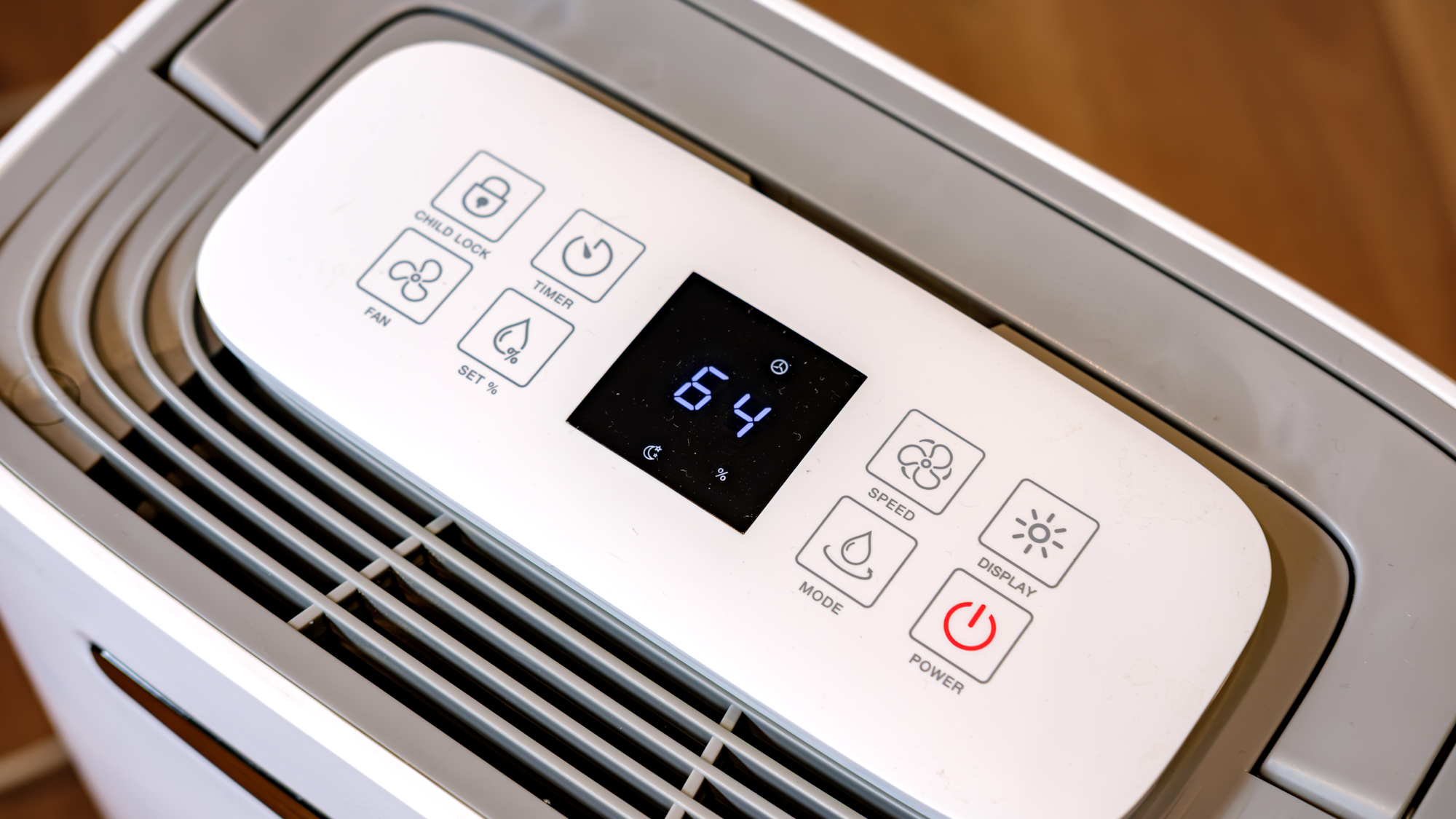
In less extreme scenarios, the Pro Breeze performed admirably, though. I left it running in the default de-humidification mode, where you can set the target humidity and fan speed, and it was able to keep the moisture levels in my kitchen stable (until I cooked).
In my kitchen and in my hallway (where I had mold and condensation), the Pro Breeze did a great job. There was no window condensation in the mornings and once we cleared the mold with some spray, it didn’t return. Importantly, though, the Pro Breeze wasn’t able to dehumidify my entire downstairs — to fight the mold, I had to move the unit from the kitchen to the hallway — so again, those 4,000-square-foot claims seem pretty bogus to me.
There’s a laundry mode, which is awesome for drying clothes inside during winter. I use this regularly, and the Pro Breeze dries most clothes in a couple of hours if positioned near your dryer. Annoyingly, there’s no timer by default on laundry mode. My Bosch Dry 2000 automatically sets an 8-hour timer in laundry mode for effortless overnight drying. You have to do this manually on the Pro Breeze, otherwise laundry mode will just keep running indefinitely at max, wasting energy.
The Pro Breeze Dehumidifier gets noticeably warm in use, especially in the higher power modes. It packs out quite a bit of warm air, so you won’t want to sit next to it if you’re hot. I like that the Pro Breeze can be used as a standalone fan, though — when in fan mode, it doesn’t dehumidify but pumps out cooler air, helping to cool rooms down in warmer weather.
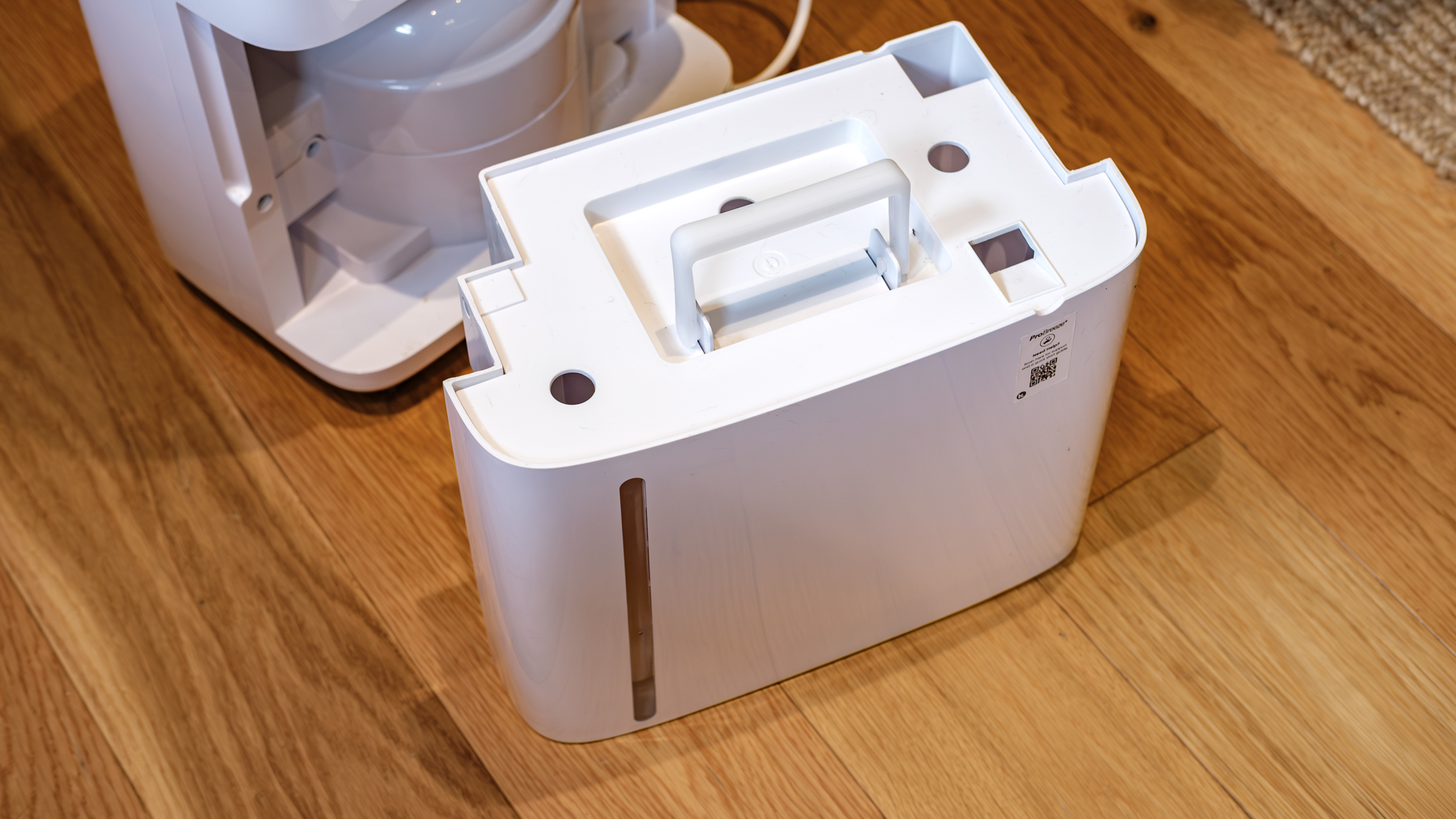
The water tank is fairly spacious at 9 pints / 5.1 liters, easy to empty and features a fill window to tell you when it’s full. It’s awkward to get back into place, though, often getting jammed — not a huge deal but a little annoying all the same. The Pro Breeze has an outlet for continuous draining and comes with a rubber pipe, so if you need to run it indefinitely with it draining into a bath or sink, you can — this is ideal for super damp homes needing emergency dehumidification.
Noise & night mode
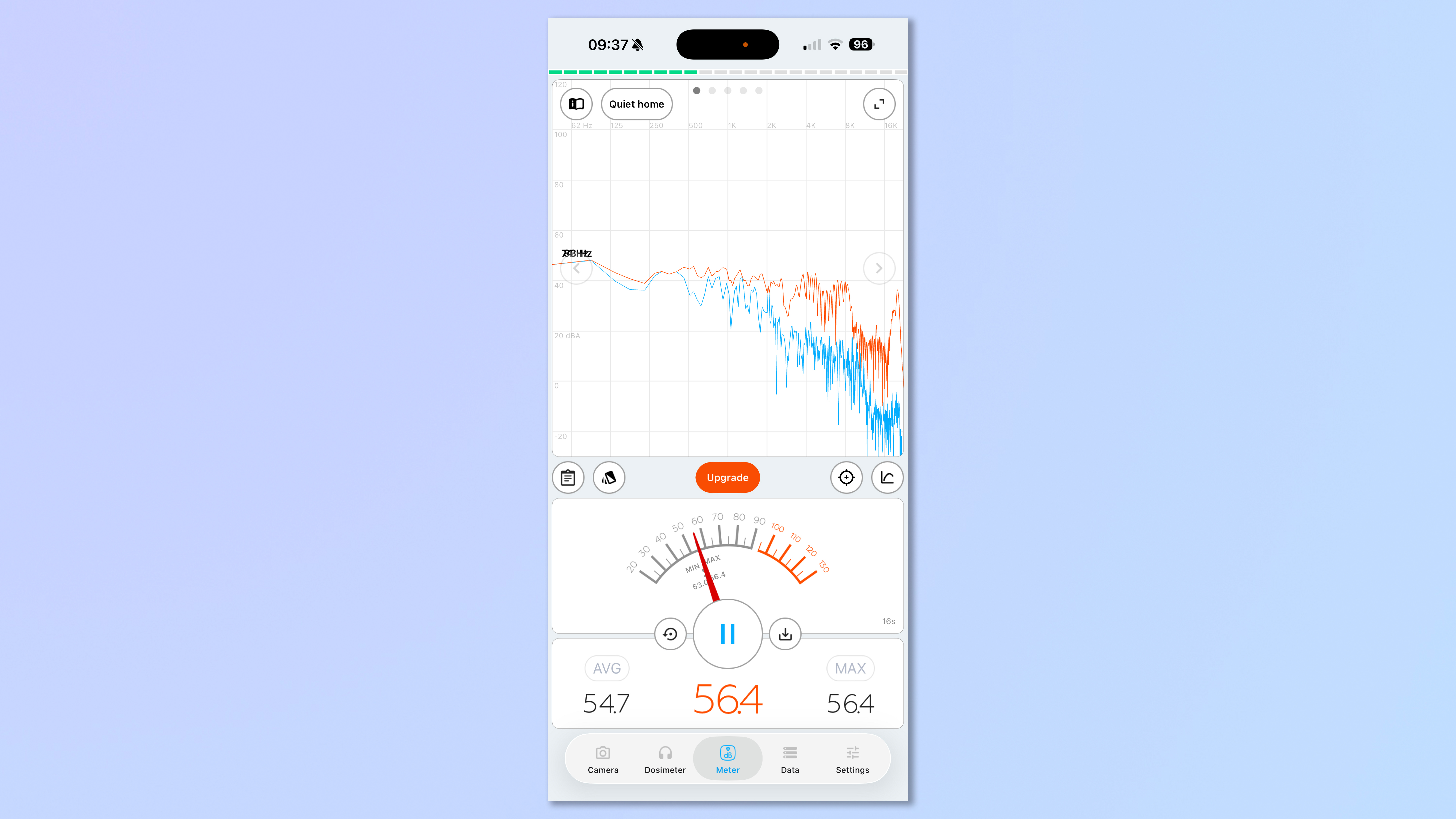
The Pro Breeze is rated for 48dB of noise, although I wasn’t able to achieve anything lower than 54dB in normal mode and 52.5 in night mode. The Waykar dehumidifier ran at a lower 49dB in our testing, so may be the one to go for if this is a priority.
Still, the Pro Breeze isn’t too loud. 54dB is around the same level as other household appliances. It’ll be enough to disturb people who sleep lightly, but the same is true for pretty much every other dehumidifier. You get used to it.
You can turn off the digital display and LEDs, so the Pro Breeze won’t disturb you light-wise.
Pro Breeze Dehumidifier review: App
In the U.S., there doesn’t appear to be a companion app for the Pro Breeze. In the U.K., there is an app version of the dehumidifier, which is slightly more expensive (and which I’d recommend, as the controls are awkward). I tested the U.K. non-app version.
Pro Breeze Dehumidifier review: How does it compare?
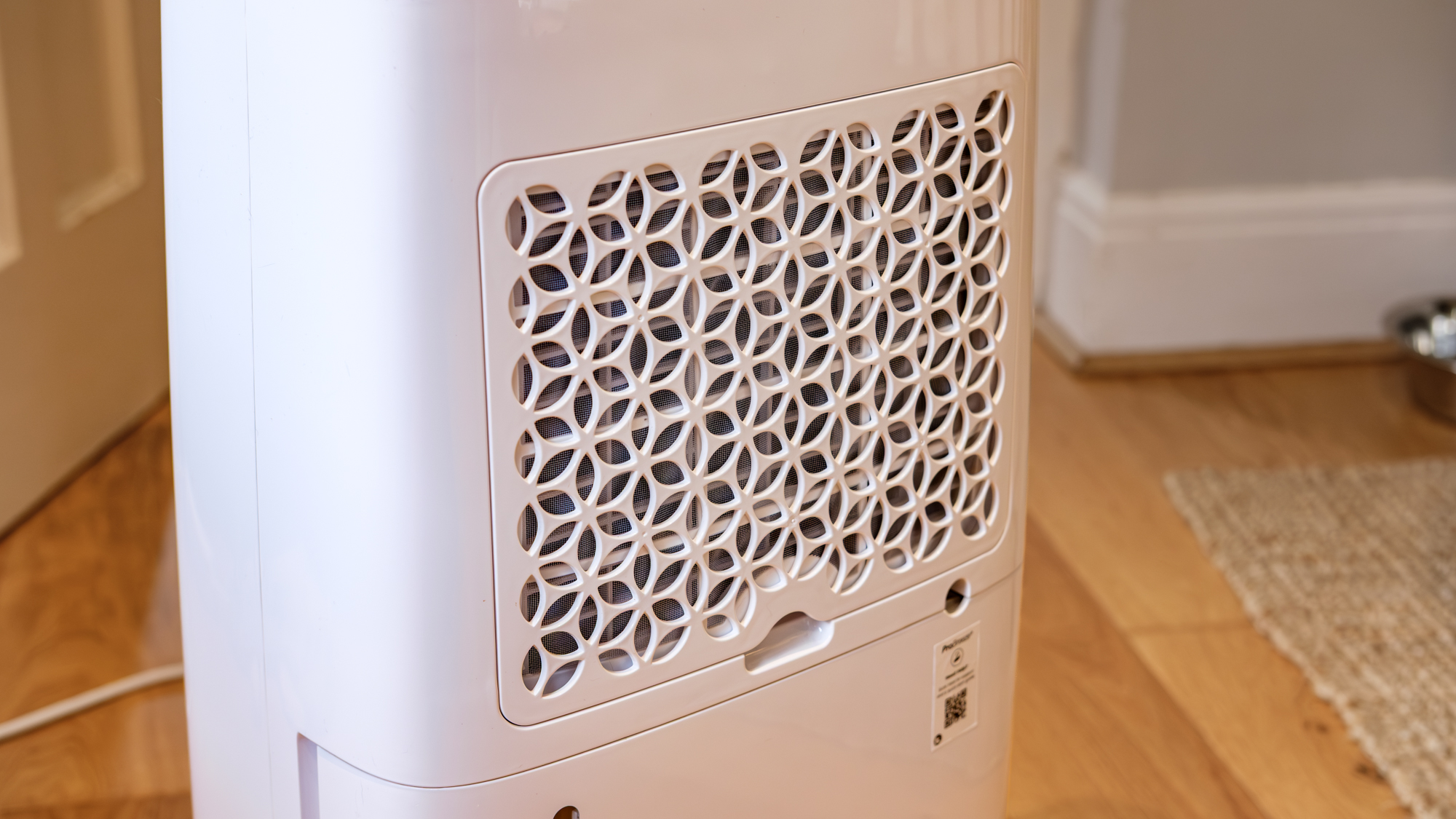
The Pro Breeze Dehumidifier isn’t the best at anything, really. The Frigidaire 50-pint Dehumidifier and GoveeLife Smart 50-pint Dehumidifier are faster, while being similarly priced. Personally, I’d spend a little more and bag the Frigidaire.
That said, while its high-speed, extreme humidity performance may not be the best, the Pro Breeze still does an excellent job at keeping levels stable longer term. With that in mind, all three rivals are equally ugly, similarly priced, and take up around the same amount of space. So, realistically, you can take your pick.
In the U.K., I’d definitely recommend my other dehumidifier, the Bosch Dry 2000 (or its bigger sibling, the Dry 4000), instead. Performance is similar, but I find the controls more intuitive and the styling ever-so-slightly nicer.
Pro Breeze Dehumidifier review: Verdict
The Pro Breeze Dehumidifier isn’t a bad product. It does a good job at everyday dehumidification, keeping levels low if you run it all the time. It wasn’t the fastest performer we’ve seen, but did the job eventually in high-humidity scenarios. The variety of modes is useful, if not a little confusing at first, and the water tank is spacious and easy to empty, if not a little tricky to refit.
At the end of the day, if you’re struggling with damp and mold, there are better dehumidifiers out there, but the Pro Breeze isn’t a terrible solution by any stretch. Still, I’d advise waiting for a sale if you can.