
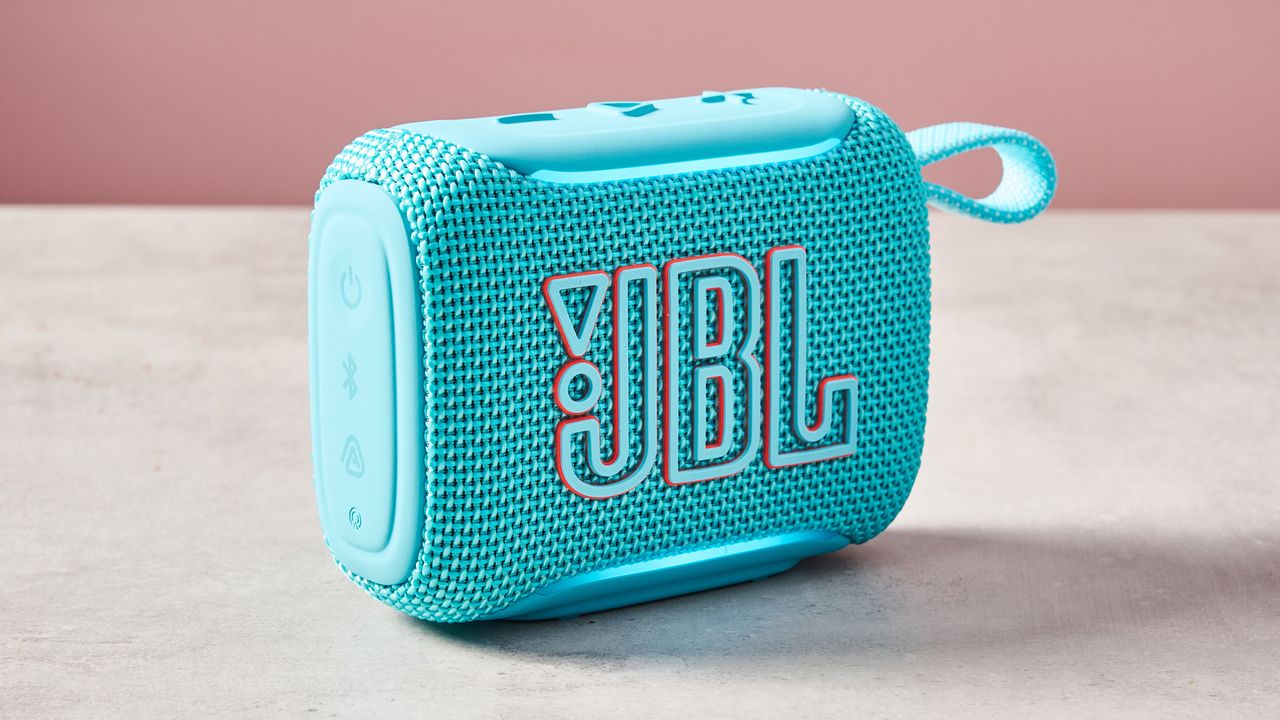
JBL Go 5: two-minute review
The JBL Go 5 has still found ways to impress me, even though I've tested more than 50 Bluetooth speakers here at TechRadar.
See, I was already a fan of the JBL Go 5's predecessor, and I wasn't expecting all too much from a next-gen update — especially as the Go 4 itself only released two years ago. But ultimately, the Go 5 was a much bigger upgrade than I'd hoped.
There are some obvious changes out of the box: ambient LED lighting, a more refined overall look, and a slightly larger build. But it's when you fire the Go 5 up that the biggest changes rear their head — and cement this as one of the best Bluetooth speakers in the small-size category.
First of all, this model offers more powerful and refined audio than the JBL Go 4 ever could. Its output power has increased to 4.8W, so the single full-range driver can deliver more volume — ideal for small get-togethers.
But the audio quality onboard has been improved substantially as well. With more expressive highs, clearer mids, and cleaner bass, the Go 5 offers a clear sonic upgrade over what came before.
On top of that, you now get a maximum 10 hours of playtime with PlayTime Boost active, representing an improvement over the previous generation. Don't get me wrong, this is nothing groundbreaking, but it's still a welcome change.
Similarly, the Go 5 has marginally better waterproofing, now packing an IP68 rating. Its drop-proof build also makes it a great model for taking on the go, as well as using in the shower.
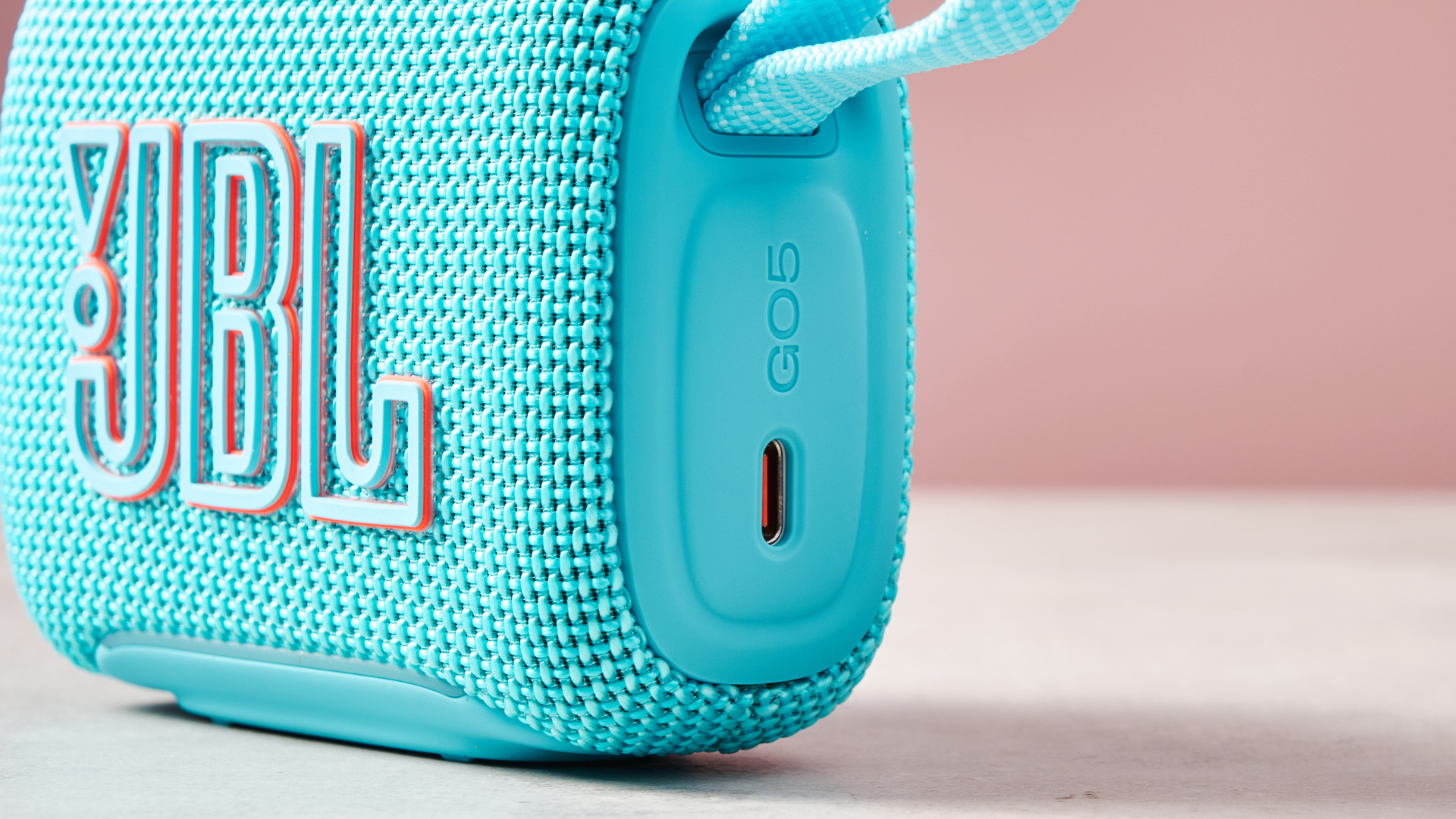
There's more, though, with USB-C audio connectivity on the features list, plus a new AirTouch function for instant stereo pairing. That's not to mention the usual good stuff, such as Auracast connectivity, solid EQ options, and multi-point connectivity.
The major takeaway, then, is that the JBL Go 5 is a great-sounding, well-built, and highly affordable mini Bluetooth speaker that offers plenty of improvements over its predecessor. I have some minor complaints, like the lack of color options for its LED lights and the battery life, which can be beaten by some rivals.
But the JBL Go 5 is without question one of the best-sounding small speakers I've ever used, and it's the one I'd pick as being best-in-class right now.
JBL Go 5 review: price and availability
- List price of $54.95 / £39.99 (about AU$75)
- Released in April 2026
The JBL Go 5 was released in April 2026, about two years after its predecessor, the JBL Go 4.
It has a list price of $54.95 / £39.99 (about AU$75), which represents a $5 increase over the Go 4 in the US, but no difference in the UK. Still, this speaker comfortably sits in the budget category, with the Go line standing as the most affordable in JBL's Bluetooth speaker lineup.
JBL Go 5 review: specs
Weight |
0.5lbs / 230g |
Dimensions |
4 x 3.1 x 1.7 inches / 101 x 77.4 x 43mm |
Connectivity |
Bluetooth 6.0, USB-C |
Battery life |
10 hours (with PlayTime Boost) |
Speaker drivers |
1x 45mm full-range |
Waterproofing |
IP68 |
JBL Go 5 review: features
- Battery life gets a boost to 10 hours
- Lights pull up to the party
- Easy to use app with neat EQ options
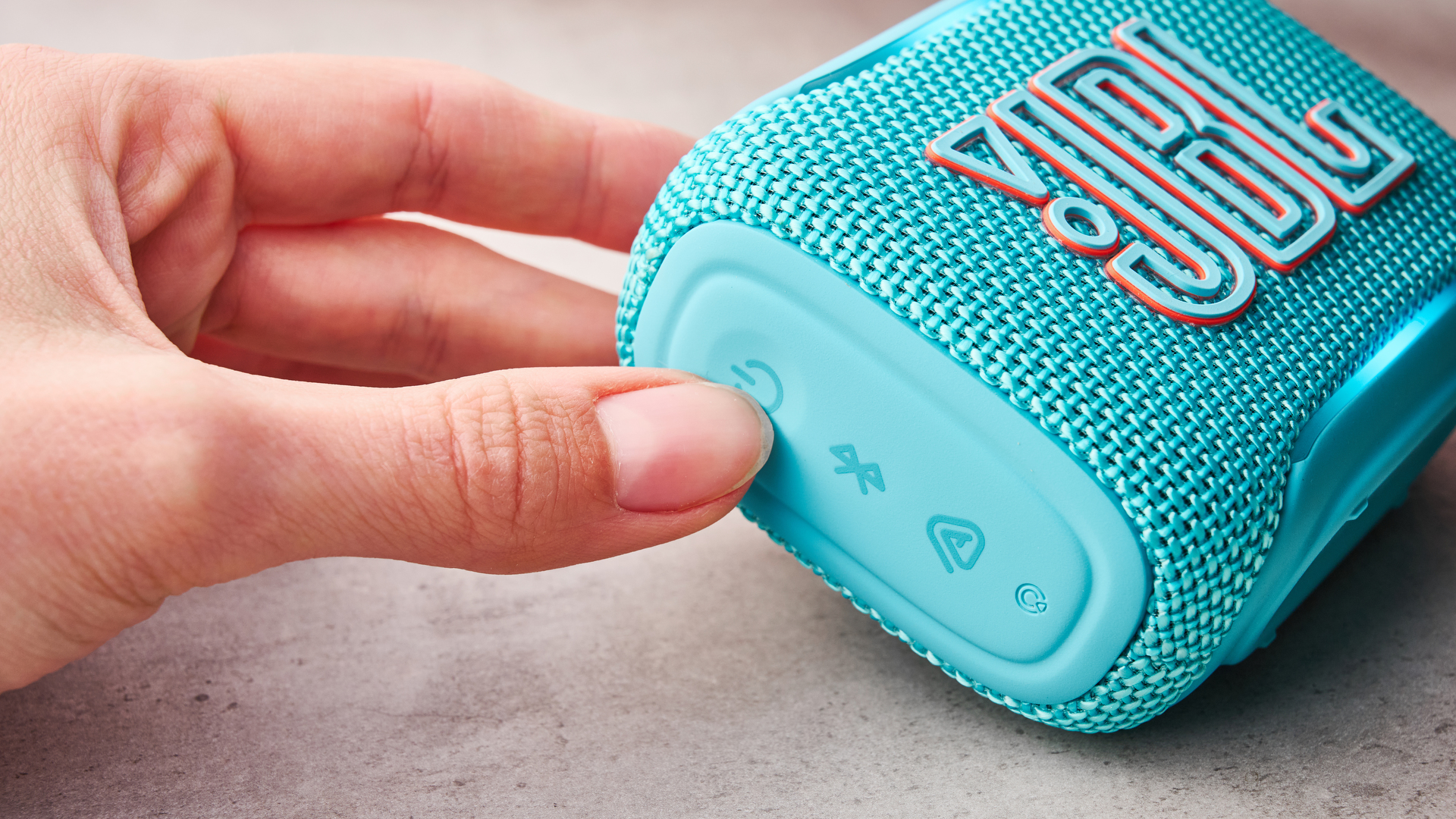
The JBL Go 5 has a solid featureset, including the usual multi-point connectivity, fast-pairing, and Auracast for multi-speaker pairing. However, by entering the user-friendly JBL portable app, you can open up even more options.
First of all, you can adjust the speaker's EQ. There are a few presets, like JBL Signature, Chill, Energetic, and more. But there's also a custom equalizer, which enables you to tailor sound to your specific taste. I created a slightly bass-boosted custom EQ to add impact for deeper tracks, and found it to work brilliantly, although the default tuning is pretty good regardless.
The JBL Go 5 now comes equipped with lights for a funkier listening experience, and these can also be customized in JBL's companion app. There are various effects to pick from, such as Bounce, Loop, Switch, and Freeze. However, you can also decide to disable lights if you'd prefer to conserve some battery life.
I would've liked the option to choose from different color lights on the JBL Portable app, but otherwise, I'm a big fan of this change.
Looping back to battery life, and JBL has given a boost to the Go 5, which now delivers eight hours of playtime, or 10 hours with the battery-saving PlayTime Boost active. 10 hours is still nothing out of this world, especially when the similar-sized Tribit PocketGo manages double, but that speaker is more basic and doesn't sound anywhere near as good as the Go 5 — more on that later.
Auracast is back for rapid multi-speaker pairing, but there's a new feature onboard for stereo linking two Go 5 models together. This is called AirTouch, and enables you to link a couple Go 5's simply by tapping them together. I tried this for myself and found it to be very responsive and practical.
One final option worth noting is USB-C audio. Just connect your listening device to the speaker with a cable, and you'll be able to enjoy technically lossless audio on the go.
JBL has added this to most of their Bluetooth speakers lately, and it's great to see this on the Go 5 as well, even if it's not exactly going to offer audiophile-grade sound, due to its small size.
- Features score: 4.5 / 5
JBL Go 5 review: sound quality
- Clear, expressive audio in a small package
- A lot more full-sounding than its predecessor
- Improved output power for increased volume
When I tried the JBL Go 4 a couple of years ago, I considered it to be a pretty solid performer, especially given its limited confines. But in my view, the JBL Go 5 offers a significant sonic improvement over that model.
Comparing the Go 5 against its predecessor, I found it to be far more full-sounding and well-rounded, and capable of more powerful audio. See, even though the Go 5 has a single 45mm full-range driver — the same as the Go 4 — it now offers a higher 4.8W power output.
I tried listening to a range of tracks, but started with the spacey house tune, Here to Catch You by Chris Stussy & S.A.M. The track's rhythmic and expressive high-pitched drums were replicated impressively on the Go 5, while synths in the mid-range came through with commendable clarity.
When bass entered the picture, the speaker didn't capture the drop with amazing impact or top-tier dynamism, but the low-end remained clean and agile.
In Editto Dal Sottoscoglio by Marco Castello, the Go 5 offered a more fleshed-out presentation than its predecessor, with more defined vocals, and less compressed-sounding highs.
Against slightly larger models, like the Tribit Stormbox Micro 3, the Go 5 isn't packing tons of low-end power, and as you'd expect, you won't get rippling sub-bass here or anything. However, I found the Go 5's bass to be rhythmic and responsive, and with a slight low-end bump in the EQ settings, I was able to get punchier bass for darker tracks.
Again, the the Go 5's smaller size means that you won't always get the most nuanced and separated audio either, but I was very satisfied with the clarity it managed across genres.
At top volumes, you'll experience a bit of compression, but the speaker rarely sounded tinny or shrill, and offered far more regimented and articulate sound than the majority of its budget-friendly rivals.
The inclusion of USB-C audio passthrough also means you can unleash lossless music on the go, something that few competitors include on their smallest models. For Bluetooth listening, you'll be limited to SBC and AAC, but that's pretty standard. And even with these more basic codecs, the JBL Go 5 is easily one of the best-sounding tiny speakers I've ever tested.
- Sound quality score: 4.5 / 5
JBL Go 5 review: design
- Lighting is a welcome addition
- Wide array of eye-catching color options
- IP68-rated and drop-proof
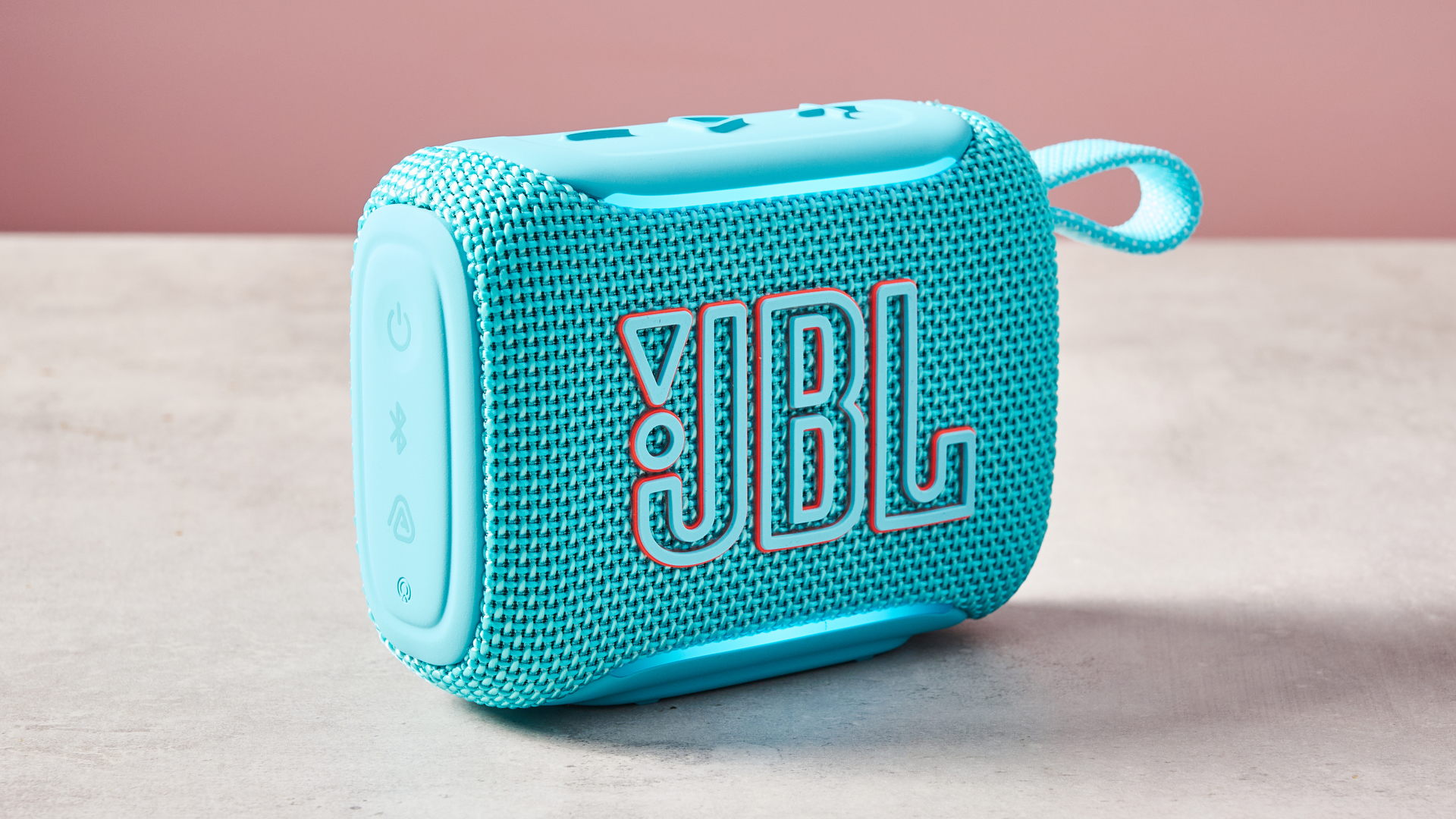
Overall, the JBL Go 5 looks pretty similar to its predecessor, but there are a few changes worth flagging.
First and foremost, there are some LED edge lights, which JBL has also added to the next-gen update of its Xtreme speaker. This adds a bit of ambience when you're listening late at night or at a party, and doesn't make the model look too busy or over-the top. I mentioned earlier how you can't alter the color of the LEDs, which is a bit of a shame, but the lighting pattern is customizable in the JBL Portable app.
This speaker is a bit larger than its predecessor as well, but only marginally. It's still extremely lightweight, and will easily fit in your pocket or a small bag, for instance.
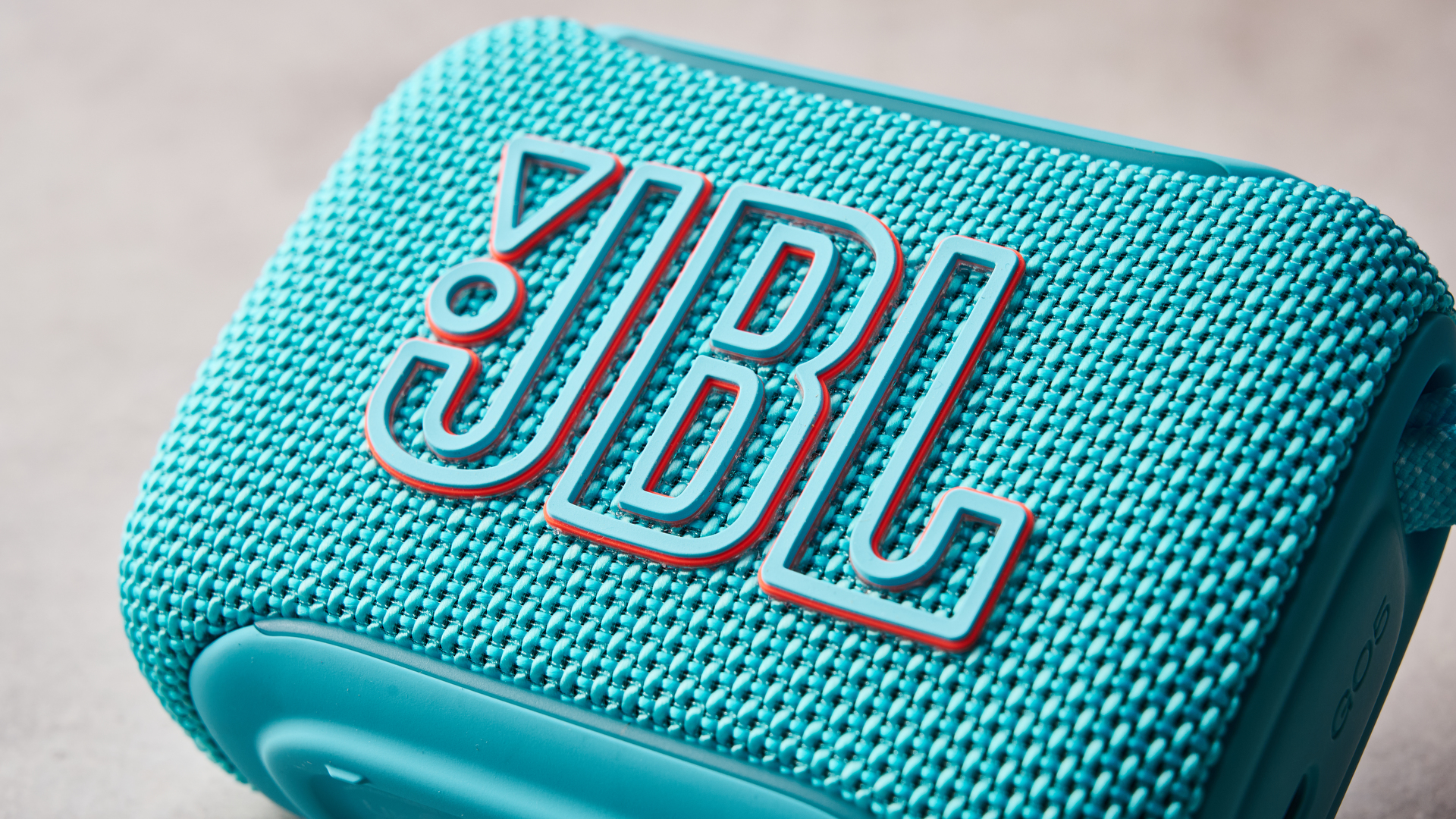
Another thing I spotted is that the Go 5's logo looks a bit sharper, and there are protruding rubber feet on the reverse side of the model to keep it more stable when laid flat. Looks-wise, though, things haven't been altered all too much — there are still plenty of color options to pick from, and I was a huge fan of the turquoise model I tested out.
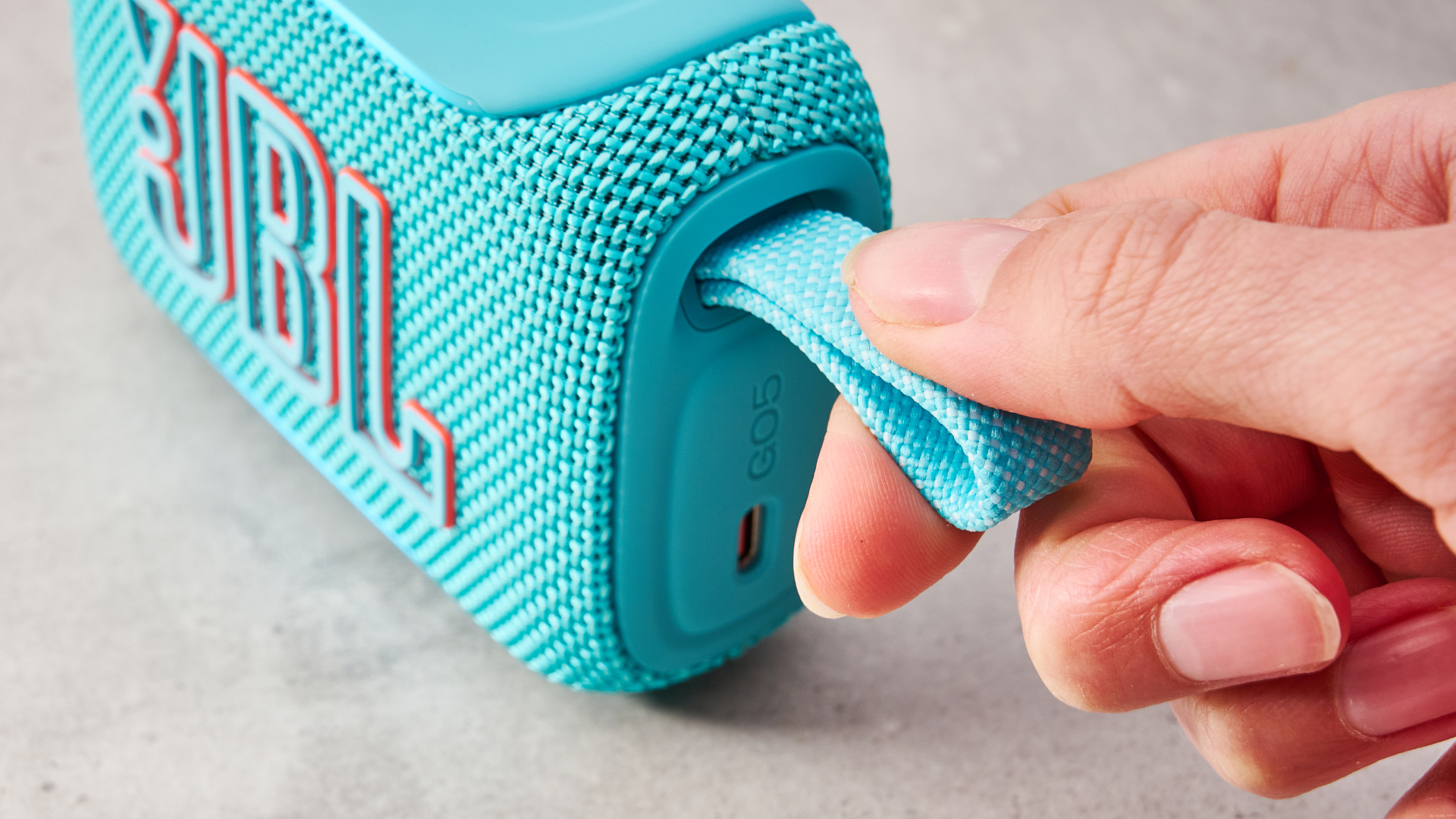
On a practical level, you're still getting a drop-proof, lightweight model, but there's one small improvement to note, and that's the dust- and waterproof rating, which has levelled up to IP68. That means that the speaker is fully dustproof and able to survive a 30 minute dip in a meter and a half of water.
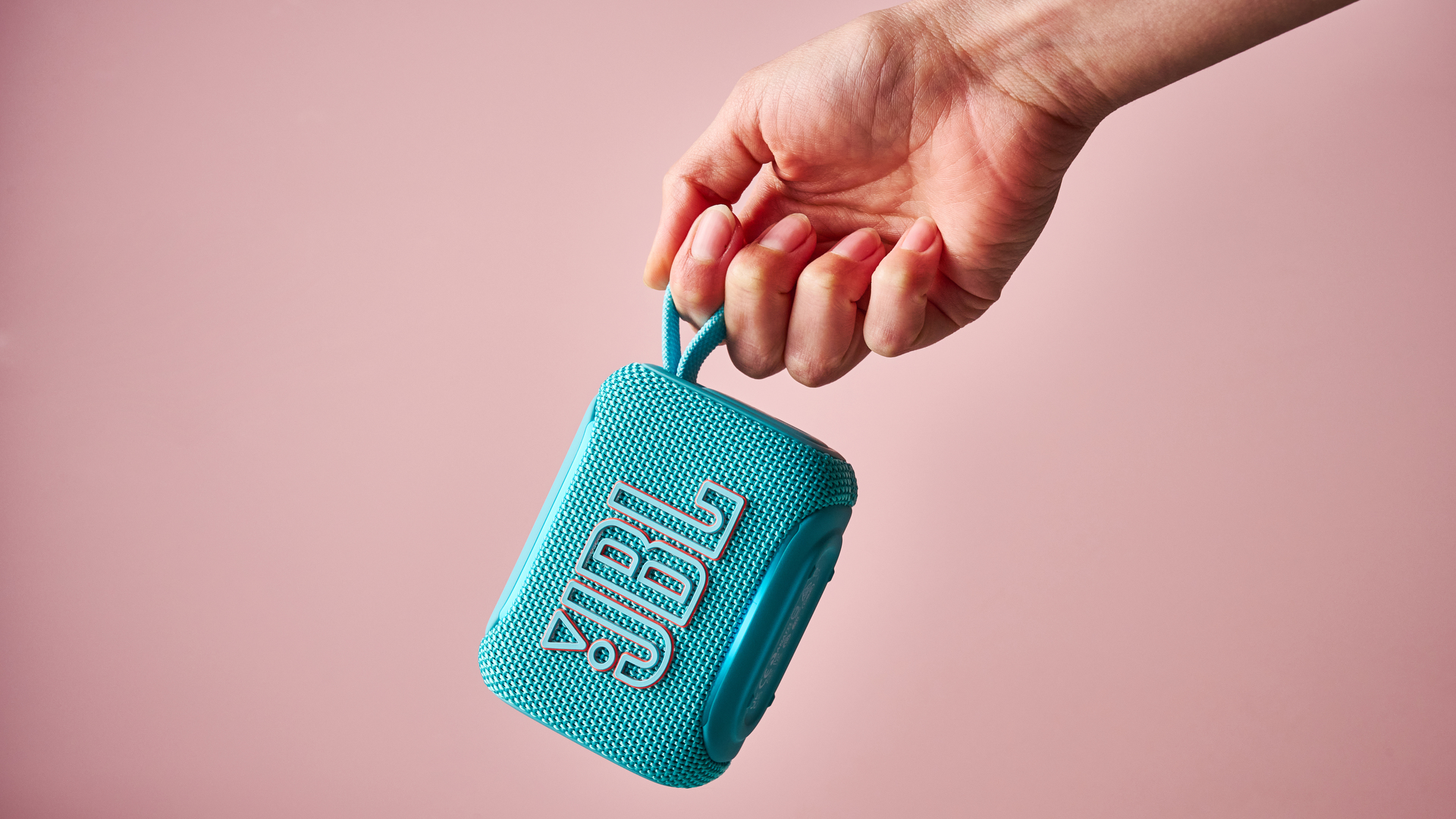
The Go 5's palm-sized form factor and practical loop also make it perfect for taking out and about — combine that with its durability and neat looks, and its a very high scorer in the design category.
- Design score: 4.5 / 5
JBL Go 5 review: value
- Not short of improvements over predecessor...
- ...meaning the slight US price-bump feels justified
- Performs a lot better than most rivals in its price-range
The JBL Go 5 is a fantastic value-for-money buy, and even though its seen a slight price increase over its predecessor (in the US, at least), it feels worth every penny.
At $54.95 / £39.99 (about AU$75), this is a very budget-friendly model, and is far cheaper than other small speakers, like the Bose SoundLink Micro Gen 2, for instance.
You also get a whole lot for the money. Impressive sound quality in an ultra-compact form, high-standard build quality, and customizability in the JBL Portable app.
I'd even argue the upgraded audio quality makes it worth upgrading to the Go 5 from the Go 4 if you own that model — the additional power and less compressed audio is an absolute gamechanger, and the ambient lights aren't half bad either.
- Value score: 5 / 5
Should I buy the JBL Go 5?
Attributes |
Notes |
Rating |
|---|---|---|
Features |
Appealing ambient lighting, user-friendly companion app, upgraded battery life welcome but nothing special. |
4.5/5 |
Sound quality |
Clean, defined, and expressive audio, offers a significant upgrade on predecessor. |
4.5/5 |
Design |
Ultra-durable, highly waterproof, and plenty of color options to choose from. |
4.5/5 |
Value |
Low price, high quality, small price increase from Go 4. |
5/5 |
Buy it if…
Don’t buy it if…
JBL Go 5 review: also consider
JBL Go 5 |
Tribit Stormbox Micro 3 |
Edifier ES20 |
|
|---|---|---|---|
Price |
$54.95 / £39.99 (about AU$75) |
$64.99 / £62.99 (about AU$130) |
$89.99 / £50 / AU$99.99 |
Weight |
0.5lbs / 230g |
0.7lbs / 330g |
0.7lbs / 300g |
Dimensions |
4 x 3.1 x 1.7 inches / 101 x 77.4 x 43mm |
4.4 x 4.1 x 1.8 inches / 112 x 103 x 45mm |
3.6 x 3.7 x 2 inches / 90.4 x 93.7 x 49.7mm |
Connectivity |
Bluetooth 6.0, USB-C |
Bluetooth 6.0 |
Bluetooth 5.4 |
Battery life |
10 hours (with PlayTime Boost) |
24 hours |
15 hours |
Speaker drivers |
1x 45mm full range |
1x 48mm full-range |
1x 43mm full-range |
Waterproofing |
IP68 |
IP68 |
IP67 |
How I tested the JBL Go 5
- I spent multiple weeks testing
- Mainly streamed tunes from Tidal
- Reviewed by someone who’s tested more than 50 Bluetooth speakers
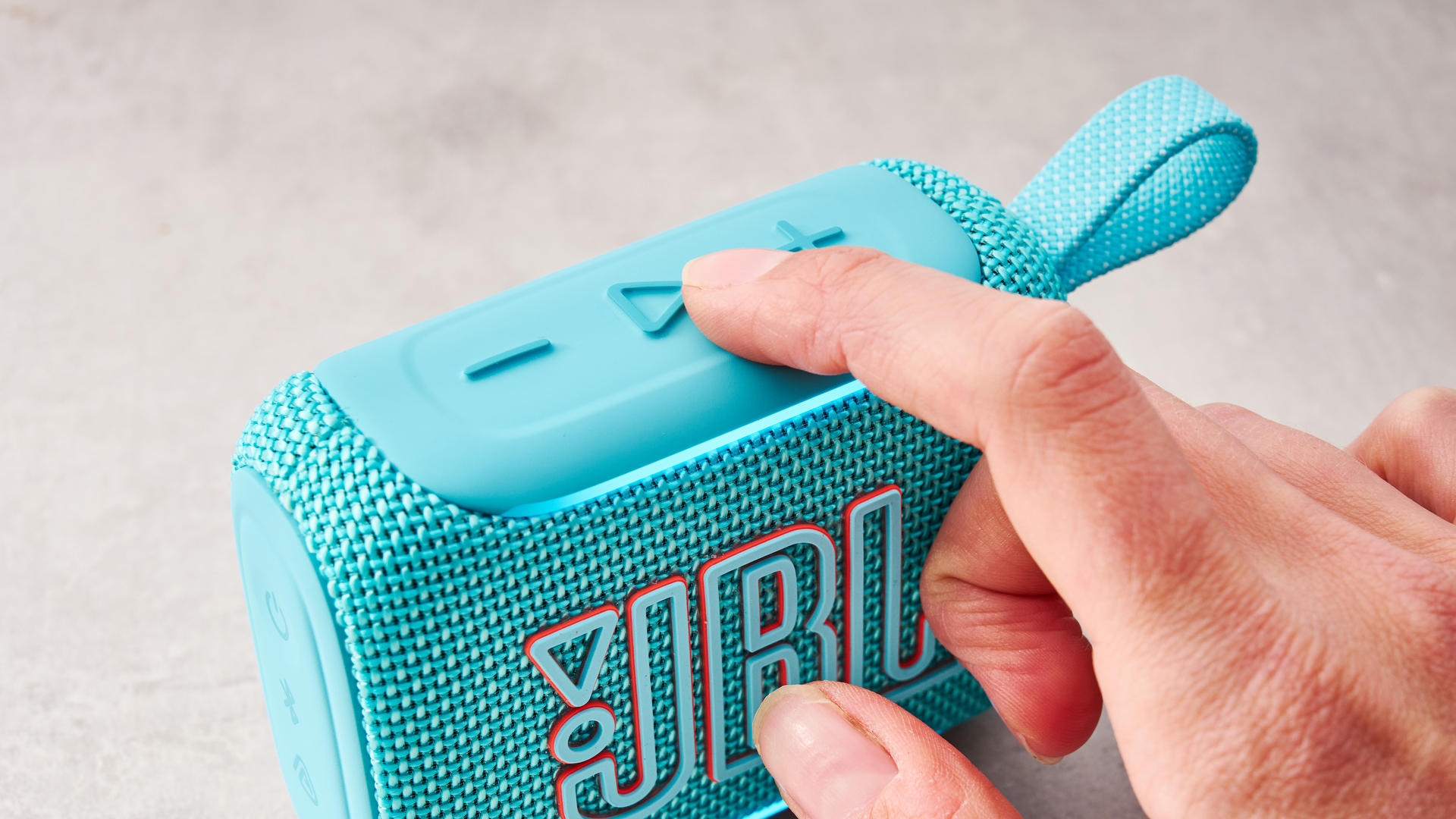
I spent weeks testing the JBL Go 5, using it at our music testing space, at home, and in the shower. I exhausted all of its features, and made sure to cycle through all of the options in the JBL Portable app.
For the most part, I used Tidal to stream music, but I dipped into Spotify from time to time as well. During my time with the speaker, I played through tracks from the TechRadar testing playlist, but also bumped a wide range of tunes from my personal library.
More generally, I've spent years testing audio gear here at TechRadar, and have covered everything from small models like the Bose SoundLink Micro Gen 2 to party speakers like the Marshall Bromley 750. I've also used the JBL Go 5's predecessor, the Go 4, pretty extensively, meaning I knew exactly what to look for from a next-gen refresh.
- Read more about how we test
- First reviewed: May 2026