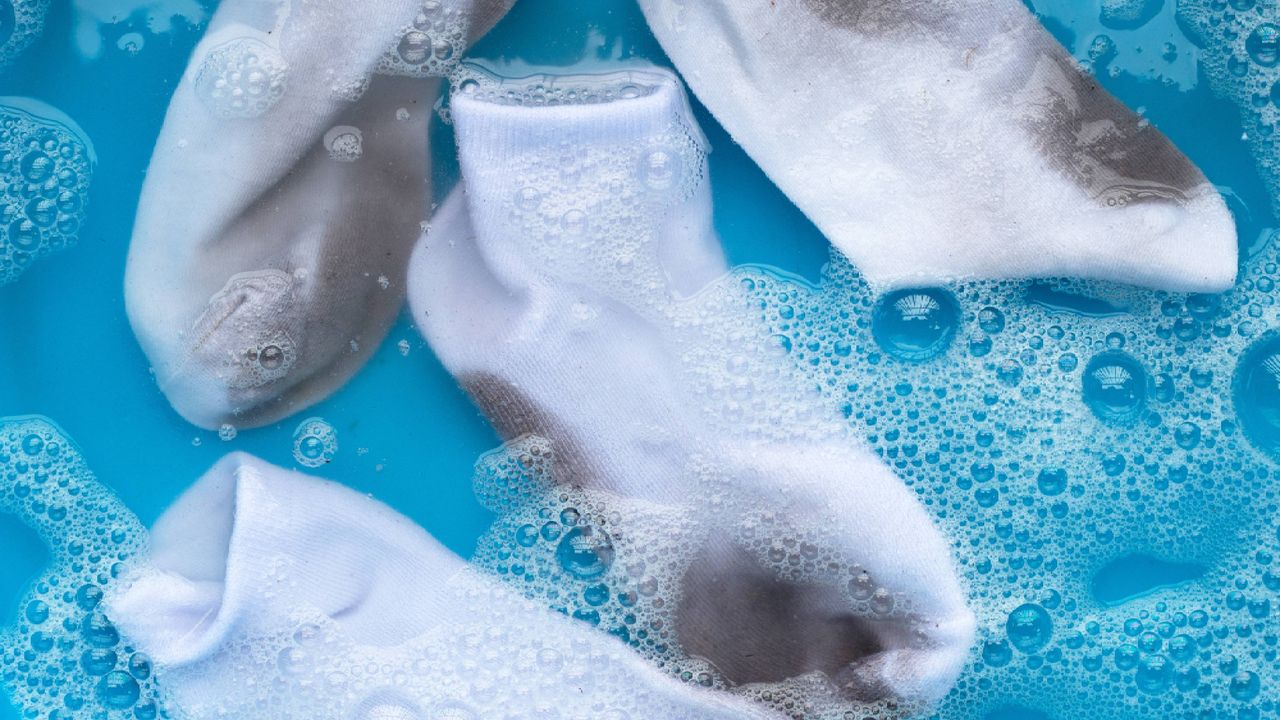
There’s nothing quite as frustrating as pulling a freshly washed pair of socks out of the dryer, only to realize they still look dingy. For a long time, I assumed mine were just past their prime. But, as it turns out, the problem isn't the socks. It’s how we treat them.
Standard washing often leaves behind sweat and detergent residue, locking that gray layer into the fibers. Once I stopped relying on boiling water and harsh chemicals and switched to one easy pre-soak step, the transformation was incredible.
Here is the exact pre-treatment method I use to get them bright white again, without damaging the fabric.
Why white socks turn gray in the first place
White socks don't fade to gray from normal wear. They accumulate a layer of detergent residue, fabric softener buildup, dead skin cells, and mineral deposits from hard water. This combination sits on the fibers and creates that dingy appearance.
The fabric itself is still white underneath, it's just been suffocated by layers of buildup that regular washing cycles can't remove. That is why athletic socks that absorb sweat regularly, or any socks washed in hard water, are particularly vulnerable.
How to get white socks white again
Soak them before washing
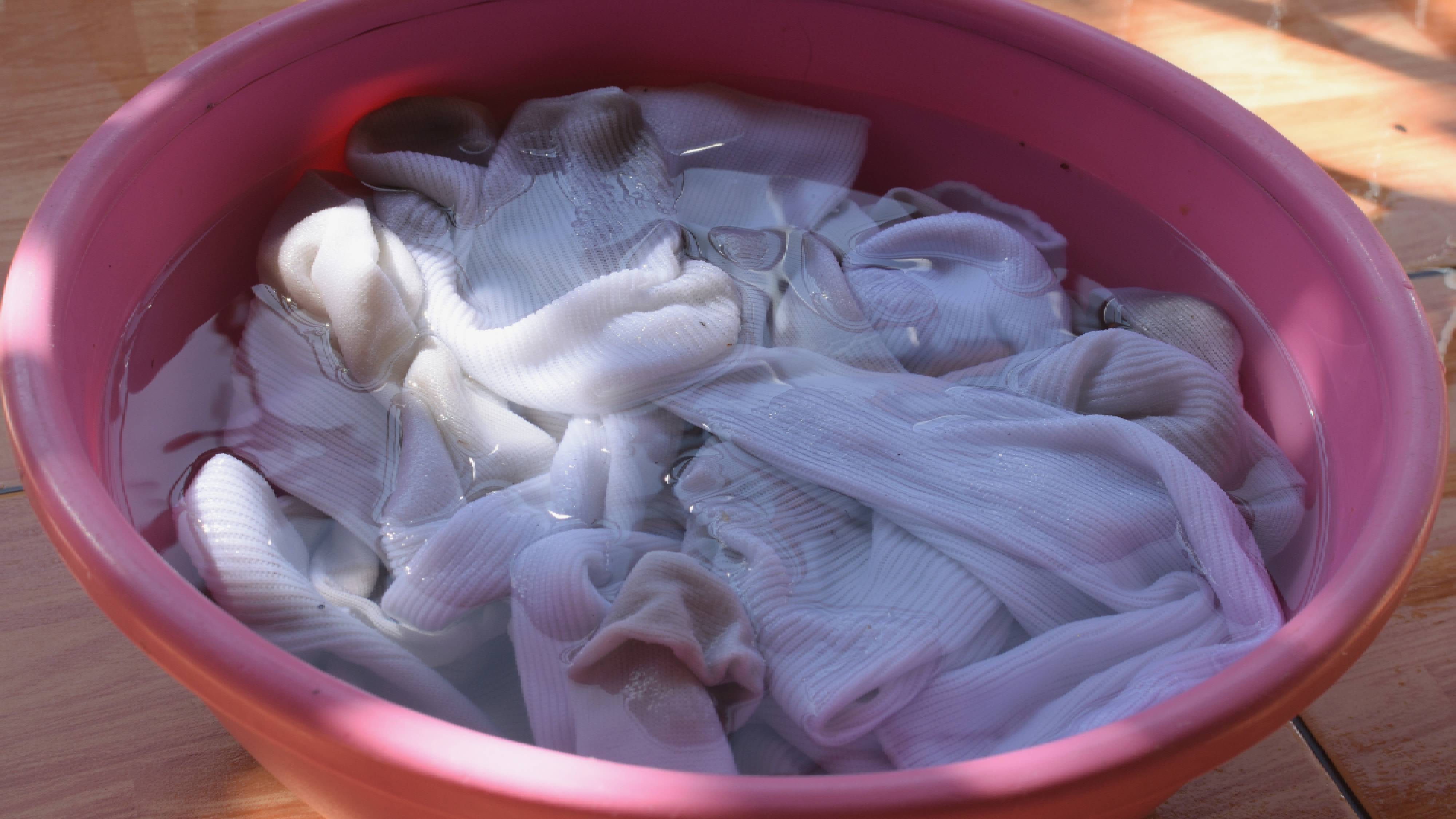
The key is pre-treatment. Mix warm water with an oxygen-based laundry booster like OxiClean — not chlorine bleach, which damages cotton fibers and yellows them over time.
Submerge your white socks and let them soak for at least 4 to 6 hours, though overnight yields the best results. The active oxygen breaks down trapped buildup without harsh chemicals.
If you are dealing with heavily soiled athletic socks, stir a tablespoon of baking soda into the oxygen-bleach soak to help lift stubborn sweat stains and neutralize odors.
If your discoloration comes from mineral buildup (which often leaves a yellowish tint), skip the oxygen bleach entirely for that batch. Instead, do a separate soak using one cup of distilled white vinegar dissolved in warm water to dissolve the minerals.
Wash with the right cycle and temperature
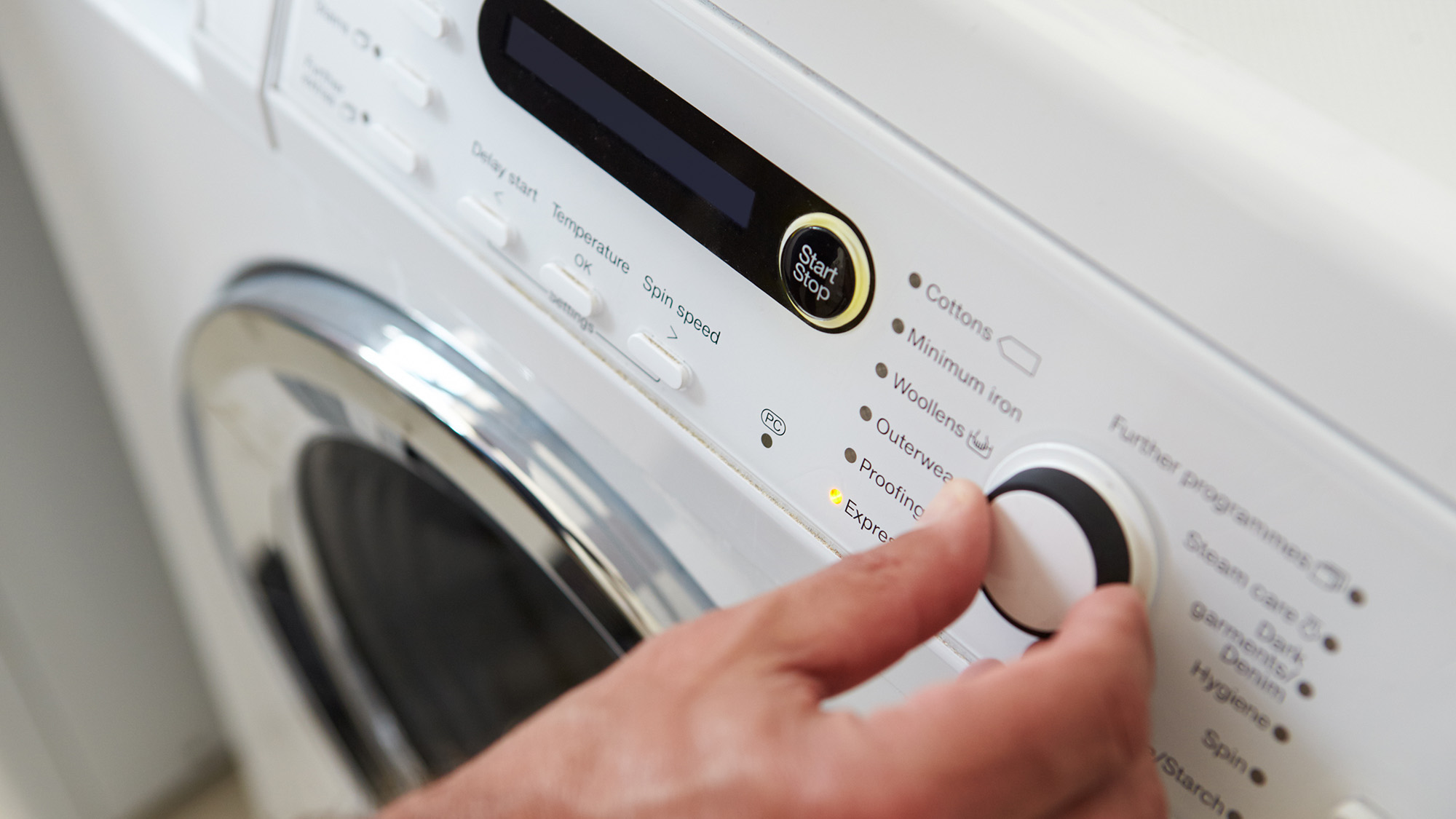
After soaking, wring out the socks and wash them separately from other laundry so they don't pick up loose dyes. Use warm water (around 90°F to 105°F, or your machine’s standard warm setting), so it’s hot enough to activate your detergent and lift remaining residue without shrinking the cotton or ruining the sock's elastic.
Stick to a standard dose of regular detergent, avoiding extra-strength or sport formulas that tend to leave behind excess buildup. Most importantly, skip the fabric softener entirely. Fabric softener coats cotton fibers in a waxy layer, which traps grime and creates that gray, dingy look faster than almost anything else.
Finally, run a full, regular wash cycle rather than a quick wash. Give the machine enough time to thoroughly rinse away all the loosened grime and soap residue that the pre-soak broke down.
Dry them properly to maintain brightness
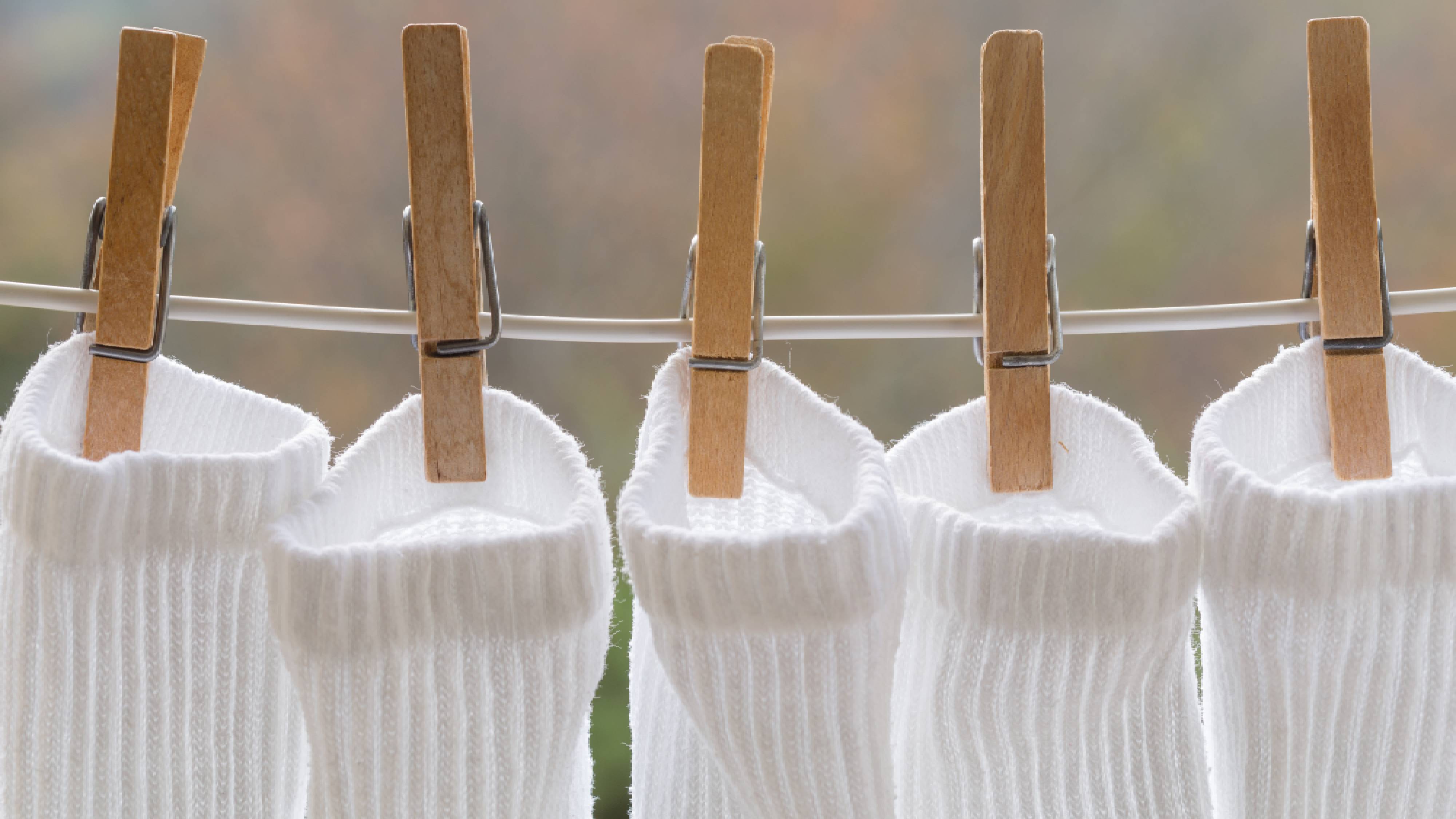
Air-drying white socks in direct sunlight is ideal. Sunlight naturally whitens and brightens cotton through a gentle process called photochemical bleaching.
If you use a dryer, stick to medium heat as excessively high heat can scorch fibers and yellow white fabrics over time. Just be sure the socks are completely stain-free before they go into the dryer, as any heat source will permanently bake in leftover discoloration that didn't fully come out in the wash.