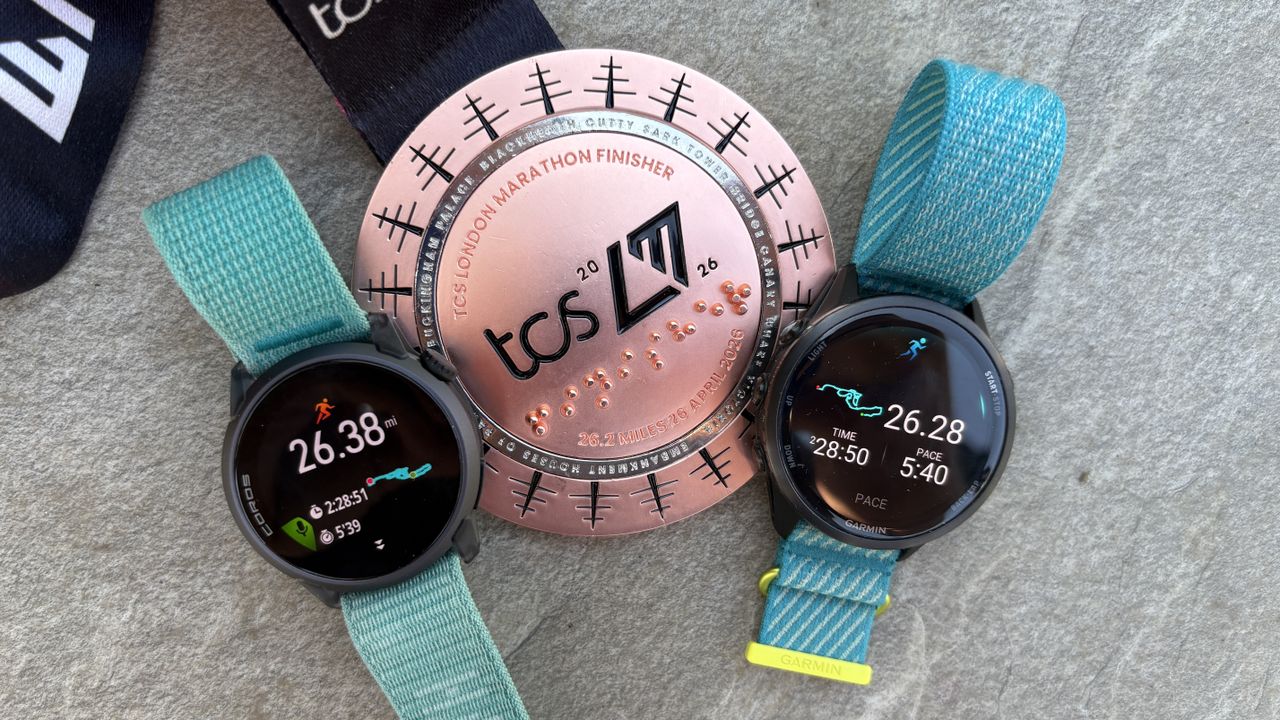
I’ve run the London Marathon nine times and if there’s one thing I’ve learned from all those races it’s that having one of the best running watches on your wrist can help you train for and pace the event.
Over the years I’ve noticed a clear improvement in the GPS accuracy on top watches in the race, especially around the skyscrapers in Canary Wharf, and the reliability of optical heart rate sensors has also got better.
This year I used the Garmin Forerunner 970 and Coros Pace 4 on race day, having also used them for months of training for the London Marathon.
Both are great options for runners and performed well during the race — here’s how they compared for GPS, heart rate and race prediction accuracy.
GPS Accuracy
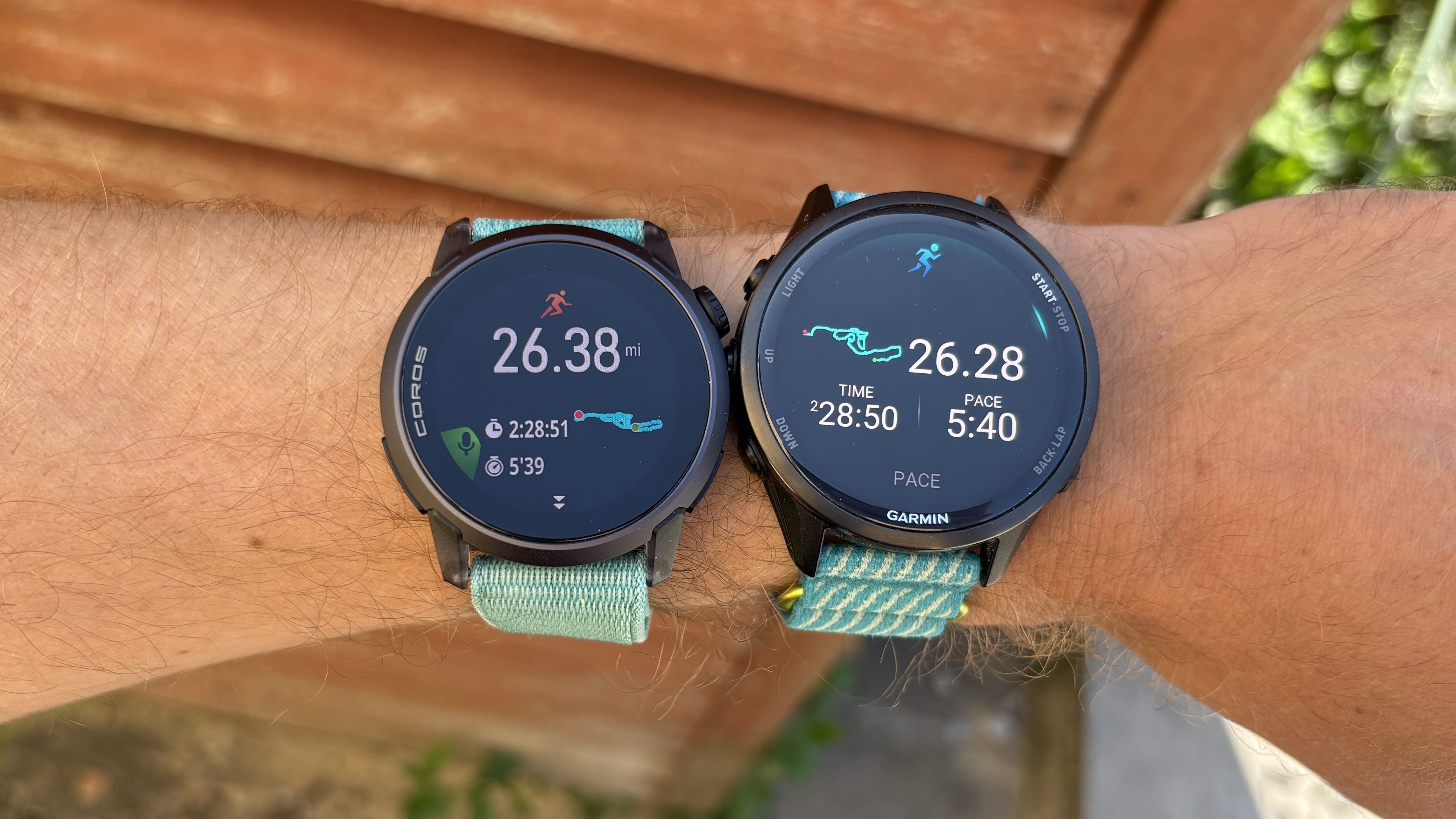
Both watches recorded a total distance that was impressively close to the official marathon distance of 26.219 miles, though the Garmin Forerunner 970 was closer to this.
I did have to weave around some runners early on but was mostly able to run the optimal racing line, which is marked on the road in the London Marathon, so I probably ran close to the official distance on the day.
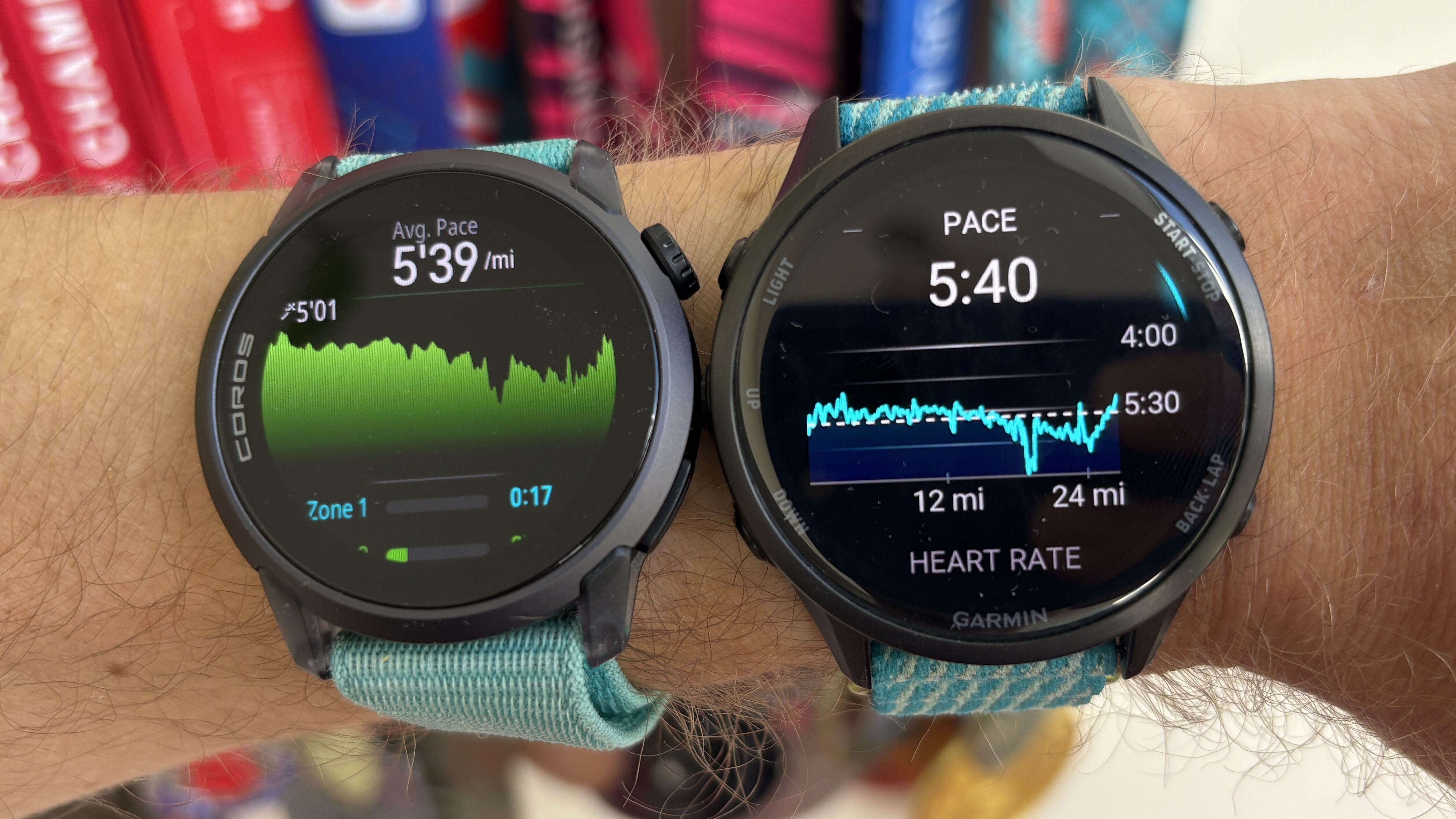
Both watches were hitting mile splits quite close to the markers on the course too, though I did reset the lap counter a couple of times to bring them nearer in line to the markers.
The hardest part of the course for GPS accuracy is around Canary Wharf, where there are a lot of tall buildings to block satellite signals and when going through the Blackfriars Underpass.
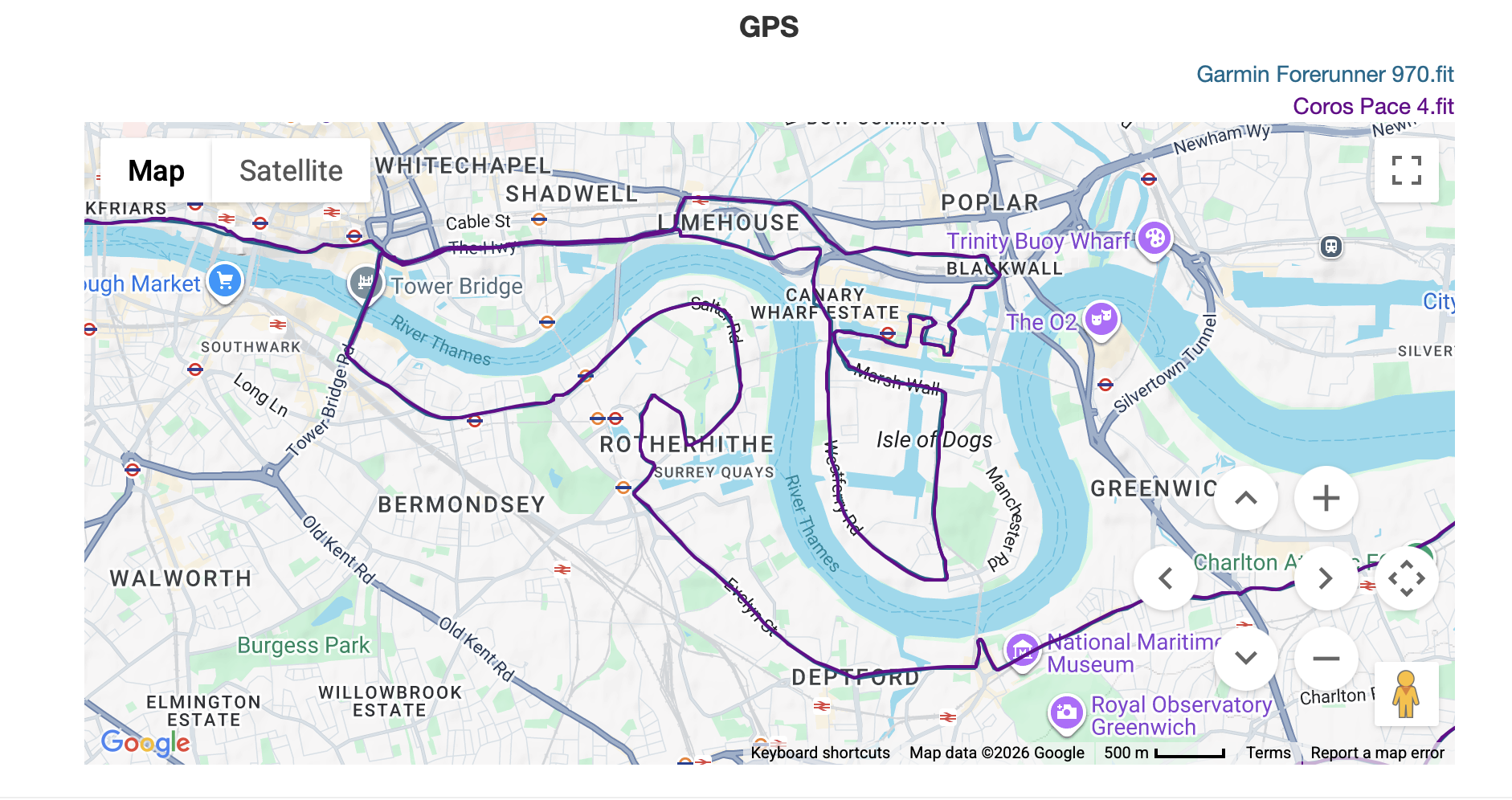
Both watches produced pretty impressive GPS tracks around Canary Wharf and though I did notice my split pace stats going a little haywire in that area, it wasn’t as drastic as during past London Marathons.
Heart Rate Accuracy
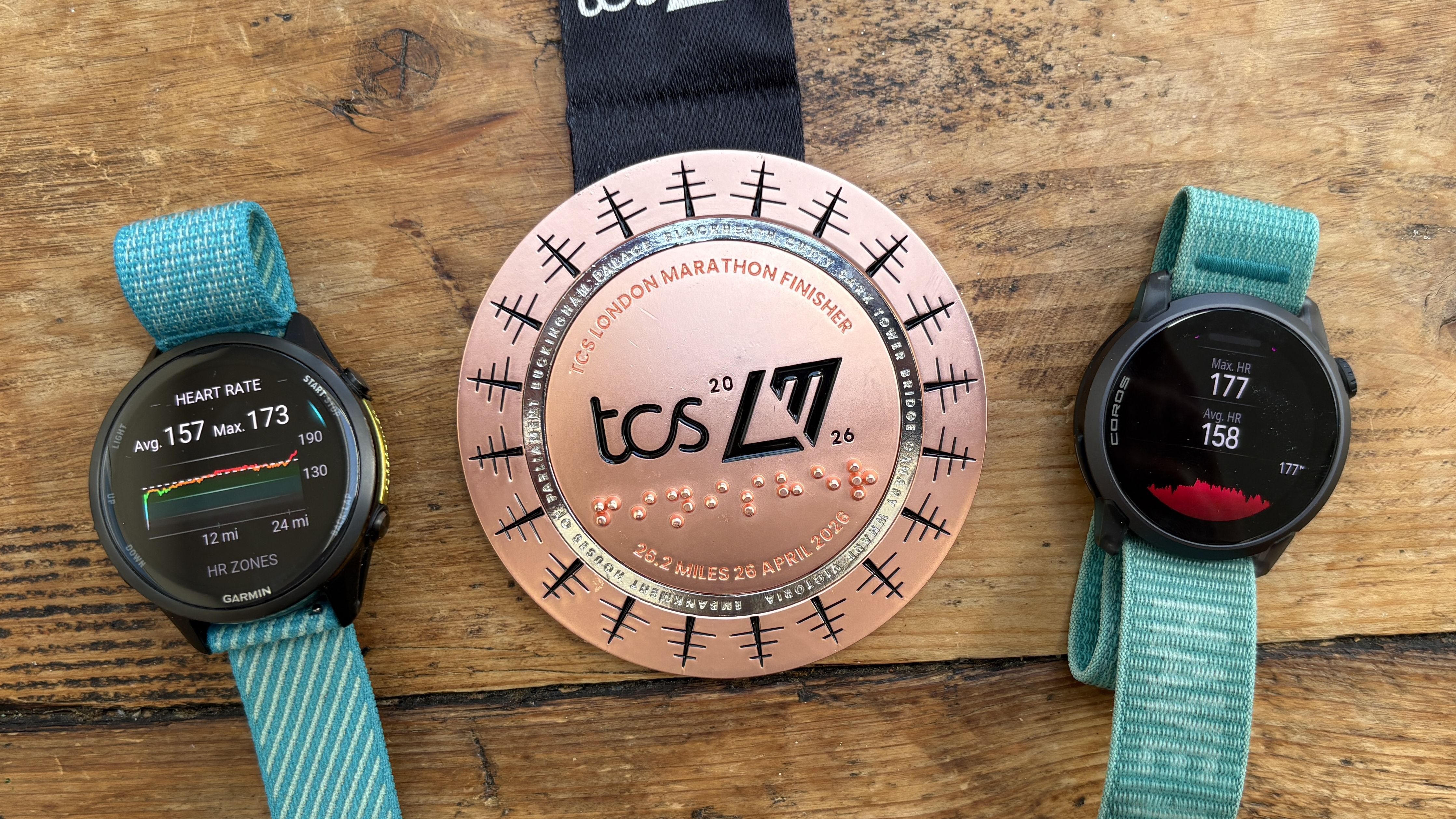
In training I generally wear a chest strap heart rate monitor to get the most reliable results, but the Pace 4 and Forerunner 970 have mostly been accurate for me when I have used their built-in optical sensors in the past, and they were accurate on race day.
While I didn’t wear a chest strap to compare the watches too, the heart rate readings were in agreement throughout the race and exactly where I’d expect them to be as someone who has run a lot of marathons, including some with a chest strap.
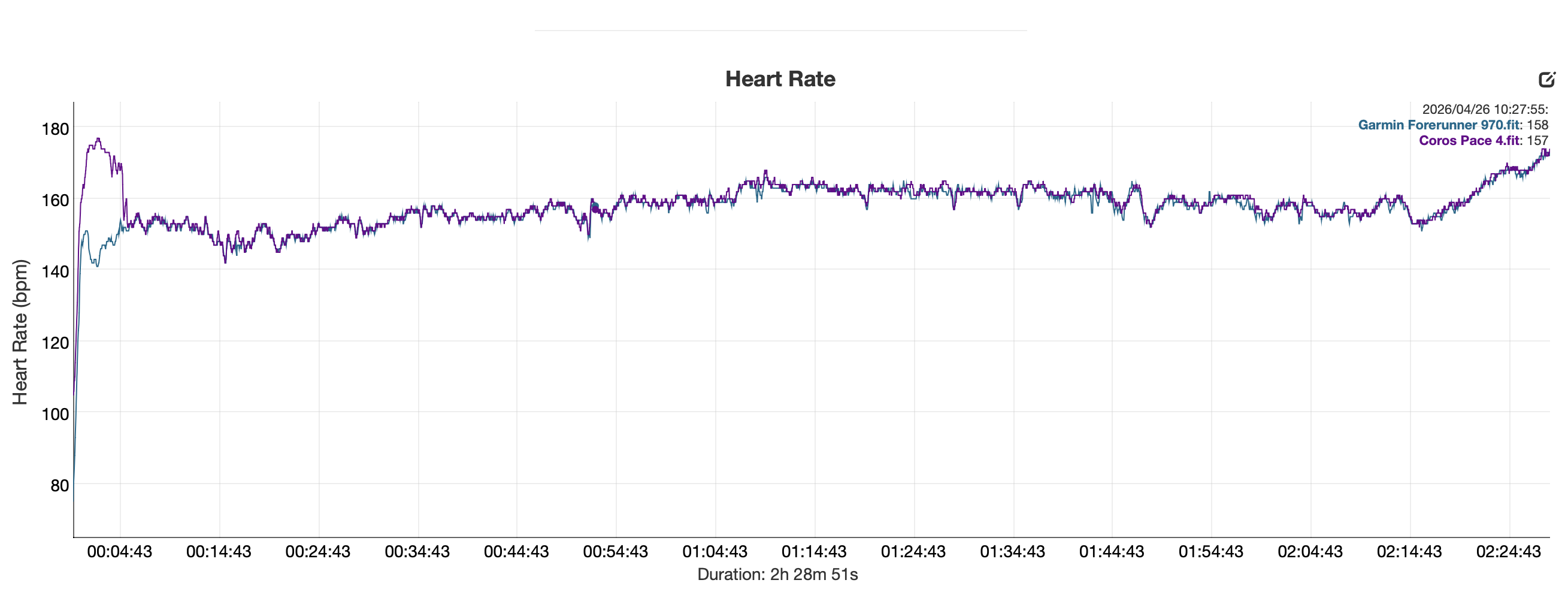
The Pace 4 did show too high a reading for a few minutes at the start of the marathon, but quickly locked onto the right heart rate and stayed there for the rest of the race.
Race Predictions
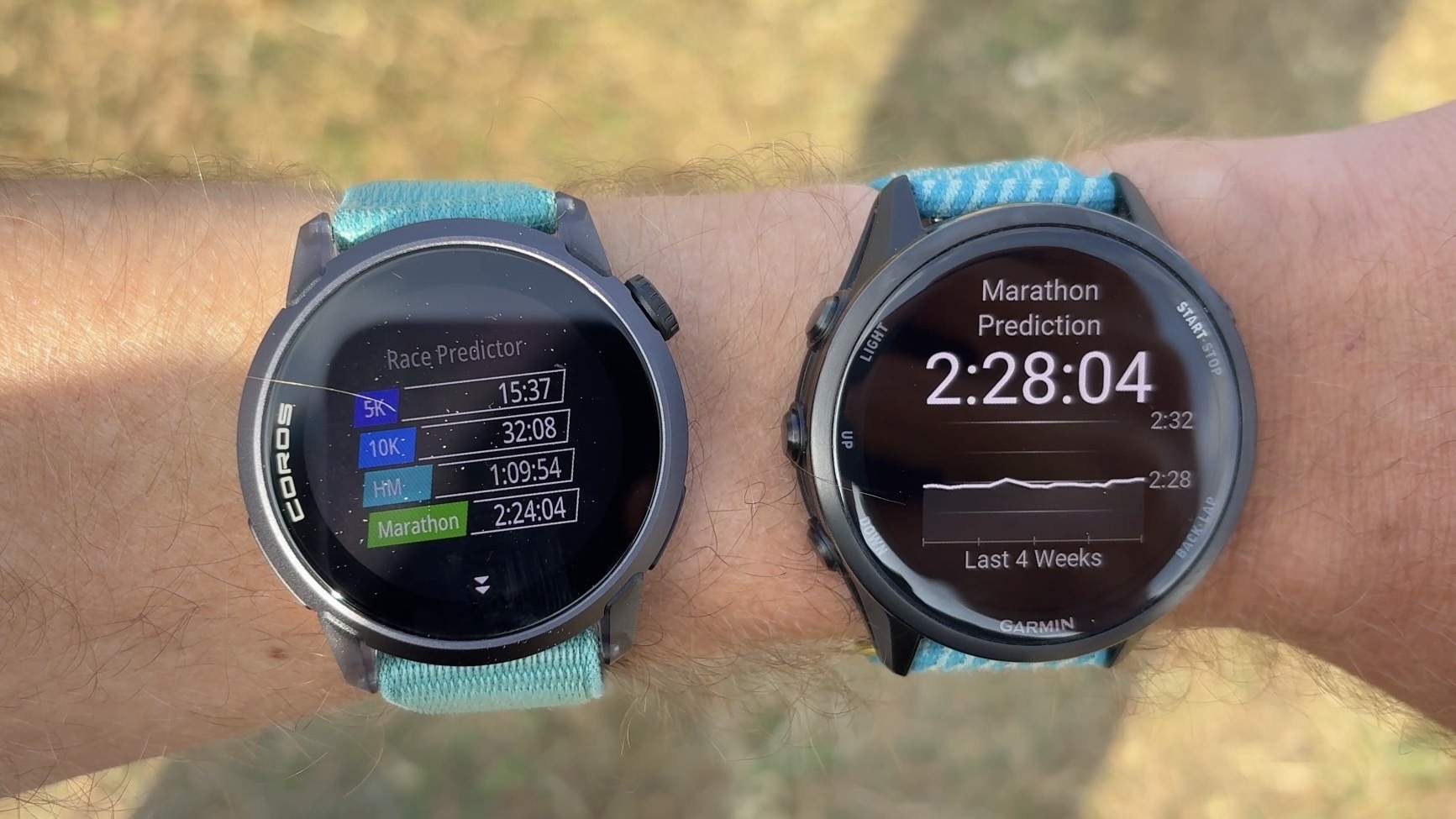
I’ve been tracking the marathon race prediction from the Forerunner 970 and Pace 4 throughout my training and the Coros has generally been more optimistic. It predicted a time of 2:24:04 on race morning, while the Forerunner 970 said 2:28:04.
My time was 2:28:49 in the end, but it doesn’t tell the whole story of which prediction was better, as I set out aiming for a 2:24 and then struggled in the second half, running a slower pace than for either prediction.
I’d say had I started more conservatively and run a more even race, my time would probably have fallen in between the two predictions and Coros’s predictions have been closer to my other race results of late, but Garmin’s estimate was closer to my final result at London.
Verdict
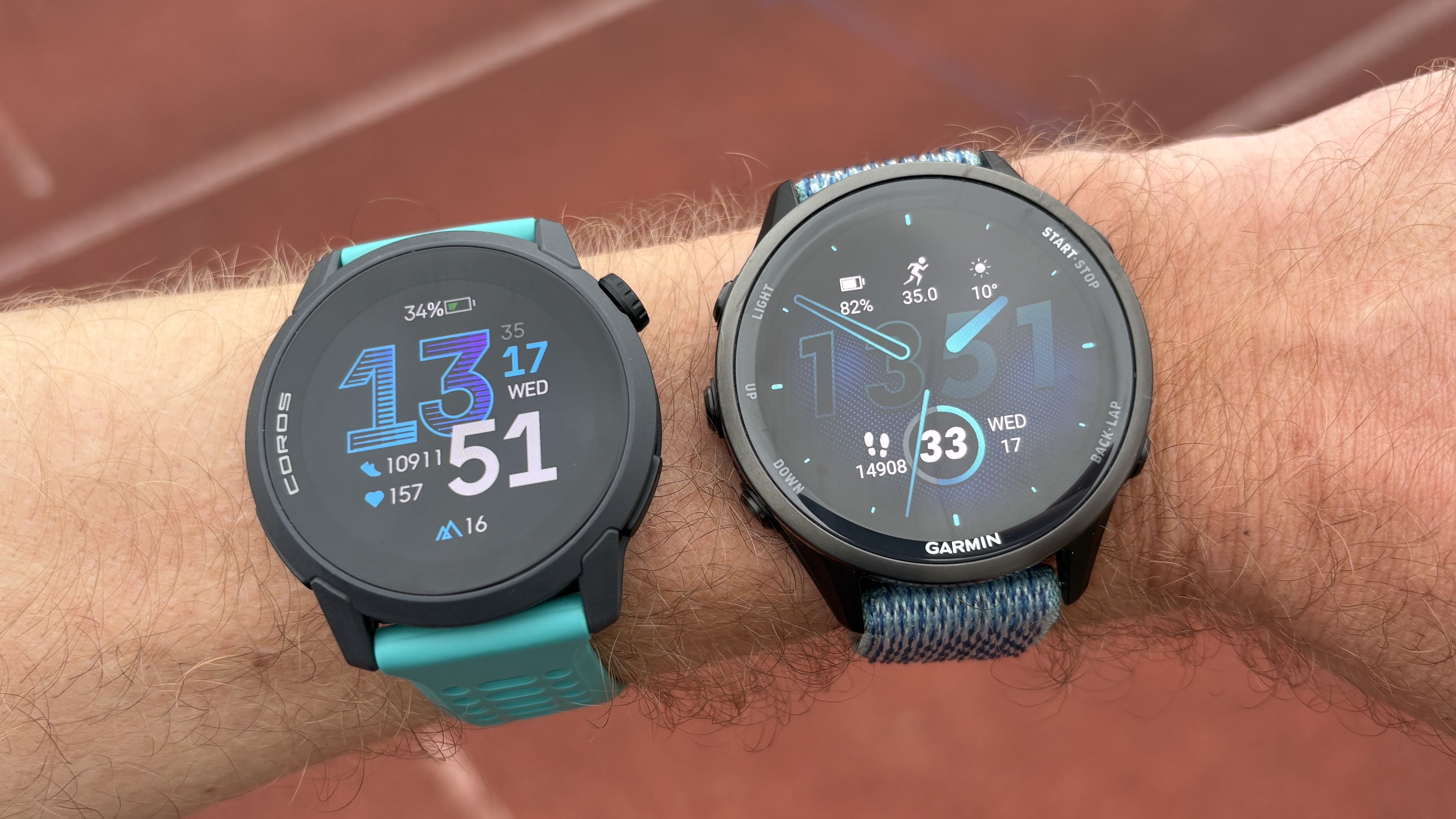
Overall, the Garmin Forerunner 970 was a little more accurate across the board at the London Marathon, but the Coros Pace 4 was also excellent.
I’d have been very happy using either watch by itself on race day and both have been reliable training partners for the past few months, offering useful training analysis and accurate tracking.
The Garmin offers a little more in terms of training features and also has offline maps, a more robust design with a flashlight, and a larger, brighter screen, but the Coros is considerably cheaper.
I rate the Forerunner 970 as the best running watch overall, and the Pace 4 as the best value option from any brand, and if you’re about to kick off marathon training, either will do a great job.