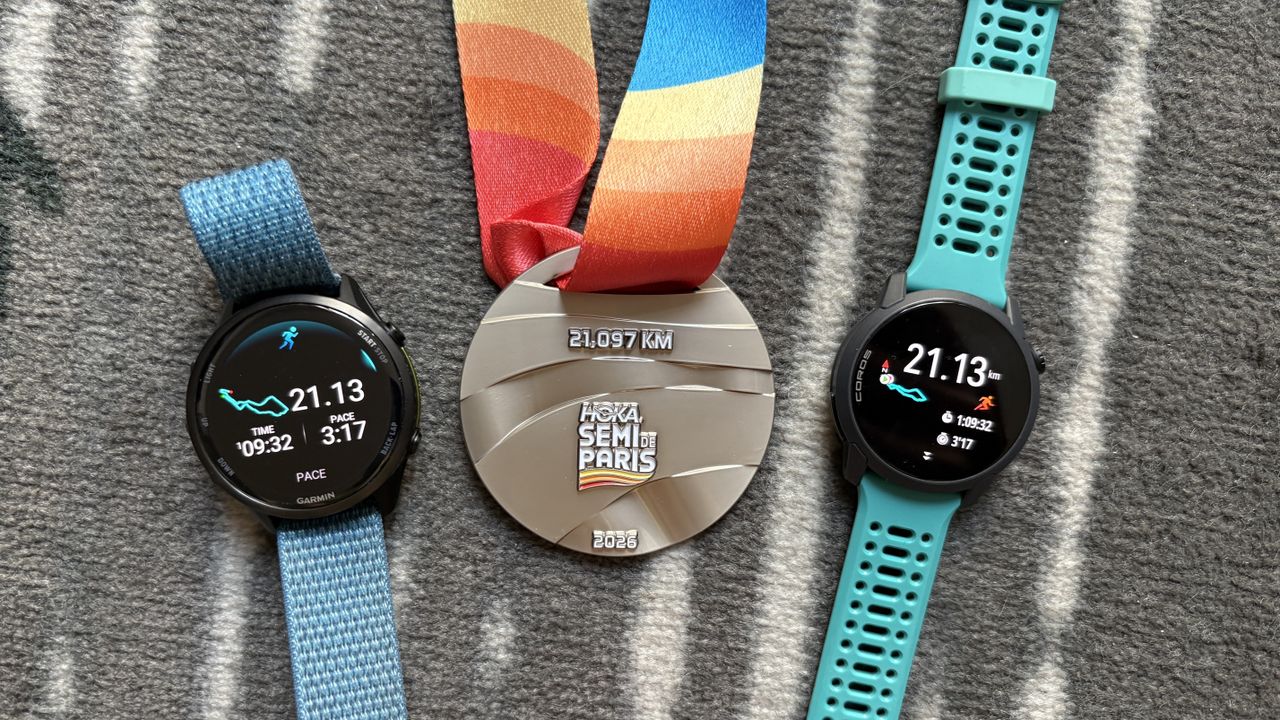
I rate the Garmin Forerunner 970 and Coros Pace 4 as the two best running watches on the market — the Forerunner 970 is top overall, and the Pace 4 offers the most value — and I’ve been using both for the past few months while training for the London Marathon.Before London comes around, however, I have some shorter races to tackle, including the Hoka Semi de Paris, which I ran at the weekend, clocking a new PR of 1:09:30.I wore the Pace 4 and the Forerunner 970 for the race to test out their GPS and heart rate accuracy, along with how on the money the watches were with their race predictions. Here’s what happened.
Predicted Race Times
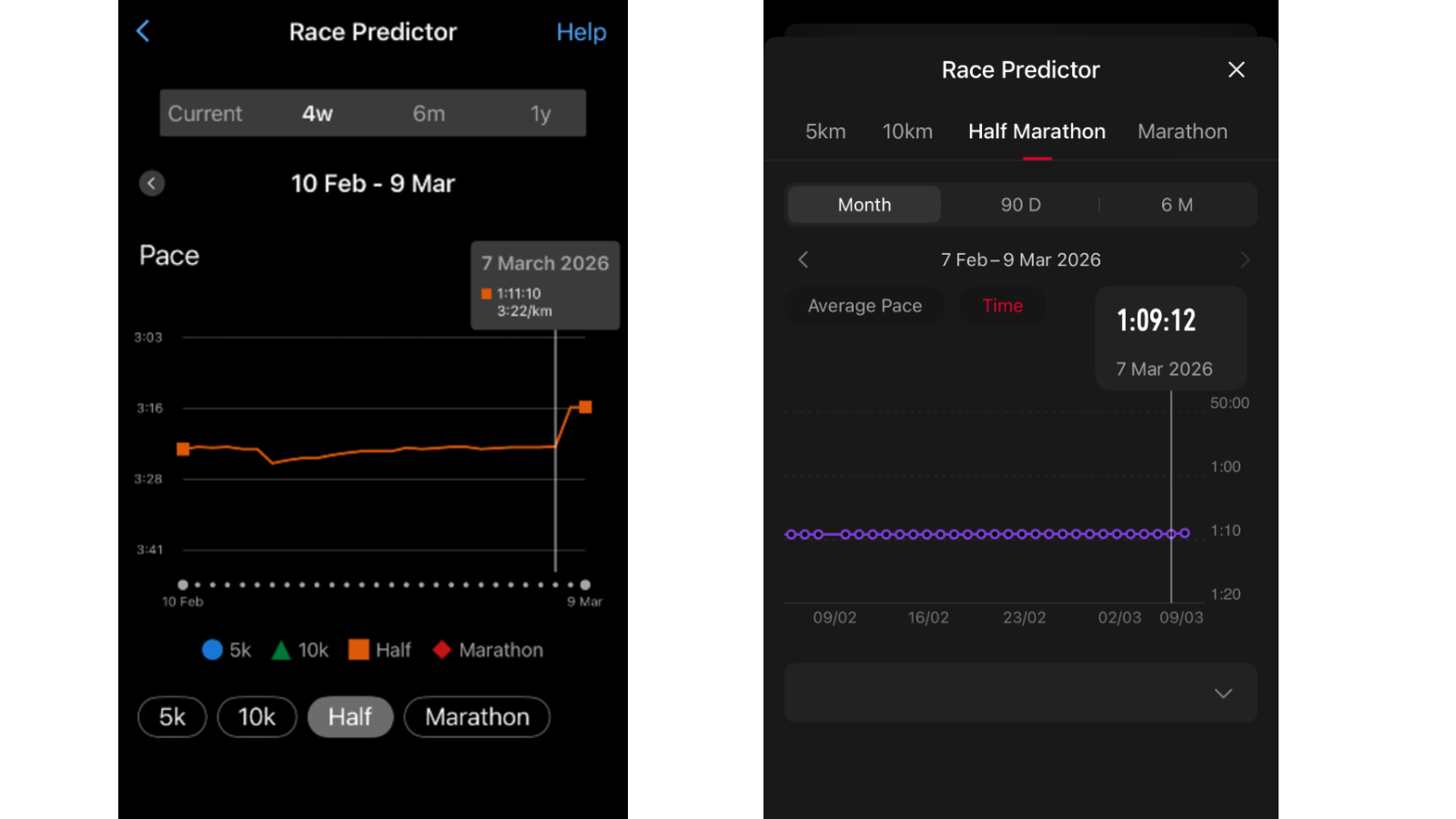
The race predictions on any watch or app are based on you running in perfect conditions, both in terms of the weather and other external factors, and your own condition, which could be influenced by illness or a lack of sleep.I did enjoy near-perfect conditions in Paris, with chilly but not-too-cold weather for the race, and woke up feeling well-rested and in good shape to chase a PR. The course had some ups and downs though, and a mild uphill in the last mile did feel tough on the day.Before the race the Coros Pace 4 suggested I could run a time of 1:09:12, whereas the Garmin was far more pessimistic, giving my predicted time as 1:11:10. Chalk that up as a win for Coros.
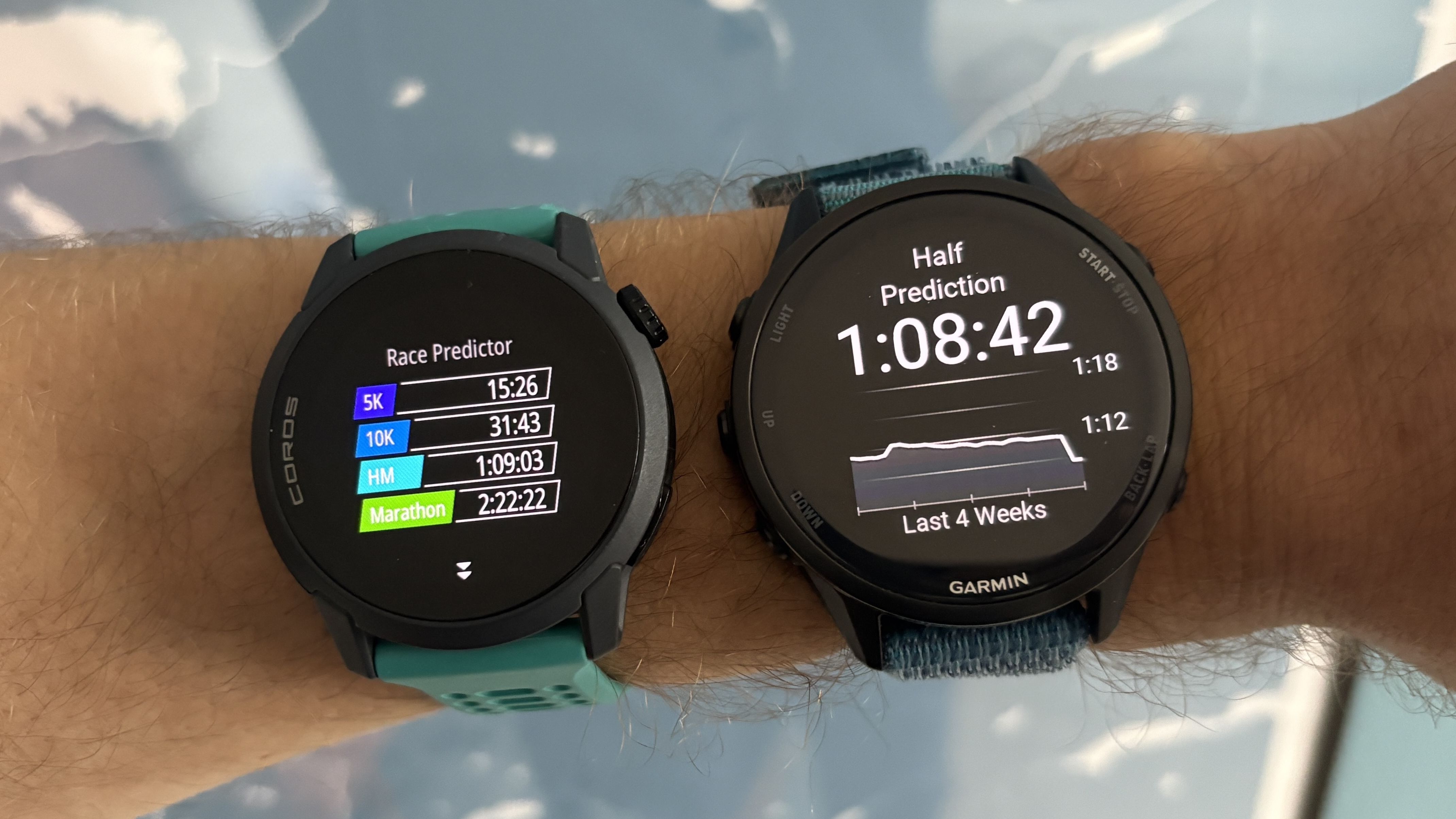
Interestingly after the race both watches revised my predictions slightly, with the Pace 4 now giving a predicted time of 1:09:03 and the Garmin 1:08:42. In the past Garmin predictions have proved slow to react to real-world race times, so it’s good to see a quick adjustment to a time that’s more in line with what I ran.
GPS Accuracy
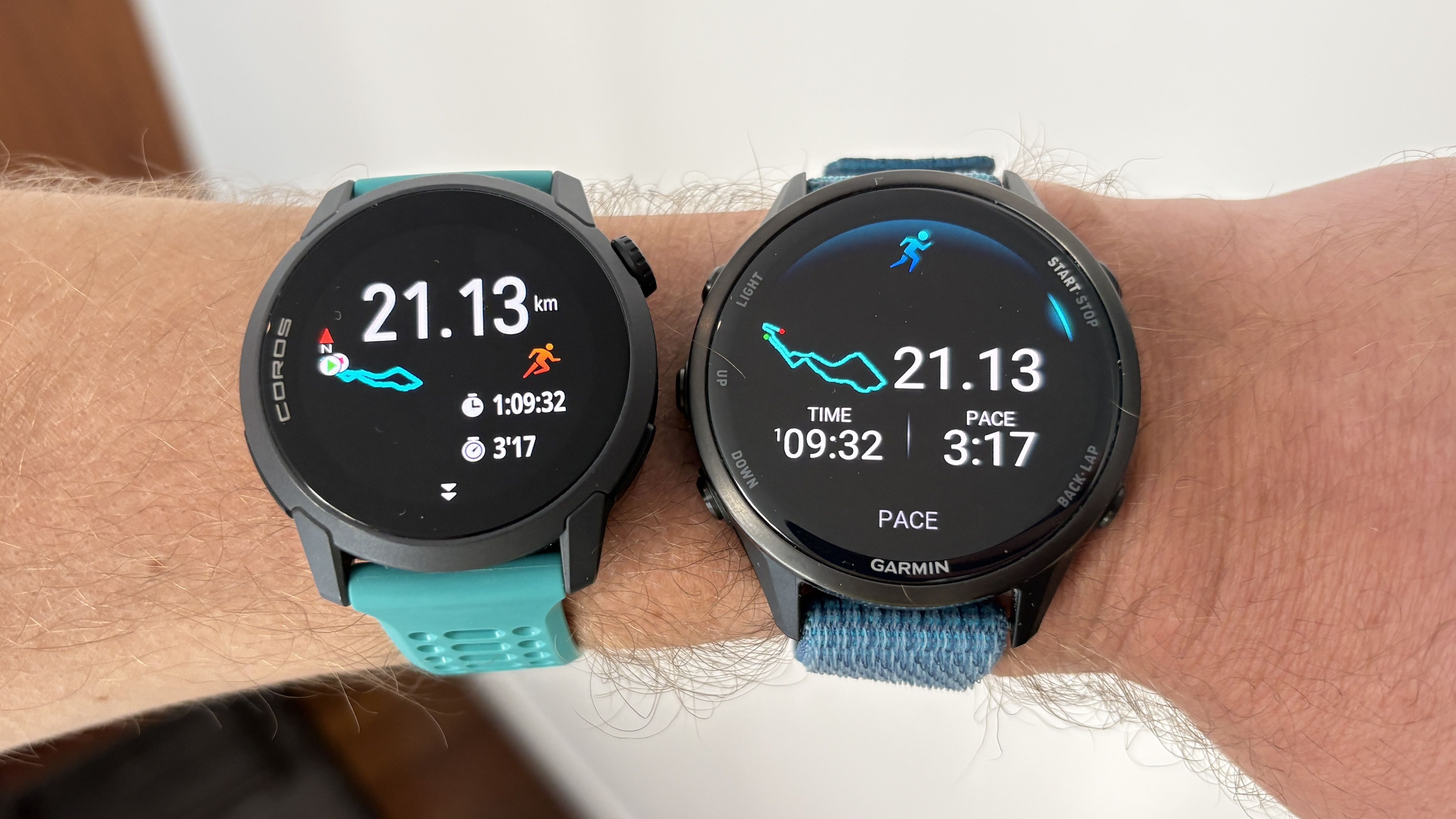
The GPS accuracy of both watches was incredibly good. They both finished with a total distance of 21.13km/13.12 miles, which is almost exactly the official race distance of 21.1km/13.1 miles.The course wasn’t too busy with runners around me, so I was able to run the tightest racing line most of the time, and although there were some turns and a short tunnel in the center of Paris, the overall route was quite clear and simple, so it’s good to see both watches nail it.
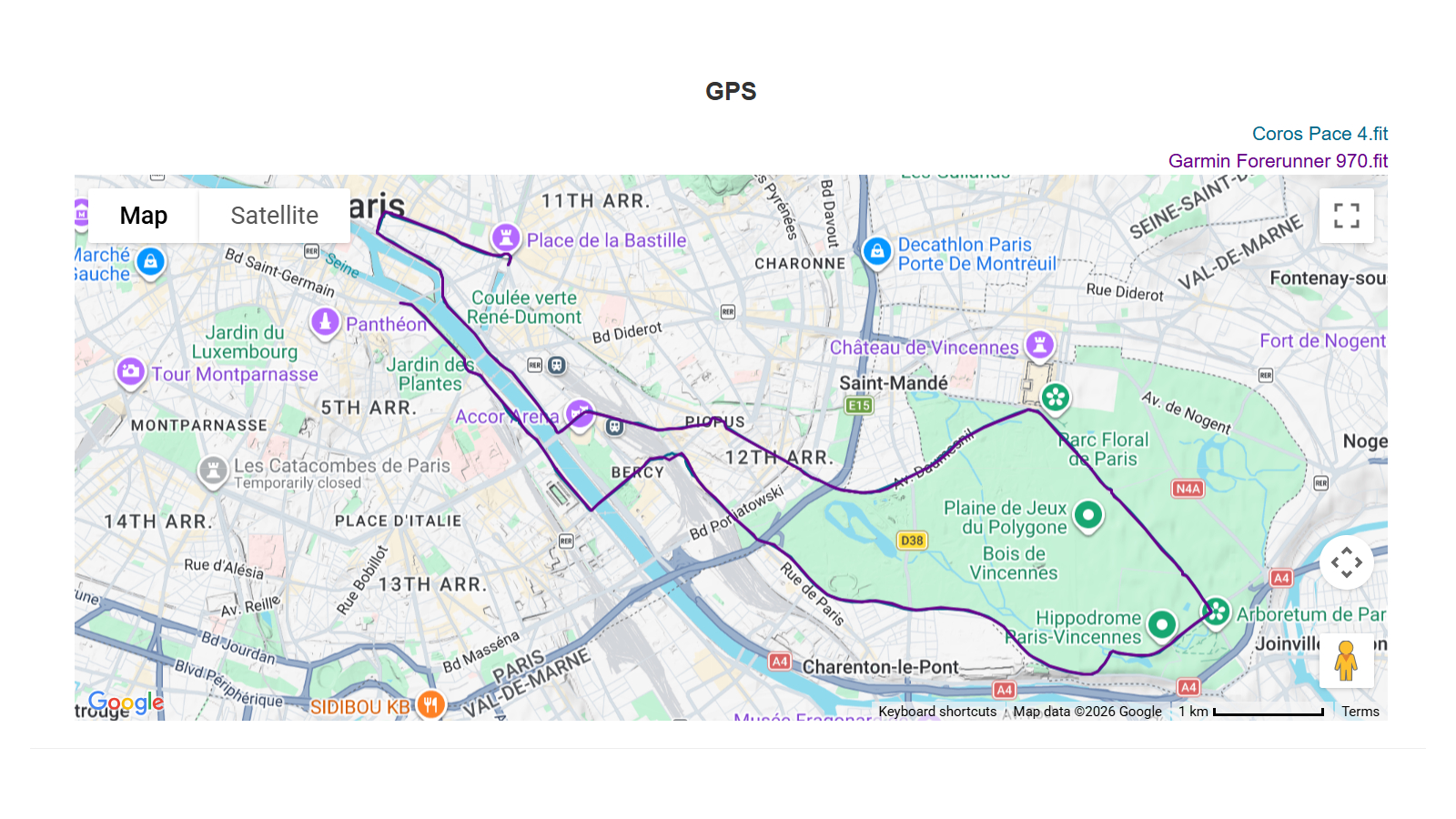
When looking at the GPS tracks from both they are almost identical throughout the race, with just one minor quirk from each early on. The splits were also coming in close to the official kilometer markers on the course throughout, making it easier to pace my run using the watches.
Heart Rate Accuracy
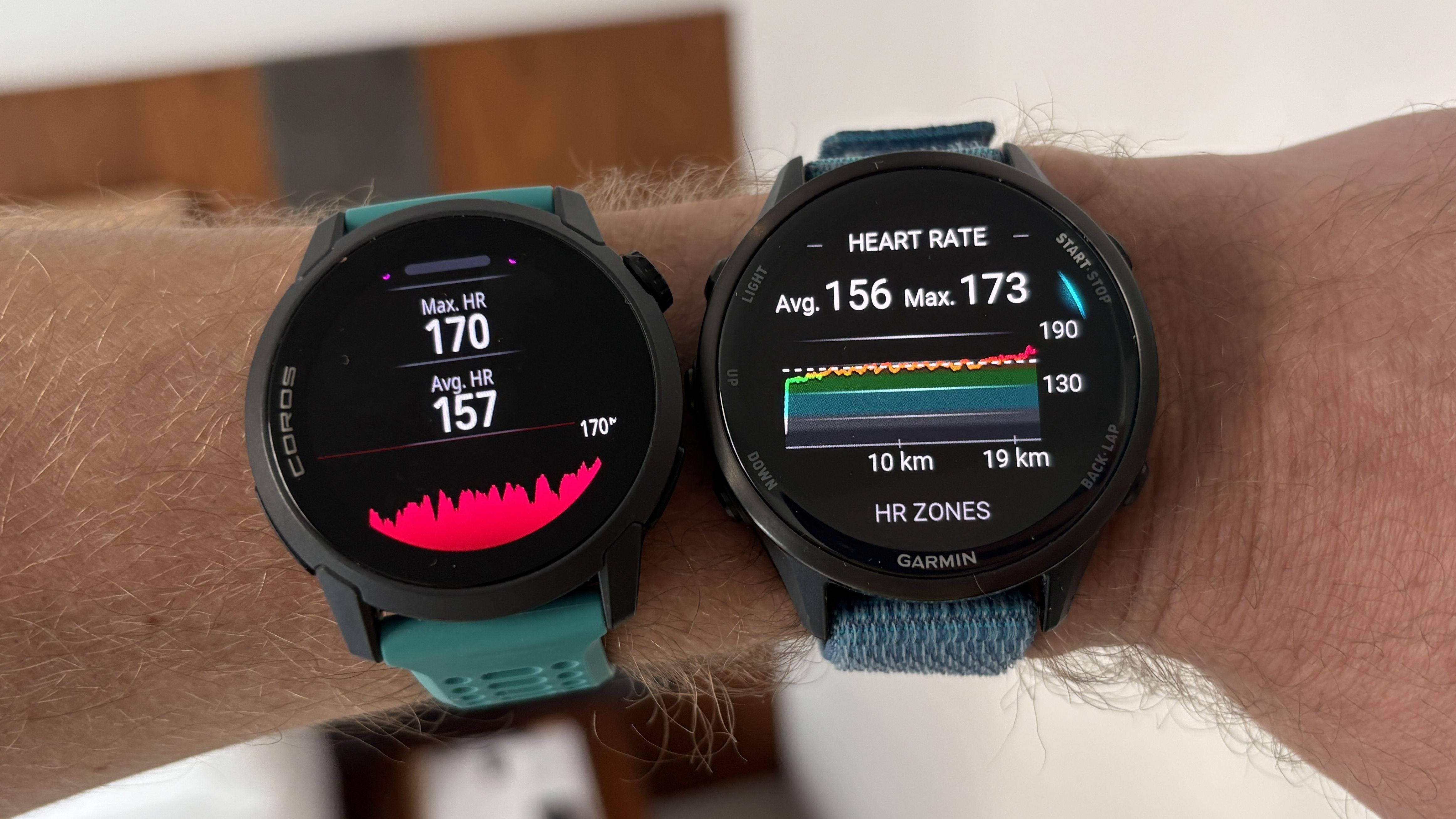
For the best heart rate accuracy in training I generally use a chest strap with both watches, but on race day I relied on the optical HR from the watches and both produced very similar results.Without a chest strap to compare them to I can’t be 100% on the accuracy of the results, but both watches produced exactly what I’d expect from my HR in a race — a gradual rise overall with some ups and downs as I ran over the small uphills and downhills on the course.
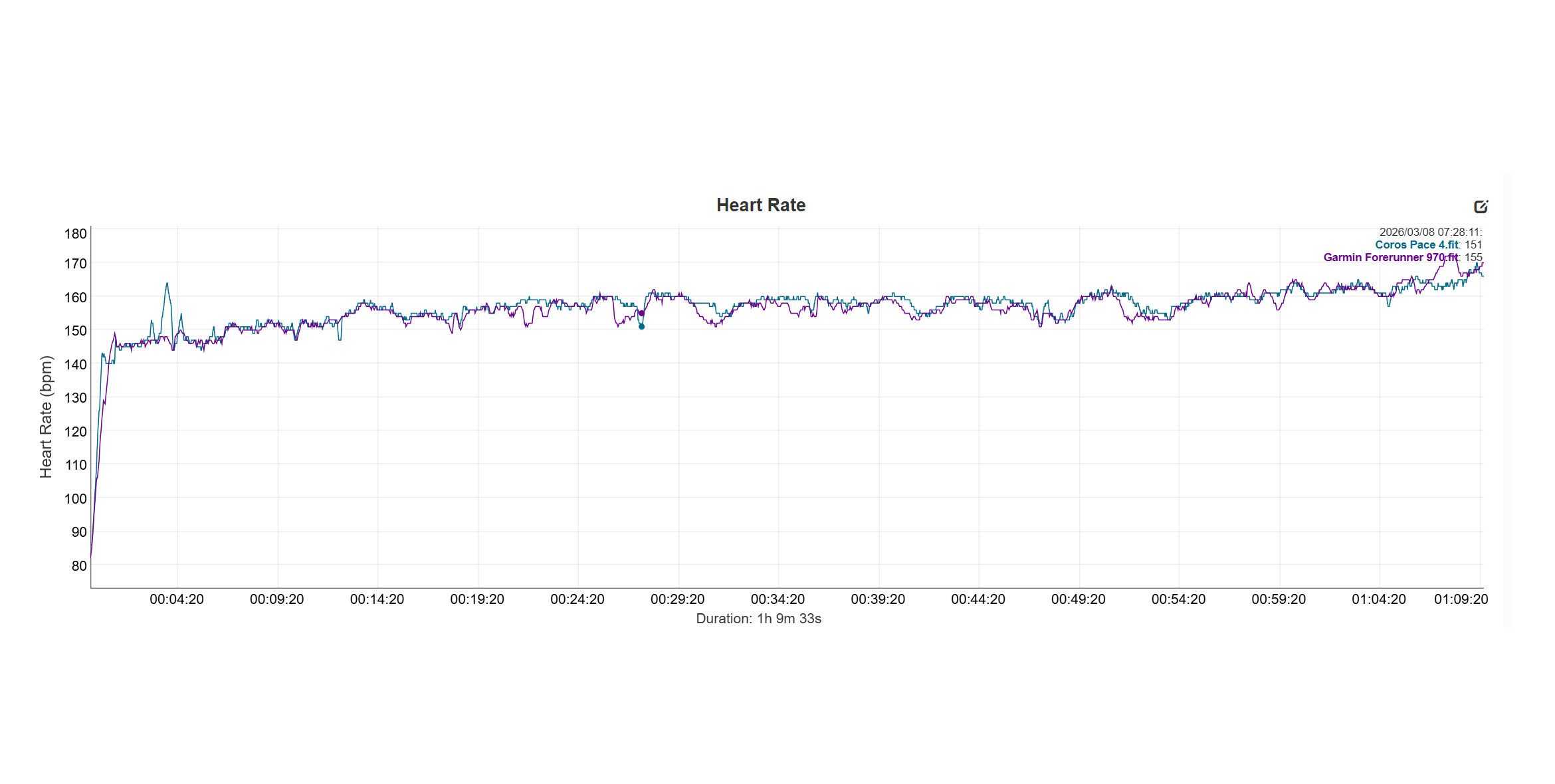
The Pace 4 had what I think is an erroneous spike early in the race, and the Forerunner 970 rose higher than I’d expected right at the end, but the HR readings were in line with what I expect to see and what I have seen when using a chest strap in past half marathon races.
Verdict
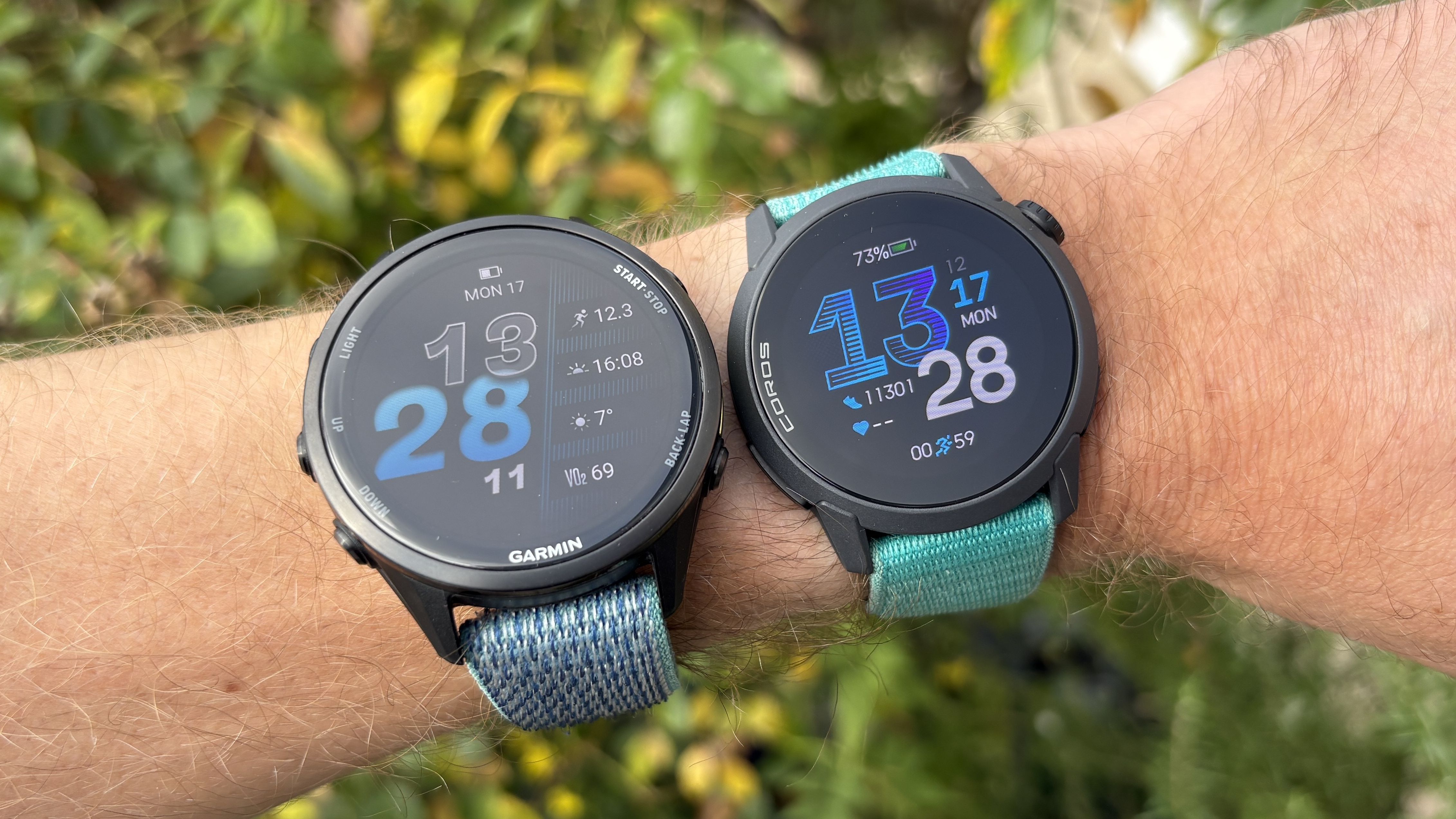
I can’t fault either watch for their accuracy on race day, though Coros does get a nod for having the more accurate race prediction ahead of the half marathon.When it comes to tracking your training, both are excellent options and the Pace 4 is significantly cheaper than the Forerunner 970, which is why I consider it the best value running watch out there.The Forerunner 970 does offer a more durable and attractive design with a bigger screen, plus extra features like maps and more in-depth training analysis. It’s a better overall watch if you don’t mind the higher cost, but on race day, you can certainly rely on either option.