What is it?
You have to hand it to DigiTech and IVL Technologies, the effects icon and the company that it has licensed pitch-shifting algorithms from for years have got serious product mileage out of their partnership. Numerous Whammy models, the compact Ricochet, HammerOn and the Drop have all come from it and they continue to sell because they were ahead of the market then, and continue to deliver now.
But for the Drop especially, things have changed since its own 2014 launch. As the name suggests, it focuses on the drop-tuning side of polyphonic pitch-shifting to allow guitarists and bassists to lower their instruments' tuning by one to seven semitones. It was a huge deal then and still is – allowing players to play sets with less guitars, tuning changes and even explore creative ideas at the click of a switch. The key difference is the DigiTech Drop has more competition now.
XP Audio's Morpheus DropTune was already discontinued by 2013, but the year of the Drop's launch saw direct competition from the Electro-Harmonix Pitch Fork, and later 2020's Pitch Fork Plus. But that was about it. But the relentless evolution of DSP found in multi-fx and amp modeling processors has seen a (pitch) shift in recent years with Line 6's Helix, plus Neural DSP's Nano and Quad Cortex models offering in-built downtuning options.
But it's Boss that offers the most serious sally to the Drop's standalone status in more recent times – namely the smaller of last year's pitch-shifting duo, the XS-100 and XS-1. After years of R&D, Boss claims to have reduced latency, but its compact XS-1 also offers the ability to tune up as well as down. I think this pedal is the elephant in the jam room we can't ignore in any 2026 evaluation of the Drop and how well it holds up for players' needs today.
Specs
- Price: $249.99 | £150
- Type: Polyphonic pitch shifting drop tune pedal
- Controls: Effect selection rotary control, Momentary On / Off switch, bypass footswitch
- Features: Seven semitones and full octave down pitch shifting, with octave down + dry mix mode, momentary and latching modes
- Connectivity: 1/4 jack input and output
- Bypass: True
- Power: 9VDC, 300mA (included)
- Dimensions: 121 (L) x 73 (W) x 45 (H) mm
- Weight: 160g
- Options: Standard Red finish and Sweetwater-exclusive White finish also available
- Contact: DigiTech
Build quality
Build quality rating: ★★★★½
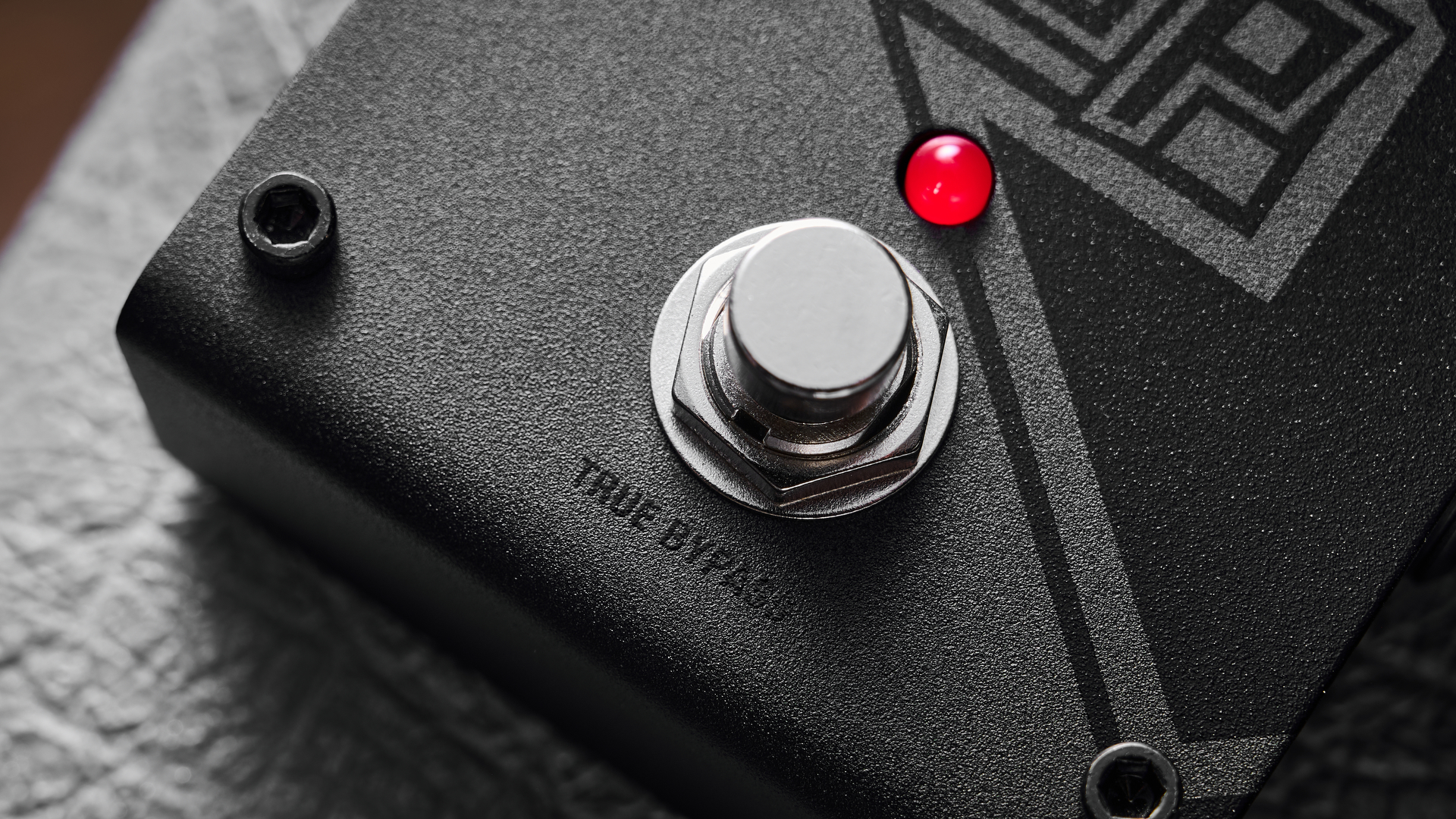
Personally, I think this is the coolest-looking pitch shifter pedal right now
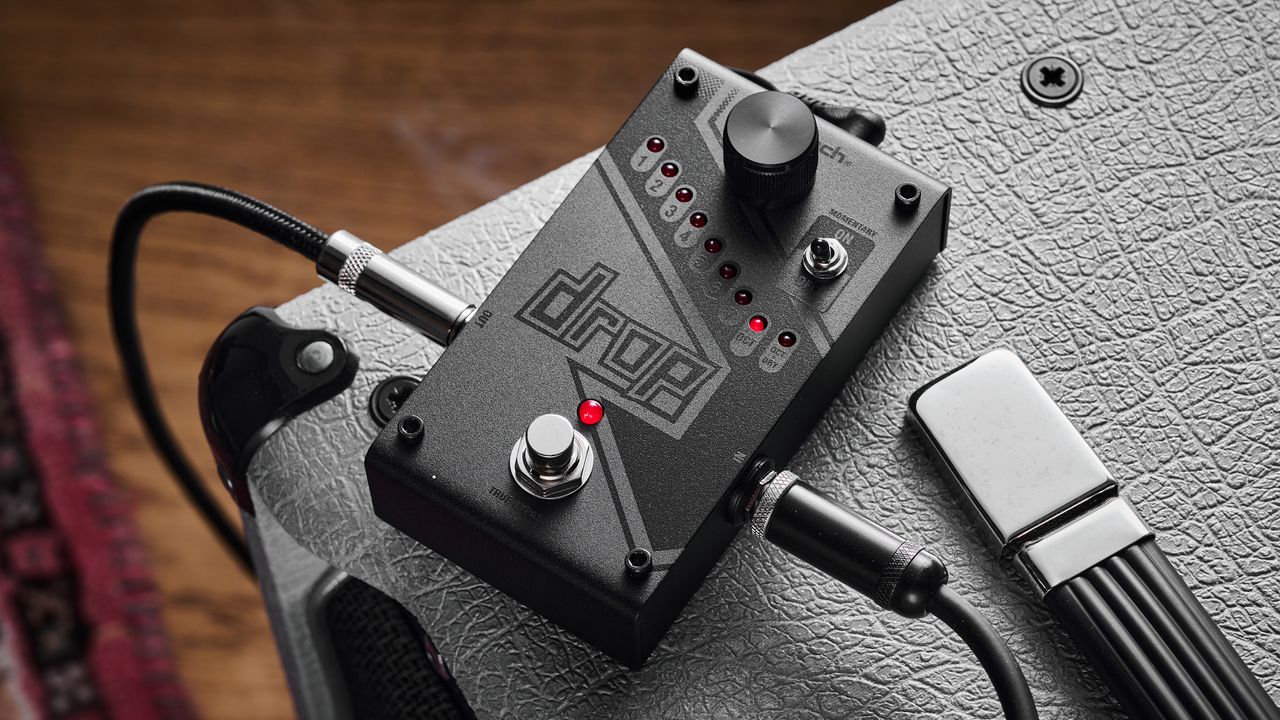
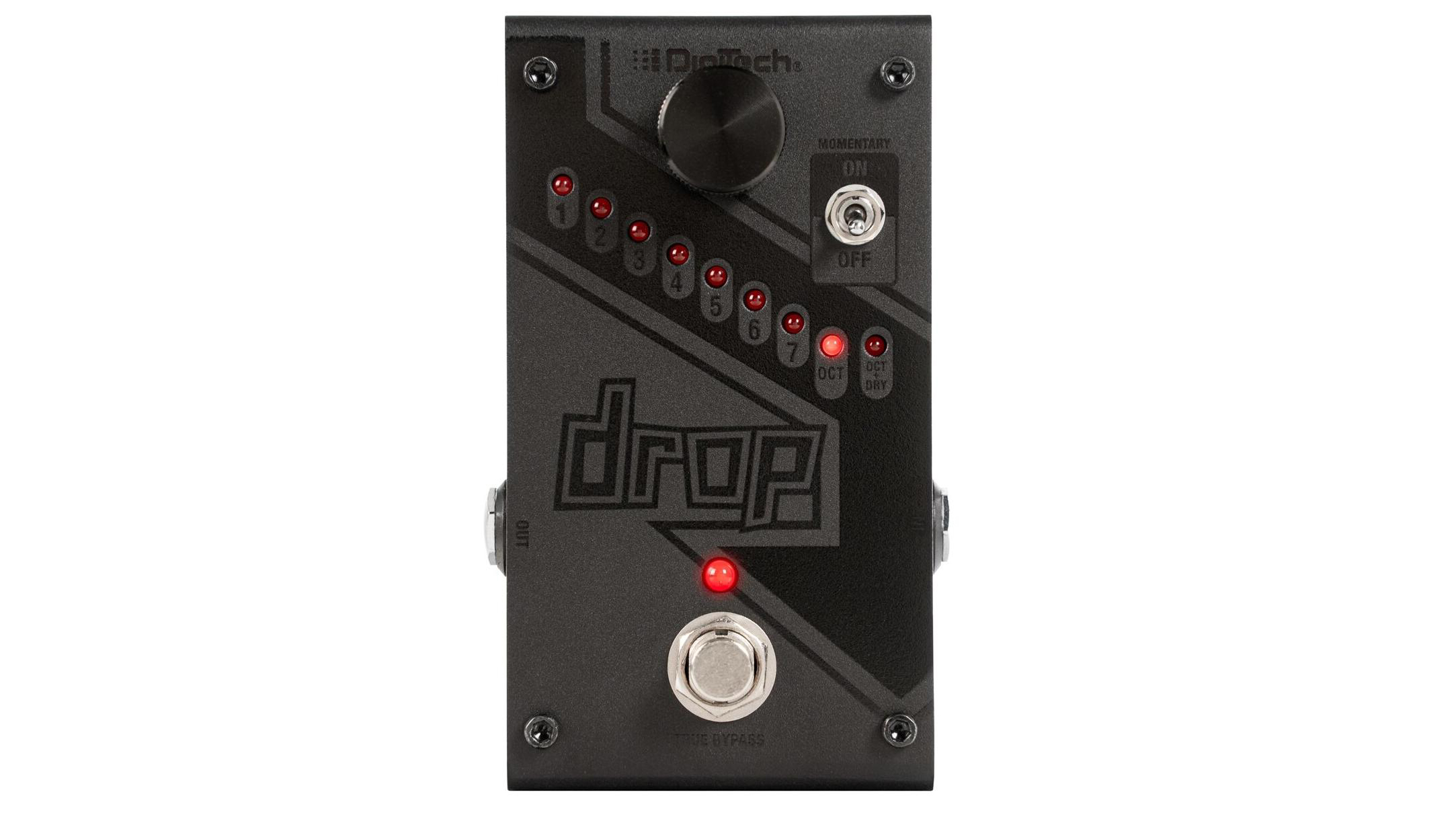
This limited Black Edition certainly looks cooler than the original (and still available) red version; more geared towards metal players and those who want to color-code their pedalboards a different way. The trade-off is the stealthy colorway makes the semitone number reading far less easy to read, but that shouldn't be too much of an issue, as you see where the LEDs lie in relation to each other. Personally, I think this is the coolest-looking pitch shifter pedal right now. Sorry Boss.
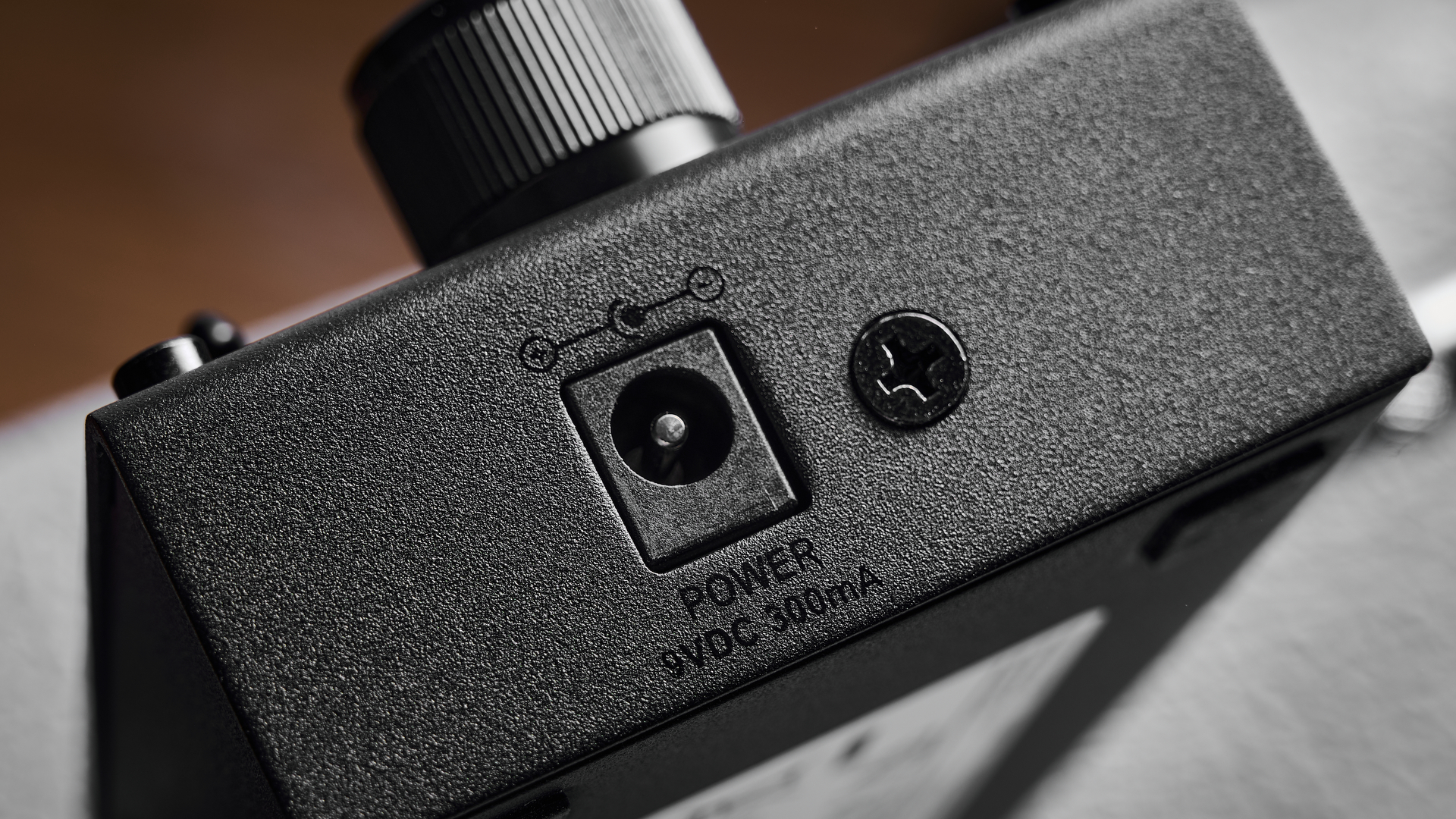
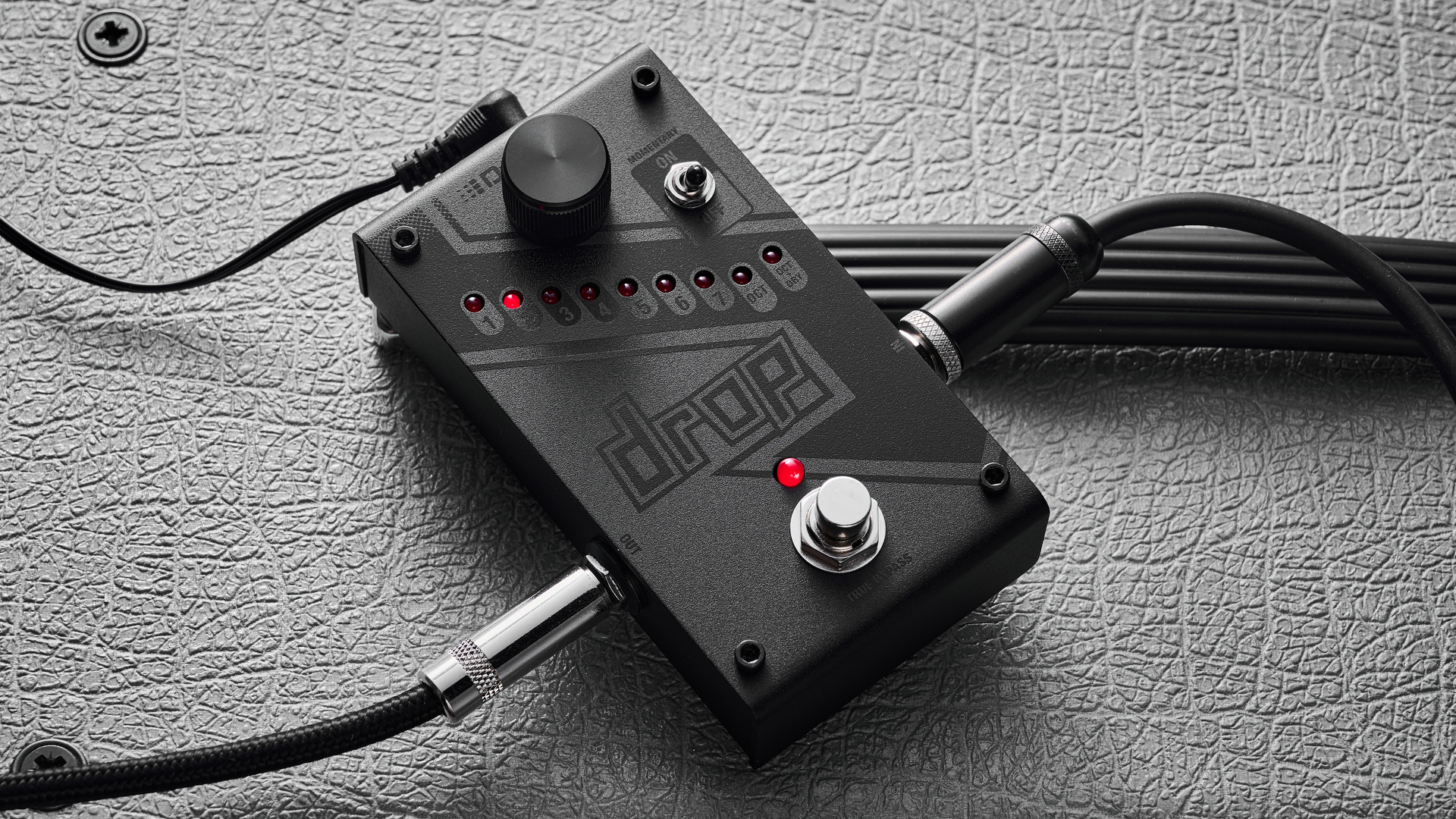
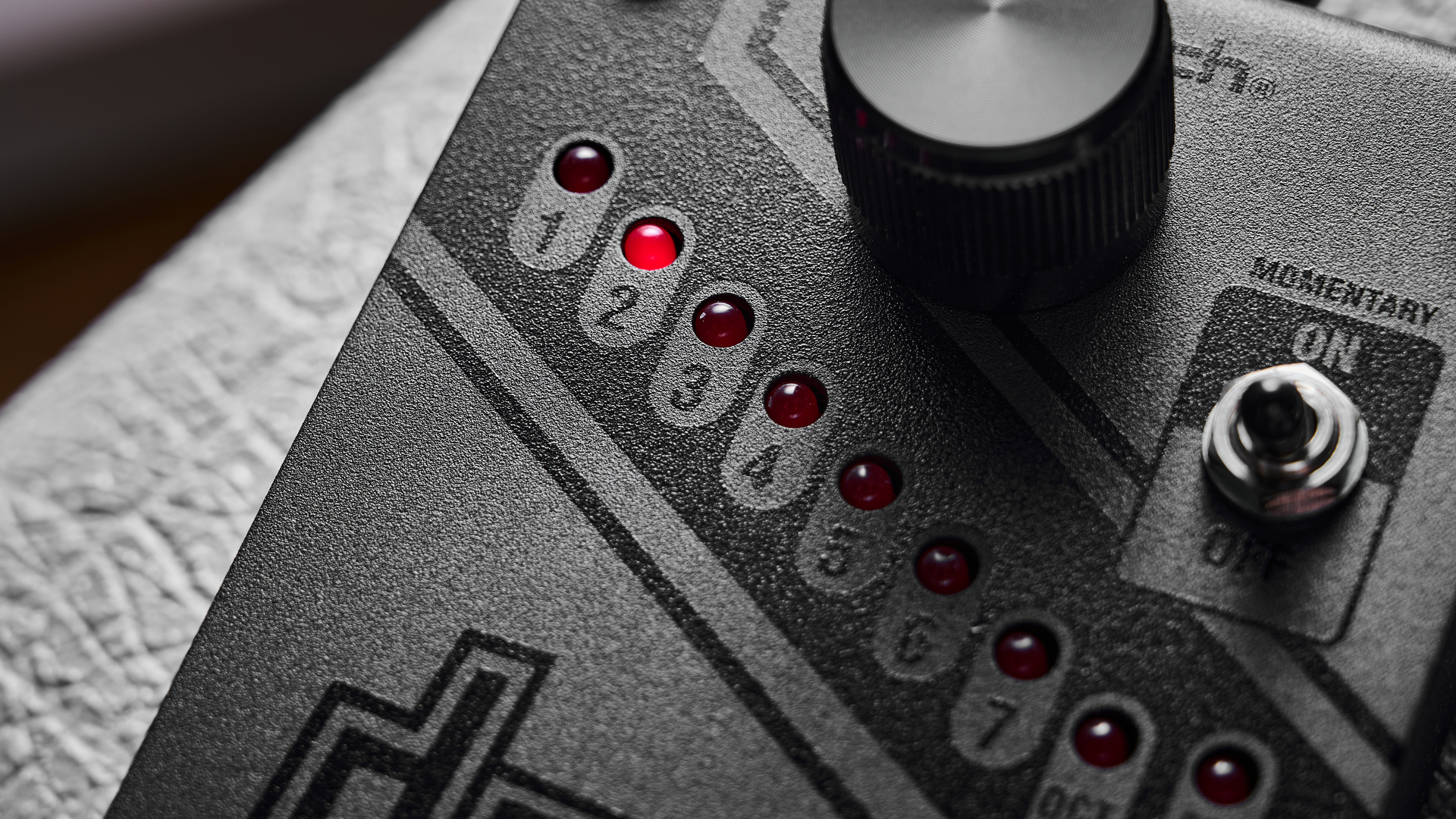
The build elsewhere remains the same as the original: sturdy and heavy metal casing with a matte lightly textured coating. A reassuring, large and notched rotary control turns the semitone level with a corresponding red LED letting you know where you are in the tuning stakes. Even the mini toggle switch for the Momentary mode (meaning the pitch drop will only engage when you press on the footswitch) feels dependable.
My only bugbear is the same as the original, and indeed any pedal with sidejacks these days; I wish they were top-mounted. I can't be a minority in looking to free up as much space on my pedalboard as possible. Always trying to squeeze one more pedal on, right?
Another consideration is the 300mA current draw here – technically 250mA but 300 is recommended to be on the safe side– it's considerably more than the newer Boss XS-1 Poly Shifter and school of 2020's Pitch Fork Plus's 120mA each, but if your pedal power supply is packing 500mA isolated outputs, it won't sweat with this.
Those aside, it looks Darth Vader-levels of cool, and it feels quality and roadworthy.
Usability and features
Usability and features rating: ★★★½
The Drop is streamlined for those who just want their pitch shifter to be a simple drop tuning pedal
The Drop is a very easy pedal to use because it does one thing – well two if you include the Momentary mode. Each notch on the rotary control is a semitone down, start with half a step at the far left, pressing the footswitch disengages whichever polyphonic pitch the selector is set on. Eight semitones down and you're at a full octave for faux-bass thrills for guitarists, but there's also a ninth setting…
This is one full octave down with a dry guitar signal for a sound reminiscent of the band CKY's early signature sound. For the Drop, the balance between dry guitar and -1 octave sound is preset and can't be altered like it can on the Boss XS-1 and Pitch Fork Plus. Both of which you can also pitch up.
Of course, the clue is in the pedal's name on the latter front. And all this means the Drop is streamlined for those who just want their pitch shifter to be a simple drop tuning pedal, but it's undeniably limited in the scope you can explore with your unpitched dry signal in comparison with its main competition now. So usability is the strong point, but features are not in 2026.
Sounds
Sounds rating: ★★★★☆
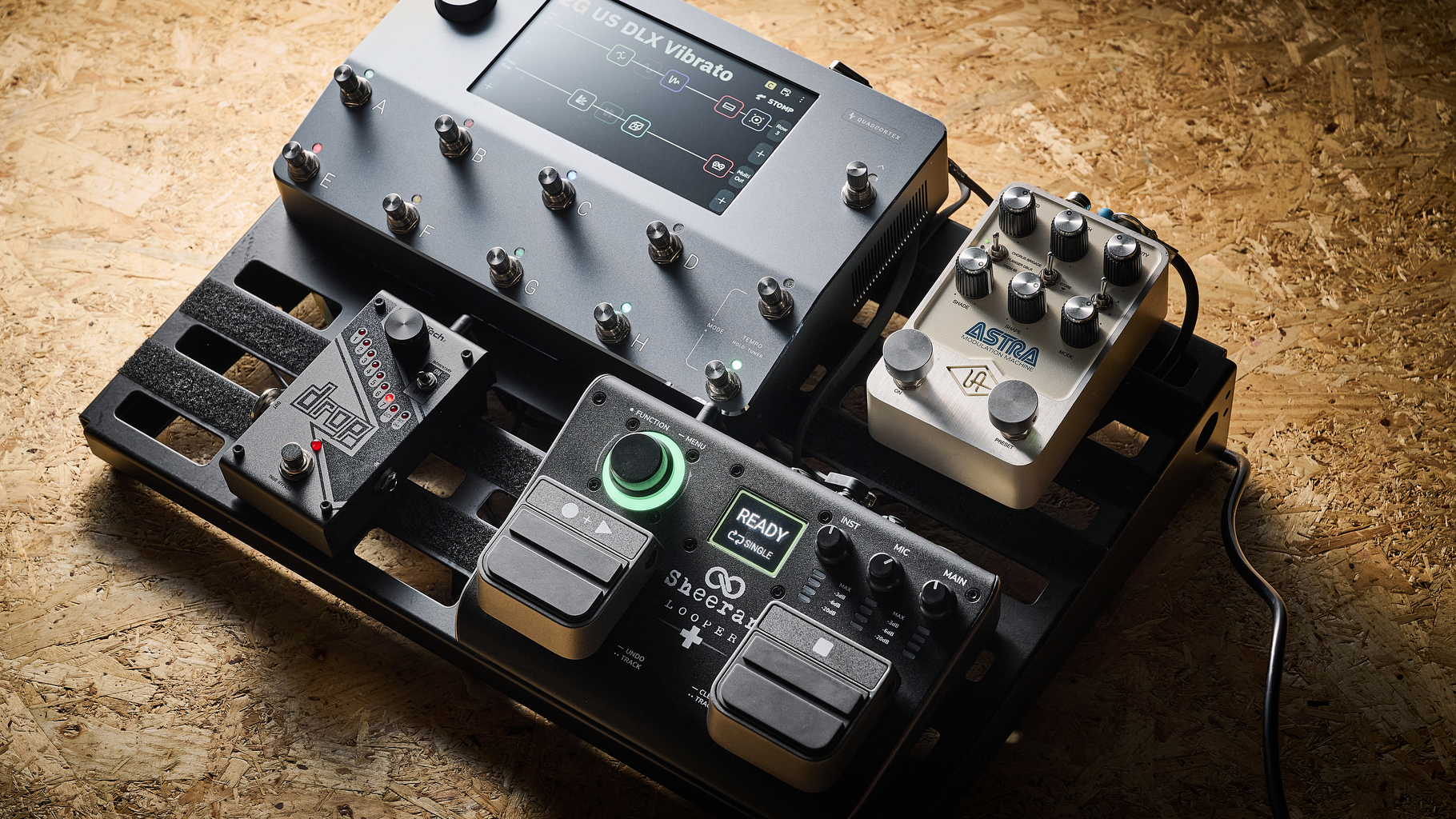
I'd argue this is an essential kind of pedal if you're in a function band
Moving between a semitone and full-step down with the Drop during my testing, it's clear that it still holds up very well 12 years on. It's easy to see why it made such an impact at launch, honing in on a facet of the larger Whammy models to serve as a go-to utility pedal for players. And it's not just metal and heavy rock players who can benefit – anyone who needs to tune down for cover versions for the sake of a vocalist will find this a huge help. I'd argue this is an essential kind of pedal if you're in a function band.
With the benefit of being able to A/B with the Boss XS-1, I can detect a slightly darker tonality from the Drop at the first two settings that goes beyond the obvious lower pitches. Without direct comparison, it wouldn't have been noticeable to me, but any latency differences between the two are less apparent to my ears at this stage, and that's obviously good news.
Compared to the Transpose feature on a Neural DSP Quad Cortex, I'd prefer to use the Drop
The XS-1 has had the obvious advantage of time, but as the obvious competitor in the admittedly still small compact pitch shifter pedal market, it can't be overlooked. Especially with the price situation out there. Something I'll get to later.
With all pitch shifters, the technology is pushed as you go further up or down in pitch. The tracking is challenged, and with that, clarity suffers, especially for runs and bends up higher on the neck. To my ears, the XS-1 is less affected than the Drop in a test with the notoriously tricky arpeggios of the function-band staple The Killers' Mr Brightside.
As I listen to my colleague and function band veteran Pete Emery play the part as I switch through semitones down, the XS-1 is a little clearer in the high end where the part is played between frets 15 and 19.
For general rhythm work and lower end riffs, the Drop still gets the job done well, and compared to the Transpose feature on a Neural DSP Quad Cortex (that isn't truly polyphonic like the Drop but is impressive with chordwork considering) I'd prefer to use the Drop as I sense there's a little more clarity and less warble for cleaner tones too.
I'd also prefer to free up the Quad's processing for running drive pedal captures instead. With the Helix's Poly Pitch and Poly Capo, the processing demands on the pre-Helix Stadium units are even greater, and although they're impressive, users may want to balance the advantages with using the Drop as a dedicated option for drop tuning. It's still a pedal I'd be more than happy to gig with.
Verdict
It's also showing its age a little in terms of features, as you might expect
I need to be honest about how well this pedal holds up for down-tuning against the newer competition it faces, and it still does well. But it's also showing its age a little in terms of features, as you might expect, while still offering a compelling alternative to the processing modellers for the most part. But with the current state of play we're seeing between US and European prices – influenced in some cases by tariffs – buying decisions based on price have gained new dimensions that I can't overlook.
The DigiTech Drop is simply a more persuasive deal on the UK side of the Atlantic right now for players who need to tune down
The verdict section is always the place I start to reflect on the value proposition of a product - what it offers you for your money, and how that compares to other options. And with the Drop it's a trickier area than you might think. The thing is, right now, it's a much better deal for players in Europe than the US. I'm seeing it for around $249.99, whereas in the UK this Black Edition is around £130 or lower. That's a big difference, especially considering the Pitch Fork + and XS-1 are both coming in under $200 at the time of writing, but the latter is around £200.
So in short, the DigiTech Drop is simply a more persuasive deal on the UK side of the Atlantic right now for players who need to tune down.
It's been 14 years since the Drop emerged, and a decade since the similarly-sized DigiTech Whammy Ricochet. Neither has a dry blend, only octave + dry setting, so it's something DigiTech probably should have addressed by now with a newer release. However, with DigiTech effectively dormant in terms of design as a brand from 2018 until Cort-Tek acquired the brand alongside DOD in 2022, there's a sense that lost time may well have factored into its evolutionary story with pitch-shifting effects. It'll be very interesting to see if it has further plans.
As it stands, the Drop still holds up… or down pretty well, depending on your specific scope and where you're buying it right now.
Guitar World verdict: The Drop might be showing its age against the more recent competition in some ways – and it's undoubtedly a better deal in Europe than the US right now – but it still gets the job done well, especially if you're regularly going a half and full step down and want to save yourself guitar changes. Plus it looks cooler than ever with this black edition.
Test |
Results |
Score |
|---|---|---|
Build quality |
Reassuring build, stealthy looks – I just wish it had top-mounted jacks. |
★★★★ |
Usability and features |
Only tunes down and doesn't allow a dry level like it's main compact competition. But the upside is it's really easy to use. |
★★★½ |
Sounds |
Still holds its own against the high-processing demands of modellers, but has serious competition from Boss now. |
★★★★☆ |
Overall |
DigiTech is probably due a new compact, easy to use pitch-shifter for tuning down (and up) but I think the Drop is still a worthy option for players – especially in the territories where it's markedly cheaper. |
★★★★☆ |