The British Cohort Study has tracked a sample of 17,000 people born in 1970 from birth to their current age of 42; 32% were in social housing at age five in 1975. At that time their housing conditions were good, if not quite as good as in home ownership: 80% were in houses rather than flats.
As in other tenures, 40% of mothers in social housing were working when their child was five years of age, and, as in private renting, 6% were lone mothers. However, there were already signs of the social polarisation that was to take hold in the 1980s: 64% of social renting families were in the bottom two-fifths on an index of parental education and employment.
Starting with these family disadvantages, it is no surprise that those in social housing in childhood in the 1970s and 1980s were doing less well, on several measures, than those who grew up in other tenures by ages 26, 30 and 34. However, other research led by Feinstein and Lupton has found that some disadvantages remained even after controlling for numerous family and individual factors.
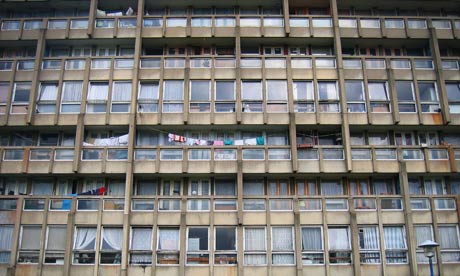
Conventional research does not present a particularly rosy picture of 1970s social housing. Studies by Anne Power, myself and colleagues tracking a group of 20 council estates have shown that in a minority of cases the buildings were in a serious state of decline. iIn 1978, a caretaker of one of the estate said: "I have had enough. The problems of estate X are getting worse and fast reaching crisis point … more and more people are moving out … some blocks have deteriorated into appalling and dangerous conditions".
But what happens when we look at another data source – groups set up by former and current residents on social networking sites to discuss their childhoods in estates in the 1970s and 1980s?
Of the 20 "problematic estates", 16 have online networking groups with more than 6,000 members in total. These groups present a view at odds with quantitative studies and the views of adults captured by researchers. When a group member recalled estate X, she said: "My childhood there really was one of those classic idyllic ones you read about in books. I only wish kids of today could experience the same thing."
A few posts suggested at least some ambiguity: "Forgetting about … the house getting burgled 13 times, those were the days." However, only a very small minority were unambiguously negative. The former estate children reminisced about what their local environment offered: "I miss playing football for 12 hours straight with all the boys"; "I miss knowing that if someone took it too far, there where 25 people watching all the kids play from their balconies."
They described many of the 50 experiences the National Trust has said that today's parents should aspire to provide for their 21st-century children. There were numerous traditional and other games: hide and seek, knock and dash, tin can alley, knock down ginger, British bulldog, rounders, football, cycling, swimming, climbing and playing with fireworks. There were organised activities and adventure play ("We made a den in an empty flat"), and there was contact with nature. These former child residents remembered specific locations, play equipment, shopkeepers, and estate characters: "Rino the ice-cream man"; "Bluearse with the quiff".
Can the evidence from these disparate sources be reconciled? The social network posters are a self-selected sample, albeit a large one. Perhaps self-censorship, selective memory or perverse pride are at work? Are posters overlooking the risk they faced and possible long-term harm done to their life chances?
Nevertheless, this evidence reminds us that high rates of dissatisfaction for a tenure or estate does not mean that all residents were dissatisfied. Conventional research – and conventional wisdom – can overlook important groups and experiences. It seems undeniable that even some particularly "problematic" social housing has offered things that some or even most children valued. Not all children had access to these environments in the 1970s; not all children do today.
Becky Tunstall is director of the centre for housing policy and Joseph Rowntree professor of housing policy at the University of York. She will be speaking at the York Festival of Ideas on 30 June 2012
This content is brought to you by Guardian Professional. Join the housing network for more comment, analysis and best practice direct to your inbox