It took 461 days but Rosa Robles was able to rejoin the outside world on Wednesday, free from fear, and do something she had long yearned for: watch her sons play baseball.
The Mexican maid emerged from her sanctuary in a Presbyterian church in Tucson, Arizona, secure in the knowledge that she would not be deported. “I’m so happy. I’m watching my boys. The air outside feels different,” she told the Guardian, speaking from the sidelines of a baseball field under a cold, starry sky. “How do I feel? Great.”
Since August 2014 the undocumented immigrant had hunkered down in the Southside Presbyterian church’s adobe compound, a reluctant symbol of the paralysis in US immigration reform.
She was not one of the “criminals” or “gang members” whom Barack Obama prioritised for expulsion in 2014, yet she faced a deportation order from the Immigration and Customs Enforcement (ICE), a branch of the Department of Homeland Security.
A snowballing campaign to let her stay has now paved the way for a deal with Homeland Security, said Robles’s lawyer, Margo Cowan. “It leaves Rosa in a position to be able to leave sanctuary safely. There is no risk whatsoever of being removed.”
A confidentiality clause prevented Cowan giving details of the accord, but she hailed it as good news for others facing deportation. “I think Rosa is every mom, and her husband every dad. She took a stand in saying that she wouldn’t permit her family to be torn apart. It was a really powerful example.”
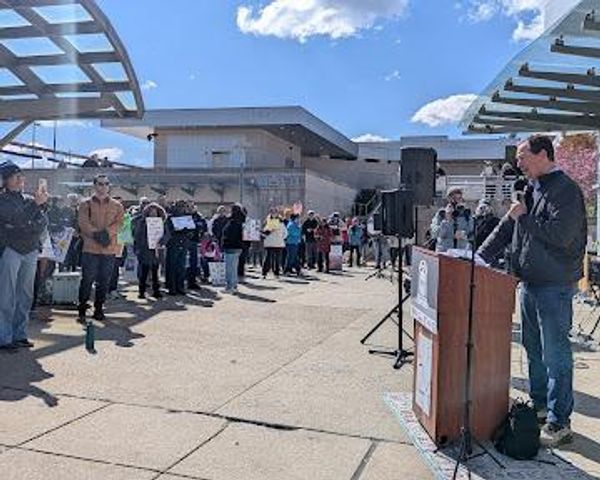
Support from the Tucson city council, board of supervisors and thousands who planted “we stand with Rosa” signs outside homes and businesses helped tip the scales, said the lawyer. “It just came to a point where justice prevailed. It’s a wonderful victory. The whole community came together. It’s quite an exceptional human moment.”
The breakthrough in Tucson came amid continued deadlock at national level over the fate of an estimated 11 million undocumented immigrants. A federal court this week upheld an injunction blocking Barack Obama’s attempt to shield about 4.7 million of them from deportation.
The fifth US circuit court of appeals in New Orleans ruled in favour of 26 states, all with Republican governors, which said the president’s executive action exceeded his authority. The justice department has said it will appeal to the supreme court.
Donald Trump’s vow to deport all 11 million if elected president has set the tone of the Republican primary campaign, angering and alarming immigrant activists.
Robles, who moved to the US in 1999 and overstayed her visa, had no criminal record and was in theory a low priority for deportation. Obama had promised compassion for those “trying to figure out how to feed their families”. Robles’s two sons, Jose Emiliano, nine, and Gerardo, 12, grew up in Arizona but are not US citizens.
The house cleaner got snagged in September 2010 when, on her way to work, she drove on the wrong side of traffic cones in a construction zone. The sheriff’s deputy who pulled her over did not issue a ticket but called ICE agents, triggering deportation proceedings. The use of traffic stops to summon immigration officials is the source of an old, bitter joke among immigrants about being found guilty of driving while Mexican.
Robles was held for 53 days in detention before being released on bond and placed in removal proceedings. After four years of fruitless appeals she was told she would be deported on 8 August 2014. She entered the Southside Presbyterian Church on 7 August, leaving her husband, Gerardo, 41, a landscaper, to care for their sons.
The same church sparked a sanctuary movement in the 1980s by taking in migrants fleeing wars and persecution in central America.
Robles occupied a small, windowless room. She helped church staff to cook and clean, walked around the yard for exercise, listened to music, did jigsaw puzzles with her family during visits, and lobbied, with the help of supporters, for deportation relief.
Hopes of a swift resolution faded as weeks turned to months. A handful of undocumented migrants sheltering in other churches across the US obtained assurances of being allowed to stay relatively quickly but the maid’s case dragged on.
“The lowest point was the one-year anniversary,” Robles recalled, speaking Spanish. “It was very hard. I just had to keep living day to day.” She urged others facing deportation to not give up hope. “Keep knocking on doors. If one closes, another can open. Keep fighting. God is with us.”
She savoured the prospect of a return to normality on Thursday morning. “I’m going to take the kids to school. Be a mom.”