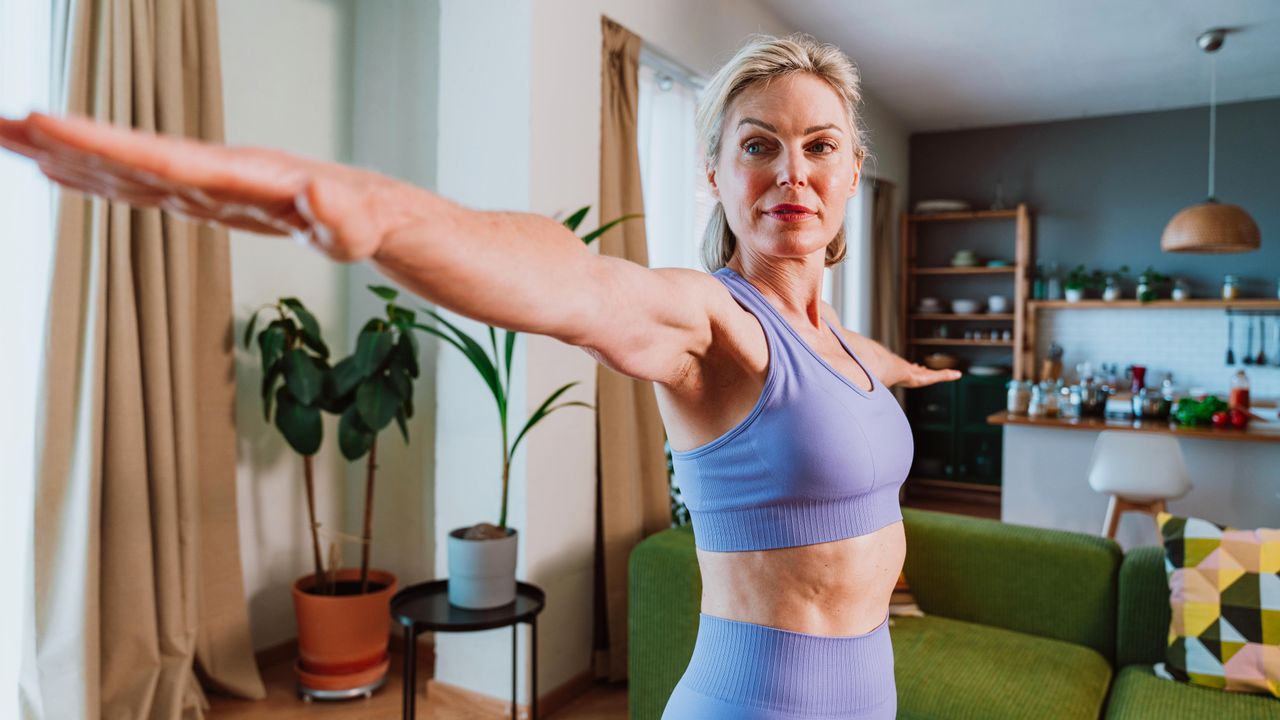
Our fitness goals and priorities usually change as we get older, and as a certified personal trainer, I start to see that shift happen as my clients near 60. However, focusing on your strength and stability now can safeguard your health and independence in your senior years.
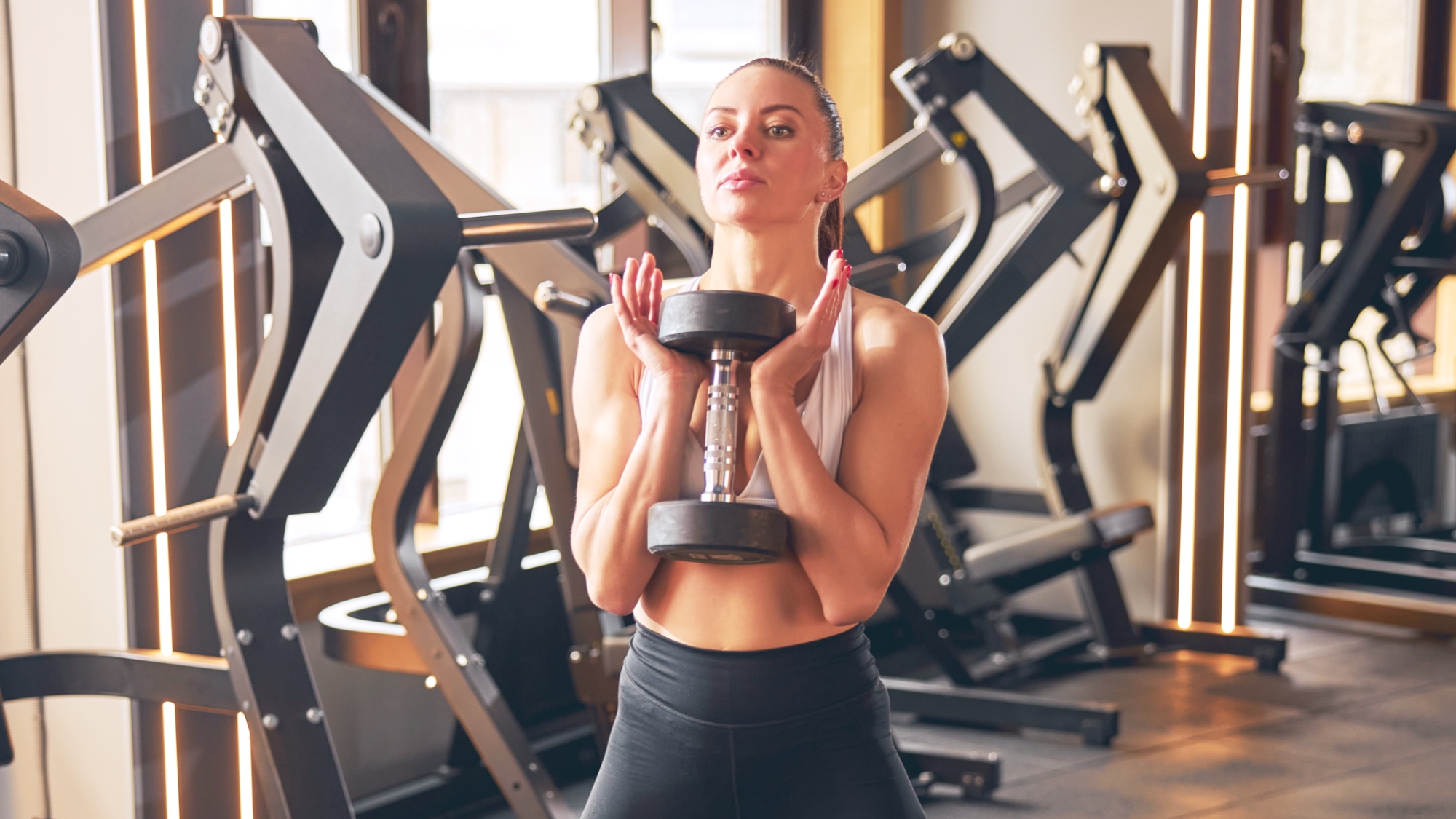
The one exercise I give almost every client — no matter their age — is the goblet squat. While most think of it as a lower-body move, it’s actually a full-body compound exercise that can strengthen your core and upper body, improve your stability, and even impact your balance. These crucial aspects of health and fitness become even more important in your senior years.
Best of all, the goblet squat can be modified or progressed for almost anyone, even if you’re a total beginner. Grab a dumbbell and read on to see how you can incorporate goblet squats into your routine.
What is the exercise?
Goblet squats can be easily modified for most, but always check in with your doctor before trying any new activity. If you’re able, consider meeting with a certified personal trainer for guidance on proper exercise form. A trainer can also provide you with alternative exercises if needed, and progress the goblet squat appropriately as you build strength.
Depending on your current fitness level, you’ll need a light or moderately heavy dumbbell and a chair for this exercise. Beginners should try 5-10 reps, 2-3 times a week. If you’re more advanced, aim for 10-12 reps, 3-4 times a week. You can also include the exercise as a part of any resistance training workout. Here's the best adjustable dumbbells for working out at home.
Work with a weight that allows you to do at least 5 reps with good form. If you need to rest before you get to 5 reps, choose a lighter weight. If you can do 12 reps without feeling fatigued, choose a heavier weight. No weight is “too light” to start — if you can only use a 1-pound weight at first, start there and work your way up as you get stronger.
Here’s how to do the exercise:
- Stand tall with your feet hip-width apart.
- Engage your core and keep your spine neutral.
- Hold a dumbbell by the bell and bring it to chest level.
- Hinge your hips behind you, as if you were about to sit down.
- Bend your knees, lowering your tailbone towards the floor.
- Once you’ve reached the end of your range, pause briefly.
- Stand back up.
- Continue for 5-12 repetitions.
Always hinge your hips before bending your knees, and keep your center of gravity over the middle of your foot. Don’t allow the spine to round as you squat down, and avoid any excessive arching in your lower back. You’ll also want to be sure that your feet stay planted throughout the movement – don’t let your toes or your heels rise up off the ground. Keep your chest tall and your shoulder blades engaged, and avoid letting your shoulders shrug towards your ears.
What are the benefits?
Goblet squats are a full-body exercise that targets the hamstrings, quads, glutes, deep core, upper back, and shoulders. This compound movement forces multiple muscle groups to work together at the same time, which strengthens the body efficiently while enhancing overall coordination.
This is also a functional exercise, mimicking movements that we do in our everyday lives. The better we are at goblet squats, the easier it will be to pick up heavy objects, squat down to sit in a chair or on the floor, or carry groceries in from the car.
What are the modifications?
If you’re a beginner, have limited mobility, or are working with any injuries, you may need to modify the goblet squat.
A chair can be used in various ways to make this exercise more accessible. Placing a chair behind you gives you a “target” to aim for as you bend your knees and lower your hips. You can choose to sit all the way down onto the chair and then stand back up, or you can lightly tap your hips onto the chair before coming to a standing position.
You may also elect to do goblet squats without holding onto a weight, at first. Holding a lighter object, like a book or another household object, will still engage the right muscle groups and allow you to gradually build strength safely.
What are the progressions?
The simplest method for progressing the goblet squat is by using a heavier weight. However, you should always be aware of your form — be sure that you can still keep your spine neutral, chest tall, and shoulders rolled back when performing this exercise with a heavier dumbbell.
You can also increase your range of motion and go deeper into the squat, given that you’re not experiencing any injuries, joint pain, or instability. If your hips and knees are parallel at the bottom of your goblet squat, try aiming your hips a little lower towards the floor. Again, working with a certified personal trainer at this stage can ensure you’re building strength safely and appropriately.
Finally, you can continue to challenge yourself by adding reps or sets. If you’re doing one set of 10-12 reps, try tacking on an additional set. If 10-12 reps have started to feel easy, aim for 15 reps.
More from Tom's Guide
- Not sit-ups, planks, or crunches: I do this simple Pilates exercise every single day to build a strong and stable core and work on my hip flexor mobility
- Not sit-ups or lunges — I use this simple Pilates exercise to sculpt strong obliques, inner thighs and hip stabilizers
- 'I’m a Pilates instructor, and I recommend these 5 core exercises to help older clients build strength and improve posture'