Kito* has a quiet voice; the husky tone of a late adolescent.
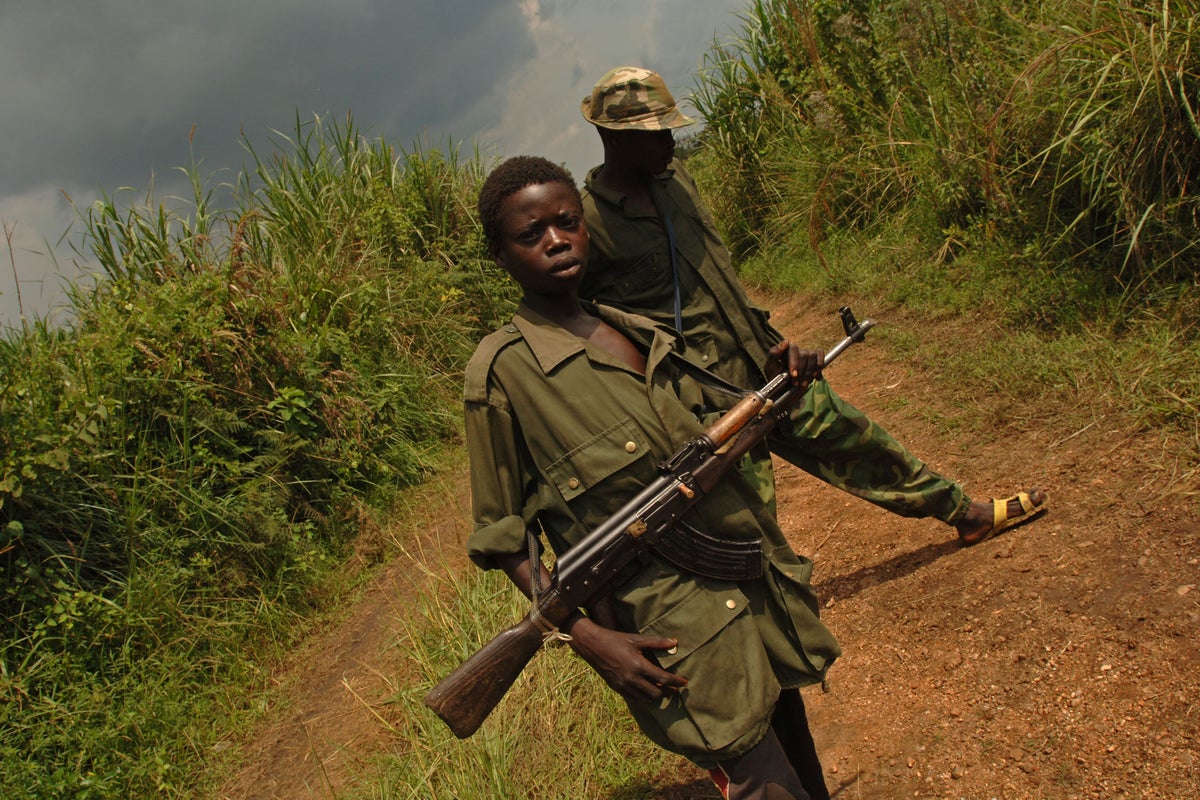
“I killed at least 100 people,” the 17-year-old boy says, speaking from a small village in the northeastern Ituri province of the Democratic Republic of the Congo (DRC). “It’s really difficult to know how many, because we were shooting people en masse. But obviously it’s a lot.”
The Ituri region, which borders Uganda and South Sudan, is victim of some of the fiercest fighting in the country. The region is home to dozens of warring ethnic militias and the Allied Democratic Forces (ADF), the DRC branch of Isis. It is less heavily involved in - but still affected by - the war between the Congolese government and the Rwanda-backed M23 rebels, who launched a renewed insurgency in 2023.
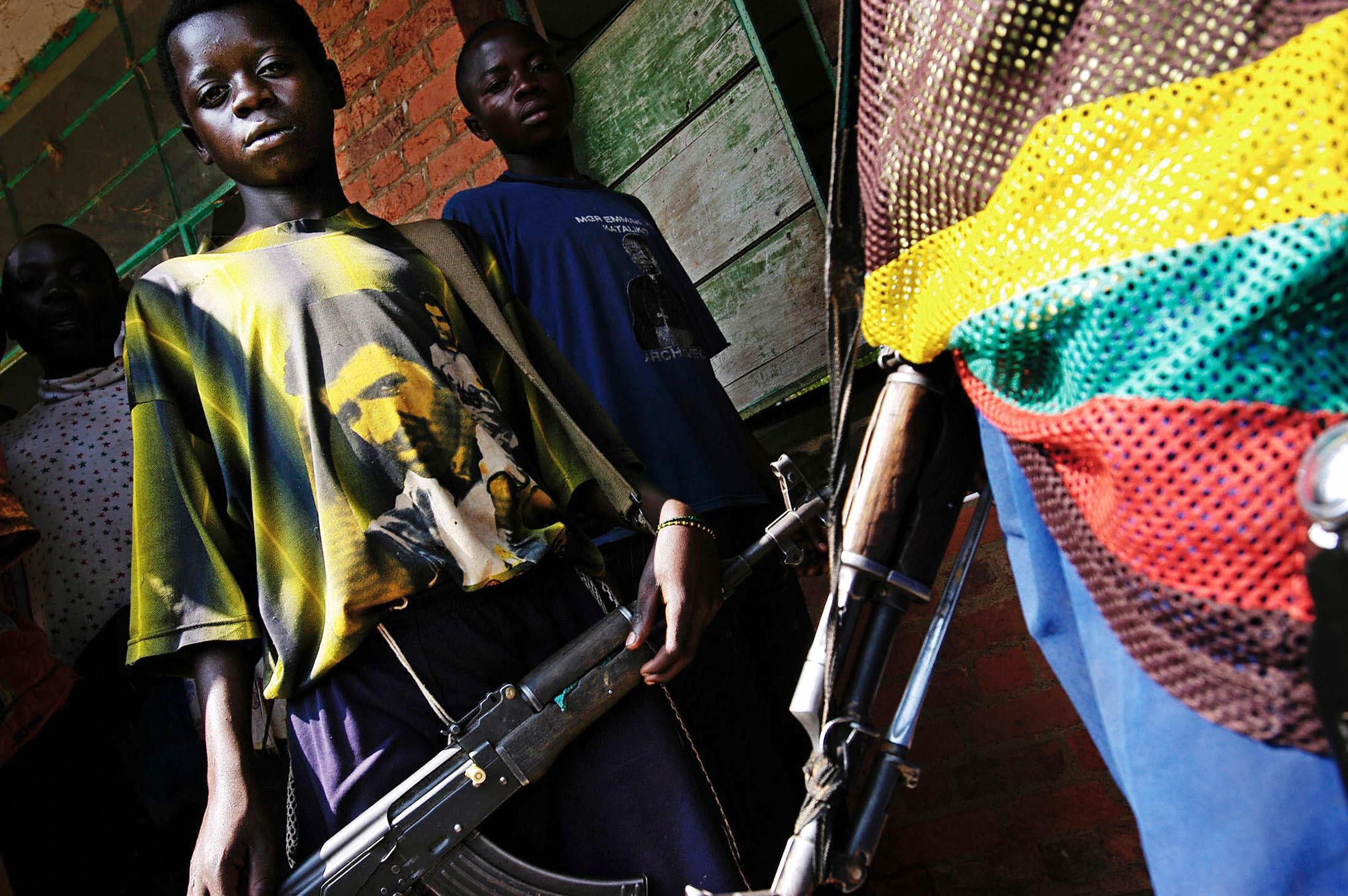
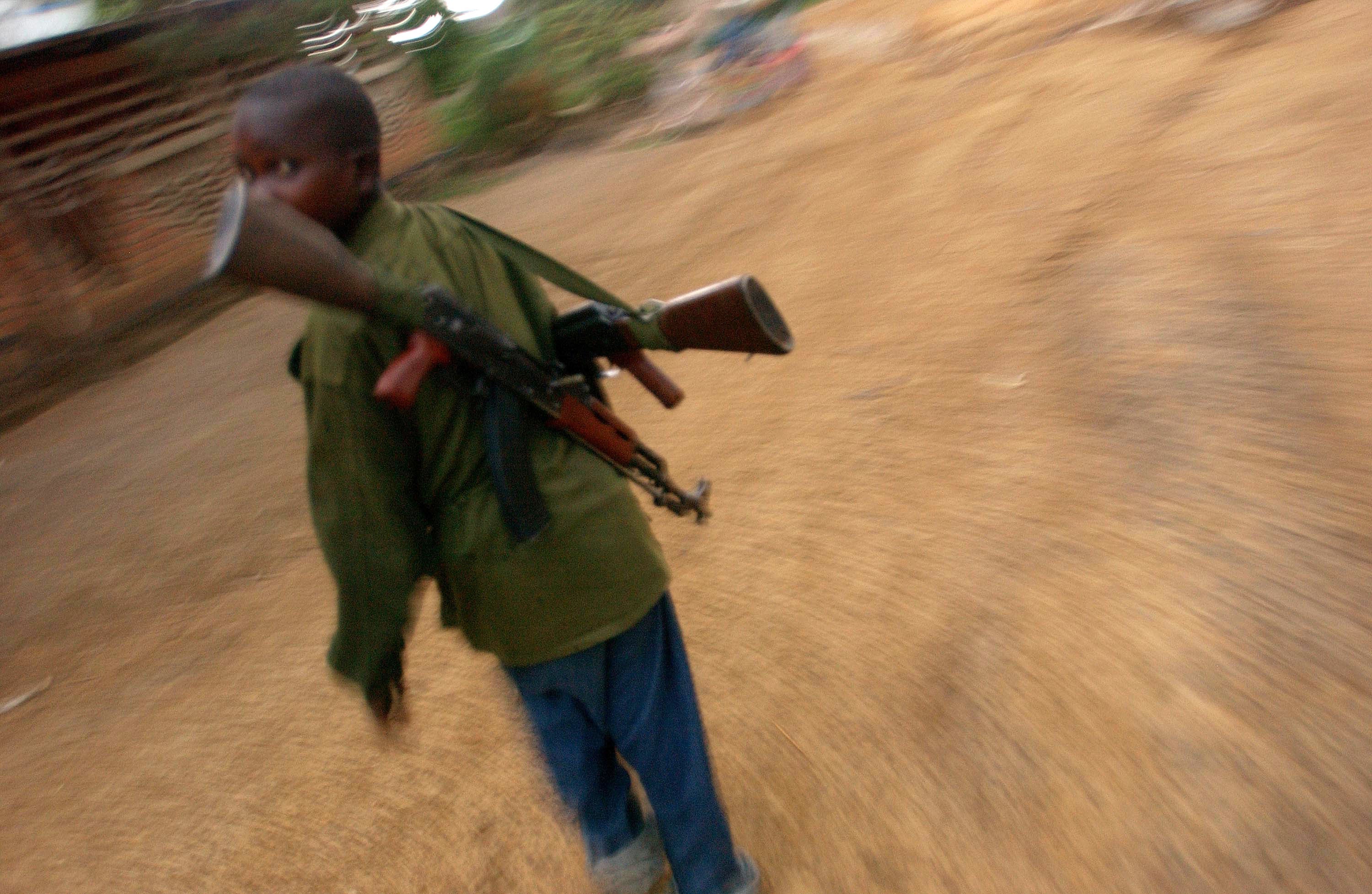
The M23, ADF, militias in the government-aligned Wazalendo coalition, and dozens of other armed groups in the DRC, are all accused of recruiting children, both boys and girls, who are forced to kill, search for food, spying, work on the land, or serve as “wives” for commanders.
Speaking bluntly in an interview with The Independent, Kito recalls the horrors of his time with one of scores of armed militias in the war-ravaged country.
The image of his victims is, he says, engraved deep into his memory. “They were looking at me. It will stay with me forever, the things I saw and the horrible things I had to do. I killed people. I saw these people die every day.”
He is one of thousands of children to have become cannon fodder for the endless violence in the DRC, which is home to the world’s most severe child recruitment crisis. In the Ituri province alone, 13,000 children remain in armed groups after 1,360 were released in 2025. The UN’s annual report says at least 2,365 children were recruited across the country in the year to June 2025 but experts say this is likely a major underestimate; in the North Kivu province, at least 2,054 children were recruited according to the NGO Children for the Future and Development (EADEV).
Most are forcefully abducted, coerced, or drugged by militia groups, while others volunteer following pressure from the militia or from their friends.
“The children think they're doing the right thing by joining to protect their own community,” explains Katharina von Schroeder, a director of advocacy at Save the Children. “Also some of the armed groups work with youth to recruit. So they will send children that are already with them to convince their friends. That is, unfortunately, a very successful strategy.”
Children like Kito, whose family was left cash-strapped after his father died, are targets for the local militias, coercing children with promises of money and respect.
-a-child-formerly-associated-with-an-armed-group.jpeg)
Kito was a positive and self-assured boy, those who know him well say; a big dreamer who was fixated on transforming his impoverished childhood before his father’s death left him in a desperate financial situation.
He was recruited on 24 September 2024, as an assistant to one of the colonels. “The colonel was really mean to me,” Kito recalls. “He was really demanding, giving me too many orders, it was really difficult.”
Kito was made to do the colonel’s bidding. His duties involved fetching water and supplies, laying paths for the group’s missions, and engaging in battle, firing at other armed groups, often with other children in their ranks.
That November, he would seize an opportunity to flee the militia, after taking stock of possible escape routes when tasked with laying the trail through the Ituri rainforest for an upcoming mission. “I was creating the trail, so I managed to escape the road which I traced for the group. I took another main road, and left while no one was watching,” he says. “It was because the colonel asked me to get some water. I took advantage of this situation to escape the group.”
‘It’s too difficult to talk about’
Escaping such a fate was extremely complicated for Imani*, who was recruited in August 2020 when she was a 12-year-old.
A friend had convinced Imani to join an armed group when she was “young and didn’t have the capacity of thinking”, the now 18-year-old tells The Independent.
She was handed several laborious roles within the group. “I was made to carry water, cultivate the land, carry bags. It was really difficult, because sometimes I would not eat for three days and then I was made to do that.”
Imani was forced to served as a so-called “wife” to one of the captains. She was repeatedly raped until she fell pregnant little more than two years into her time with the group, aged just 15 years old. Discussing this period of her life, Imani says, brings too many painful memories: “It’s too difficult to talk about.”
After a pregnancy fraught with complications, Imani gave birth to her daughter in her home village. But soon afterwards she would return to the militia with her child, where, for nearly another year, she was forced to work with an infant baby in her arms.
Imani would be sent to steal food from local farmers to feed the militia men, or to the market to carry large loads of food to the base. She fell ill several times after the pregnancy. Often, she would go to bed having not eaten in days.
“After [the pregnancy] I became really sick,” Imani says. “It was around 9am in the morning. All the chiefs of the army group went out. I felt really, really bad that morning. My friend saw that I was really ill.” When Imani and her friend realised the group leaders and bodyguards were absent, they quickly departed the village.
Imani was 16, and her scarred adolescence had been lost to four years of abuse and control at the hands of a brutal militia. But as of 15 August 2024, she was free.
‘They welcomed me home’
Both Imani and Kito are among the minority who successfully escape the clutches of an armed group each year, to be reunited with their families and supported by NGOs that help them reintegrate into society.
This process has been made more difficult after severe cuts to aid by the Trump administration. USAID was the leading donor of humanitarian assistance in the DRC, but since around 83 per cent of the programmes were cut, this assistance has run thin. Children are also more likely to end up in armed groups due to the cuts; an absence of aid and educational programmes leaves children more liable to joining.
Leaving the armed groups, however, does not guarantee an end to their hardships. Resettling at home is difficult, with children months or years behind their peers at school, often struggling to fit in socially after losing much of their childhood to war and violence. The psychological impact of what they have witnessed or taken part in can be hugely damaging.
“Parents invest in their childhood for a good future, send the child to school, and then the child is suddenly ripped out of the community, out of the family, and the families often don't know if the child is still alive, if they will ever come back,” explains von Schroeder.
“They're also scared that if the children come back, they will become violent because they're so traumatised.”
Imani’s mother welcomed her home.
-a-child-formerly-associated-with-an-armed-group.jpeg)
“She wanted to know why I left the village for the group. I explained that my friend told me that it was great, that it was amazing, and that she had duped me into going there.”
Things were trickier for Kito. “When I arrived home, my mother and brother were so nice to me, they welcomed me home. I was so happy,” he says.
“But I felt like an outsider, because the other children went to school, they were living life, and I didn’t know what to do.”
Both have since turned their lives around. Kito has since trained in carpentry and works in a carpentry workshop, a transformation he says he is “really proud of”.
“I’ve kind of forgotten everything that happened,” he says. “Sometimes I think about it but I don’t remember anything. My job is taking a lot of time, and it’s good for me, because I don’t think about these things.”
Imani, who is now training in tailoring, says the trauma of her past has not ruined her vision of the future. “I haven’t forgotten everything. Sometimes I remember the struggle of what happened. But what is in the past is in the past.”
*Names changed to protect identities
This article has been produced as part of The Independent’s Rethinking Global Aid project.
UK climate minister: We need to re-make the case for net zero
British consumer confidence plunges to record low as Iran war fuels inflation fears
Scientists pinpoint the age kids become ‘cunning little liars’
Eswatini to repatriate Cambodian man deported by US
The war-torn mines at the heart of Trump’s latest fortune-hunting