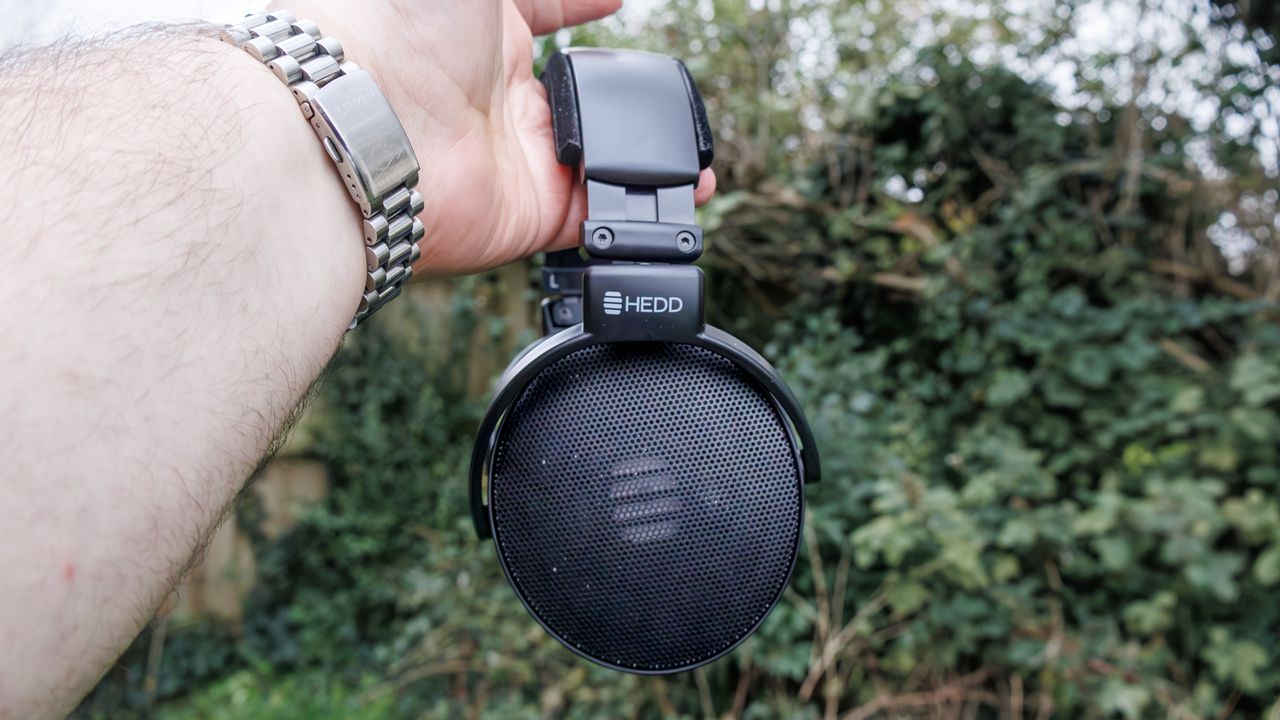
There are about as many wired headphone models there are stars in the sky, so making yourself stick out is like, hard. Hedd has done two things to make its new headphones unique. The first is the name — the Heddphone D1, something only Hedd could get away with. The second is the driver tech inside, and it's pretty special.
They're made out of the same stuff as racing cars, and apparently make for a more engaging listening experience. "Well," I thought, "I'll be the judge of that." So I put them on my head, plugged them into my headphone amplifier, and got listening.
And you know what? I wonder if all drivers in the best headphones should be made out of Formula 1 materials.
What's all the fuss about?
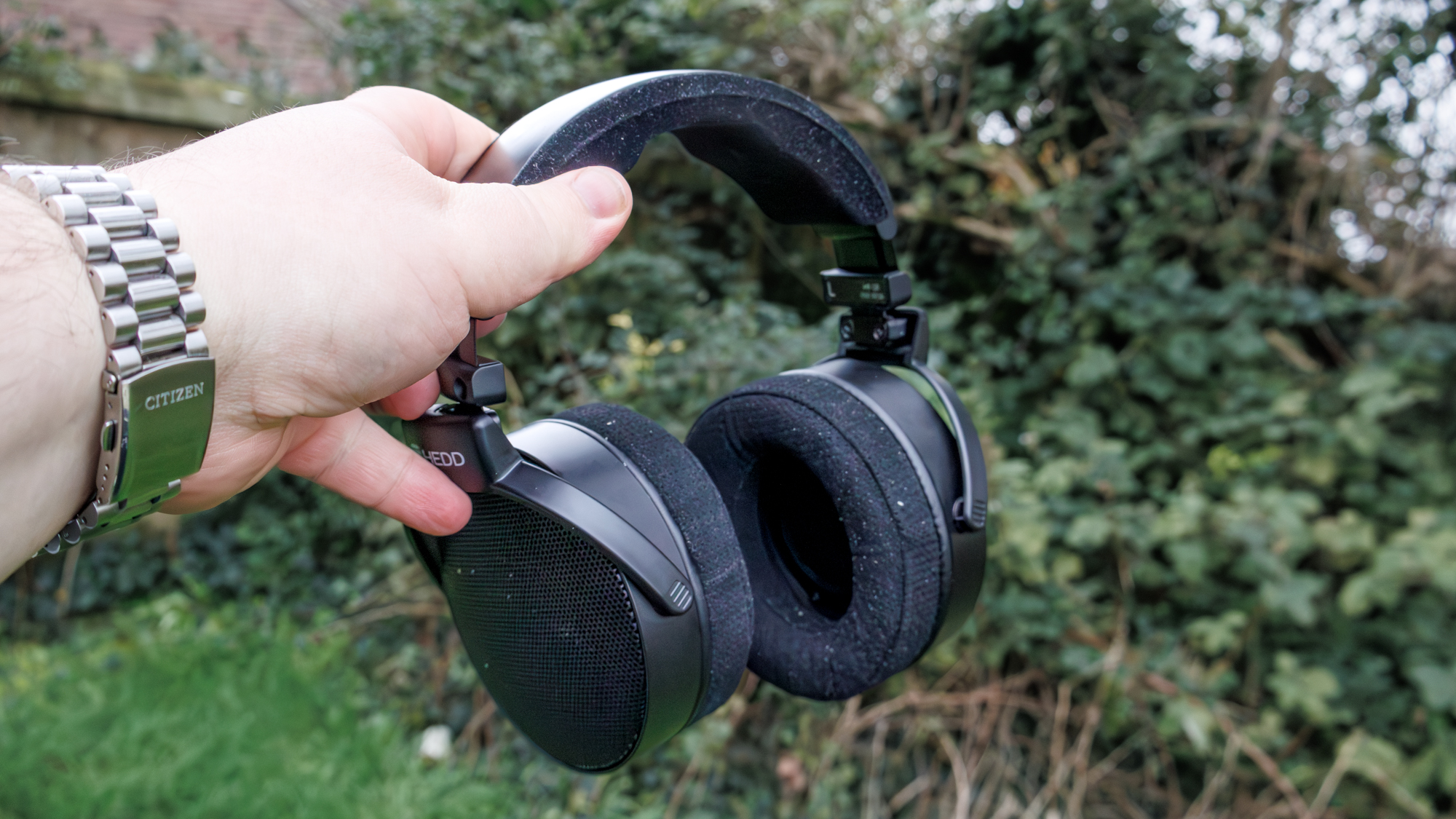
Hedd is known for making headphones that are usually packed with exotic panels of goodness-only-knows-what to create their sound. Arguably, the Heddphone D1 are more boring than the rest of the Hedd range, but they've got a trick up their sleeve.
Inside the D1 is a pair of dynamic drivers, a lot like the kind you'll find in the Bose QuietComfort Ultra Headphones and the Sony WH-1000XM6. Where the D1 set themselves apart is in the construction of the dynamic drivers — they're made out of Thin-ply Carbon.
That's the same stuff that you'll find making sure that Sir Lewis Hamilton's car is nice and light, and making up bits of space-faring helicopters (Yes, they're real. Yes, they're extremely cool.) But what does that mean, and what does it do for the headphones and how they sound?

Without getting too technical, it's going to mean quicker performance. You've got to remember that the drivers have to make all the sounds in your music, fitting low sounds and high sounds within tiny amounts of time. The quicker that it can shift its vibration pattern, the better your headphones are going to sound.
That's the simplified version — it's actually a lot more complicated than that. What it means for you, the end listener, is better balance, tighter bass, and increased detail. In short, tastier sound than your average set of headphones.
How do they sound?
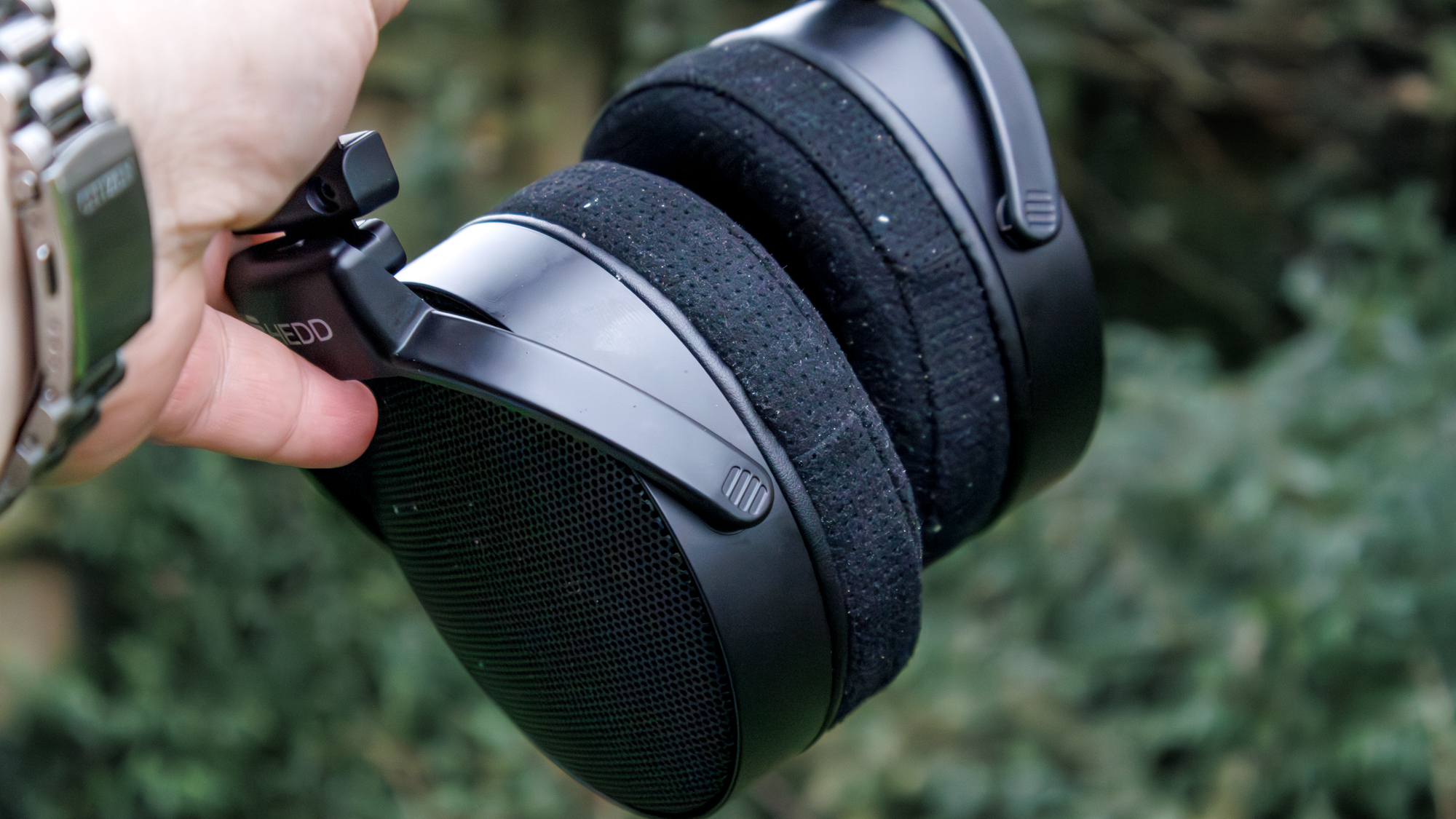
Ok, so a headphone maker with decades of experience walks into a bar to meet a Swedish company that has spent loads of money developing super materials. They spend time over some drinks designing some headphones, and then send the design off to a factory in Berlin, where, one can assume, magic happens.
Are the Heddphone D1 good? No. They're spectacular.
First things first: bass heads go elsewhere. Your need for more low-end is not welcome here. Go tune your subwoofer or something.
Now that the brutes are gone, we can get on with the matter at hand — how the D1 might have just usurped my usual reference headphones, the Sennheiser HD 600. See, the Sennheisers are lovely. They're about as revealing as a headphone dare be, and open enough to make your music sound like it's being played from somewhere around you. They have a weakness, however, and that's in bass volume.
The D1 retain the incredible detail of the HD 600, and the wide-open sound thanks to their very open design, but they bring a whole lot more bass volume to the table. Bass depth is great too, going plenty far down the frequency range.
The bass heads, as I said before, are still not going to like them — these are headphones about detail — but their more impressive low-end presence makes them a nicer listen than the HD 600, which can sometimes come across as too analytical.

Obscura's The Beyond brings some truly epic tech-death noise to the party, and the D1 make sure that you can hear every single instrument in pin-sharp detail. Bass is quick and engaging, never lingering or becoming to flabby. The guitar is crunchy and devastating, the drums pummeling and furious. Nothing gets too much attention; everything remains extremely well-balanced despite the ongoing metallic din.
Casiopea's Transatlantic gives the D1 plenty of finer detail and little musical nods to get their teeth stuck into. The slight shuffling of a cabasa in the left earcup, the clapping through the track. The guitar that sours, the cymbals that tap. The keyboard that jumps from note to note. Everything is quick, clean and precise.
I have only one complaint about the D1. They're engaging, very well detailed, and stunningly dynamic, but they're a little clinical in their presentation. There's still some of that Germanic precision that you might expect out of Sennheiser reference headphones, and while it's great for critical listening, it can take a smidge of the life out of listening for fun.
Still, the D1 and their carbon-ply diaphragms are easily some of the best-sounding headphones I've tested all year. Perhaps I should look at other things made out of carbon-ply...

Follow Tom's Guide on Google News and add us as a preferred source to get our up-to-date news, analysis, and reviews in your feeds.